
What Is the Best Solid Wood Bed Frame in 2026?

Time:2026-11-17 Author:Liam
0%

Choosing the best Solid Wood Bed Frame in 2026 means looking beyond polished photos and bold product claims. The right frame should feel steady, fit your room, and suit the way you sleep. A few details matter immediately: the wood species, the joinery, the center support, and the finish. Run your hand along the rails. Check how the slats are spaced. Small clues can reveal a lot.

Furniture maker George Nakashima said, “The tree is not dead when it is cut down. It continues to live in the furniture.” His words point to a useful standard: solid wood has character, but good design must also make a frame durable and practical. No single model is best for every bedroom. Room size, mattress weight, assembly needs, and budget all change the answer. And yes, even beautiful wood can disappoint.

This guide compares frame construction, wood types, stability, finish quality, and everyday usability to help you judge the options. It also considers what product listings may leave unclear, such as whether a frame uses solid wood throughout or combines it with engineered panels. Those differences are easy to miss. A low price may be appealing, but it does not tell the whole story. We’ll weigh the trade-offs and identify the details worth checking before you buy. The goal is not a perfect promise. It is a more informed choice.
What Is the Best Solid Wood Bed Frame in 2026?

What Defines a Solid Wood Bed Frame?

A solid wood bed frame uses lumber for its main load-bearing parts, such as the side rails, legs, and support slats. It may contain several boards joined together, and different components may use different wood species. That does not automatically make it less solid. What matters is whether the structure is made from solid lumber rather than particleboard or a veneer-covered composite core. The label alone is not a durability grade.

Look closely. Visible end grain on a rail or leg can help distinguish a solid board from a thin decorative surface. Check the underside, joints, and slats too. A sturdy-looking headboard cannot compensate for weak rail connections. The USDA Forest Products Laboratory’s Wood Handbook (FPL-GTR-282, 2021) notes that wood’s fiber-saturation point is about 30% moisture content for many species; below that level, moisture changes can cause wood to shrink or swell. This matters in a bedroom with seasonal humidity shifts. Solid wood moves. That can mean creaks or loosened joints if construction is poor. I would not assume “solid wood” means one species, perfect stability, or superior craftsmanship; those details deserve a closer look.

How Do Wood Species Affect Strength and Longevity?

A wood species gives useful clues about a bed frame’s durability, but it cannot tell the whole story. Oak and hard maple are dense hardwoods that generally resist dents and support repeated use well. Pine is lighter and softer, so a dropped toy or metal bed leg may leave a mark more easily. That does not make pine a poor choice; thicker rails and sound joinery can compensate. Details matter.

Wood also responds to its environment. Seasonal humidity changes make boards expand and contract, and poorly dried lumber may twist or develop cracks over time. A stable finish helps slow moisture exchange, but it cannot prevent it completely. Check that the frame’s joints fit tightly and that its center support and slats feel firm under pressure. A sturdy species with loose connections can still creak or sag.

For longevity, look beyond a “hardwood” label. Ask what parts are solid wood, inspect rail thickness, and notice whether the grain runs continuously through load-bearing pieces. Knots and uneven grain are not automatically defects, though large knots near a joint deserve closer attention. Not always. I would avoid assuming the heaviest frame is the strongest; construction quality and dry, well-prepared lumber matter just as much. A little movement in wood is normal, and expecting furniture to stay perfectly unchanged may be unrealistic.

Which Construction Features Matter Most?

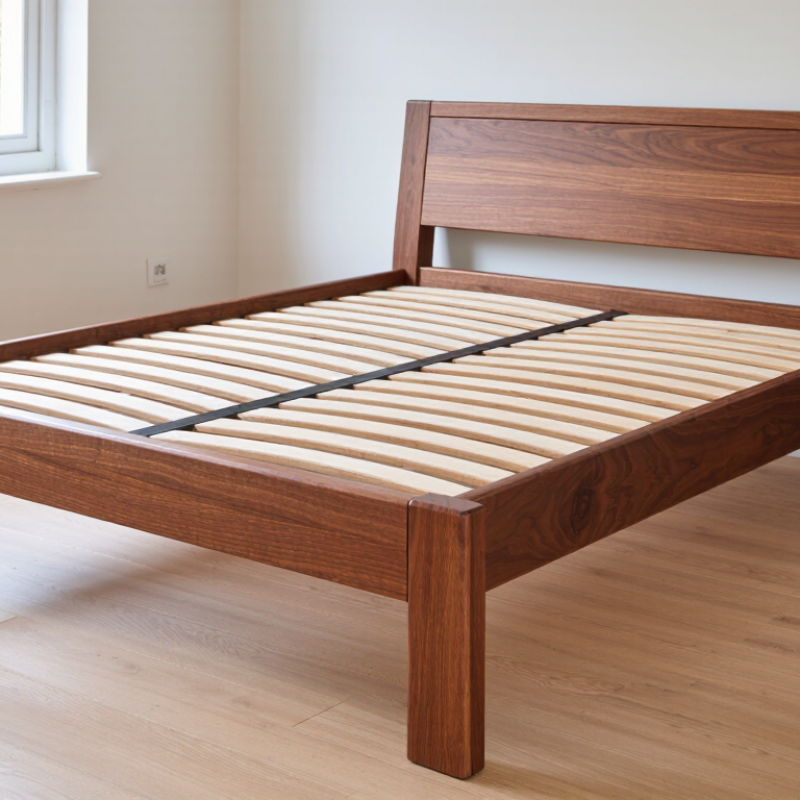
What makes a solid-wood bed frame dependable in 2026 is less about thick-looking boards and more about how the parts connect. Look for sturdy corner joints, such as well-fitted mortise-and-tenon or dowel joints, rather than relying on screws alone. Side rails should lock firmly into the headboard and footboard without wobbling. A center support and closely spaced slats help distribute weight and reduce sagging. Check the recommended slat spacing against your mattress requirements; “solid wood” alone does not guarantee proper support. Small details matter.

Tips: Press gently on each corner and listen for creaks. Check that the center leg touches the floor, and inspect slat spacing before buying. Ask how replacement parts are handled.

Wood movement deserves attention, too. Seasonal humidity changes can cause boards to expand or shrink, so thoughtfully designed joints allow a little movement without loosening. A smooth finish protects the surface, but it should not hide cracks, rough edges, or uneven joins. I might be tempted by a heavy frame, yet weight is not proof of quality. A lighter frame with precise joinery can perform better than bulky pieces assembled carelessly. If possible, examine the underside and test the frame on an even floor; showroom lighting rarely reveals every flaw.

How Should You Compare Support, Durability, and Price in 2026?

What Is the Best Solid Wood Bed Frame in 2026?

How Should You Compare Support, Durability, and Price in 2026?

In 2026, compare a solid wood bed frame by how it handles daily movement, not by appearance alone. Press lightly on the frame and listen for creaks or shifting joints. Ask whether the slats are closely spaced and whether a center rail supports larger mattresses. A center rail can reduce sagging over time. That matters.

Tips: Measure your mattress and bedroom first. Check slat spacing, center support, and the weight limit. Keep the assembly instructions for later adjustments.

Durability depends on wood quality and construction, not just the word “solid” in a product description. Look for sturdy joints, smooth edges, and slats that sit securely in place. Compare the total price, including delivery and any required tools. A very low price may mean simpler joinery or thinner slats, though price alone cannot prove poor quality. It is easy to overvalue a thick-looking frame; the support underneath may matter more. The best choice balances dependable support, lasting construction, and a price that fits your room and budget.

Which Solid Wood Bed Frame Best Fits Your Needs?

The best solid wood bed frame is the one that suits your room, sleep habits, and tolerance for upkeep. Measure the mattress and bedroom before shopping, including doorways and stair turns. A frame that fits on paper may still be difficult to carry upstairs. Choose a low profile if you want the room to feel open, or a taller frame if under-bed storage matters. Measure twice.

Wood type affects both appearance and feel. Oak and maple are typically dense, while pine is lighter and may show dents sooner. Look for sturdy corner joints, closely spaced slats, and a center support suited to your mattress size. These details matter more than decorative trim. Ask how the finish should be cleaned, especially if you prefer to avoid harsh products.

Think about assembly, too. Bolted connections can loosen over time, so check whether the frame can be tightened without special tools. If you are sensitive to movement or creaking, read construction details and inspect the slat supports before buying. Listen closely. A heavier frame is not automatically better, and solid wood can vary in grain and color. That variation is natural, though it may look uneven in a small room. Compare dimensions, support requirements, and care instructions against your actual routine.

FAQS

Which wood species usually resist dents better?

Oak and hard maple are dense and generally handle repeated use well. Pine is softer, so a metal bed leg may leave a mark. Not a flaw.

Does a hardwood label guarantee a durable bed frame?

No. Strong joints, dry lumber, thick rails, and firm slats matter too. A sturdy wood species can still creak if connections are loose.

Which construction details should I check?

Look for fitted corner joints, secure side rails, a center support, and closely spaced slats. Press gently on each corner. Listen for creaks.

How can I tell whether the frame supports my mattress?

Check the slat spacing against your mattress requirements. Make sure the center support reaches the floor and feels firm under pressure. Details matter.

Can humidity changes affect a solid wood frame?

Yes. Boards may expand or shrink as seasons change. A stable finish slows moisture exchange, but it cannot stop wood movement completely.

Is a heavier bed frame always stronger?

No. Weight alone proves little. A lighter frame with precise joints may perform better than bulky pieces assembled carelessly. I might still be tempted by the heavy one.

What should I measure before buying?

Measure the mattress, bedroom, doorways, and stair turns. A frame may fit the room but still be awkward to carry upstairs. Measure twice.

How should I think about wood grain and knots?

Grain and color can vary naturally. Large knots near joints deserve a closer look, though knots are not automatically defects. Perfect uniformity may be unrealistic.

What care and assembly details are worth asking about?

Ask how to clean the finish and whether bolts can be tightened without special tools. Check how replacement parts are handled. Small things, easily missed.

Conclusion

Choosing the best Solid Wood Bed Frame in 2026 starts with understanding what it is made of and how it is built. Solid wood components offer a natural, sturdy foundation, while different species vary in hardness, weight, appearance, and resistance to everyday wear. The right choice depends on how the frame will be used, the room’s style, and the balance of strength and cost you prefer.

Construction matters as much as the wood itself. Look for secure joints, a stable frame, well-spaced slats, and suitable center support to help reduce movement and maintain reliable mattress support. Compare these features alongside expected durability, maintenance needs, and price rather than relying on appearance alone. A well-matched frame should suit your mattress, space, and budget while providing dependable support for years of regular use.

Liam

Liam

Liam is a dedicated marketing professional with a profound expertise in the industry, where he excels at highlighting the unique advantages of our core products. With a keen understanding of market trends and consumer needs, Liam frequently updates our company’s professional blog, providing......