Industrial White Paper · Sourcing Intelligence 2026
Power Reclining Sofas Manufacturers & Factories
A procurement-grade guide to sourcing motorised reclining sofas from Foshan, China — factory capability, supply-chain economics, localisation support, compliance assurance and the design trends reshaping global demand.
OEM / ODM Ready10+ Years Export100+ PatentsLanded-Cost Optimised
Executive Summary
Why Power Reclining Sofas Are Now a Factory-Direct Category, Not a Retail Premium
Power reclining sofas — also called motorised recliners, electric motion sofas or power-motion sectionals — have moved from a niche luxury SKU to a mainstream living-room category in North America, Europe, the Middle East and Oceania. For importers, wholesalers, hospitality procurement teams and interior specifiers, the strategic question is no longer “should we stock power recliners?” but “which manufacturing partner can deliver consistent motion hardware, upholstery quality, compliance documentation and repeatable lead times?” This white paper answers that question using the operating model of Qingyumai, the export brand of Foshan Qingyumai Technology Co., Ltd., an integrated whole-house furniture manufacturer in Shunde, Foshan — the world’s densest furniture production cluster.
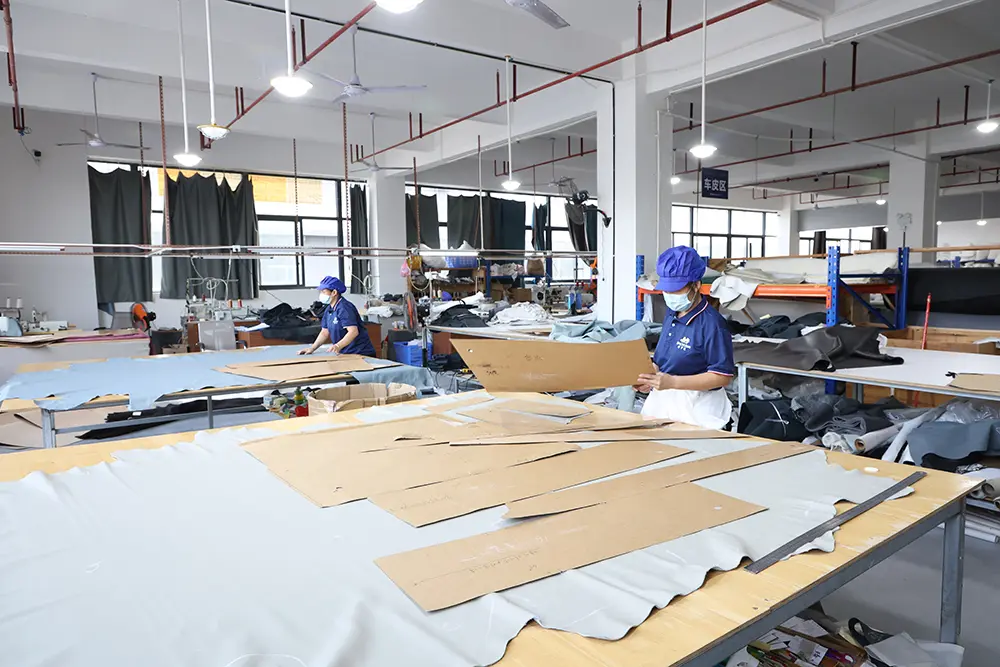
Unlike trading companies that resell catalogue stock, a genuine power-reclining-sofa factory controls frame welding, motion-mechanism sourcing, foam density specifications, upholstery cutting and final packaging. Those five variables determine whether a container arrives with zero claims or a 4% defect rate that erodes margin. Below we break down how professional buyers should evaluate that capability, and how Qingyumai structures it across its power reclining sofas manufacturing division.
10+Years supplying global furniture markets
100+Original design & structure patents
19Furniture categories, one supplier
4OEM / ODM customisation dimensions
Living Room & Motion Seating — Core SKUs
Factory-Direct Sofa & Seating Models for Motion-Ready Configurations
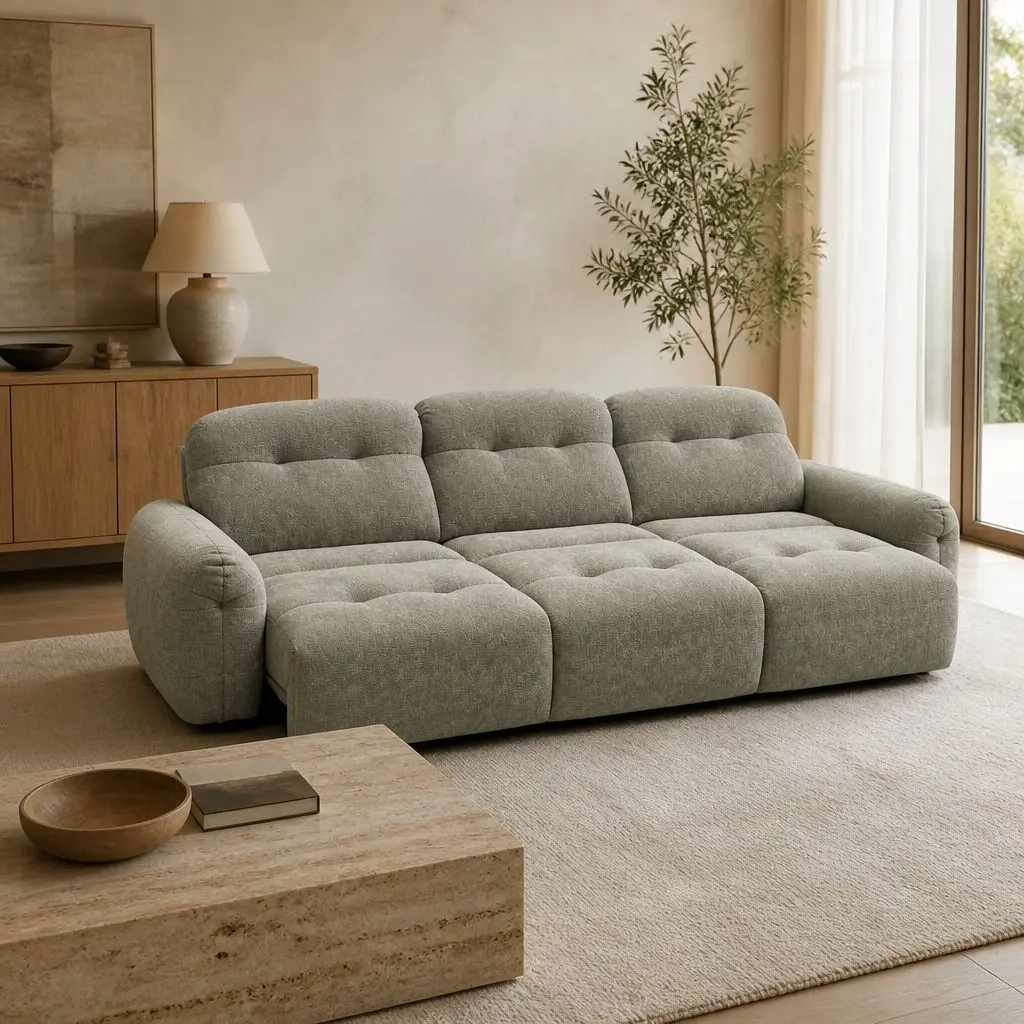
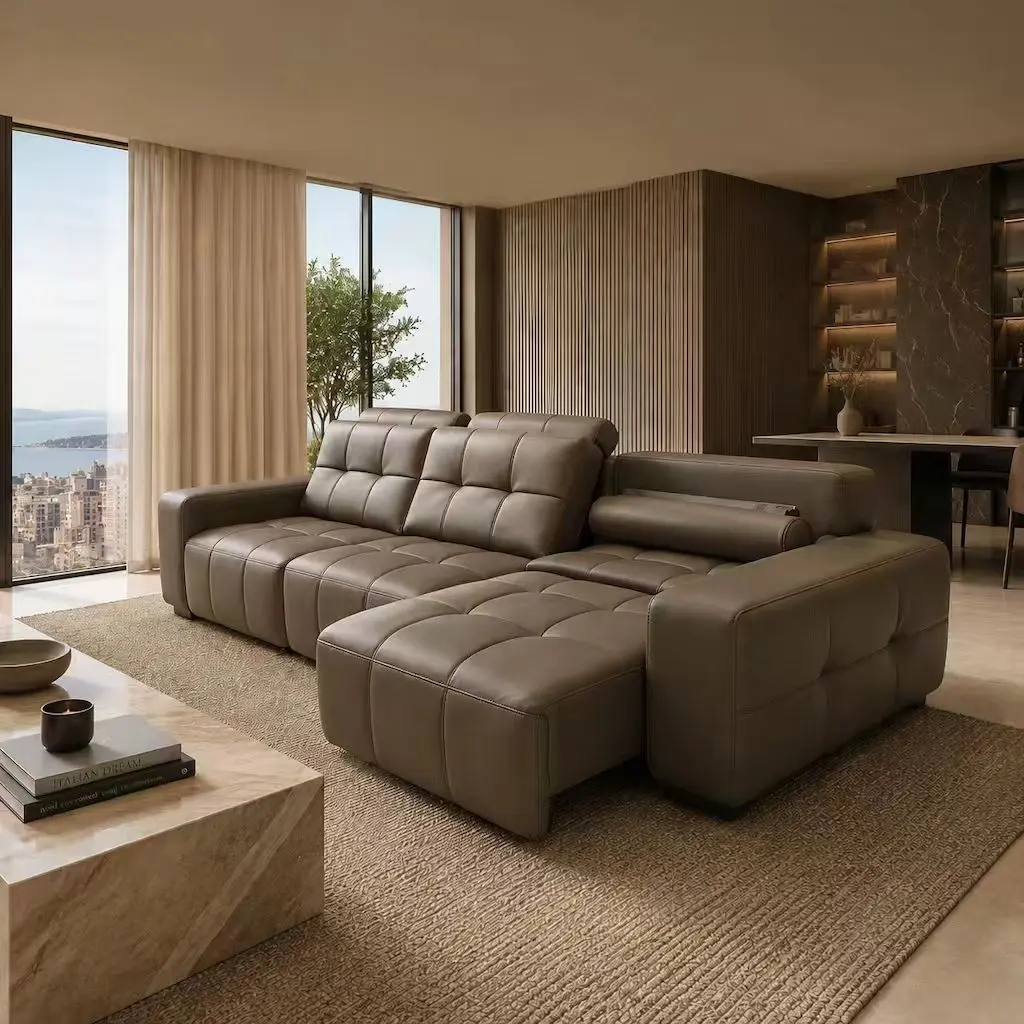
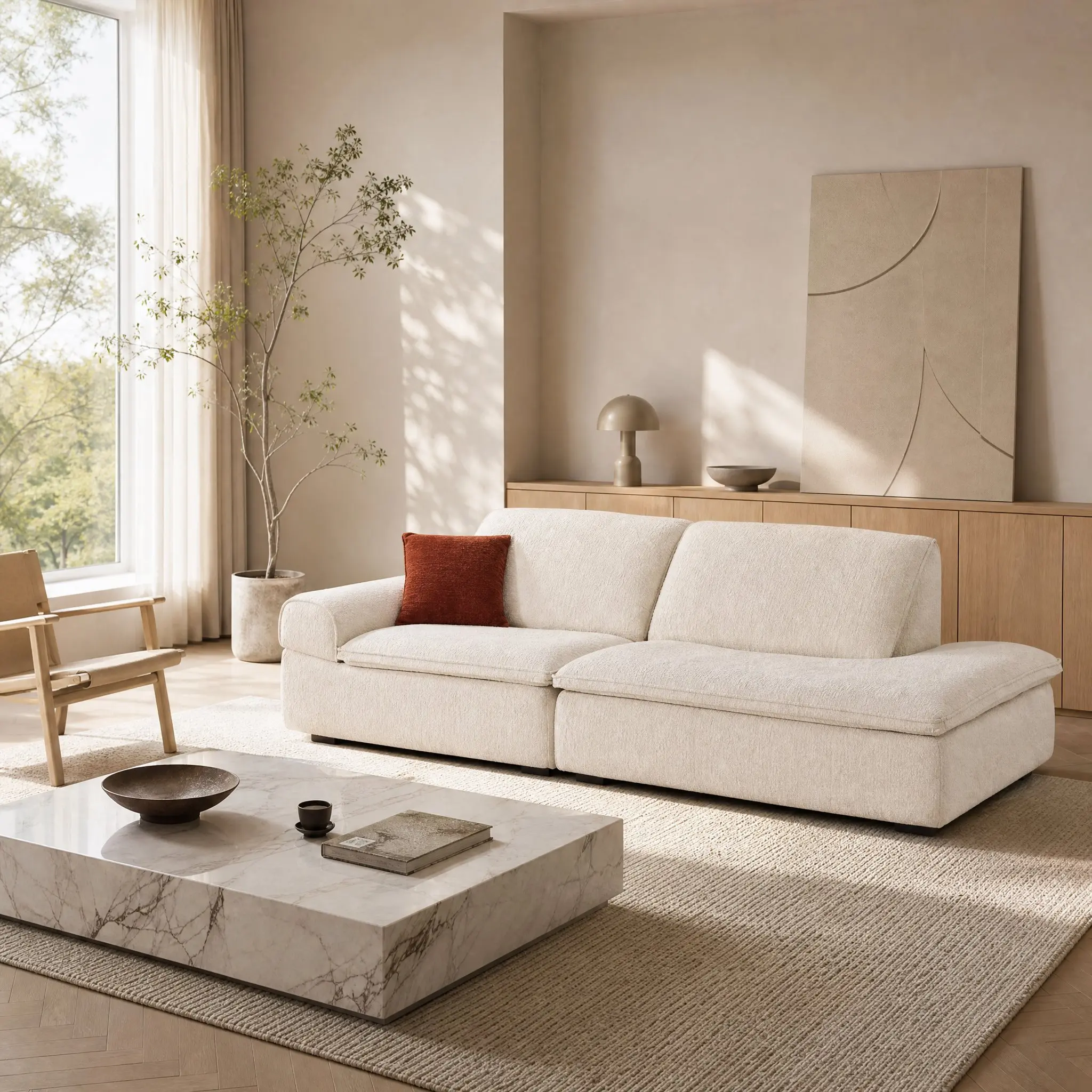
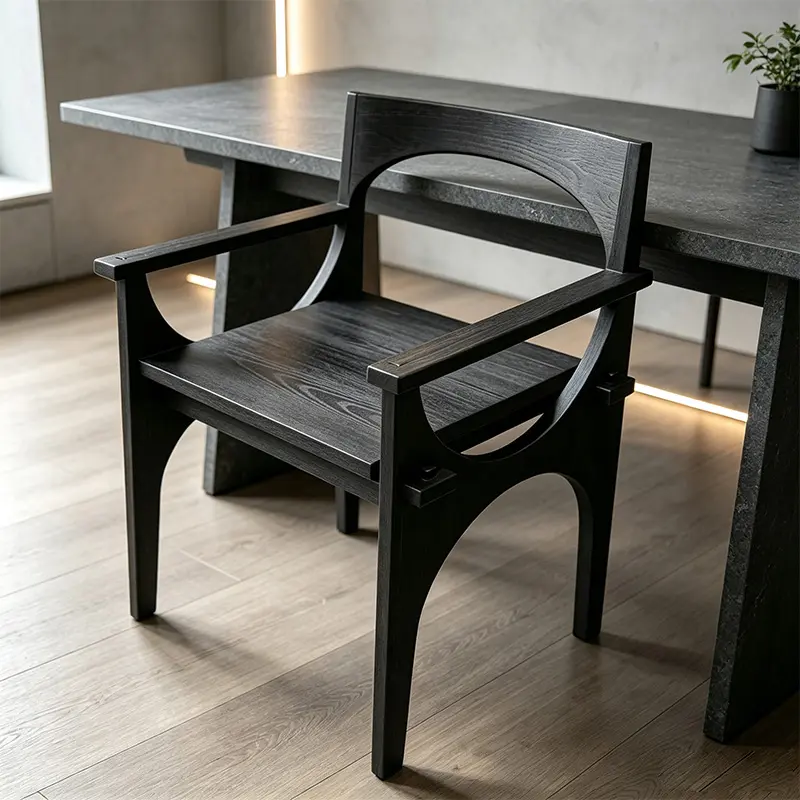
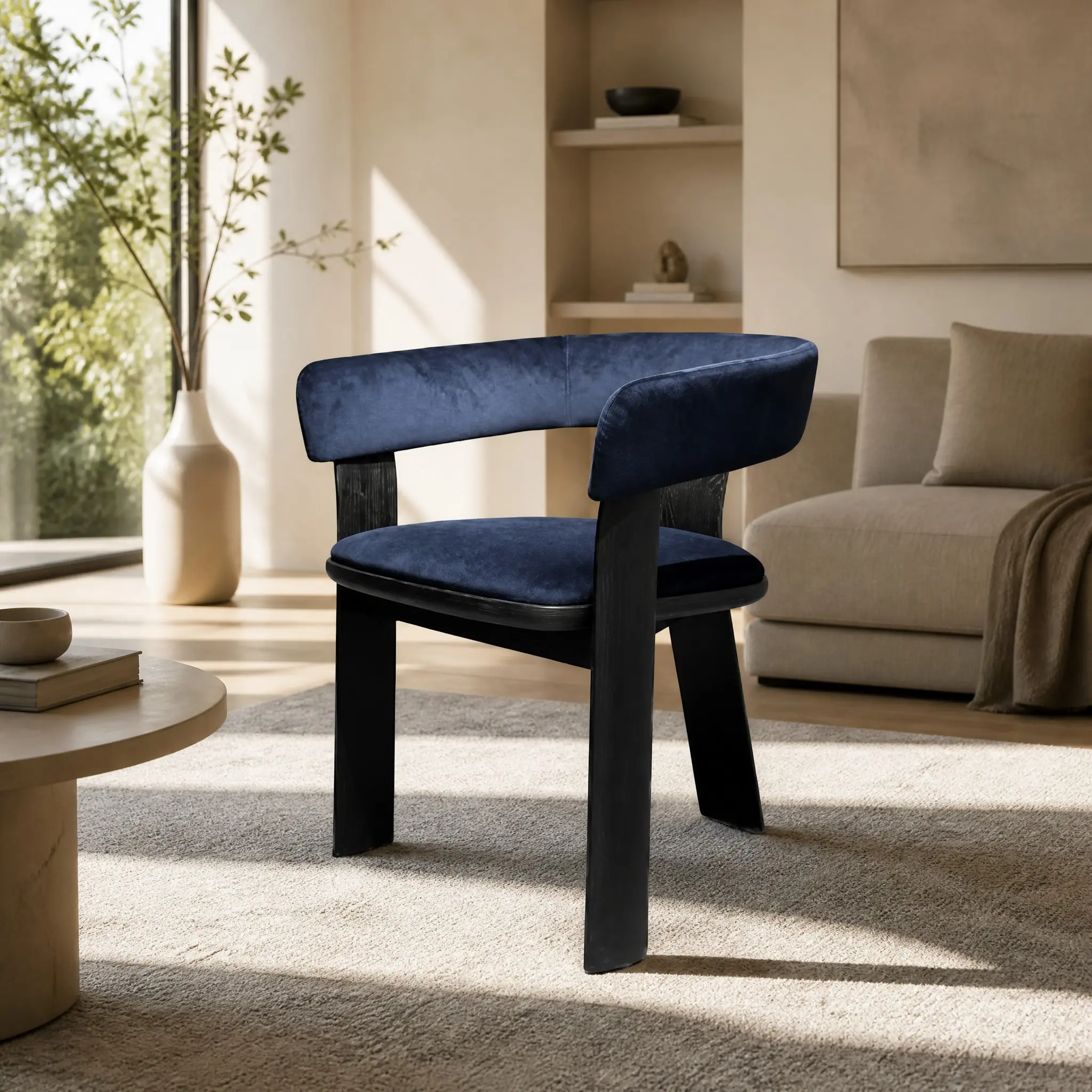
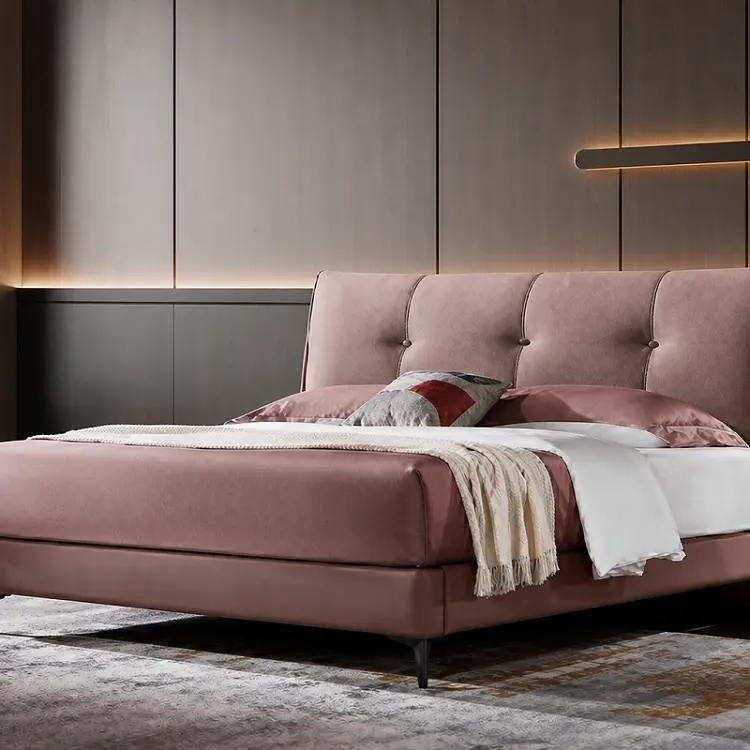
The models below are the platforms buyers most frequently specify for motorised conversion, modular living-room layouts and upholstered seating programmes. Each product page links directly to full specifications, material options and OEM customisation notes.
What Actually Defines a Credible Power Reclining Sofa Manufacturer
Google’s Search Quality Rater Guidelines reward content that demonstrates first-hand experience and demonstrable expertise. In furniture sourcing, that means describing the production reality rather than marketing slogans. A power reclining sofa is a mechanical product bolted into an upholstered product, and the failure modes are specific: mechanism drift, controller failure, foam collapse, fabric pilling and frame fatigue. A factory worth appointing controls each of these.
Frame & Structure Engineering
Kiln-dried hardwood and plywood laminates are joined with corner blocks, staples and glue, then reinforced at the pivot points where the mechanism mounts. Larch and ash frames — as used across the QYM B2202-B and M1066 platforms — are chosen for dimensional stability under repeated load cycles.
Motion Mechanism Sourcing
Recliner mechanisms are sourced from vetted component suppliers with documented cycle ratings. Linear actuator motors, hand controllers and USB charging modules are selected by voltage standard — 110V for North America, 220–240V for Europe, the Gulf and Australia — which is the single most common cause of field failure when buyers skip market verification.
Foam Density Specification
Seat cushions are specified by density (kg/m³) and indentation load deflection, not by “high density” adjectives. Contract-grade recliner seating typically requires higher density cores plus a memory-foam or latex comfort layer to prevent the seat breaking down at the footrest hinge — the highest-stress zone on any motion sofa.
Upholstery & Fabric Testing
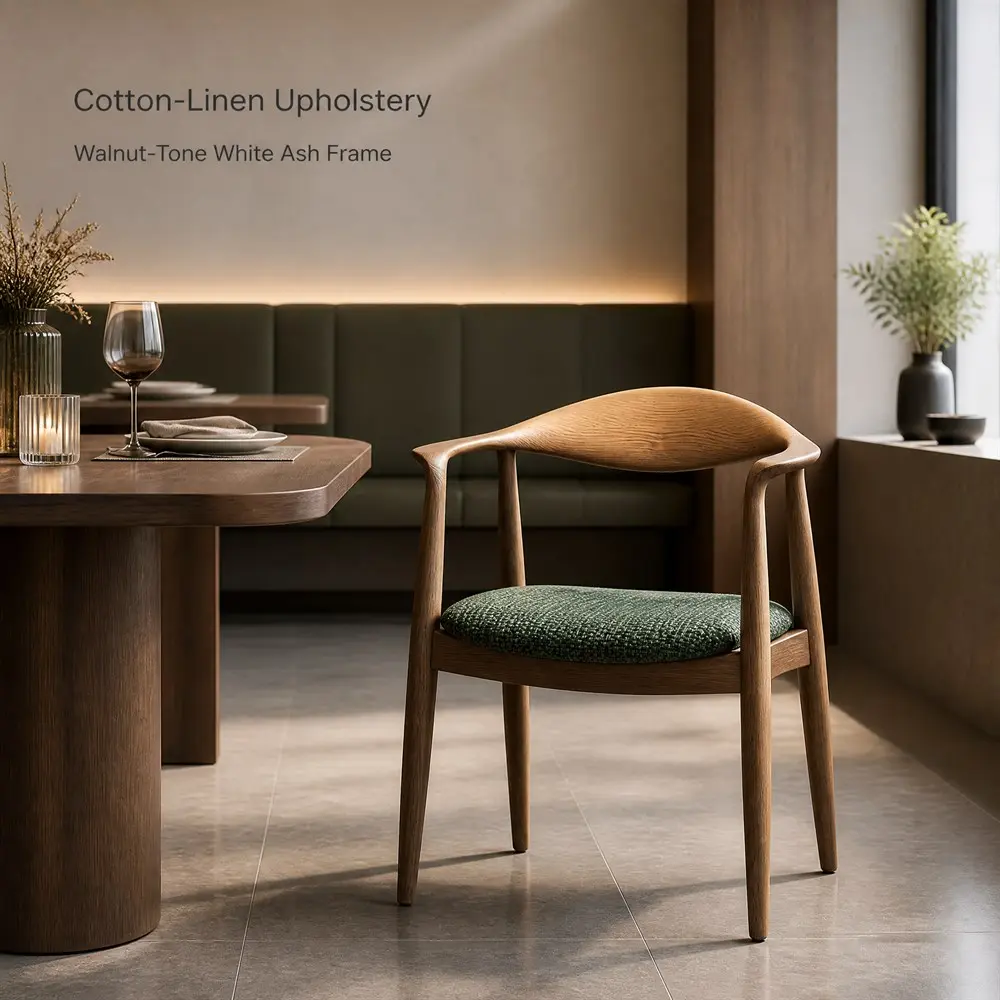
Fabric is evaluated on Martindale abrasion cycles, pilling resistance and colourfastness. Commercial-grade contract fabrics are specified for hospitality projects, while cashmere-touch and cotton-linen grades serve residential retail. Removable, washable covers — a hallmark of the QYM B2202-B and M1066 — reduce after-sales friction in rental and family markets.
In-Line Quality Audits
QC engineers audit production lines for structural durability and finish consistency before packing. For recliner programmes this includes cycle testing of the mechanism, controller function verification and electrical safety checks on the actuator wiring harness.
Export Packaging Engineering
Motion sofas ship with the mechanism pre-installed or partially disassembled depending on carton limits. Multi-layer export crating, foam corner protection and moisture barriers prevent transit damage — a variable that can swing landed cost by several percentage points per container.
The China Factory Advantage
Why the Foshan Cluster Still Outperforms on Cost, Speed and Depth
Foshan’s Shunde district — where Qingyumai operates from Hui Cheng Industrial Park, Longjiang Town — is not simply a low-cost labour pool. It is an industrial ecosystem: foam suppliers, fabric mills, hardware foundries, mechanism assemblers, testing labs and freight consolidators sit within a few kilometres of each other. That density produces three concrete procurement advantages.
01
Compressed Sampling Cycles
Because fabric, foam and hardware are locally available, a custom recliner sample can move from brief to physical prototype in a fraction of the time required in markets where components are imported. Faster sampling means faster buyer sign-off and faster container release.
02
Component-Level Cost Transparency
Buyers can negotiate on mechanism grade, foam density and fabric tier independently rather than accepting a bundled retail price. This value-engineering approach lets a distributor hit a specific retail price point without degrading the structural specification.
03
Aggregate Manufacturing Capacity
Qingyumai runs its own production facility and extends capacity through strategic alliances with audited specialist factories. For whole-house or project orders, this means sofas, beds, mattresses, dining and outdoor furniture can ship under one purchase order, one QC standard and one shipping plan.
Global Procurement Demand
What International Buyers Actually Ask For — Region by Region
Search-intent mining across B2B furniture queries reveals that buyers in different markets articulate the same underlying need with very different vocabulary. Understanding those regional intent clusters is how manufacturers and importers avoid costly specification mismatches.
North America
Demand centres on oversized sectional recliners with lay-flat mechanisms, USB-A/USB-C charging and stain-resistant performance fabric. Buyers prioritise 110V compliance, California flammability documentation and drop-test packaging for LTL freight.
European Union
Specification is driven by space efficiency — compact two-seat power recliners for apartments — plus REACH-compliant textiles, recyclable packaging and documentation for extended producer responsibility. Nordic buyers favour light-luxury palettes; southern markets prefer warmer neutrals.
Middle East & Gulf
Hospitality and villa projects dominate. Buyers request high-density contract foam, heat-tolerant upholstery, 220–240V motors and generous majlis-style modular layouts. Project timelines are short, so factory scheduling flexibility is a decisive qualification criterion.
Australia & NZ
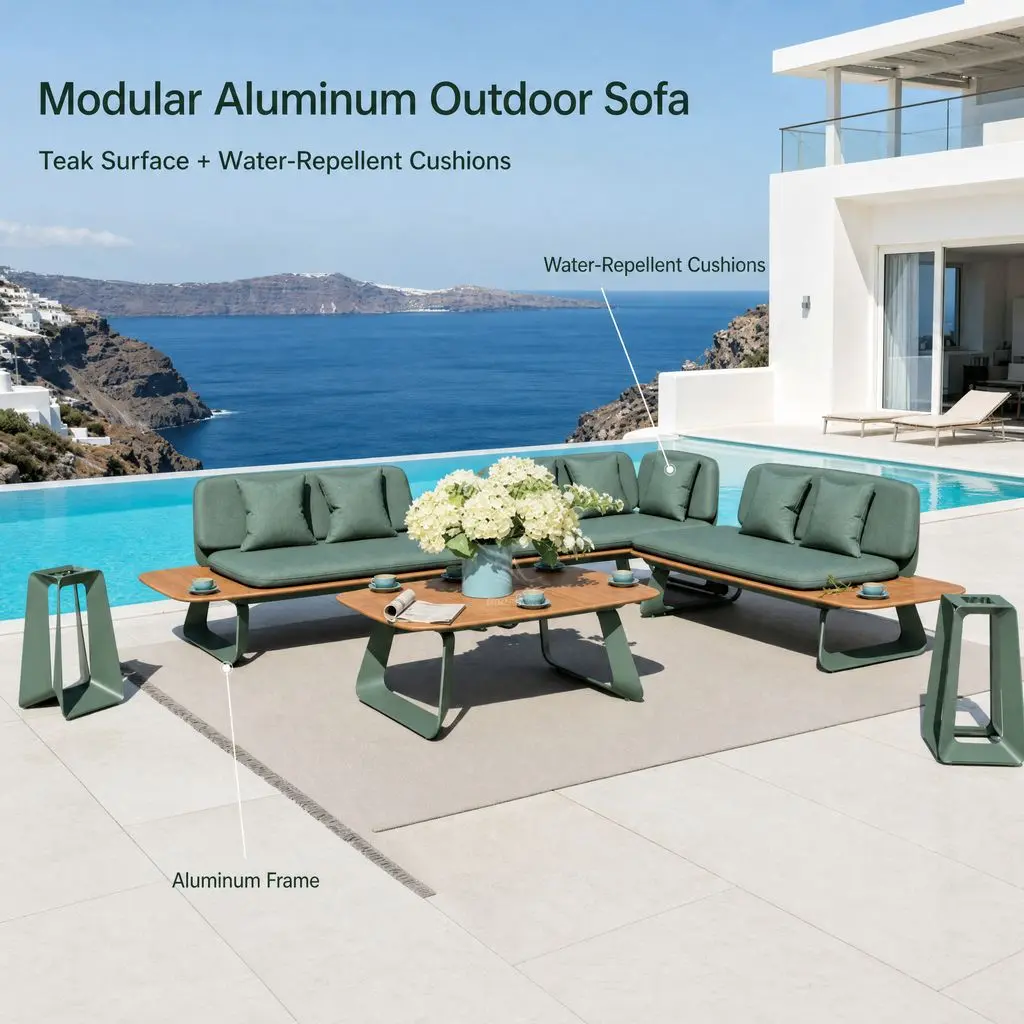
Strong coastal and outdoor-living culture drives demand for recliners with fade-resistant covers and corrosion-protected hardware. Buyers value 240V certification, quarantine-compliant timber treatment documentation and reliable sea-freight consolidation.
Localisation Support & Compliance Assurance
The Variables That Decide Whether Your Container Clears Customs and Delights End Users
This is where many low-cost suppliers quietly fail. A recliner that works perfectly in a Foshan showroom can become a returns liability in Frankfurt or Dubai if voltage, textile chemistry or documentation is wrong. Qingyumai structures pre-sale consulting around destination-market requirements rather than around a generic catalogue.
Electrical & Voltage Configuration
Motors, controllers and charging modules are configured to the destination grid — 110V/60Hz, 220–240V/50Hz or 240V/50Hz — with plug types matched to the market. This is specified at order stage, not retrofitted after arrival.
Textile & Chemical Compliance
Fabric selections are aligned to the regulatory frameworks of the destination market, including flammability standards, restricted-substance requirements and labelling obligations. Pre-sale consultants recommend material configurations matched to those standards.
Export Documentation & Origin
Commercial invoices, packing lists, certificates of origin and fumigation or heat-treatment certificates for timber components are prepared per shipment, reducing the risk of port delays and demurrage charges.
Assembly & Installation Guidance
Clear, illustrated assembly and installation guides accompany crated shipments, with QR-linked digital manuals so installers in the destination market can complete fit-out without language barriers.
Spare Parts & After-Sales Availability
Long-term after-sales support includes access to replacement actuators, controllers and hardware. Motion products live or die on service continuity, so spare-part availability is planned at the programme level rather than per order.
Private Label & Branding Compliance
Custom woven labels, embossed logos and branded packaging are produced to your market’s labelling rules, so private-label ranges reach retail floors without compliance rework.
Localised Application Scenarios
Where Power Reclining Sofas Actually Get Specified
Understanding the end-use scenario changes the specification. A recliner for a family living room has different requirements from one in a serviced apartment, a hotel suite or a senior-living facility. Below are the four scenarios that most frequently drive purchase orders.
Residential Living Rooms
Family households prioritise washable covers, child-safe low-voltage actuators, USB charging and generous lay-flat recline. Modular configurations allow sectionals to be reconfigured as households move.
Hotel Suites & Serviced Apartments
Contract seating must survive daily use with minimal maintenance. Higher-density foam, commercial-grade fabric and cycle-tested mechanisms are specified, alongside discreet controllers and easy-clean surfaces.
Senior Living & Wellness
Assisted-mobility markets specify easy-exit recline angles, sturdy armrests for leverage, low-noise mechanisms and controllers reachable from a seated position. Safety and accessibility outweigh aesthetics in this segment.
Hospitality Lounges & Clinics
Salon waiting areas, cinema lounges and clinic reception spaces use recliners as a differentiator. Coordinated whole-house programmes let procurement teams match these seats to dining, bedroom and outdoor furniture in one shipment.
Industry Trends 2026 & Beyond
Five Forces Reshaping the Power Recliner Category
Smart Integration
USB-C fast charging, wireless charging pads, app-based preset positions and voice-assistant compatibility are moving from novelty to expected feature. Factories that can integrate electronics without compromising upholstery integrity will win specification.
Sustainability Documentation
Buyers increasingly request recycled foam content, low-VOC adhesives, FSC-linked timber sourcing and recyclable packaging. Sustainability claims must be backed by evidence — vague eco-marketing is being filtered out of professional tenders.
Modularity as Standard
Sectional modularity has become the default living-room format because it lowers freight cube per seat, simplifies replacement of individual modules and adapts to apartment floor plans. Power recliners are being built into modular systems rather than as fixed three-seat units.
Battery-Powered Recline
Cordless, rechargeable actuator packs eliminate the need for floor-level power outlets, dramatically expanding placement options in rentals and hotel rooms. This is one of the fastest-growing specification requests.
Performance Fabric Dominance
Stain-resistant, pet-friendly, low-pilling performance textiles are displacing conventional fabrics in mid-market and contract grades, reducing warranty exposure for importers and retailers alike.
Consolidated Sourcing
Importers are collapsing vendor lists, preferring a single manufacturer that can ship living room, bedroom, dining and outdoor categories together. This aggregate-manufacturing model reduces freight complexity and harmonises finishes across rooms.
Experience, Expertise, Authority, Trust
Why Qingyumai Qualifies as a Long-Term Recliner Programme Partner
Qingyumai is the export brand of Foshan Qingyumai Technology Co., Ltd. — an integrated manufacturer covering R&D, production and international sales with its own facility in Shunde, Foshan. For more than 10 years the company has supplied importers, wholesalers, property developers, interior design firms, salons and hospitality procurement teams worldwide, building a portfolio of more than 100 original design and structure patents across 19 furniture categories.
Experience
A decade of export documentation, container consolidation and cross-market specification experience across North America, Europe, the Gulf and Oceania.
Expertise
In-house design, engineering and QC teams with patented structures and a documented pre-sale, production and post-sale service matrix.
Authority
Aggregate manufacturing capacity spanning 19 categories, with a network of rigorously audited partner factories coordinated under one quality standard.
Trust
Transparent factory location in Longjiang, Shunde, open showroom visits for buyers, and post-sale support covering container planning and crating standards.
Buyer Q&A
Frequently Asked Questions on Power Reclining Sofa Sourcing
Is Qingyumai a power reclining sofa manufacturer or a trading company?
Qingyumai is the export brand of Foshan Qingyumai Technology Co., Ltd., an integrated manufacturer covering R&D, production and international sales with its own production facility in Shunde, Foshan. For whole-house and motion-seating orders we also coordinate a network of audited partner factories so every category ships under one quality standard and one purchase order.
Can you supply power recliner mechanisms to my voltage standard?
Yes. Motors and controllers are configured to the destination grid — 110V/60Hz for North America, 220–240V/50Hz for Europe, the Gulf and Australia — with plug types matched to the market. Voltage is confirmed at order stage during the project brief, not retrofitted after arrival.
Do you accept OEM and ODM orders for reclining sofas?
Yes. We customise dimensions, upholstery and frame colours, fabric grades such as cashmere-touch, cotton-linen, cool-touch and commercial-grade contract fabrics, and branding including woven labels, embossed logos and branded packaging for wholesale and project orders.
Can I combine recliners with beds, mattresses and dining furniture in one container?
Yes. Our post-sale team handles container consolidation across categories, planning loading space to reduce ocean freight cost per unit while using multi-layer export crating to prevent transit damage. Because motion products occupy significant cube, mixed-category loading is planned carefully at the quotation stage.
What is the typical minimum order quantity for a recliner programme?
MOQ depends on the model, mechanism grade and fabric selection. Standard catalogue models allow smaller trial orders, while fully customised OEM programmes with bespoke fabric and controller configurations require larger volumes. The export team confirms MOQ against your specific configuration during quotation.
How do you control quality during mass production?
Our internal QC engineers carry out on-site production line audits that check structural durability and finish consistency. For recliner programmes this includes mechanism cycle testing, controller function verification and electrical safety checks on the actuator wiring harness, and pre-sale consultants recommend material configurations aligned with the regulatory standards of your destination market.
Are spare parts and after-sales support available long term?
Yes. Motion products depend on service continuity, so spare actuators, controllers and hardware availability is planned at the programme level rather than per order. Long-term after-sales and maintenance support is part of the service matrix for project and wholesale partners.
Where is your factory located and can buyers visit?
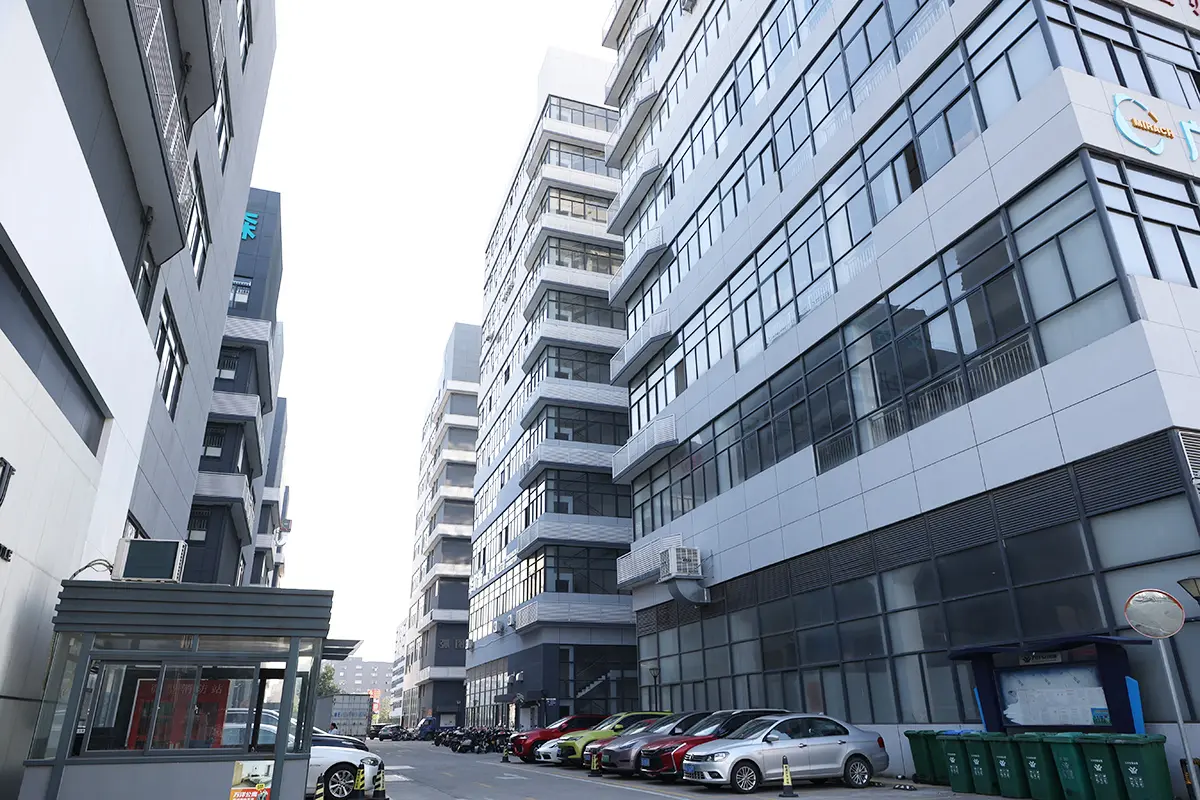
We are located at Hui Cheng Industrial Park, No. 22 Industrial Avenue, Laisha Community, Longjiang Town, Shunde District, Foshan, Guangdong, China — one of the world’s best-known furniture manufacturing hubs. Buyers are welcome to arrange factory and showroom visits as part of supplier qualification.
Complementary Categories — One Container, One Standard
Coordinate Motion Seating with Dining, Bedroom and Outdoor Collections
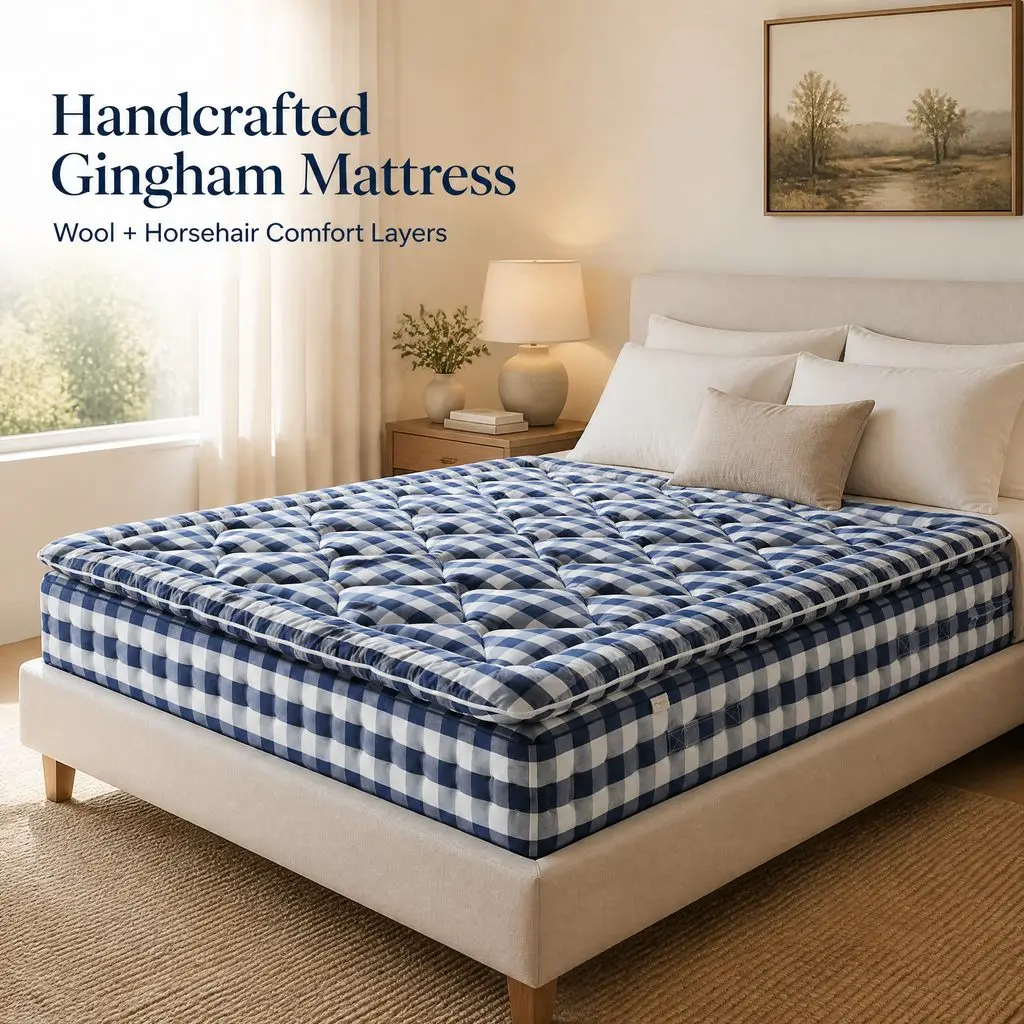
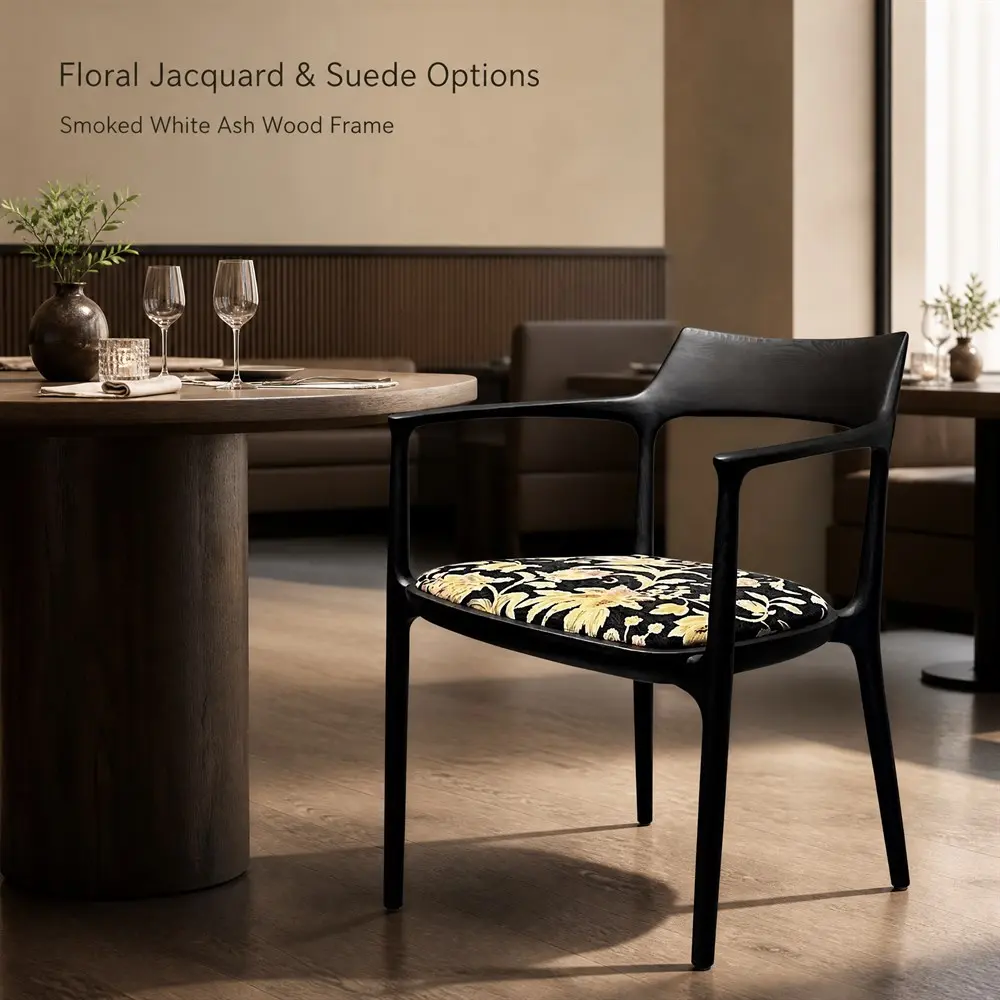
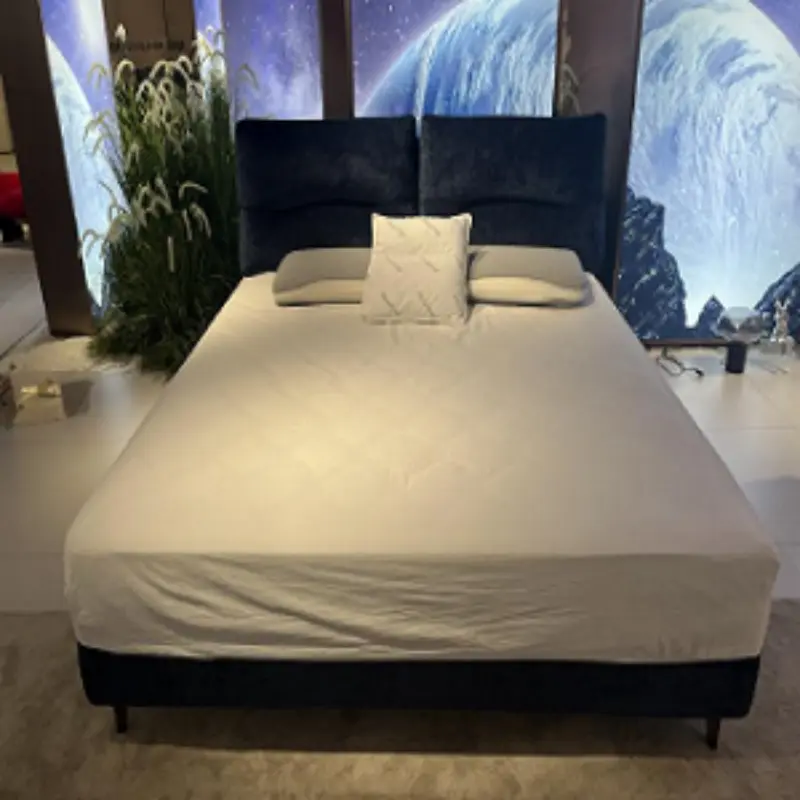
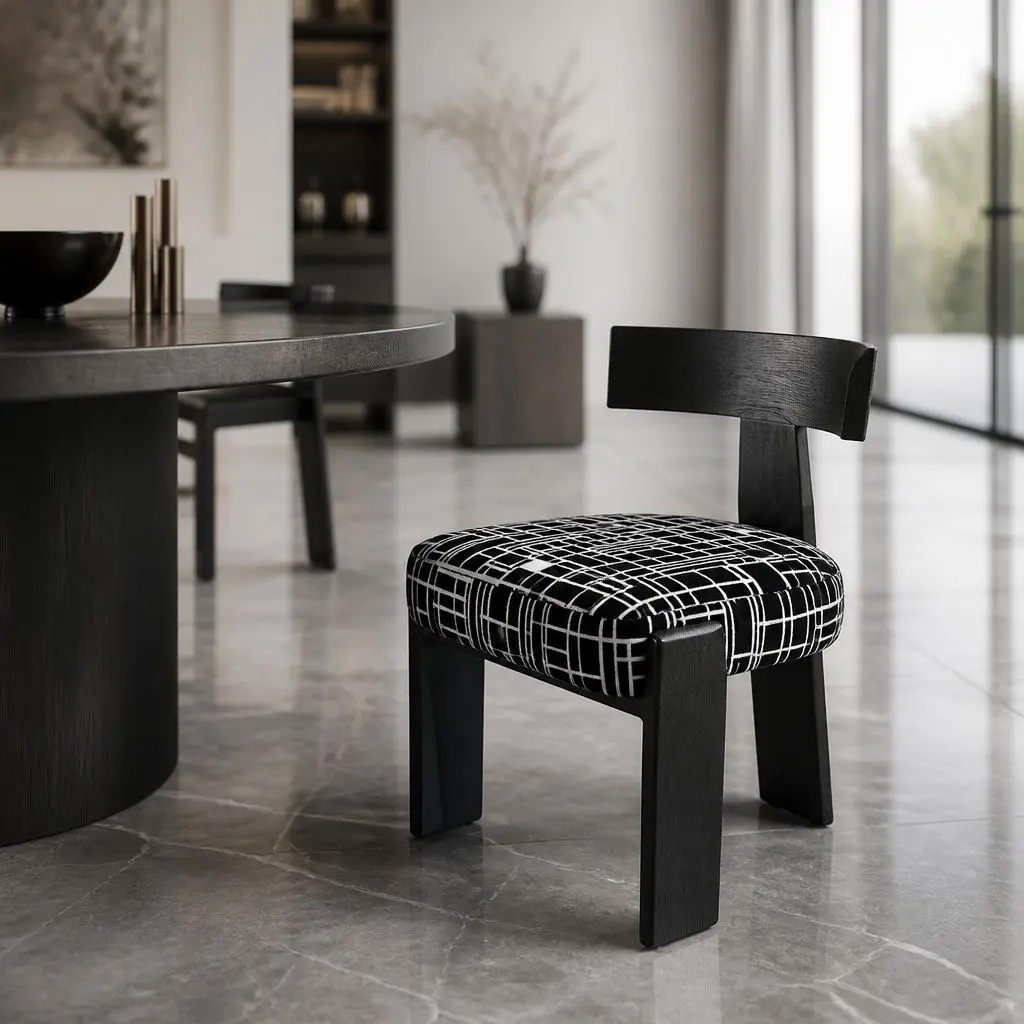
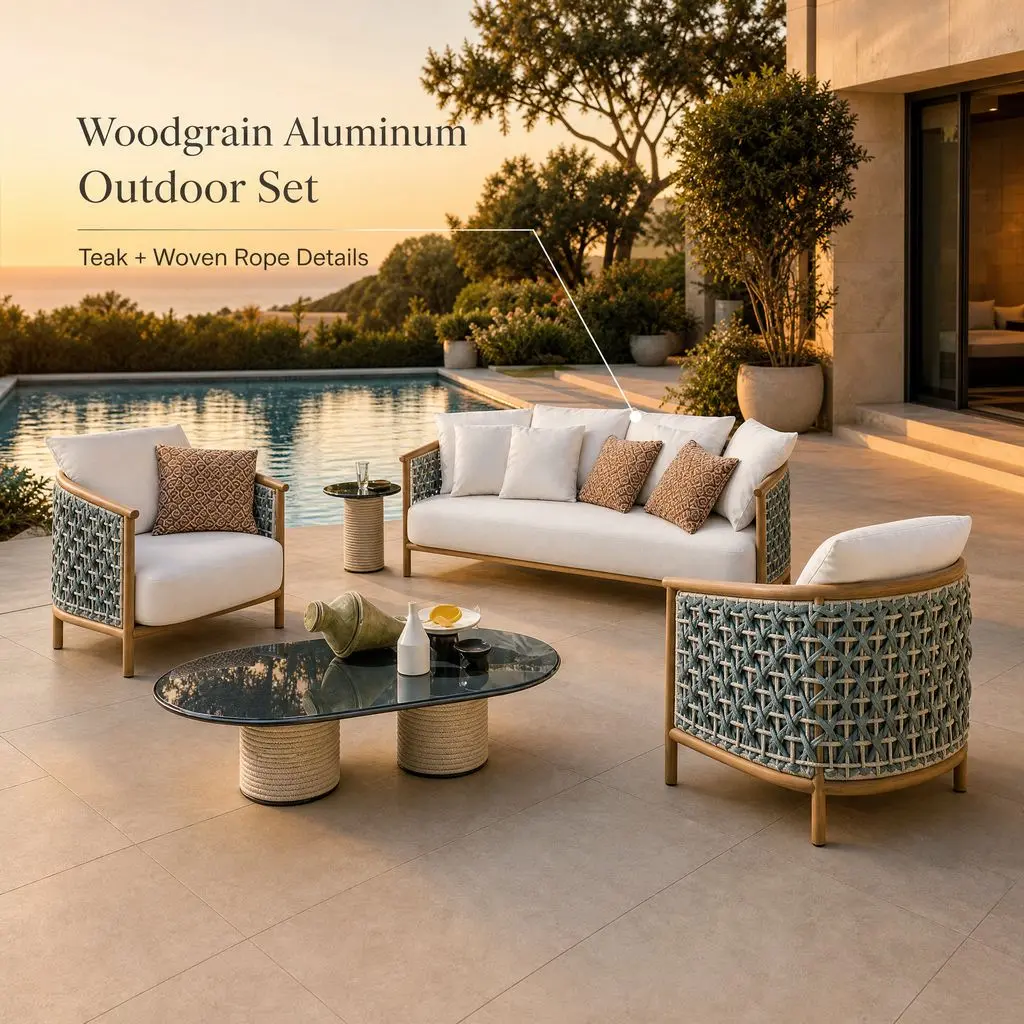
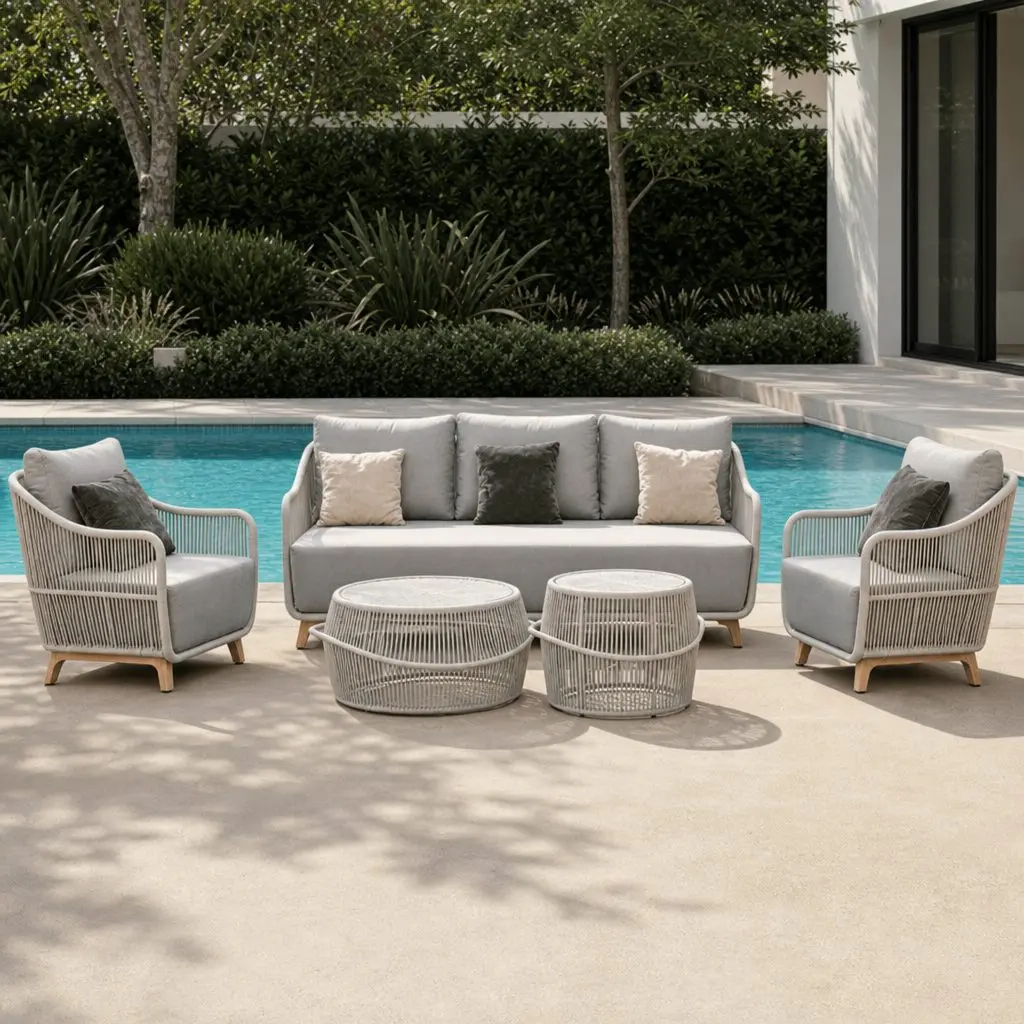
Aggregate manufacturing lets importers and project buyers align finishes, materials and packaging across rooms. The models below are commonly consolidated alongside recliner programmes to reduce freight cost per unit.
Need a Wholesale or Custom Power Reclining Sofa Programme?
Request the latest collections, mechanism specifications, material grades and the customisation guide. Our export team will help you plan configurations, compliance requirements and container loading for your market.