
A small bedroom can feel crowded before the day even begins. Spare blankets spill from a closet, shoes gather beside the bed, and a dresser blocks the easiest path across the room. A Storage Bed Frame can turn otherwise unused space into practical storage, but the right choice depends on more than capacity. Bed size, opening style, floor clearance, and access to everyday items all affect how well a frame works in a compact room.
This guide to the 10 Best Storage Bed Frames for Small Bedrooms compares useful options for different layouts and needs. It considers drawer and lift-up designs, construction materials, mattress support, assembly requirements, and the details manufacturers provide about dimensions. Measurements matter. Check the bed’s full footprint, including drawers when open, and leave enough room to move comfortably. A lift-up base may offer generous hidden storage, yet it can be inconvenient if you regularly reach for items underneath. Drawers are easier to access, though a narrow room may not have space for them to slide out fully.
There is no perfect frame. The best fit balances accessible storage with a comfortable, stable bed and a layout you can live with. Product specifications can also leave practical questions unanswered, so verify measurements and care instructions before buying. Use these recommendations as a starting point, then match the frame to your room, belongings, and budget.
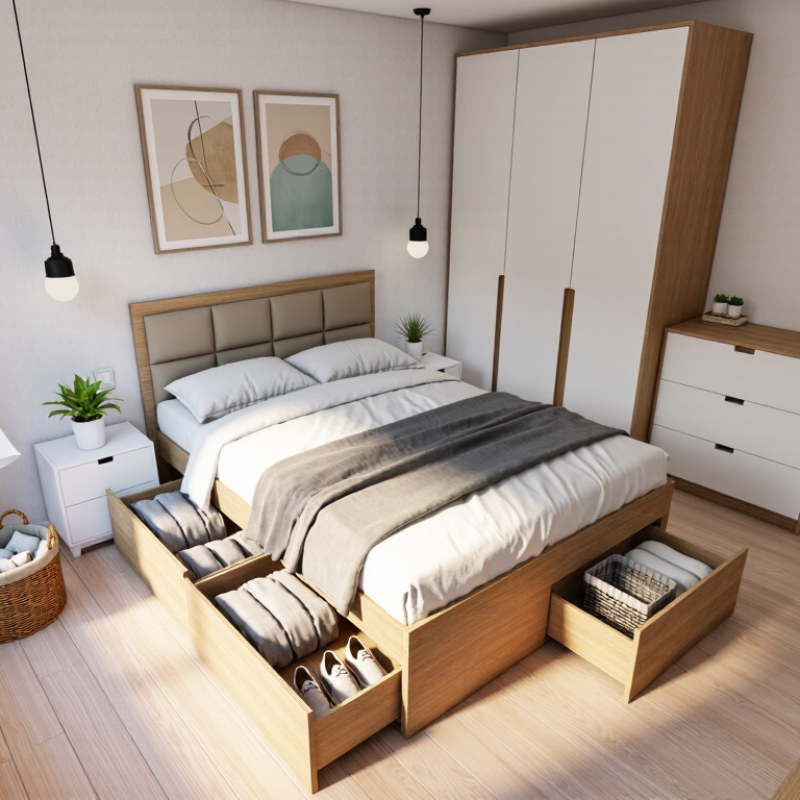
A storage bed frame combines a mattress platform with built-in space beneath or around it. Common designs use pull-out drawers, lift-up platforms, or open compartments. Each turns the bed’s footprint into storage, without adding another cabinet to the room. A lift-up base can hide suitcases and spare blankets; side drawers keep folded clothes close at hand. The U.S. Census Bureau’s 2023 American Community Survey estimates an average household size of about 2.5 people. That figure does not measure bedroom size, but it helps explain why flexible storage can matter in shared homes.
The best mechanism depends on the room. Drawers need clear floor space to open, so they may clash with a narrow walkway or bedside table. Lift-up frames avoid that side clearance, but require room to raise the mattress and enough strength to handle it safely. Check the frame’s storage dimensions, mattress compatibility, and access before buying. Measure twice. Also consider what you will store: shallow drawers suit everyday clothing, while deeper compartments work better for bulky bedding. These beds can make a small room feel tidier, though they do not create more floor area. That distinction is easy to overlook.
Storage beds generally fall into three types: drawer, lift-up, and headboard or platform storage. Drawer models offer quick access for folded clothes, but side drawers need clearance. Measure the space beside the bed, including room for a drawer to open. Lift-up frames raise the mattress to reveal a large compartment, useful for spare bedding or suitcases. They can be awkward to open when the bed is tucked tightly against a wall. Headboard shelves and platform cubbies keep books, chargers, and slippers close, though they hold less.
Room size makes these trade-offs matter. The National Association of Home Builders’ 2024 What Home Buyers Really Want report found that buyers wanted a median 2,067 square feet, down from 2,260 square feet in 2003. That figure covers whole homes, not bedrooms, but it reflects interest in using space efficiently. In a narrow room, drawers may block a wardrobe; a lift-up base avoids that side clearance, but needs strength to raise safely. Check the frame’s load rating and the clearance beneath it before buying. The fit is easy to misjudge. I would not choose a lift-up design just for its capacity if reaching the compartment would become a daily nuisance.
| Storage Bed Type | How It Stores Items | Best for Small Bedrooms | Space to Check | Main Consideration |
|---|---|---|---|---|
| Lift-up storage bed | The mattress platform lifts to reveal a compartment beneath the mattress. | Rooms where drawers would be blocked by narrow walkways or nearby furniture. | Allow room to raise the platform and access the bed comfortably. | The mattress must be lifted to reach stored items; check the lifting mechanism and weight guidance. |
| Ottoman-style storage bed | A hinged, lift-up base provides access to a large under-mattress storage area. | Storing bulky bedding, seasonal clothing, or other items used less often. | Check the space above the bed and the direction in which the base opens. | Items are less convenient to reach than in drawers; avoid storing damp or unclean items. |
| Drawer storage bed | Pull-out drawers are built into one or both sides of the frame. | Keeping clothes, linens, and everyday belongings easy to access. | Measure the drawer extension area and leave a clear path for opening drawers. | Drawers may not open fully when the bed is close to a wall or another piece of furniture. |
| Captain’s bed | A raised frame combines under-bed drawers or cabinets with a solid bed base. | Replacing some bedroom storage furniture with storage built into the bed. | Check the overall frame height and access space on the storage side. | Its raised, substantial frame can feel visually large in a very compact room. |
| Bed with under-bed bins | A raised frame leaves space for separate baskets, boxes, or rolling containers underneath. | A flexible setup that can be adjusted or removed without built-in drawers. | Measure the clearance beneath the frame and the width of the access route. | Storage is visible unless bins are covered, and low clearance can limit container choices. |
| Bed with bookcase headboard | Shelves or small compartments in the headboard hold books and bedside essentials. | Reducing the need for separate bedside tables or wall shelves. | Check the headboard depth and the space required for nearby doors or windows. | Headboards can add length or depth to the bed and may make the wall feel crowded. |
| Platform bed with side shelves | Open shelves built into the frame provide accessible storage beside the mattress. | Keeping frequently used items close without adding a separate bedside unit. | Confirm which side has shelves and whether that side will remain accessible. | Open shelves collect dust and can look cluttered if overfilled. |
| Corner-drawer storage bed | Drawers are arranged to open from selected sides or corners of the bed. | Rooms where one side of the bed is against a wall and standard side drawers would be inaccessible. | Check the drawer locations against the room layout before choosing a frame. | The storage may be limited to specific sides, so placement options can be less flexible. |
| Trundle bed with storage | A lower pull-out platform or drawer fits beneath the main bed; some designs provide sleeping space rather than storage. | Guest rooms or multipurpose rooms where an extra sleeping surface may also be useful. | Leave enough floor space to pull the lower unit out fully. | Confirm whether the lower section is intended for storage, sleeping, or both. |
| Bed with integrated shelving or cabinets | Storage units are attached at the head, foot, or side of the bed. | Combining several storage functions in one piece of bedroom furniture. | Measure the full assembled footprint, including attached cabinets and shelf depth. | Integrated units are less easy to rearrange and may occupy more floor space than expected. |
Tip: Measure the assembled bed, walking paths, and any drawer or lift clearance before choosing a storage bed frame.
A storage bed should be compared by usable space, not by drawer count alone. Measure the room, mattress, and walking route with the closet and bedroom door open. The U.S. Census Bureau’s 2023 Characteristics of New Housing report gives a median floor area of 2,286 square feet for new single-family homes, but that whole-house figure says little about one cramped bedroom. Check the frame’s outside dimensions against your actual floor plan.
Mattress size sets the first limit. Sleep Foundation lists standard full mattresses at 54 by 75 inches and queens at 60 by 80 inches. A queen frame may leave less room for drawers to open. Measure that clearance. Also compare the listed storage volume, drawer depth, and whether the base has a central support. “Large capacity” can be a slippery phrase; manufacturers may measure empty compartments differently. I still misjudge this.
Material affects weight, maintenance, and feel. Solid wood can be sturdy, while engineered panels may reduce cost and weight; inspect edges and joints for clean finishing. Steel supports are worth checking for secure attachment and a stated load rating. For lift-up designs, test whether the mattress opens smoothly and stays raised. One caveat: showroom floors rarely reproduce your rug, wall clearance, or daily clutter, so measurements can still surprise you.
The best storage bed frames for small bedrooms use space that would otherwise sit empty. A lift-up platform can hold spare bedding, seasonal clothes, or a suitcase beneath the mattress. It suits rooms with little floor space beside the bed. Check the mattress weight limit and leave enough clearance to raise the frame. Not every ceiling feels high once the mattress is lifted.
Drawer-style frames offer quicker access to everyday items. Measure the drawer extension, not just the frame footprint; a drawer may collide with a nightstand or wardrobe door. In a narrow room, drawers on one side can be more practical than drawers on both. A frame with open cubbies is easier to reach, though dust gathers quickly. Small trade-off.
Look for a sturdy slat system, clear assembly instructions, and storage compartments that fit what you actually own. Deep compartments sound useful, but buried items can become forgotten clutter. Before buying, measure the doorway, stairwell, and bed area, then compare those figures with the frame’s assembled dimensions. Leave room to walk past it. A few centimeters matter near a wall, and a storage bed can feel bulky even when it solves a real problem.
A storage bed can free valuable floor space, but the right frame depends on how you use the room. Measure the mattress area and the full frame, including handles and drawer fronts. Leave enough clearance for drawers to open without hitting a wardrobe or bedside table. Measure twice. A narrow room may suit a lift-up base, while side drawers work better when one side remains accessible.
Tips: Check the storage opening before buying. Drawer frames need clear floor space; lift-up frames need room above the mattress and a lifting mechanism you can manage comfortably. Note the frame’s weight limit, too. Bedding, books, and seasonal clothes add up quickly.
Think about what you will store. Deep drawers are handy for bulky linens, while divided compartments can keep smaller items from shifting. If you plan to store rarely used belongings, a lift-up frame may offer a larger, less accessible space. Check whether the base has ventilation and whether assembly requires two people. A tall frame can make a small bedroom feel crowded, even when it adds storage. There’s no perfect option; sometimes a simpler frame leaves the room easier to move through.
Drawer beds offer quick access to folded clothes. Lift-up beds hide larger items beneath the mattress. Headboard shelves and platform cubbies keep small essentials nearby.
A lift-up frame avoids side-drawer clearance, but needs room to open safely. Measure wall and ceiling clearance. It can still feel awkward.
Measure how far each drawer extends, then check nearby wardrobes and nightstands. Open the bedroom door during your test. Small gaps matter.
Measure the room, mattress, walking route, doorway, and stairwell. Compare them with the frame’s assembled dimensions. Measure twice, if needed.
Check the frame’s stated load rating and test whether the mattress opens smoothly and stays raised. A heavy mattress may be difficult to lift.
Solid wood can feel sturdy, while engineered panels may weigh less and cost less. Inspect joints, edges, and steel supports. Details count.
They keep books, chargers, and slippers within easy reach. However, dust gathers quickly, and cubbies hold less than hidden compartments.
Not necessarily. Deep spaces can bury spare bedding or seasonal clothes, turning useful storage into forgotten clutter. I might misjudge that, too.
A Storage Bed Frame helps make better use of limited bedroom space by combining a place to sleep with practical storage underneath or within the frame. Common designs include beds with drawers, lift-up platforms, and open compartments, each offering different levels of access and capacity. The best option depends on how much you need to store, how often you need to reach it, and how much floor space is available around the bed.
When comparing frames, consider the mattress size, overall dimensions, storage layout, materials, and ease of assembly. A compact room may benefit from a lift-up design or a frame with drawers that can open without blocking walkways. The ten options in this guide illustrate a range of styles and storage solutions for small bedrooms. By matching a frame’s capacity and construction to your room layout and everyday needs, you can choose a comfortable bed that keeps belongings organized without making the space feel crowded.
