
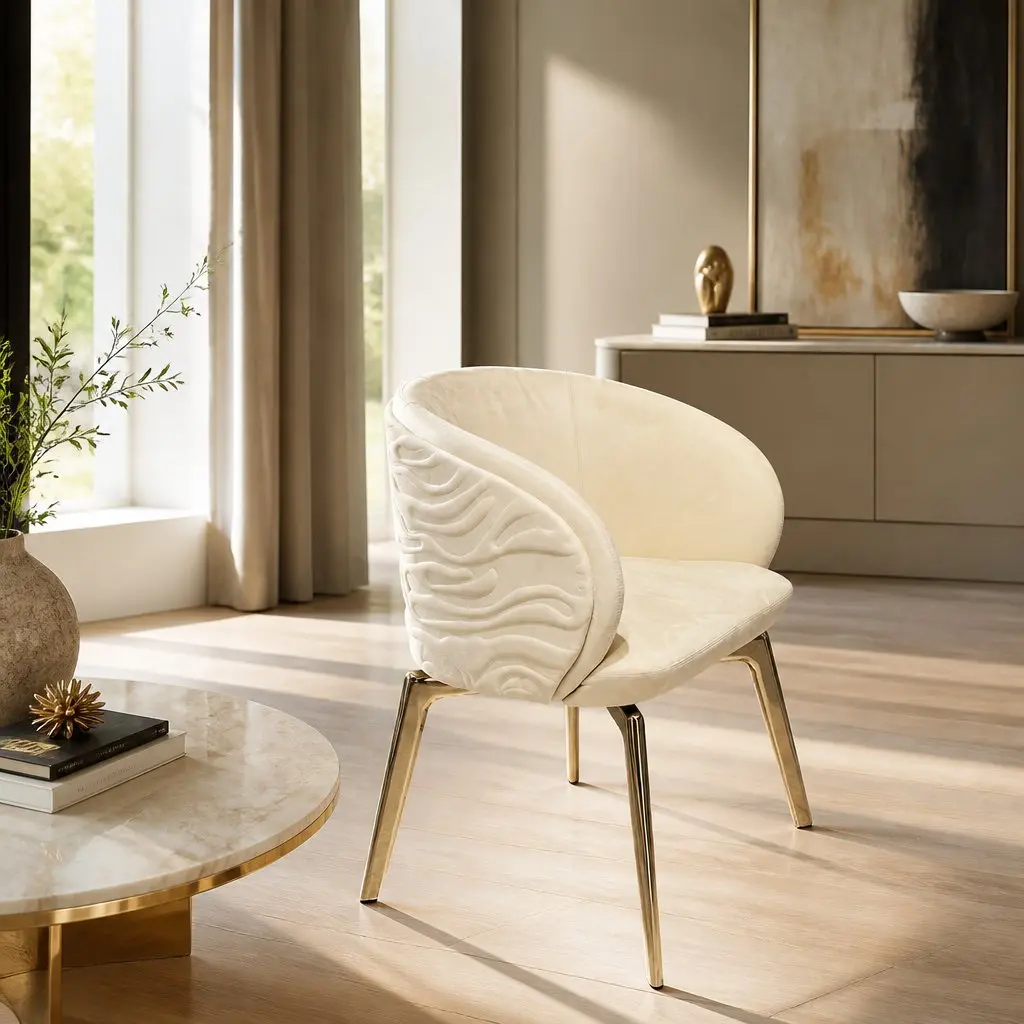
Wholesale QYM Italian Minimalist Velvet Dining Chair, 180° Swivel Upholstered Armchair with Embroidered Backrest & Stainless Steel Legs Factory, Wholesaler
View ProductA procurement-grade guide to Italian minimalist dining chairs, upholstered armchairs and accent seating — engineered in Shunde, Foshan, and shipped to importers, hotel groups and design studios worldwide.
Wholesale QYM Italian Minimalist Velvet Dining Chair, 180° Swivel Upholstered Armchair with Embroidered Backrest & Stainless Steel Legs Factory, Wholesaler
View Product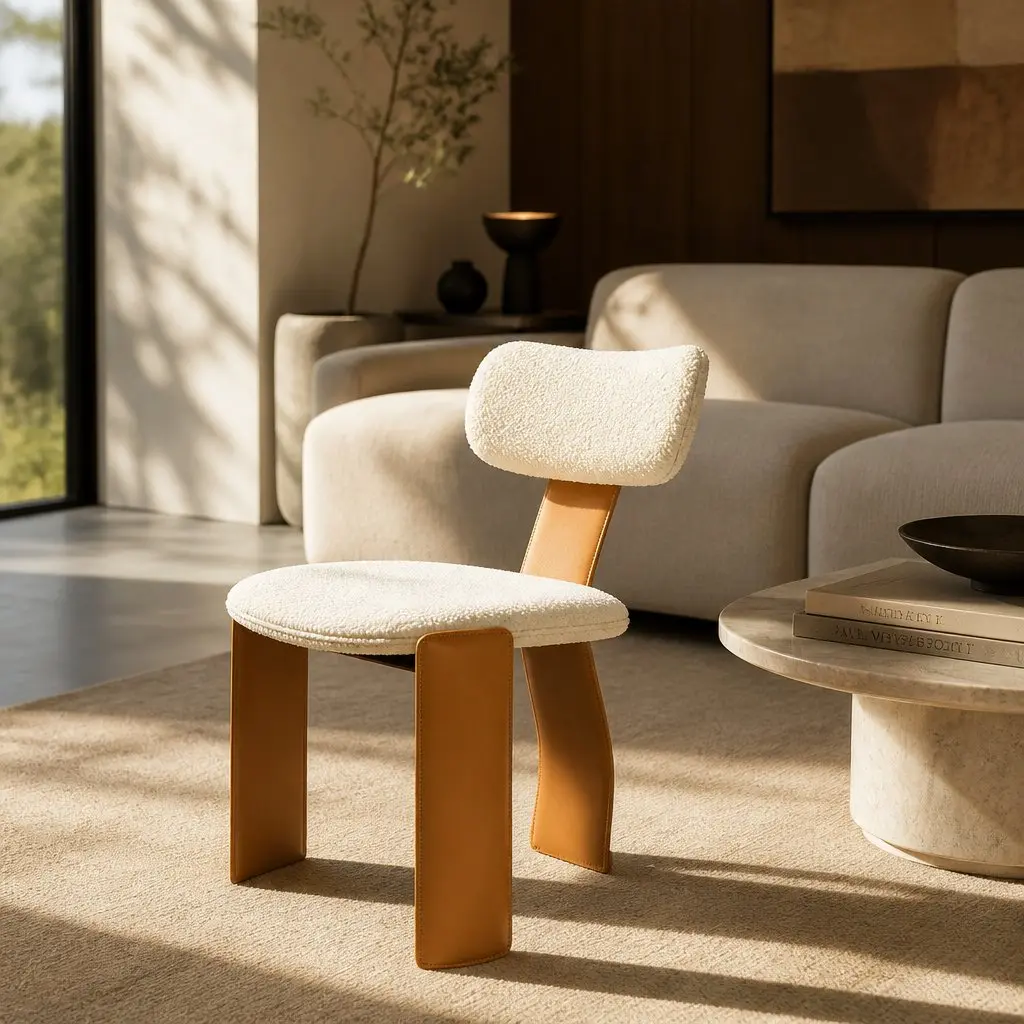
China White Bouclé Dining Chair, Italian Minimalist Accent Chair with Solid Wood & Stainless Steel Frame Suppliers, Factory
View Product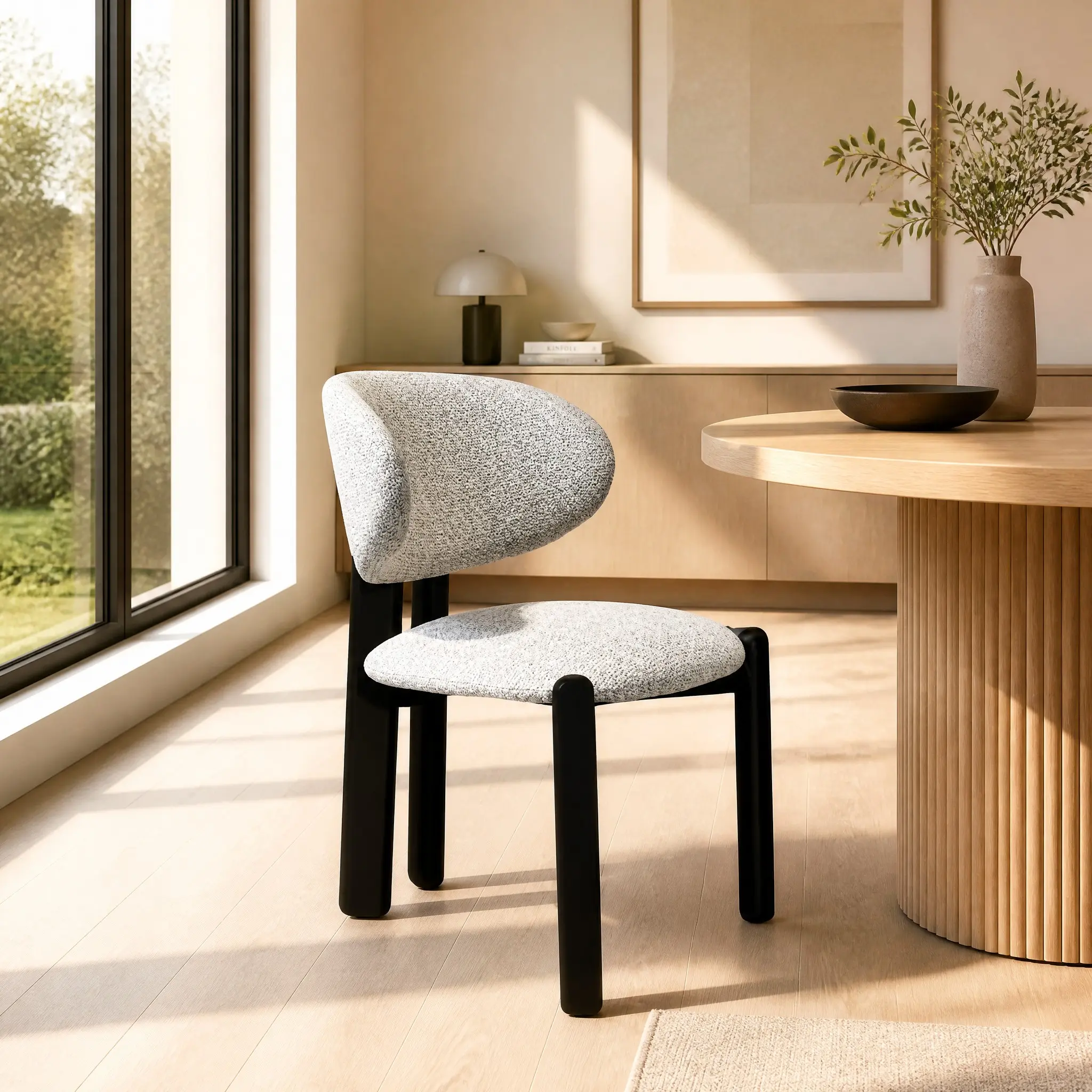
Latest design QYM Italian Minimalist Dining Chair, Coffee Microfiber Leather Upholstered Side Chair with Smoked Ash Wood Legs Manufacturer, Suppliers
View Product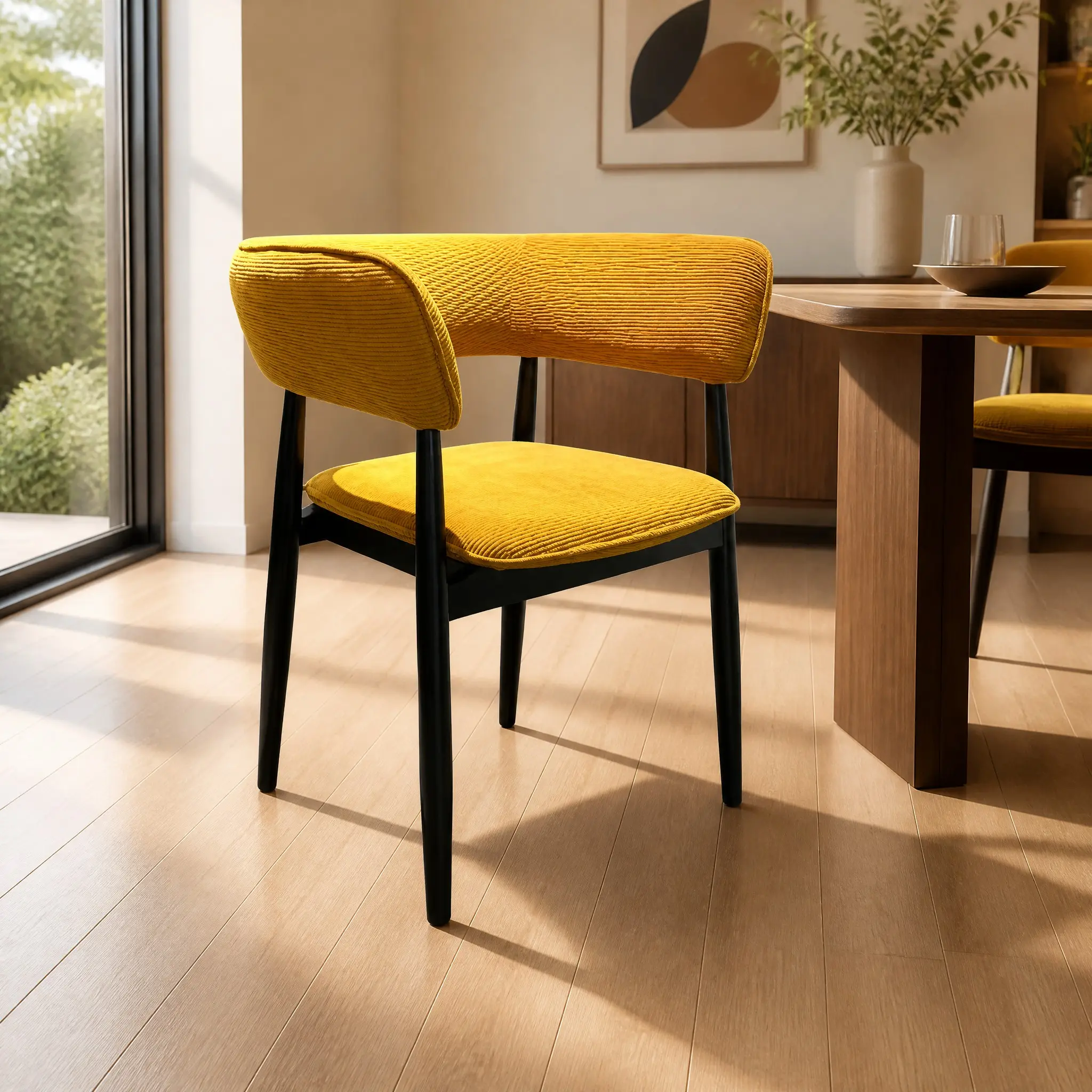
Wholesale QYM Modern Minimalist Yellow Fabric Dining Chair, Curved Backrest Upholstered Armchair with Matte Smoked Ash Wood Legs, Ergonomic Accent Chair for Home Dining Room Cafe Hotel Manufacturers, Wholesaler
View Product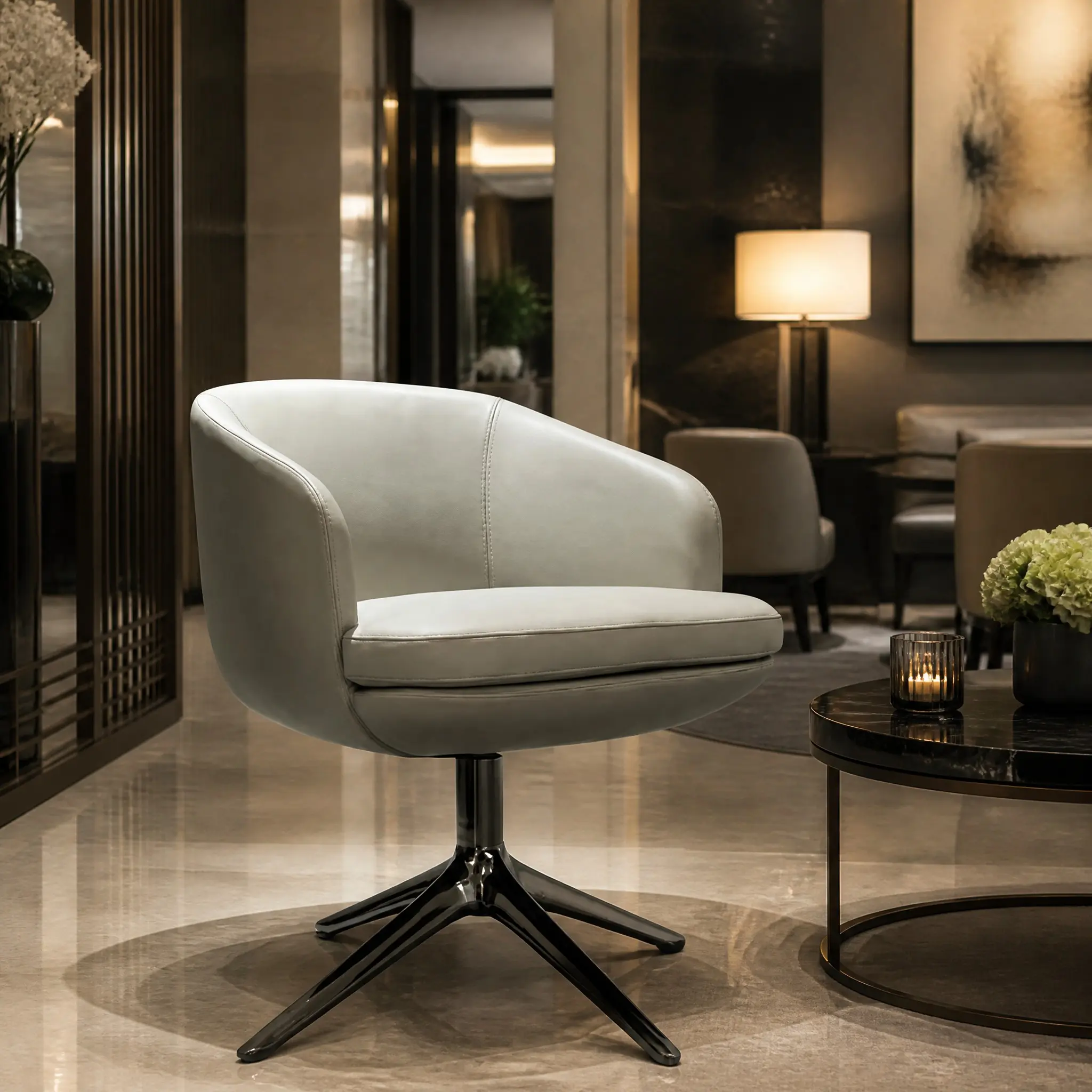
Wholesale QYM Modern Minimalist Cotton & Linen Dining Chair, Solid Wood Armrests with Smoked Ash Wood Frame, Ergonomic Upholstered Accent Chair for Dining Room Hotel Cafe Factory, Wholesaler
View Product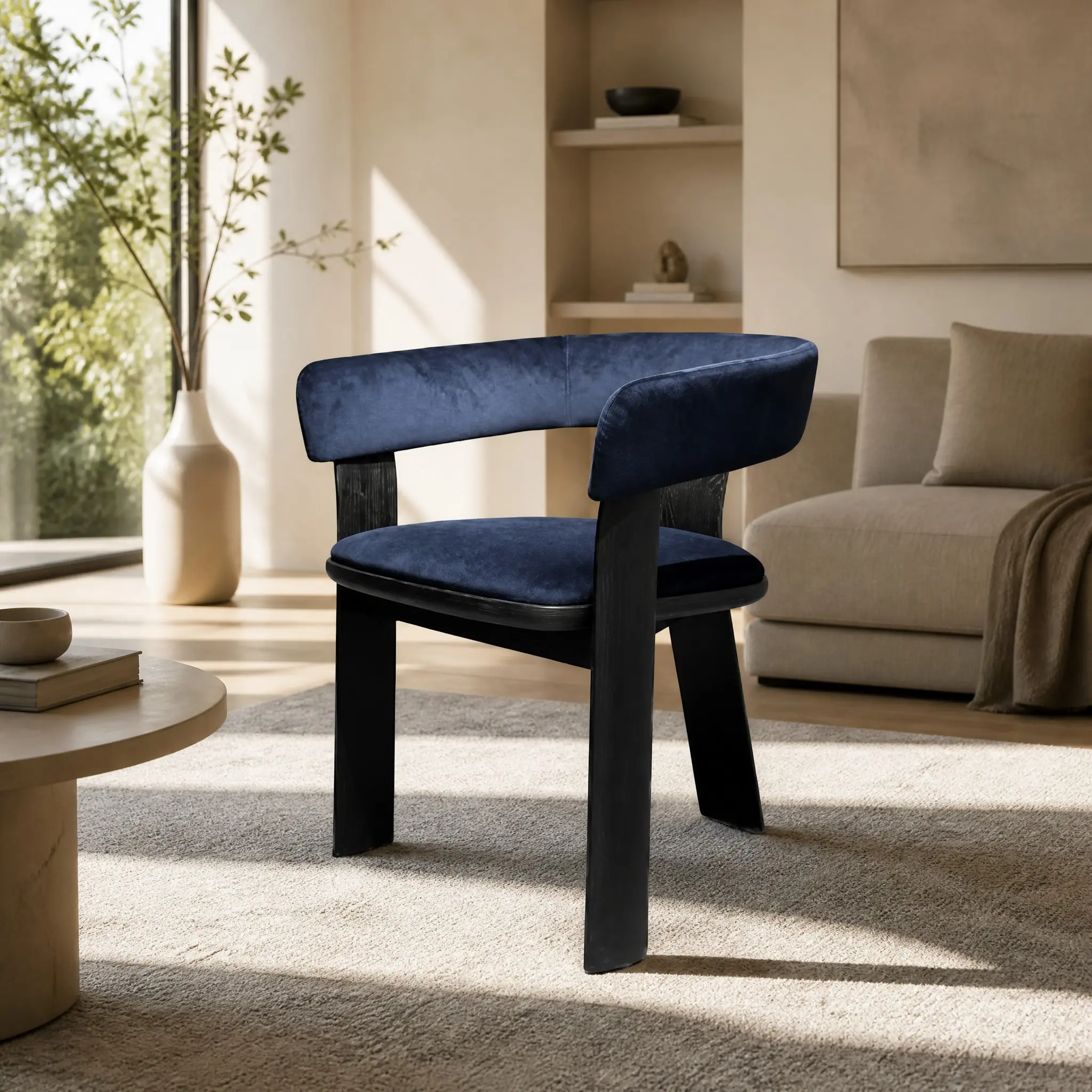
Latest design QYM Modern Minimalist Shearling Velvet Dining Chair, Smoked Solid Ash Wood Frame, Ergonomic Upholstered Armchair for Dining Room Hotel Cafe Factory, Wholesaler
View Product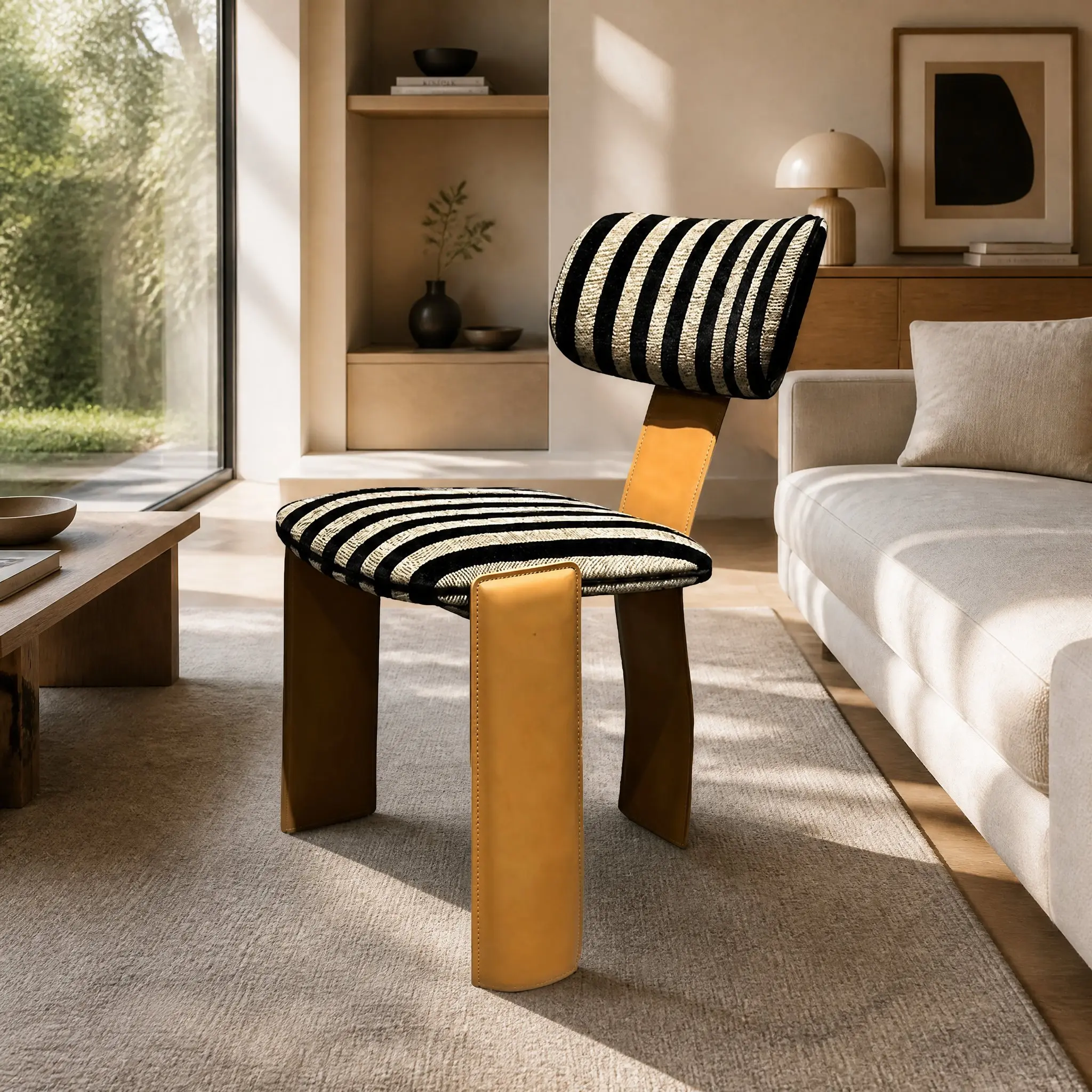
Wholesale QYM Modern Art Striped Dining Chair, MA1-2 Saddle Leather Legs with LVZ. Fendi V854-02 Stripe Fabric, Solid Wood & Stainless Steel Frame Accent Chair for Home Hotel Cafe Supplier, Suppliers
View Product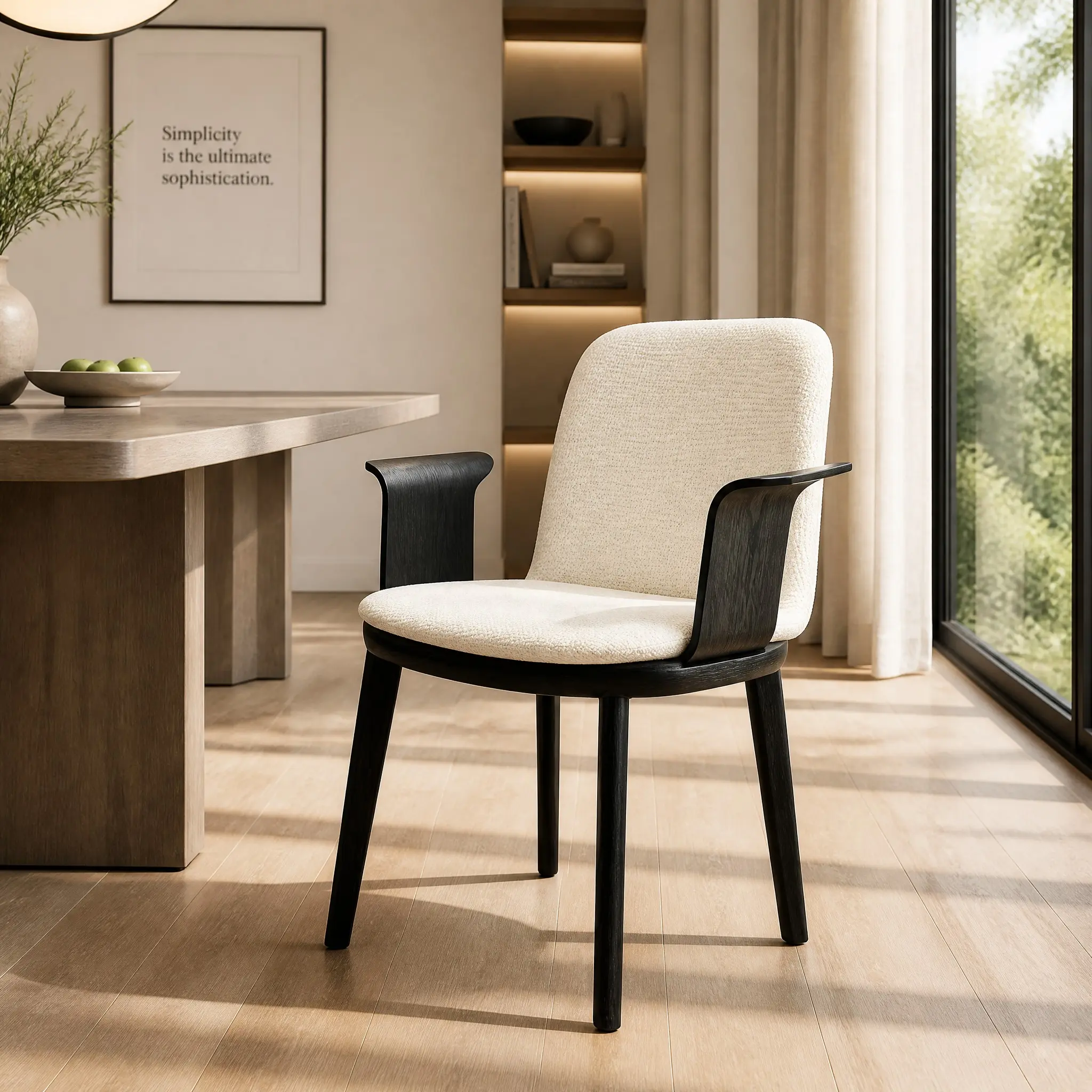
Wholesale QYM Modern Minimalist Cotton Linen Dining Chair with Solid Wood Armrests, Smoked Ash Wood Frame Ergonomic Upholstered Side Chair for Dining Room Hotel Cafe Manufacturer, Factories
View ProductDining chairs sit at the intersection of three commercial realities: high replacement frequency, growing specification scrutiny from hospitality buyers, and a supply chain concentrated in a handful of Chinese manufacturing clusters. For importers and project procurement teams, source quality in this category directly shapes margin, claims rate and repeat business.
A single restaurant fit-out can require 80–300 chairs, and residential buyers typically purchase 4–8 units per household. The category therefore rewards suppliers who can scale upholstery, frame and finishing capacity in parallel.
Hotel groups, chain restaurants and property developers now issue FF&E schedules with explicit load tests, fabric abrasion cycles and frame moisture-content tolerances. Generic “factory-direct” offers no longer pass.
Foshan’s Shunde and Longjiang districts host one of the densest upholstery, solid-wood and metal-leg ecosystems on earth. That density is a structural cost and speed advantage — but only when buyers know how to qualify it.
Information gain in this guide: instead of a catalogue listing, this brief decodes the manufacturing economics, compliance logic, application scenarios and sourcing decision tree behind the eight reference models — so procurement teams can compare suppliers on substance rather than price screenshots.
The visual language of Italian minimalism hides a dense engineering stack. Four layers decide whether a chair survives a hotel season or fails within a residential year: the structural frame, the joinery and leg interface, the foam density and shaping method, and the fabric’s abrasion and pilling behaviour.
Smoked solid ash, white ash and walnut-finished hardwood frames are cut, kiln-dried to a controlled moisture range, then reinforced at the seat apron with corner blocks or dowel-and-biscuit construction. Stainless-steel leg interfaces use threaded inserts rather than surface-mounted plates to resist lateral racking.
Seat cushions combine high-density base foam with a softer top layer. “Shaped foam” moulding — used on the Luosen-01 and Raffi-02 platforms — allows compound curves around the backrest without hard seams, which matters for long-duration seating in cafés and lounges.
Velvet, bouclé, cotton-linen, shearling-touch velvet, microfibre leather and saddle leather each behave differently under Martindale abrasion testing. Residential ranges sit in the 20k–30k cycle band; contract and hotel ranges should be specified at 40k+ with pilling grade 4 or better.
Smoked and charcoal-black ash finishes rely on controlled staining plus a protective topcoat for colour stability under UV. Walnut paint finishes need consistent film thickness to avoid visible wear on armrests — a common failure point in high-touch hospitality environments.
| Specification Layer | Residential Target | Hospitality / Contract Target | Procurement Question to Ask |
|---|---|---|---|
| Frame moisture content | 8–12% | 8–10% (climate-matched) | What kiln-drying tolerance do you hold before assembly? |
| Fabric abrasion | 20,000+ Martindale | 40,000+ Martindale, pilling ≥4 | Can you supply the test report for the exact colourway? |
| Static load (seat) | 110–130 kg | 150 kg+ with cycle testing | Do you run cyclic load tests or only static proof loads? |
| Leg interface | Dowelled / bolted | Threaded insert + reinforced apron | How is stainless-steel leg attachment engineered? |
| Foam density (seat) | 28–32 kg/m³ | 35 kg/m³+ shaped foam | What is the foam density and does it deform beyond 10%? |
A dining chair is not built in one building. It is built across a micro-supply-chain: a wood-drying yard, a CNC and joinery shop, a foam moulder, an upholstery workroom, a metal-leg fabricator, a fabric mill, and a finishing line. Foshan’s density compresses the distance between all seven — and that compression shows up directly in lead time, revision speed and unit cost.
Component vendors sit within a short drive of assembly floors. Sample revisions that would take three weeks in a dispersed supply chain can be turned in days, and production slots can be re-sequenced without shipping components across provinces.
Fabric mills, foam suppliers and metal fabricators compete inside the same cluster. Buyers benefit from transparent, benchmarked component pricing rather than opaque markups layered through trading intermediaries.
Upholstery is a hand-skill discipline. Longjiang’s multi-generational workforce includes pattern cutters, foam shapers and frame joiners with decades of experience — the difference between a chair that looks right in a photo and one that holds its shape after 5,000 sittings.
Foshan exporters operate inside an ecosystem fluent in FOB/CIF terms, container consolidation, export crating standards and destination-market documentation. The learning curve for a first-time importer is far shorter than sourcing from a non-export region.
Milan and High Point show introductions are absorbed into Foshan design cycles within weeks, not seasons. Buyers sourcing here can refresh a dining programme twice a year without re-qualifying an entirely new supplier base.
A single factory can be disrupted by a fire, a power event or a labour shortage. Cluster-based sourcing gives procurement teams qualified backup capacity inside the same quality and cost envelope — genuine supply-chain resilience.
For buyers comparing China against Vietnam, Eastern Europe or domestic production, the practical difference is not labour cost alone — it is the breadth of the upholstery and solid-wood component ecosystem available within a 30-kilometre radius.
Buyer intent is shifting from “a chair that matches the table” to “a chair that survives the operating model”. Five forces are reshaping specifications and, consequently, supplier selection.
Curved backrests, wrapped shells and softened silhouettes are replacing rigid rectilinear frames. This raises tooling complexity but improves ergonomic perception at the point of sale — a measurable conversion factor in furniture retail.
Buyers increasingly request species confirmation for solid ash and walnut, plus recycled-content declarations for foam and fabric. Documentation quality is becoming a competitive differentiator in EU and North American tenders.
Hospitality brands and serviced-apartment operators now specify residential aesthetics with contract durability. The result is a hybrid demand: minimal Italian forms delivered at 40,000+ Martindale abrasion with reinforced leg interfaces.
Dining chairs are becoming the accent vehicle in a neutral room. Suppliers who can hold consistent dye-lot control across repeat orders — and support small-batch colour trials — win the design-driven accounts.
With ocean freight volatility, knockdown and nestable packaging designs reduce per-unit cubic volume. Suppliers engineering cartons backward from container fill rate deliver real landed-cost savings, not just FOB discounts.
Procurement teams increasingly evaluate suppliers through 3D models, CAD blocks, BIM objects and photoreal renders before requesting physical samples. Suppliers with strong digital asset pipelines shorten the approval cycle by weeks.
Reflecting these trends, the reference range in this guide spans velvet, bouclé, cotton-linen, shearling-touch velvet, microfibre leather and saddle leather across smoked ash, white ash, walnut-painted and stainless-steel frame architectures — giving buyers a single qualified source for multiple trend positions.
The same chair specified for a Milan-inspired apartment dining room will fail in a 200-cover brasserie. Below is a practical mapping between reference model families and the environments they are engineered for.
The Luosen-01 and cotton-linen side chairs suit residential dining rooms where comfort duration is moderate and design continuity with the living room matters. Cotton-linen covers are breathable and removable, which supports family households and short-let apartments that require frequent refresh.
The yellow curved-backrest armchair and smoked-ash armchair range prioritise lateral stability and easy wipe-down surfaces. Microfibre leather seats resist spillage better than velvet, and shaped foam reduces pressure concentration during 90-minute covers.
The 180° swivel embroidered-backrest armchair is well matched to hotel suites and lounge areas, where rotational movement helps guests orient toward conversation or workspace. Specify contract-grade velvet and reinforced leg interfaces for public-area deployment.
White bouclé accent chairs and art-striped paddle-leather models photograph strongly and signal design ambition in sales galleries. Because they are often specified in small quantities, suppliers must support low-MOQ colour and fabric flexibility.
Armrest-equipped chairs with firm seat support reduce fatigue in meeting-room environments. Stainless-steel or smoked-ash frames provide visual weight without the creaking risk associated with lighter joinery under repeated reconfiguration.
Operators furnishing dozens of apartments need chairs that tolerate heavy turnover of occupants. Faux-leather and microfibre leather seats with smoked ash frames offer the strongest hygiene and durability profile per unit cost in this segment.
Dining chairs are rarely purchased in isolation by serious buyers. They are one line in a broader furniture schedule that may include sofas, beds, mattresses, outdoor seating and salon furniture. Program-level sourcing changes the economics of the entire order — and the qualification criteria for the supplier.
Combining dining chairs with dining tables, sideboards and living-room seating under one purchase order reduces vendor management overhead, consolidates quality accountability and simplifies payment and documentation.
Chairs are volumetric, not weight-limited. Mixed-category container loading — pairing chairs with flat-pack casegoods or mattresses — improves cubic fill and materially lowers landed cost per unit.
When every category ships under one QC protocol, finish consistency across a project improves and post-installation snag lists shrink. This is the operational reason large developers prefer program suppliers over piecemeal buying.
One documentation set — material declarations, test reports, care instructions and warranty terms — covering every SKU in the schedule. This reduces the administrative burden on import compliance teams.
Hotel and development projects rarely need everything at once. Suppliers capable of warehouse holding, staged release and scheduled container dispatch become logistics partners rather than merely manufacturers.
Factory-direct program pricing removes distributor layers. Combined with freight optimisation and reduced claims rates, the effect on project margin is usually larger than a headline FOB discount.
Requirements diverge sharply by buyer type. A distributor managing stock across 40 retail doors needs different things from a hotel group fitting out 300 rooms in a single quarter. Understanding those differences is the foundation of a productive supplier relationship.
Predictable replenishment, stable colour matching across repeat orders, carton-level barcoding, and MOQ tiers that align with container planning. They value quoting speed and SKU depth over bespoke design.
Contract-grade durability, tight delivery windows coordinated with site handover, and documented compliance. Repeat-order consistency matters more than unit price — a mid-project spec change is operationally expensive.
Rapid sampling, fabric substitution flexibility, honouring client-owned COM/COL materials, and joinery detail control. Designers need a supplier who reads drawings accurately rather than approximates them.
Programme-scale consistency across multiple unit types, packaging that survives multi-storey site handling, and a supplier who accepts phased delivery aligned to construction milestones.
Practical takeaway: a supplier claim of “low MOQ, fast delivery, good price” is not information. What buyers should ask for is documented abrasion test results, a container-loading simulation, a named QC contact, and evidence of repeat-order colour consistency — these are the signals that distinguish a manufacturer from a broker.
The following workflow reflects how experienced dining chair buyers structure the sourcing cycle with a Foshan manufacturer — reducing sample cycles, avoiding specification drift, and keeping container economics under control.
Define seat count, environment type (residential, contract, lounge), target landed cost and colour direction. Specify compliance destination early.
Match frame species, foam density and fabric abrasion grade to the operating environment. Confirm which layers are fixed and which can be substituted.
Approve dimensions, seam placement, stitch density, finish tone and comfort feel. Retain the signed sample as the mass-production reference standard.
Verify joinery integrity, foam shaping accuracy, fabric dye-lot consistency and finish coverage before packing. Document each audit stage.
Optimise carton configuration, plan container fill, and apply multi-layer export protection. Confirm documentation set for destination customs.
Qingyumai is the export brand of Foshan Qingyumai Technology Co., Ltd., an integrated manufacturer covering R&D, production and international sales with its own production facility in Shunde, Foshan. For whole-house orders we also coordinate a network of audited partner factories so every category ships under one quality standard and one purchase order.
Yes. We customise dimensions, seat height, armrest configuration, upholstery and frame colours, fabric grades (velvet, bouclé, cotton-linen, shearling-touch, microfibre leather, saddle leather) and branding such as woven labels and embossed logos for wholesale and project orders.
MOQ depends on the level of customisation. Standard models in stocked fabrics can be produced at smaller quantities, while new frame tooling or bespoke fabric development requires a higher threshold. Because dining chairs are volumetric, the practical MOQ is often driven by container fill rate rather than by piece count — our team will model both.
Our QC engineers carry out on-site production line audits that check joinery integrity, structural durability, foam shaping accuracy, fabric dye-lot consistency and finish coverage. Pre-sale consultants also recommend material configurations aligned with the regulatory standards of your destination market.
Yes. Our post-sale team handles container consolidation across categories, planning loading space to reduce ocean freight cost per unit while using multi-layer export crating to prevent transit damage. This is one of the core advantages of program-level sourcing.
For contract environments we recommend fabrics rated 40,000 Martindale cycles or above with a pilling grade of 4 or better. Microfibre leather and commercial-grade velvets perform well in food-service settings, while bouclé and shearling-touch velvet are better reserved for lounge and residential areas with lower physical abrasion.
Chairs are packed with foam corner protection, edge guards and multi-layer cartons, with leg components either pre-fitted or separately protected depending on the model. Carton configuration is optimised against the container plan to reduce per-unit freight cost while maintaining protection.
We are located in Hui Cheng Industrial Park, Longjiang Town, Shunde District, Foshan, Guangdong, China — one of the world’s best-known furniture manufacturing hubs. Buyers are welcome to arrange factory and showroom visits, and we can coordinate multi-factory tours within the Foshan cluster.
Share your seat count, environment type and target landed cost. Our export team will return a model shortlist, material options, abrasion and load data, and a container loading estimate for your market.
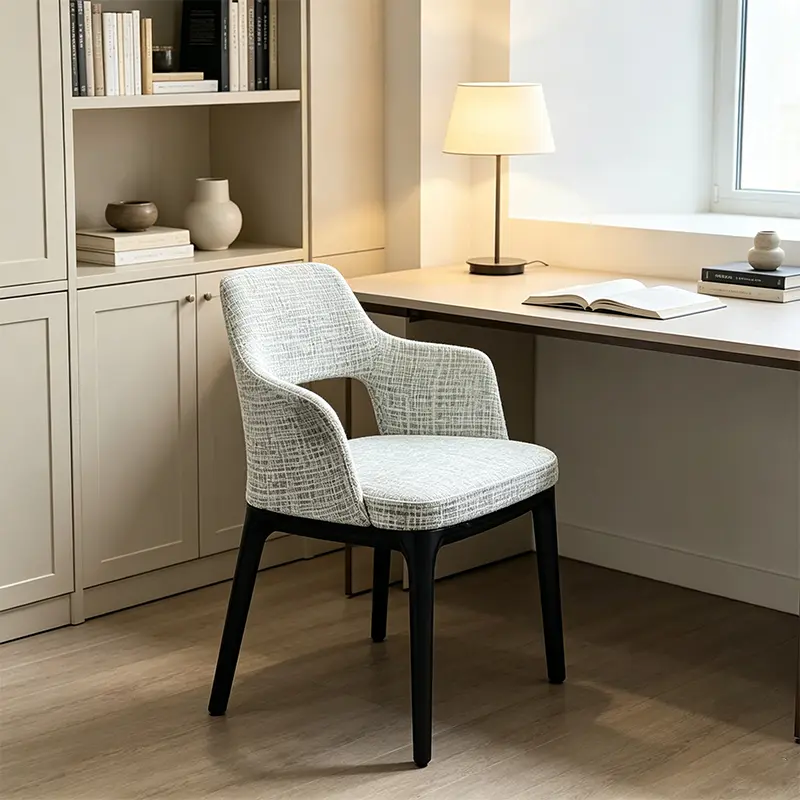
Wholesale QYM HY Luosen‑01 Linen Cotton Fabric Arm Dining Chair, Smoked White Ash Wood Frame, Shaped Foam Upholstered Dining Chair Suppliers, Factory
View Product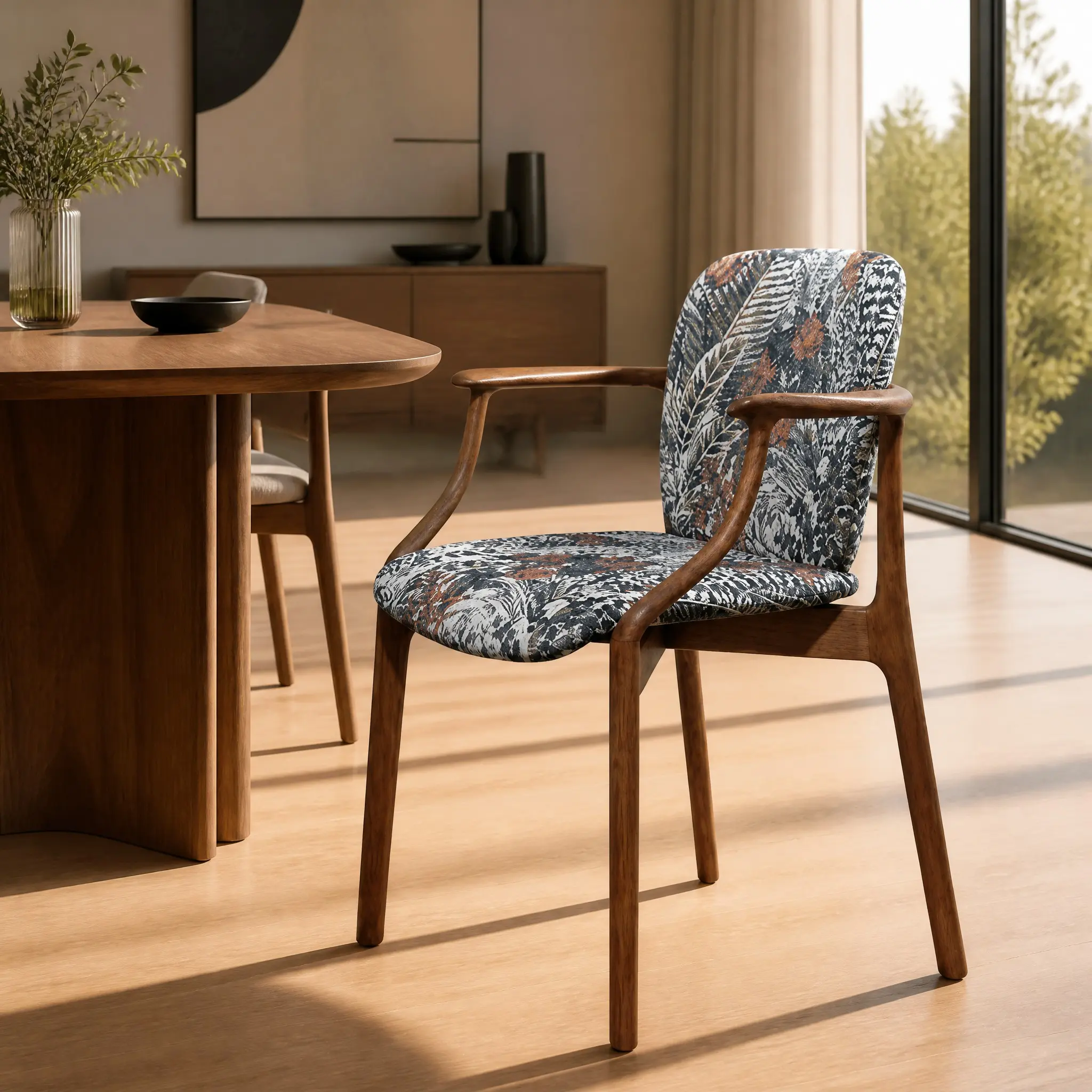
Wholesale QYM Printed Velvet Fabric Arm Dining Chair, Solid White Ash Wood Frame, Smoked / Walnut Finish Manufacturer, Factory
View Product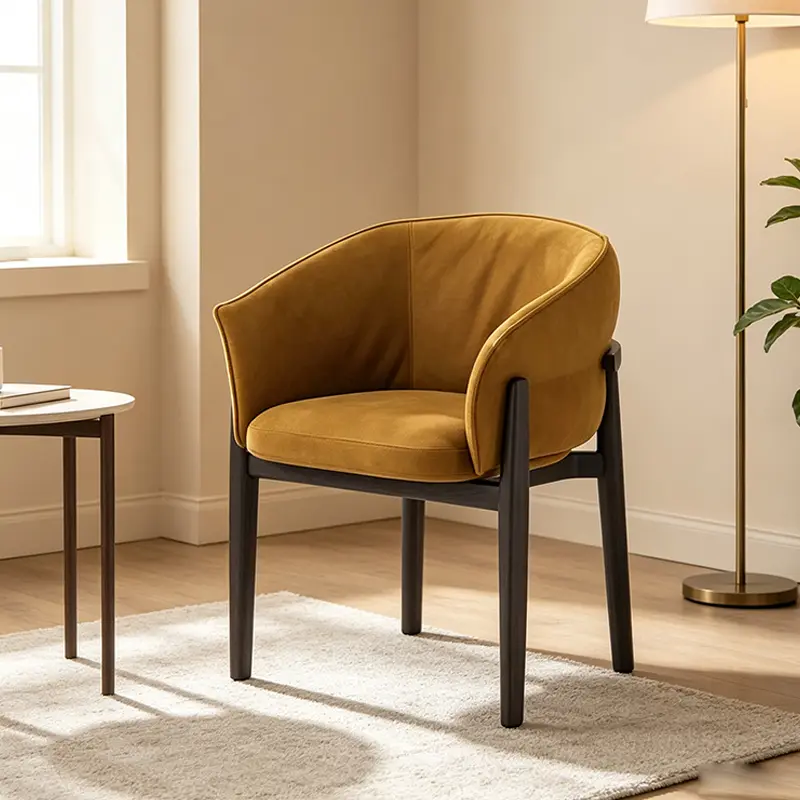
Wholesale QYM Modern Upholstered Arm Dining Chair Ruby828 Light Grey NBS995‑22 Coffee Microfiber Leather Solid White Ash Smoked Wood Frame For Home Restaurant Hotel Manufacturer, Factory
View Product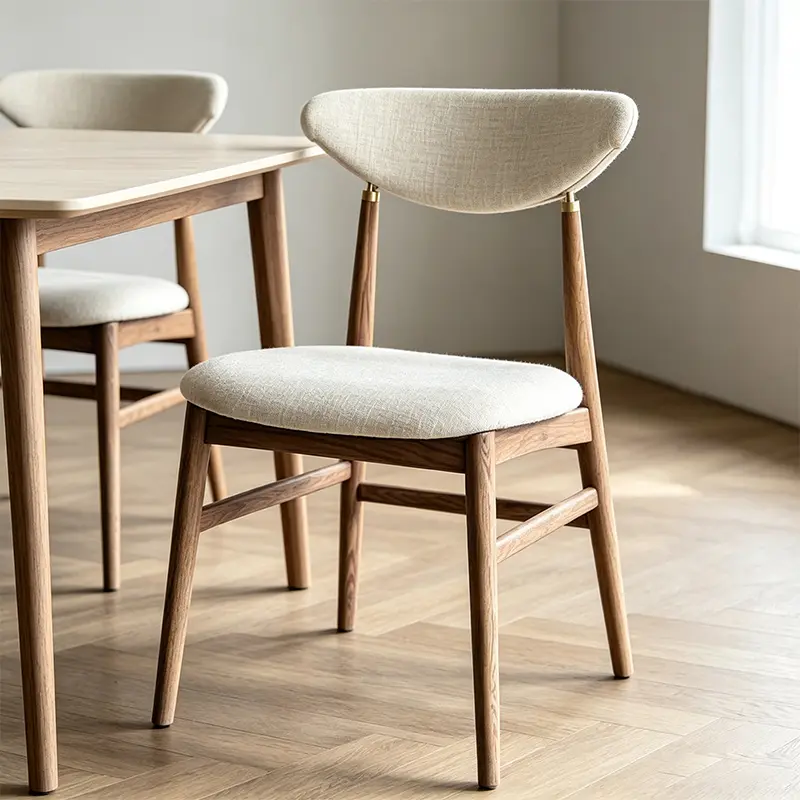
Latest design QYM Linen Cotton Fabric Dining Chair, Beige / Orange Fabric, Solid White Ash Wood Frame With Walnut Paint Finish Manufacturer, Supplier
View Product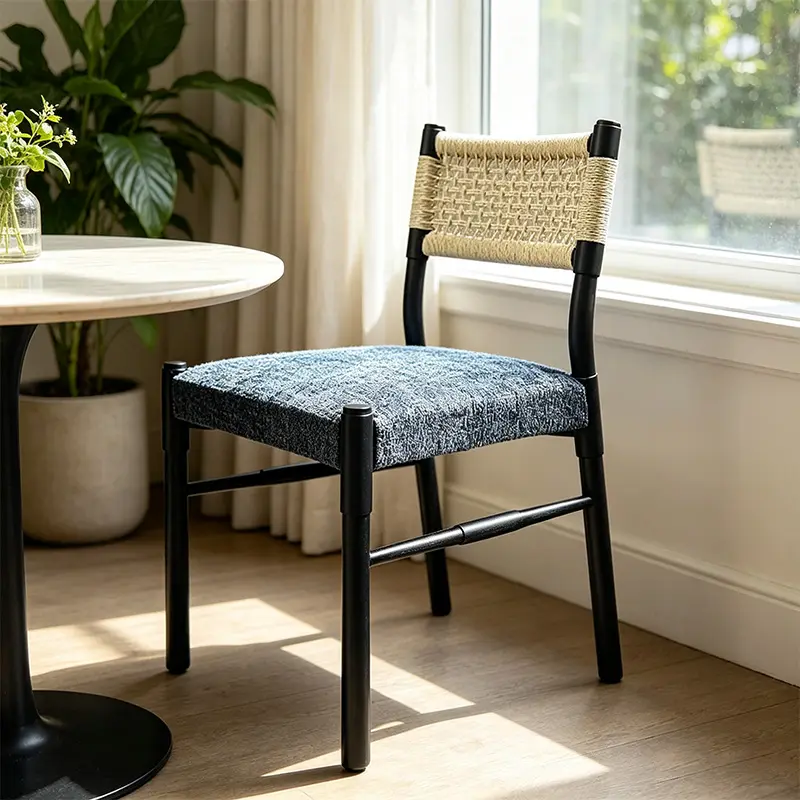
Latest design QYM Rope Woven Back Dining Chair, LVZ.61‑16 Blue Linen Cotton Cushion, Solid White Ash Wood Charcoal Black Finish Side Chair Manufacturers, Supplier
View Product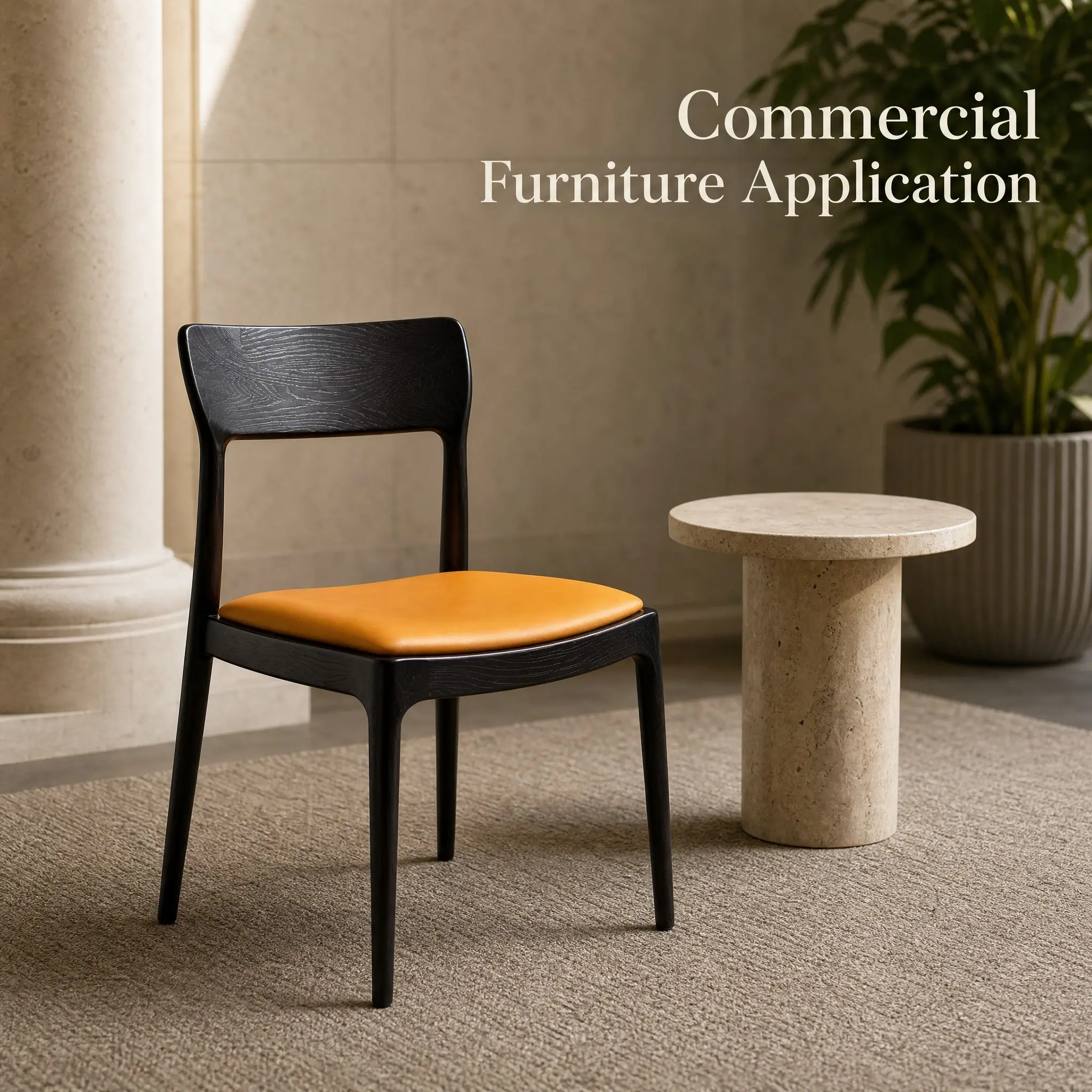
Wholesale QYM Modern Solid Ash Wood Dining Chair Faux Leather Seat Smoke Finish Ash Frame Armless Side Chair For Home Restaurant Hotel Suppliers, Wholesaler
View Product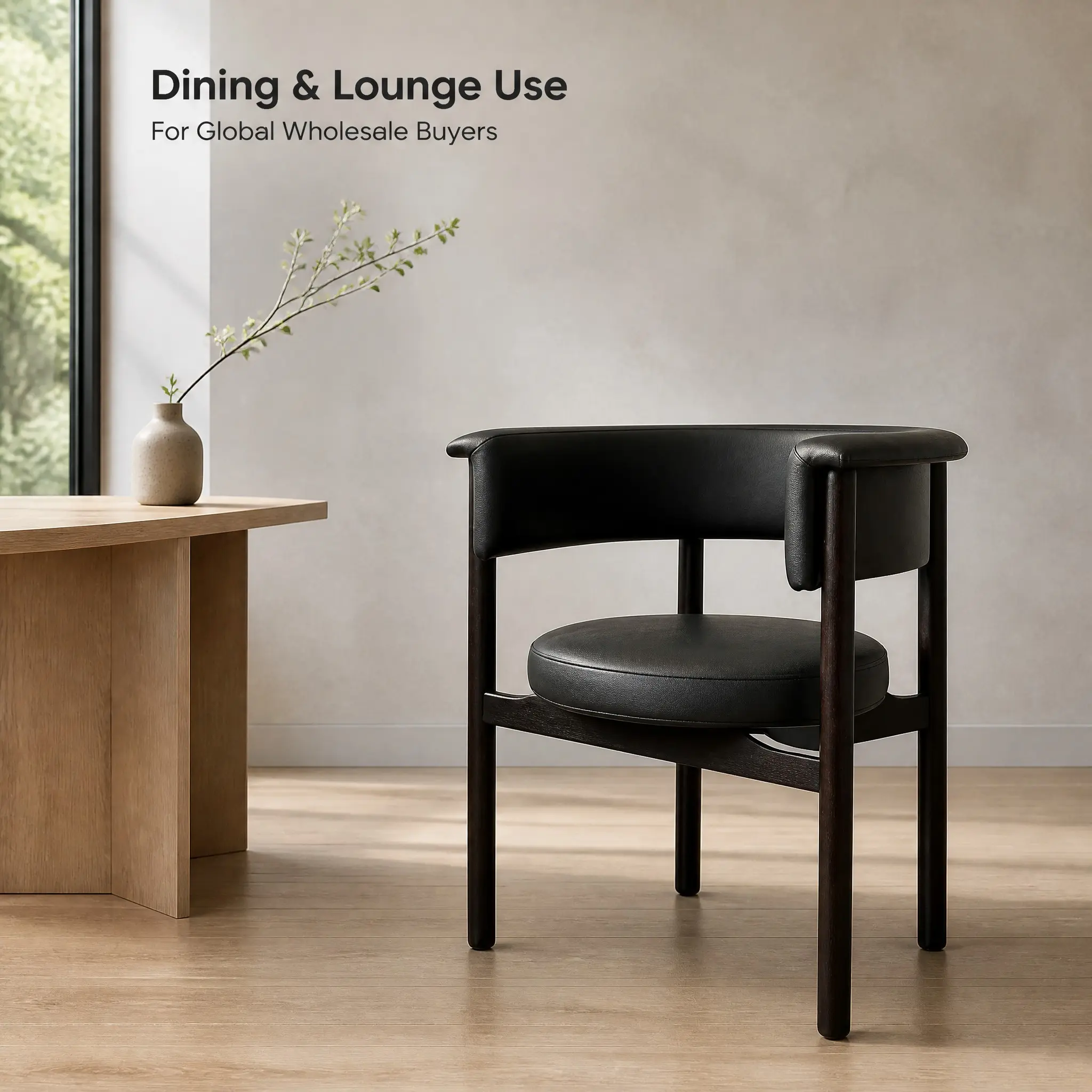
China QYM Modern Solid Ash Wood Dining Chair Black Faux Leather Upholstered Armchair Smoke Finished Frame For Dining Room Restaurant Supplier, Factories
View Product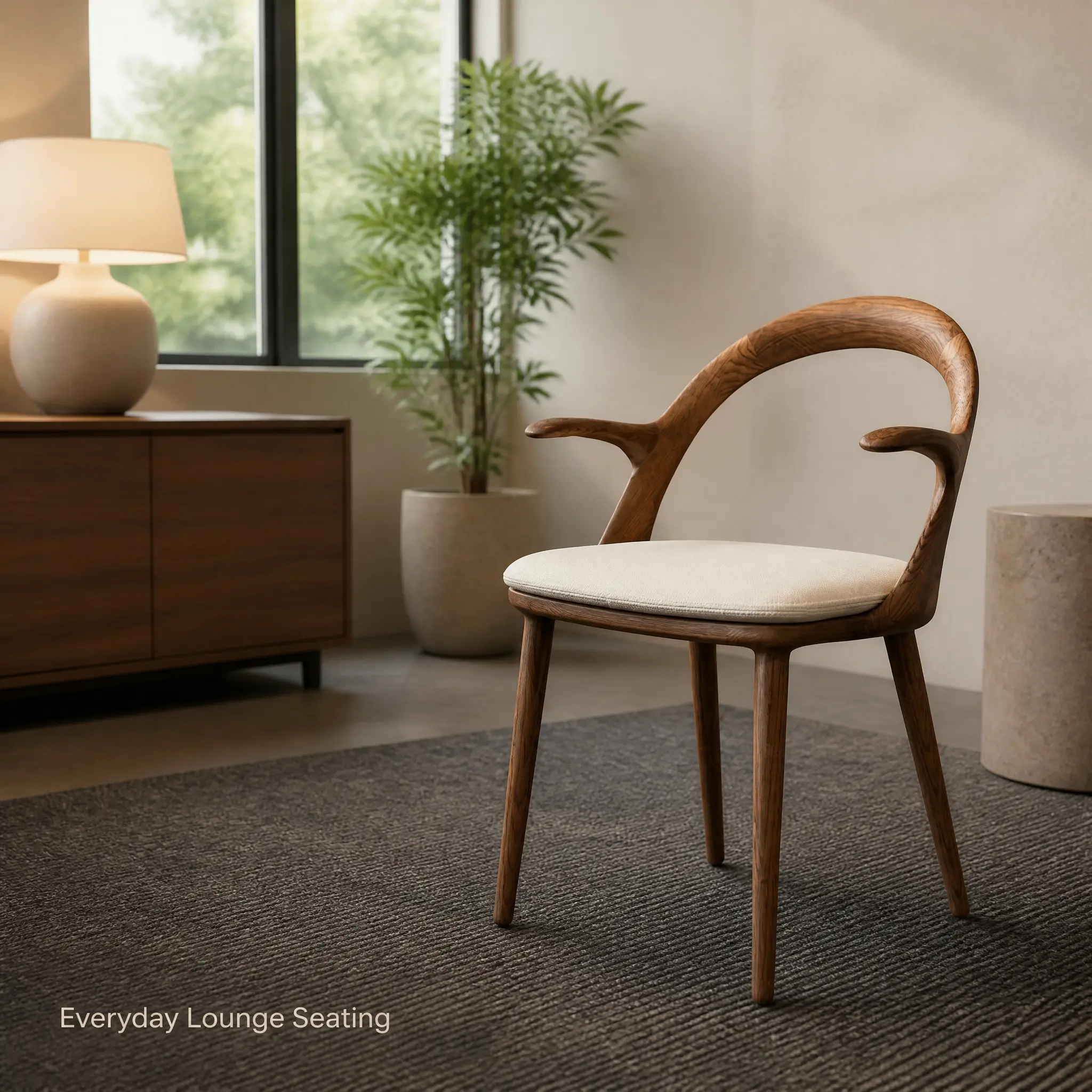
Latest design QYM Artistic Curved Solid Ash Wood Dining Armchair QCX.Raffi‑02 Microfiber Leather Smoked Finish Ash Wood Frame Dining Chair For Home Restaurant Hotel Manufacturers, Factories
View Product