
Aluminum + Teak
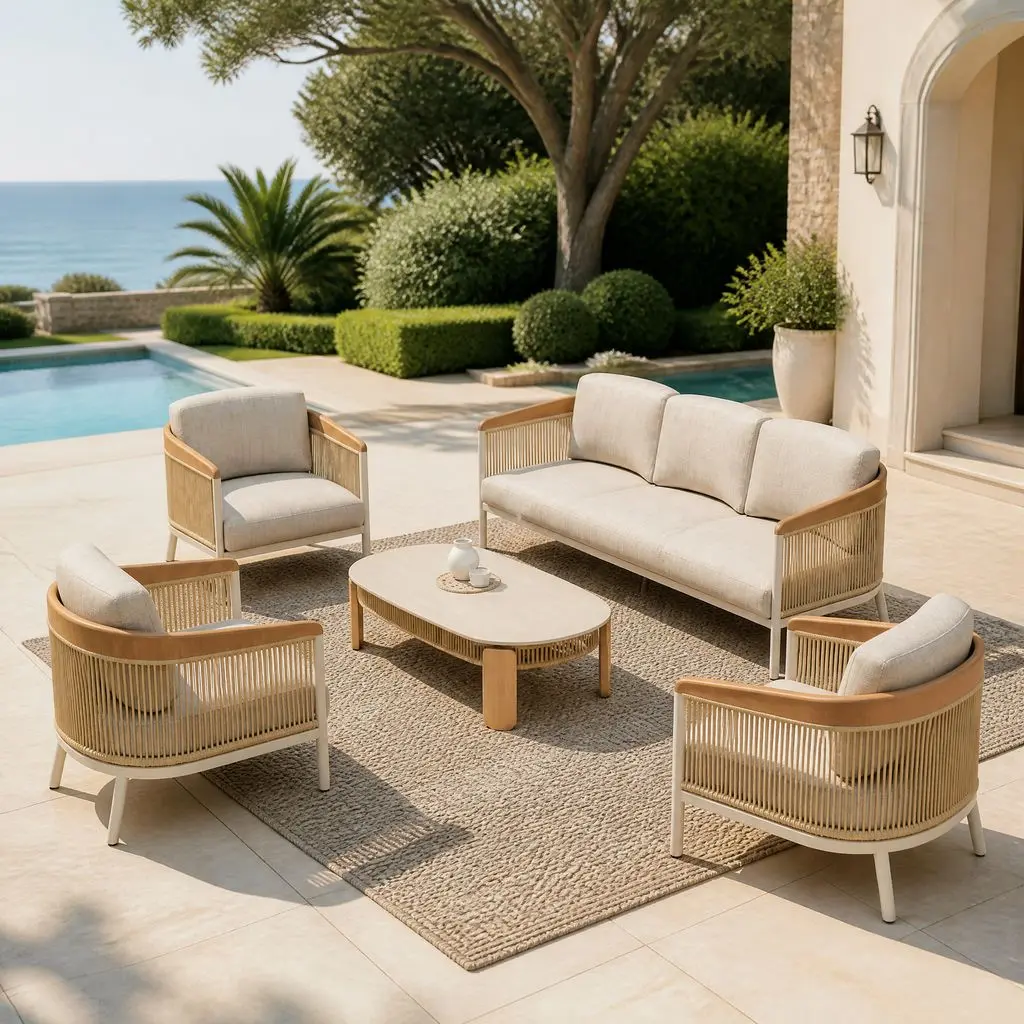
Mumbai does not behave like a European or North American outdoor-furniture market. No single survival factor dominates — manufacturers must simultaneously engineer for humidity, salt-air corrosion, monsoon driving rain and constrained lift-up balcony logistics, all within India's cost-of-ownership expectations.
Mumbai's outdoor living category sits at the intersection of four forces. First, monsoon intensity: the city receives the bulk of its annual rainfall between June and September, with sustained humidity the rest of the year. Second, coastal salt aerosol: projects along Worli, Bandra, Juhu, Navi Mumbai's Palm Beach Road and the Alibaug belt expose metal hardware to chloride attack continuously. Third, vertical living: premium and mid-market stock is increasingly high-rise, meaning furniture enters through service lifts or is craned up, and must respect balcony dead-load limits. Fourth, a design-led consumer: Mumbai buyers compare finishes on Instagram before they compare price lists.
The practical conclusion for importers is that a European catalogue model — tuned to dry summers and short-season usage — underperforms in Mumbai. What performs is a tropicalised specification: powder-coated marine-grade aluminum frames, olefin or solution-dyed acrylic rope instead of natural fibre, quick-dry reticulated foam, and stainless or treated hardware with sacrificial protection at every fastener.
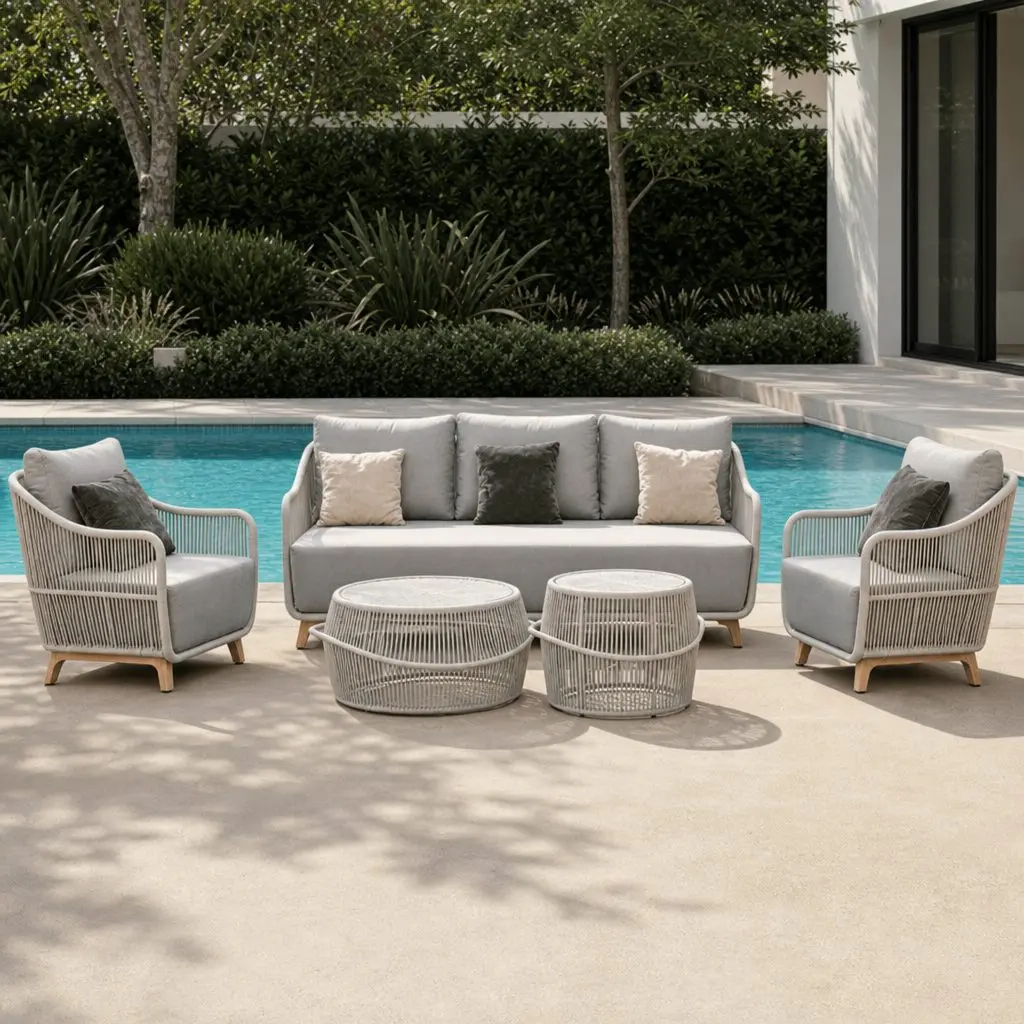
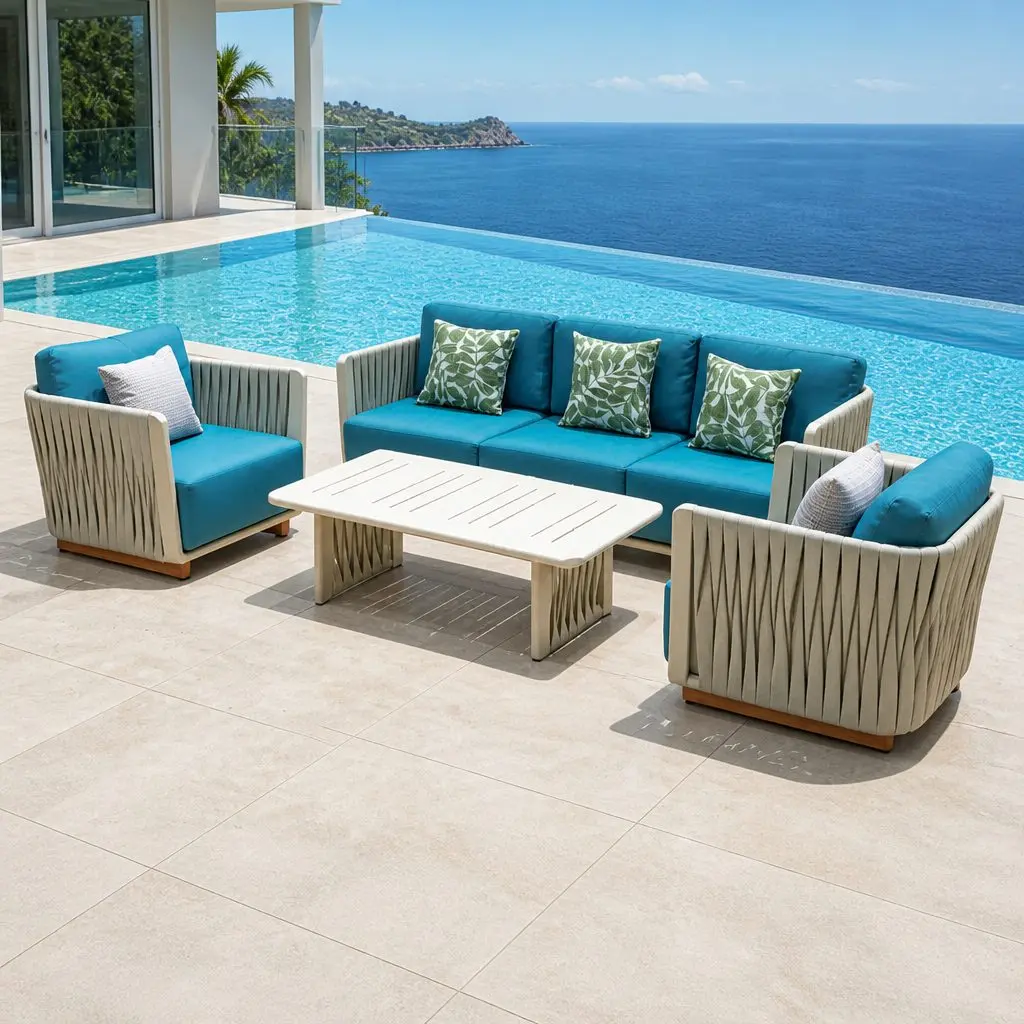
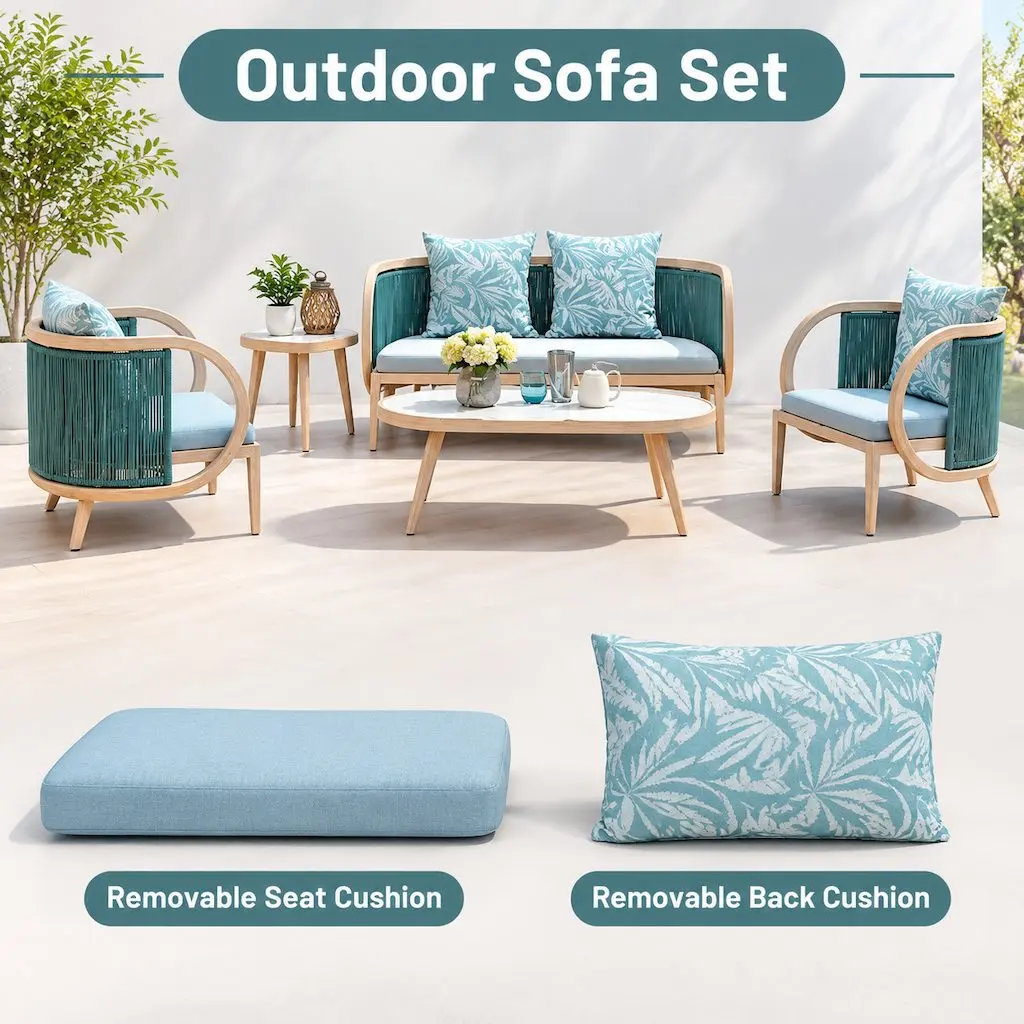
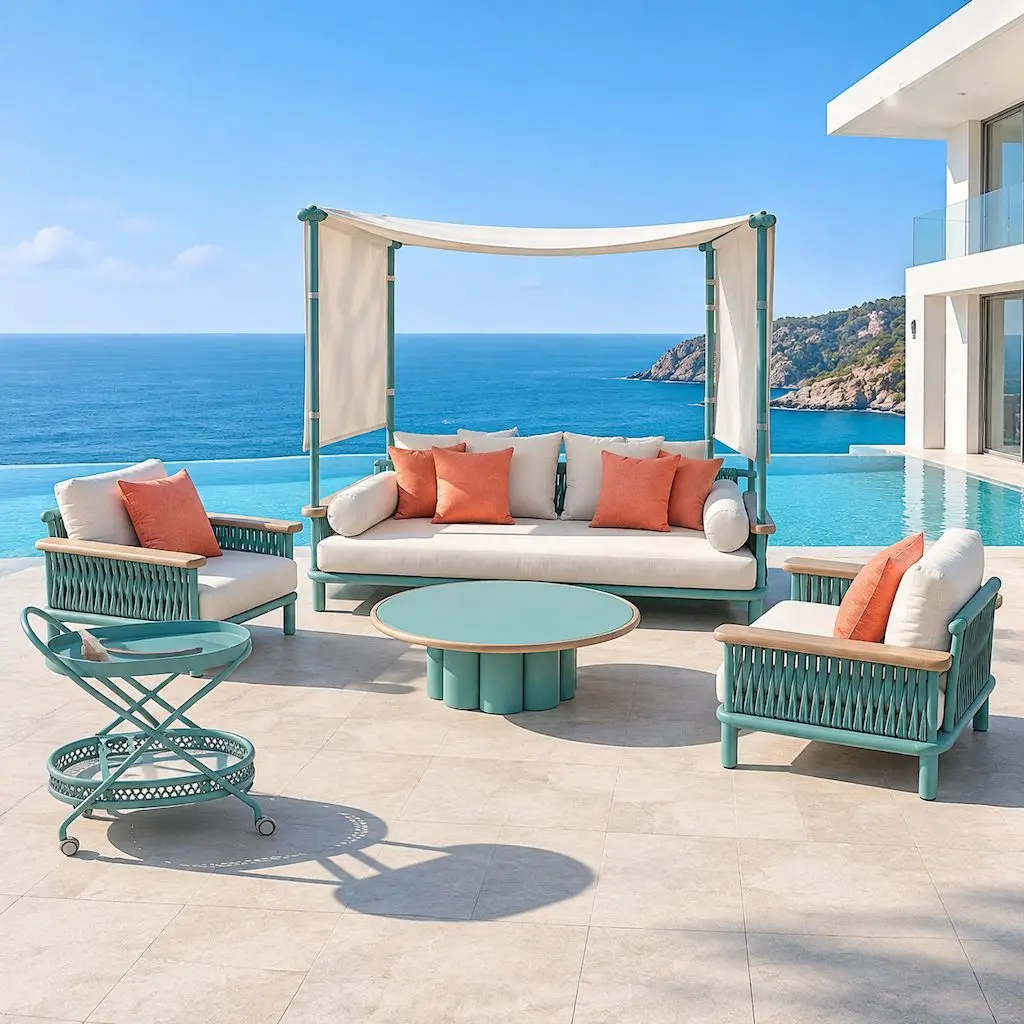
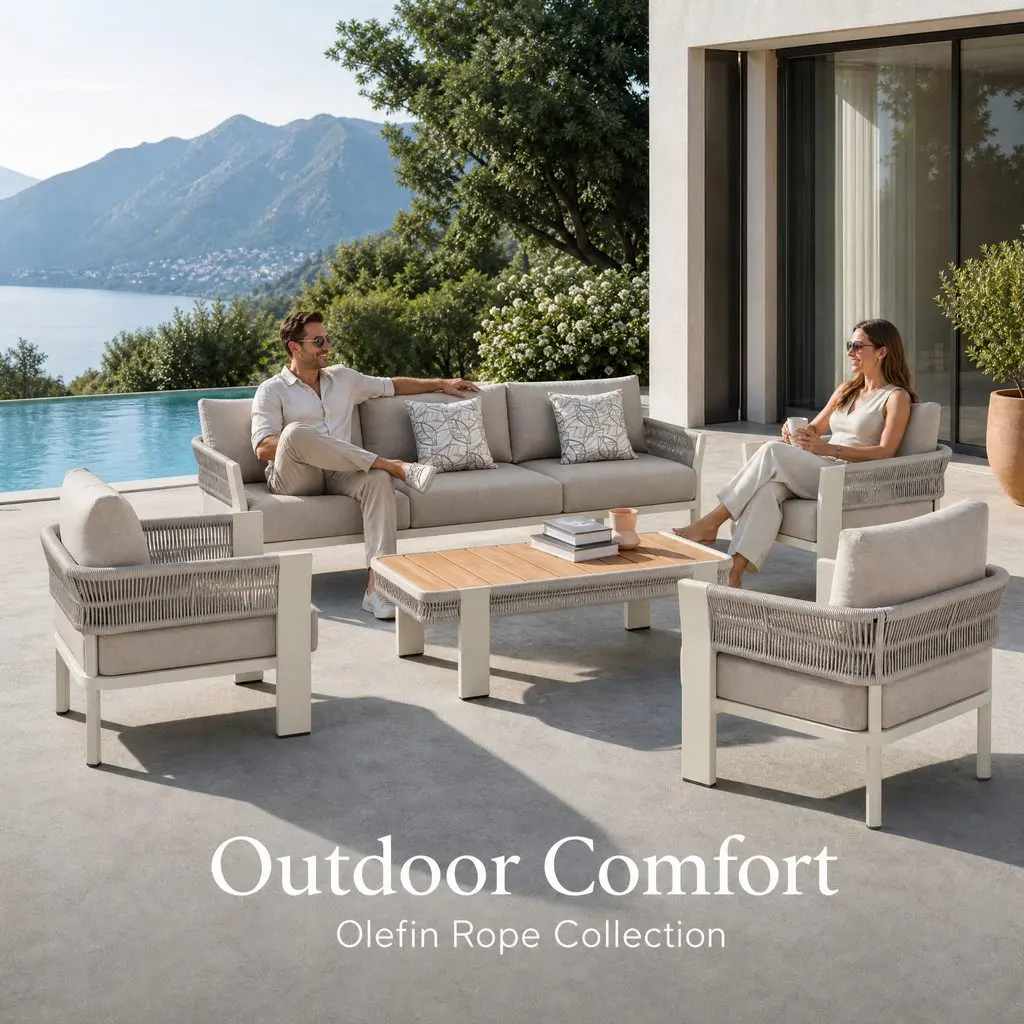
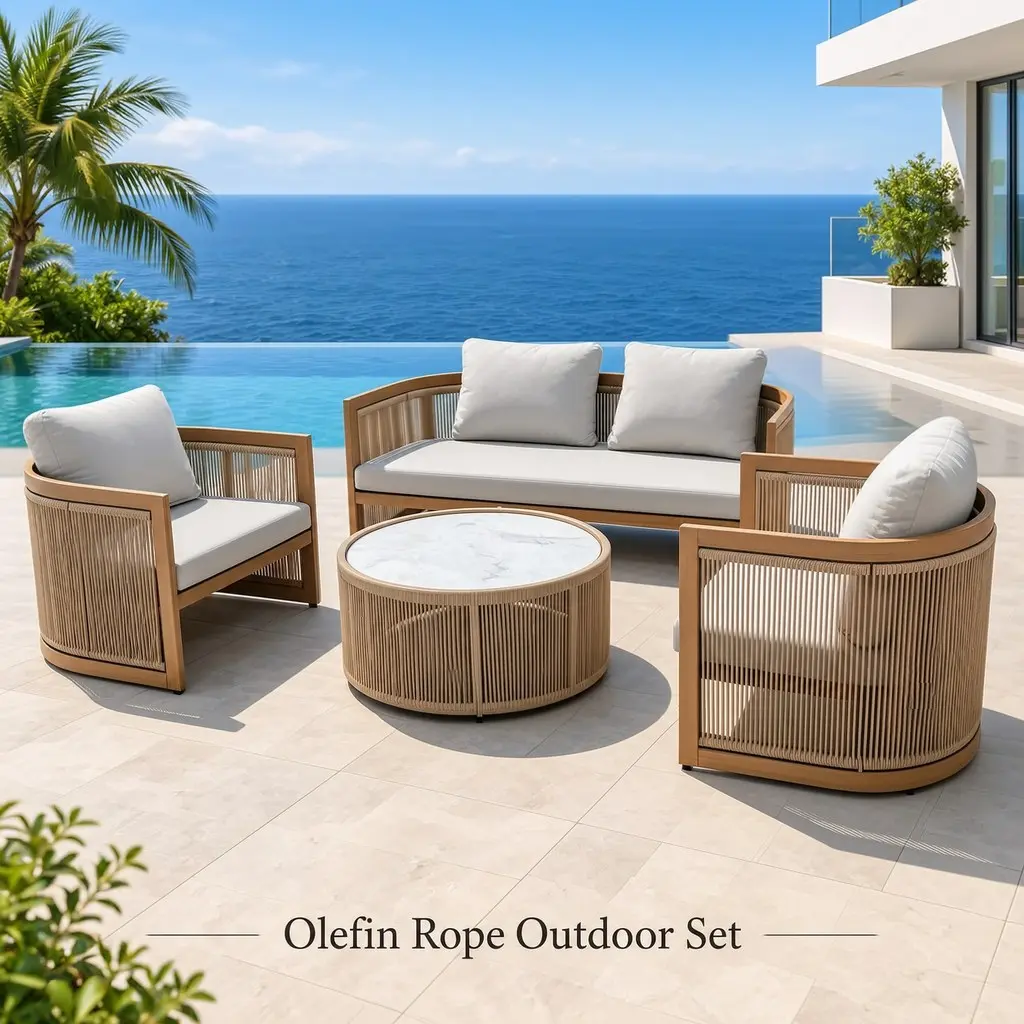
These four models lead our Mumbai enquiry volume. Each is configured with corrosion-resistant framing, rope weave that survives monsoon cycling, and waterproof cushion construction.
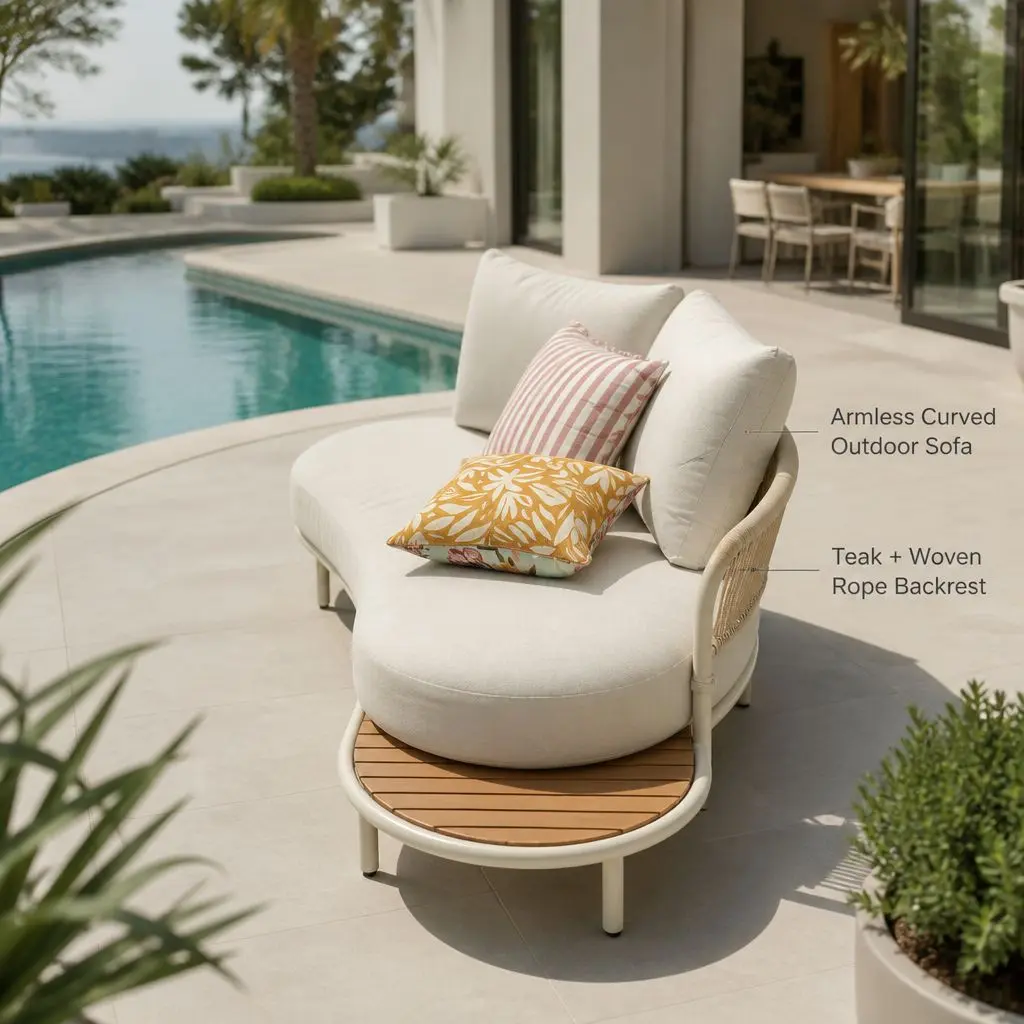
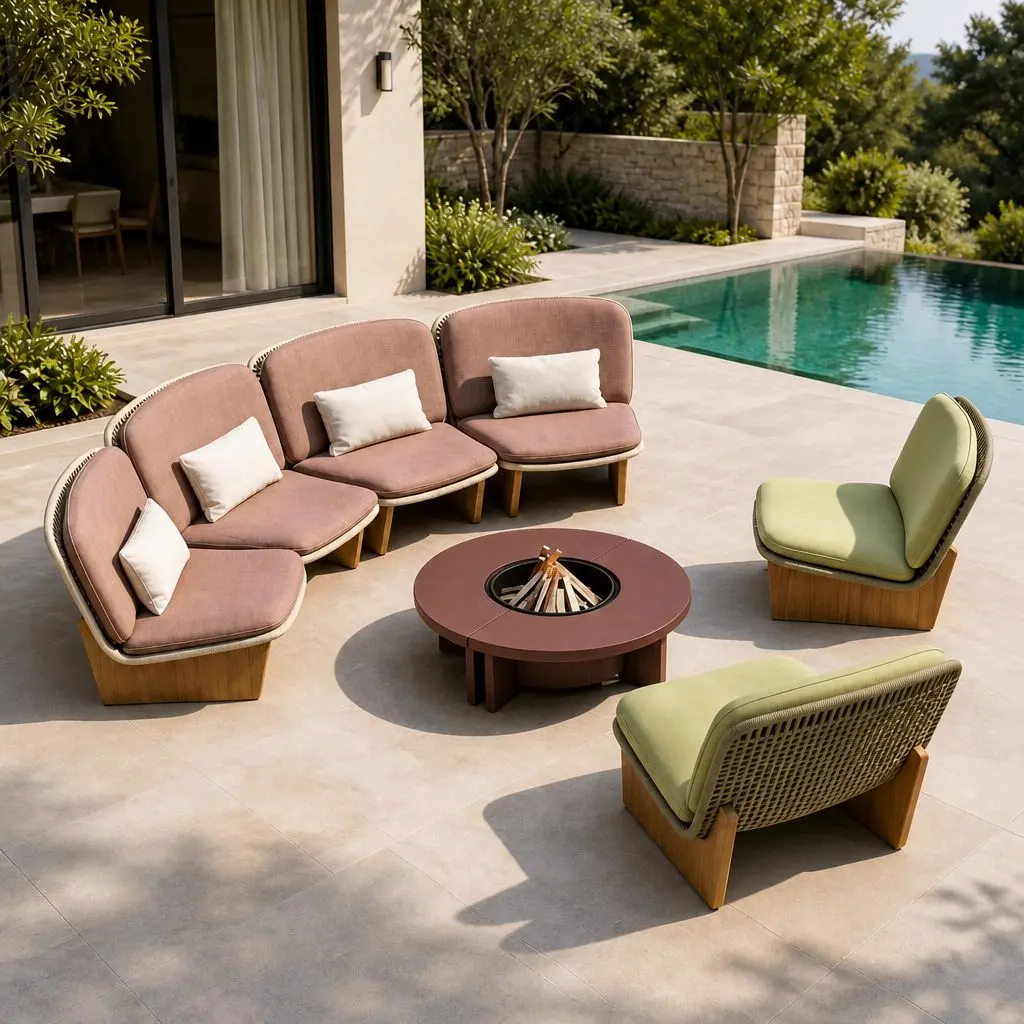
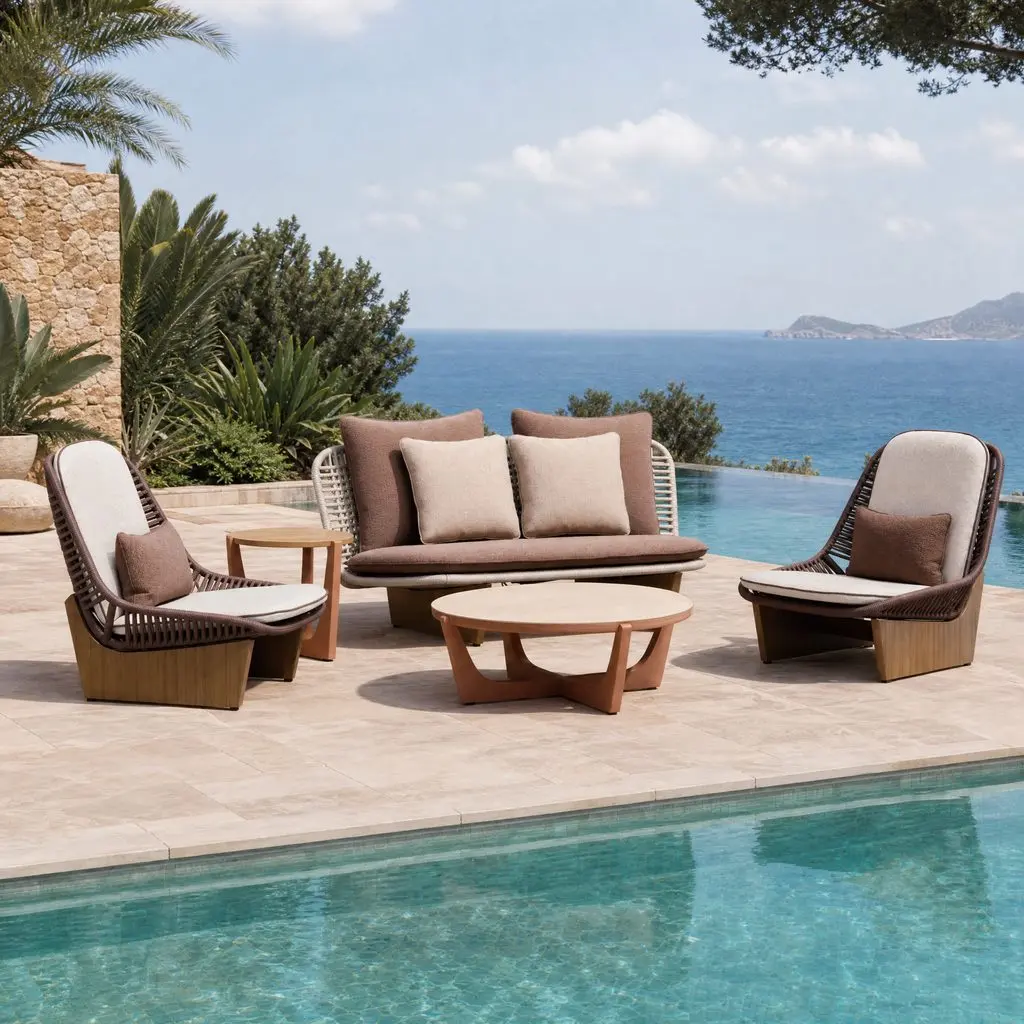
Understanding where Mumbai's outdoor furniture demand actually originates changes how a supplier should specify, package and ship.
Towers across Powai, Malad, Goregaon and Thane drive demand for compact 2-seat and 3-seat modules. Lift dimensions and balcony depth are the binding constraints, not floor area.
Rooftop bars, sea-facing restaurants and boutique hotels along Bandra, Colaba and Juhu require contract-grade specification with documented cleaning and replacement cycles.
BKC and Lower Parel campuses specify outdoor breakout seating with a strong emphasis on low-maintenance finishes — no timber that requires annual oiling.
Second-home buyers in Alibaug, Karjat and Lonavala specify larger lounge groups and poolside sun-loungers, often with a stronger tolerance for premium materials.
Independent furniture retailers and design studios in Andheri, Dadar and Vashi increasingly buy factory-direct and private-label, compressing the traditional distributor margin stack.
A practical replacement cycle of roughly 4–7 years exists for lower-specification products. That churn is an opportunity for suppliers who engineer for longevity and can prove it.
Mumbai buying decisions are increasingly shaped by global supply-chain and material trends. Four structural shifts matter most.
Globally, outdoor furniture has migrated from natural rattan, wicker and untreated timber toward olefin and solution-dyed acrylic rope, powder-coated aluminum and HPL/compact laminate tops. The driver is total cost of ownership: natural materials absorb water, grow mould and require replacement far sooner in humid climates.
Hospitality groups and corporate buyers increasingly request modular construction where cushion covers, feet glides and rope panels can be replaced independently. Design-for-disassembly is moving from a sustainability talking point to a specification line item.
Post-pandemic procurement teams reduced supplier counts. Buyers now prefer a single manufacturer that can supply living room, outdoor, dining and contract lines under one quality system — reducing audit overhead and freight complexity.
Container economics and customs documentation quality now differentiate suppliers as much as design does. Factories that can consolidate mixed categories, provide accurate HS classification and support the importer's compliance workflow win repeat business.
Fit-out contractors, interior design practices and developers increasingly buy direct from factory, bypassing distributors. This shifts the burden of specification support, sampling and after-sales to the manufacturer.
Compliance is not a paperwork afterthought. Mumbai importers need predictable documentation, clear HS classification and material evidence they can share with their own customers.
| Area | What Our Mumbai Programme Provides | Why It Matters to the Importer |
|---|---|---|
| HS Classification | Product-level HS code guidance covering outdoor seating, tables and cushions, with description alignment to invoice lines. | Reduces clearance friction and classification disputes at Nhava Sheva / JNPT. |
| Material Declarations | Aluminum alloy grade, powder-coat specification, rope composition and foam type documented per model. | Supports buyer-side technical submissions to developers and hotel owners. |
| Corrosion Specification | Chromate conversion plus polyester powder coat on aluminum; stainless or treated fasteners at all joints. | Directly addresses coastal chloride exposure in Mumbai and Navi Mumbai. |
| Fabric & Foam Performance | Olefin / solution-dyed acrylic options with UV and colour-fastness data; reticulated quick-dry foam cores. | Prevents the classic monsoon failure mode: waterlogged, musty cushions. |
| Packaging Standard | Multi-layer export crating, corner protection, moisture barrier, desiccant where appropriate. | Critical for monsoon-season sailings and open-yard container staging. |
| Loading & Consolidation | Mixed-category container plans combining outdoor, dining and living room lines under one booking. | Lowers per-unit ocean freight and simplifies the importer's inbound logistics. |
| After-Sales Support | Replacement part identification for cushions, covers, glides and rope panels, with spares planning on request. | Protects the importer's reputation with end customers and project owners. |
The same platform model adapts across five recurring use cases in the Mumbai Metropolitan Region.
Compact 2- and 3-seat configurations with low back profiles that do not block sightlines, sized to pass through standard service lifts in older buildings.
Modular corner groups with deep seating and accent tables, specified with contract-grade cushion covers to withstand daily commercial cleaning.
Larger sectional configurations with canopy variants, balancing generous seating with the wind-loading considerations of higher floor levels.
Full terrace suites including sun loungers and dining groups, where buyers accept premium materials and a longer specification conversation.
Outdoor breakout and terrace meeting zones specified with uniform, neutral finishes and easy-to-replace covers to suit facility-management routines.
Bulk specification for phased handover, requiring consistent finishes across shipments and reliable documentation for developer approvals.
Material and process development is continuous. Four workstreams define where outdoor furniture specification is heading for humid coastal markets.
Higher-performing powder-coat systems and pre-treatment methods targeting longer service life in chloride-rich coastal air.
Cushion architecture with engineered drainage channels and airflow paths to shorten post-monsoon drying time.
Expandable component libraries so covers, glides and rope panels can be replaced without retiring the whole frame.
Knock-down and nesting structures to increase container fill rates and reduce per-unit freight for Indian importers.
Procurement decisions made today will lock in a material specification for several replacement cycles. Buyers should ask suppliers three questions: what coating system is applied and how is it pre-treated; what is the documented drying behaviour of the cushion assembly; and which components are individually replaceable.
Suppliers who can answer those questions with evidence — not adjectives — will own the next phase of the Mumbai outdoor market, particularly as hospitality and corporate buyers formalise their own material standards.
Visually, Mumbai is moving toward lighter frame profiles and neutral, sand-and-stone palettes that read well on camera and resist visual fatigue. Functionally, the direction is toward fewer moving parts, fewer moisture traps and more exposed, cleanable surfaces.
The most durable design decision a buyer can make is to reject decorative complexity that hides water. Simplicity here is not minimalism as an aesthetic — it is an engineering choice.
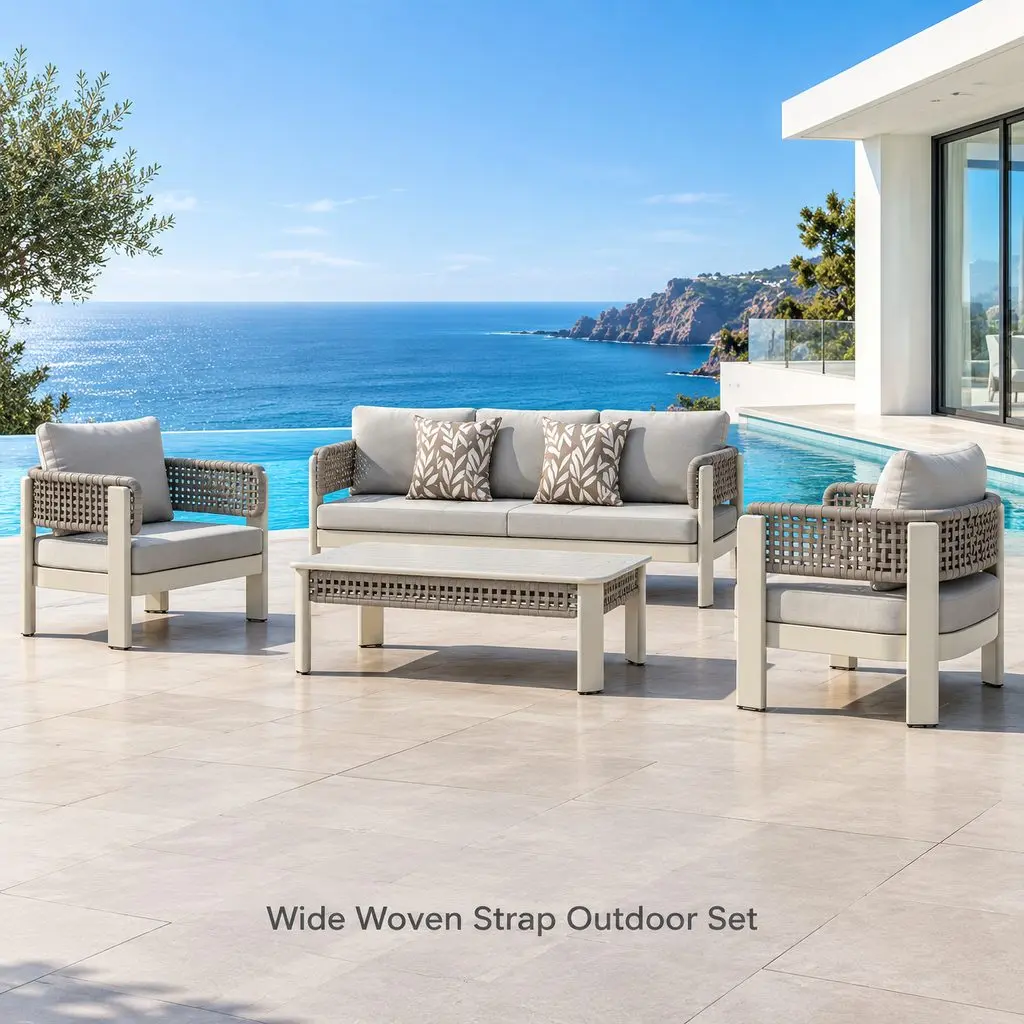
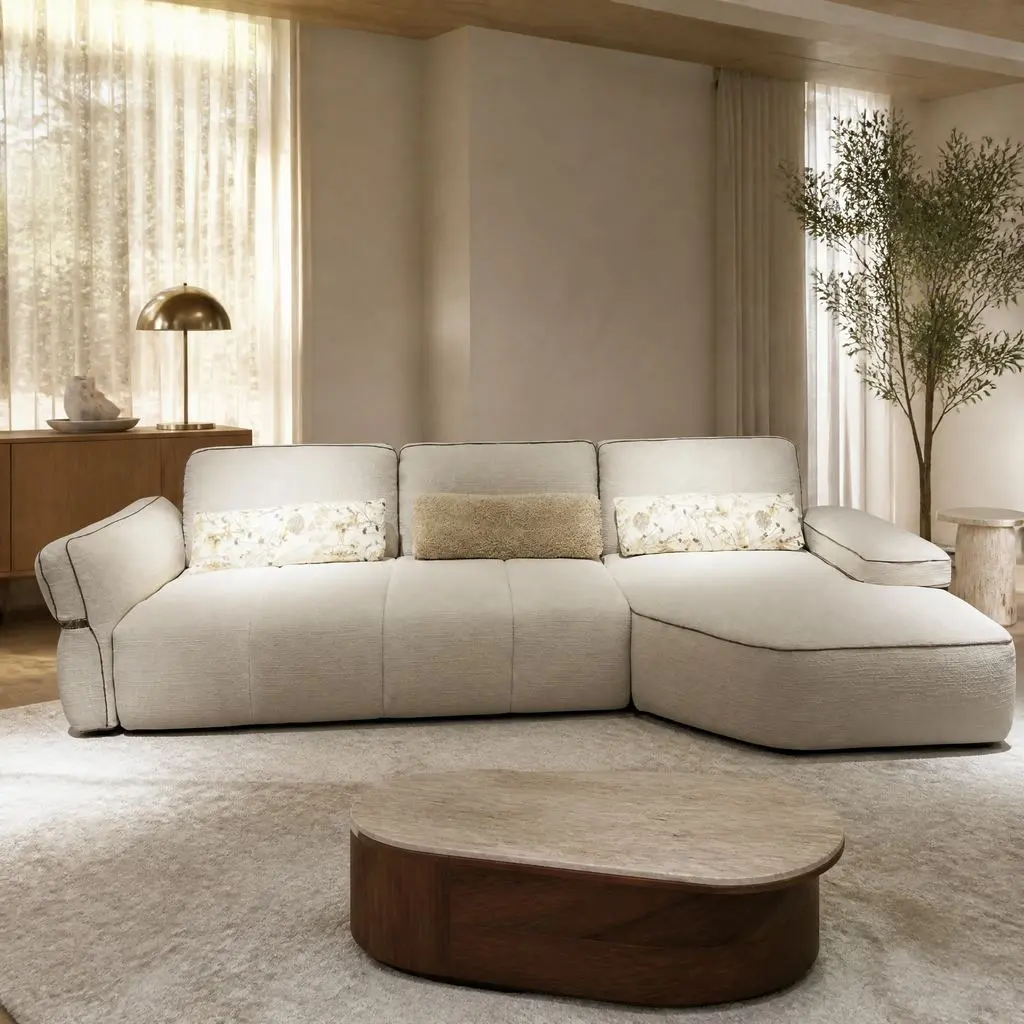
Beyond the four flagship platforms, these models cover canopy, wide-strap and wood-grain variants — plus an indoor sectional option for buyers consolidating mixed-category containers.
Qingyumai is the export brand of Foshan Qingyumai Technology Co., Ltd., an integrated manufacturer in Longjiang, Shunde — the heart of Foshan's furniture cluster. We design, engineer and build in-house, and extend capacity through audited specialist partners.
Importers frequently assemble outdoor terraces, dining areas and living rooms from separate vendors. In practice that produces mismatched finishes, duplicated freight bookings and fragmented accountability when something fails after the monsoon. Consolidating under one purchase order and one QC standard removes those friction points.
Practical answers to the questions Indian importers and project buyers ask most before placing a first order.
Qingyumai is the export brand of Foshan Qingyumai Technology Co., Ltd., an integrated manufacturer covering R&D, production and international sales with its own production facility in Shunde, Foshan. For mixed-category orders we also coordinate a network of audited partner factories so that every category ships under one quality standard and one purchase order.
Yes, when specified correctly. Our Mumbai-recommended configuration uses powder-coated aluminum frames with chromate pre-treatment, olefin or solution-dyed acrylic rope rather than natural fibre, and reticulated quick-dry foam cushions with removable covers. Buyers can request the material and coating specification per model to confirm the build against their site conditions.
Yes. We customise dimensions, upholstery and frame colours, fabric grades and branding such as woven labels and embossed logos. Private-label programmes are common with Indian retailers and design studios who want a differentiated range rather than an open catalogue item.
Yes. Our post-sale team handles container consolidation across categories, planning loading space to reduce ocean freight cost per unit while using multi-layer export crating to protect goods in transit — particularly important for monsoon-season sailings.
Internal QC engineers carry out on-site production line audits checking structural durability and finish consistency, and pre-sale consultants recommend material configurations aligned with the destination market's conditions and the importer's documentation requirements.
We supply furniture wholesalers and importers, hotel and hospitality procurement teams, property developers, interior design firms and retail brands that need coordinated furniture for multiple rooms or phased project handovers.
We are located at Hui Cheng Industrial Park, Longjiang Town, Shunde District, Foshan, Guangdong, China. Buyers are welcome to arrange factory and showroom visits, and our team can coordinate a visit itinerary alongside a sourcing trip to Guangzhou or Shenzhen.
Share your project type, balcony or terrace dimensions, target price band and delivery window. Our export team will respond with a specification recommendation, material options and a container loading plan.