
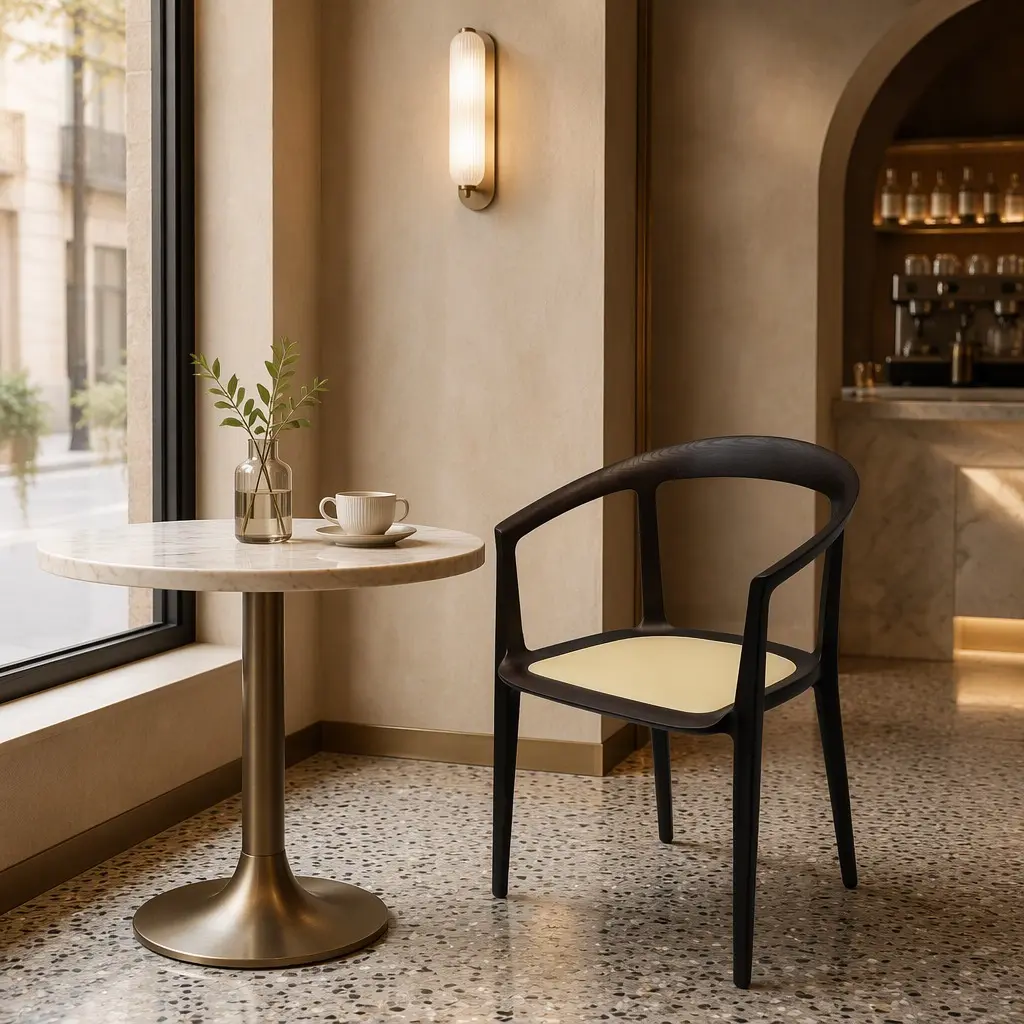
 Dining & Suite Seating
Executive Summary
Why Houston Is One of the Fastest-Moving Hospitality Furniture Markets in the U.S.
Houston added tens of thousands of hotel rooms across the last development cycle, and the city's conversion, renovation and select-service pipeline continues to absorb guestroom furniture at a pace that outstrips most U.S. metros. That velocity creates a specific sourcing problem: owners need casegoods and upholstery that survive Texas humidity, meet contract-grade flammability standards, and still land inside an aggressive per-key budget.
This guide is written from the perspective of a manufacturer that ships hotel guestroom furniture into North American projects. It explains what Houston buyers actually need, how a Foshan-based factory structure compares with domestic and Mexican alternatives, and where the information gain sits for procurement teams who are tired of paying distributor margins for the same factory output.
10+Years supplying global hotel & contract projects
100+Original design & structural patents
19Furniture categories under one purchase order
4OEM / ODM customization dimensions
Guestroom Core Program
Four Guestroom Categories Houston Buyers Order First
These are the models most frequently specified for Houston-area select-service and full-service guestrooms: an upholstered bed as the room anchor, a lounge chair for the seating corner, a dining-height chair for suites and F&B adjacency, and a leather bed option for premium tiers.
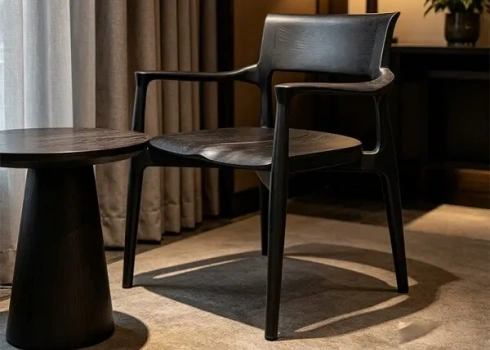
Dining & Suite Seating
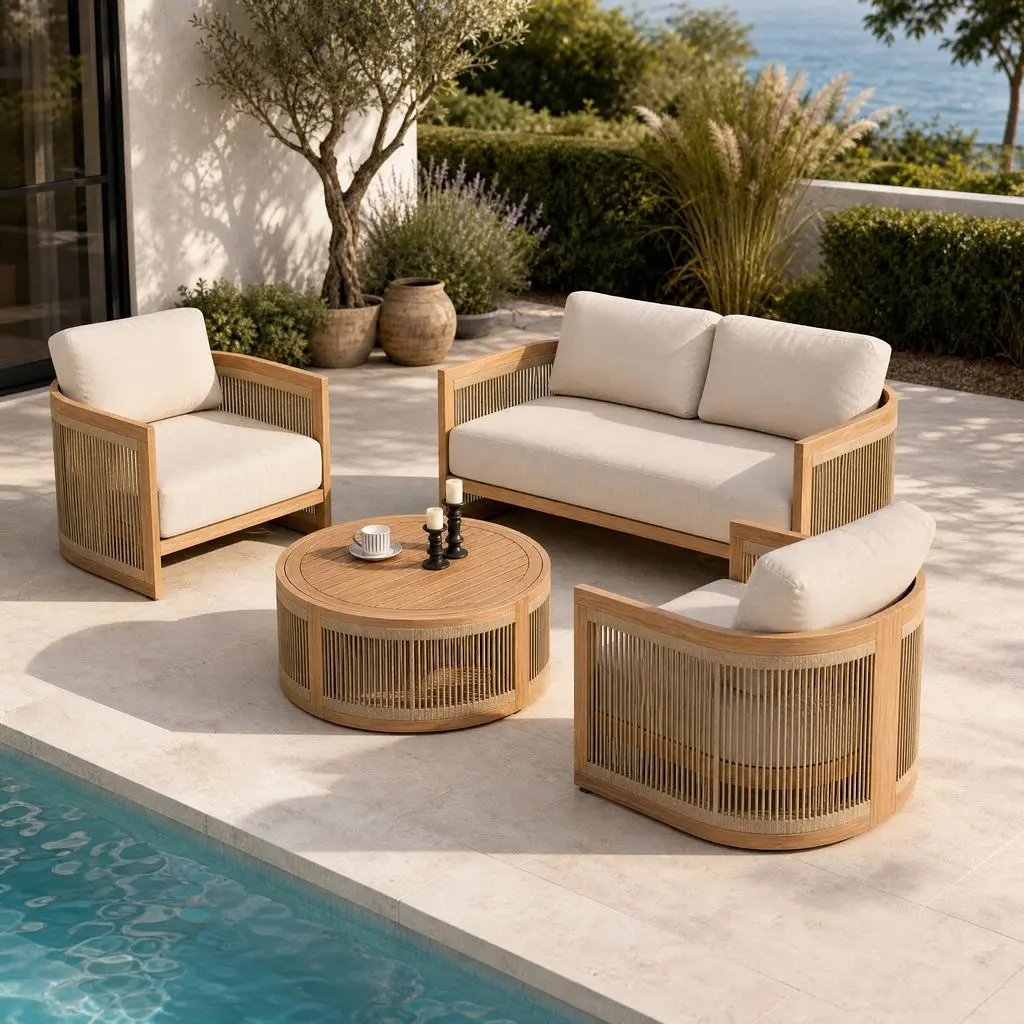 Pool Deck & Terrace
 Guestroom Bed
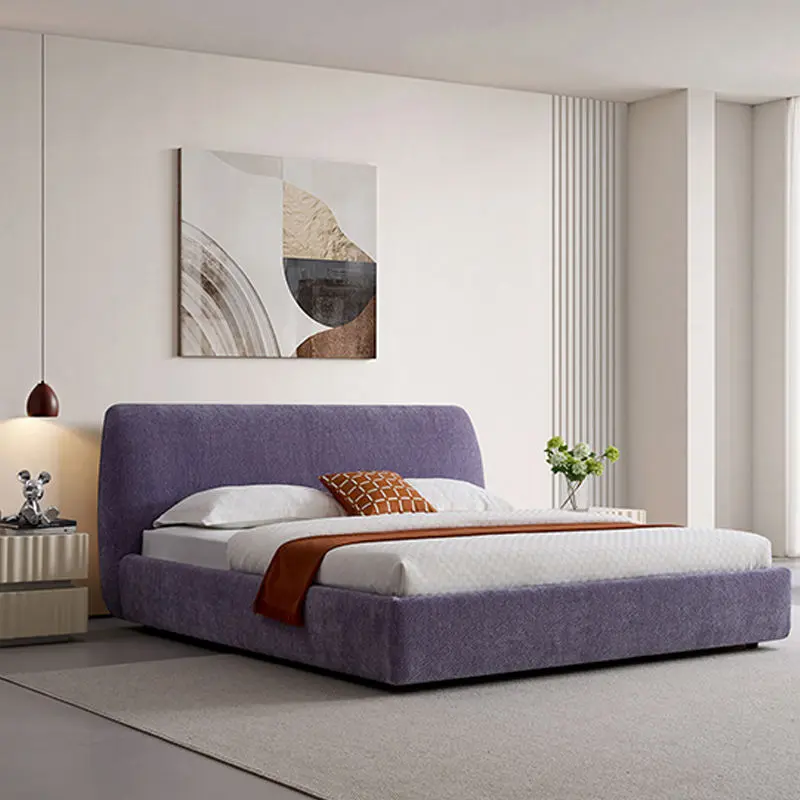 Luxury Suite Bed
Local Market Intelligence
The Houston Hospitality Furniture Landscape
Houston is not a single market — it is a set of micro-markets with different furniture requirements. Understanding this is the first step to specifying guestroom furniture that survives the warranty period.
- Energy Corridor & Westchase — corporate extended-stay and business-travel hotels where durability and quick-change casegoods matter more than decorative detail.
- Downtown & Medical Center — convention and medical-stay properties with tight loading windows and union labor on delivery.
- Galleria / Uptown — full-service and luxury flags where premium upholstered beds and accent seating define brand standards.
- Katy, Sugar Land & The Woodlands — suburban select-service builds where per-key furniture budgets are scrutinized line by line.
- Bay Area / Clear Lake & Galveston corridor — coastal humidity and salt air demand aluminum outdoor frames, marine-grade hardware and mold-resistant foam.
The consistent thread across all five: Houston's climate is subtropical, with high humidity for most of the year. Contract furniture that performs fine in Phoenix or Denver can delaminate, warp or develop odor in a Houston guestroom. Specification has to account for that.
Why this matters for procurement: Houston's hotel pipeline is dominated by conversions and renovations rather than ground-up luxury builds. That means furniture is typically ordered to a fixed opening date, in phased floor sets, often with a mock-up room approved only weeks before production. A supplier that cannot compress sampling, production and consolidation into that timeline becomes the critical path — regardless of price.
Supply Side Economics
What a Foshan Factory Actually Changes About Your Houston Project
"China factory" is not a marketing line. It is a specific cost structure, lead-time structure and capability structure. Here is what changes when you buy direct instead of through a U.S. distributor or a domestic contract manufacturer.
Cluster Density
Foshan's Shunde district concentrates upholstery, casegoods, metal fabrication, foam cutting and finishing within a short radius. A single finished guestroom can source its bed frame, nightstands, desk, chair and headboard from coordinated workshops that already speak the same tolerance language.
Structural Cost Delta
Factory-direct pricing removes distributor and rep margins that typically sit between 35% and 60% of landed contract furniture cost in the U.S. That delta either protects your per-key budget or funds upgrades on the items guests actually touch.
Compressed Custom Cycles
Our in-house sample shop can turn an approved designer drawing into a physical mock-up faster than most domestic contract houses, because tooling, foam CNC and upholstery sit in one facility rather than being subcontracted across three vendors.
Consolidated Container Loading
Texas-bound projects often mix guestroom, public-area and outdoor furniture. Because we produce nineteen categories, one container can leave Foshan fully loaded — reducing the ocean freight cost per unit and eliminating the multi-vendor coordination fee.
Specification Control
Fire-retardant foam, contract-grade fabrics, high-pressure laminate and moisture-resistant substrates can be locked at the material level rather than negotiated through an intermediary. What you approve in the sample room is what ships.
Export-Mature Logistics
Houston is served by the Port of Houston and a mature drayage network, but inland delivery to a project site is where novice exporters fail. Our post-sale team plans container sequencing, stacking protection and delivery windows around your GC's access schedule.
Sourcing Decision Matrix
Domestic Contract Manufacturer vs. Foshan Factory-Direct: An Honest Comparison
We are not going to pretend China wins on every dimension. Domestic contract manufacturers offer real advantages in lead time certainty, on-site service response and warranty handling. Here is the balanced picture Houston buyers should weigh.
| Dimension | U.S. Contract Manufacturer | Foshan Factory-Direct (Qingyumai) |
|---|---|---|
| Landed unit cost | Highest; includes domestic labor, distributor margin and rep commission | Lowest; distributor and rep layers removed, factory pricing retained |
| Typical lead time | 8–14 weeks depending on capacity and season | 10–16 weeks including ocean transit and inland drayage to Houston |
| Customization depth | Strong, but tooling changes are expensive at low volume | Strong at volume; dimensions, fabric, finish and branding all adjustable |
| Warranty response | Fast; domestic service technicians and local replacement stock | Requires planned replacement-parts reserve in the initial shipment |
| Compliance documentation | Native — CAL TB 117, NFPA 260, ASTM routinely handled | Available, but must be specified explicitly in the purchase order |
| Mixed-category orders | Usually requires multiple vendors | 19 categories under one purchase order and one QC standard |
| Best fit | Landmark luxury, tight-schedule renovations, brand-mandated domestic sourcing | Select-service pipeline, multi-property rollouts, conversion projects, value-engineered full-service |
Practical conclusion: the highest-value strategy for most Houston projects is a hybrid — source the high-touch, brand-defining pieces domestically where warranty response matters most, and source the volume guestroom furniture (beds, casegoods, desks, chairs, outdoor terrace sets) factory-direct where the cost delta is largest and replacement cycles are predictable.
Industry Trends
Five Forces Reshaping Hotel Guestroom Furniture in 2026 and Beyond
Guestroom furniture is no longer a background cost line. It is now a measurable driver of guest review scores, RevPAR positioning and asset resale value. These are the trends shaping specification decisions right now.
1. Durability as a Brand Standard
Owners are moving away from decorative casegoods toward commercial-grade laminate, powder-coated metal and high-density foam. The evaluation question has shifted from "does it photograph well" to "does it survive 400 room-nights a year."
2. Moisture and Mold Engineering
In Gulf Coast markets, sealed substrate edges, moisture-resistant MDF, open-cell foam alternatives and breathable upholstery backings are becoming specification requirements rather than optional upgrades.
3. Modular and Replaceable Components
Rather than replacing an entire bed or sofa when one element fails, procurement teams increasingly specify replaceable cushions, interchangeable headboard panels and bolt-on legs — extending asset life and reducing renovation cost.
4. Smart-Room Integration
USB-C outlets in nightstands, integrated bedside lighting and cable management channels are moving from luxury to baseline. Guestroom casegoods now need to be designed around technology, not retrofitted for it.
5. Local-Flavor Design Cues
Houston's identity — energy, aerospace, port culture, cultural diversity — is increasingly expressed through material choices: warm walnut tones, industrial metal accents and regionally inspired textile palettes rather than generic global-modern finishes.
Bonus: Sustainability Documentation
Brand standards increasingly ask for low-VOC finishes, recycled-content foam and FSC-certified wood. Suppliers that can produce these documents on request are being shortlisted faster than those that cannot.
What this means operationally: a guestroom furniture purchase is no longer a one-time transaction. It is the start of a 7–10 year asset lifecycle in which cushions, headboards, tabletops and outdoor fabrics will need to be replaced in stages. Specify a supplier who can still produce the same model in year five.
Localized Applications
Room-by-Room Specification for Houston Hospitality Projects
A guestroom is not a single furniture purchase. It is a coordinated set of pieces that must survive daily turnover, weekly deep cleans, and Texan humidity. These are the practical specification patterns we see working across Houston-area properties.
Guestroom Bed & Headboard
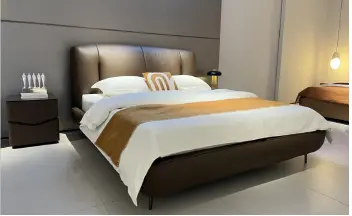
The bed is the highest-value and highest-abuse item in the room. Specify a steel-reinforced wood frame, high-density foam padding at the headboard contact zone, and bleach-cleanable upholstery. Integrated under-bed storage is a growing request as housekeeping teams seek to reduce lost-found items and hide spare linens.
Nightstands & Desks
Casegoods take the most daily contact. Commercial laminate with sealed edges, metal drawer runners and USB-C integrated outlets are baseline expectations for Houston business-travel properties. Avoid veneer on high-touch horizontal surfaces in humid guestrooms.
Lounge & Accent Seating
Guestroom lounge chairs are often the first item to show wear. Specify replaceable cushions, contract-grade foam density above 2.0 lb/ft³, and fabric with a Martindale abrasion rating above 30,000 cycles. Our bowl-shaped lounge chair with fiberglass shell and stainless base is a proven performer in this role.
Suite & F&B Seating
Suites and adjacent restaurant or lobby spaces call for dining-height chairs with solid wood frames and microfiber leather upholstery — a combination that photographs well, cleans easily and holds up to daily guest turnover.
Pool Deck & Outdoor Terrace
Houston's long pool season and coastal humidity make outdoor furniture a permanent, high-wear installation rather than a seasonal accent. Specify powder-coated aluminum frames, marine-grade stainless hardware, olefin or acrylic rope, quick-dry foam and solution-dyed acrylic cushions.
Public Areas & Lobby
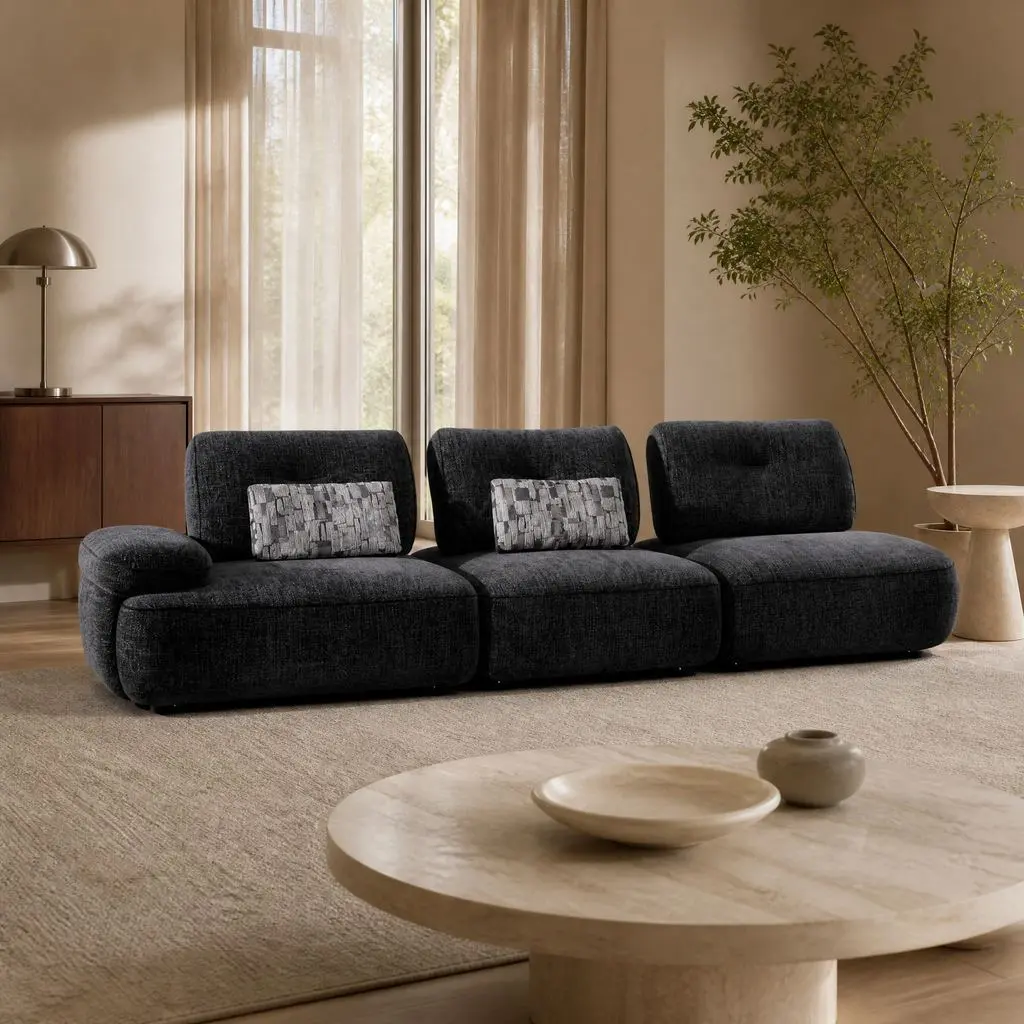
Lobby seating must survive continuous daily use. Modular sectionals with washable covers and high-resilience foam allow gradual renewal of worn modules without replacing the entire piece — a strategy increasingly used by asset managers planning 5-year refresh cycles.
Macro-Level Solution
From Single Room Mock-Up to Multi-Property Rollout
Most hotel furniture problems are not product problems — they are coordination problems. Our integrated manufacturing model is built specifically to remove coordination risk from mid-size and large hospitality programs.
-
Project Brief & Spec Review
Share drawings, brand standards, target market and per-key budget. Our consultants map each room type to the right category and material tier.
-
Material Engineering
We recommend frames, foams, finishes and fabrics that meet Texas humidity conditions and the regulatory standards of your brand and market.
-
Sample Room Approval
A full mock-up room is produced and shipped for on-site approval. Dimensions, comfort, fabric and finish are locked before mass production begins.
-
Phased Production & QC
Floor sets are produced in sequence aligned to opening dates. Internal QC engineers audit structural durability and finish consistency inline.
-
Container Consolidation
Guestroom, public-area and outdoor furniture are loaded into sequenced containers with multi-layer export crating to reduce damage in transit.
-
Delivery Coordination
We coordinate with freight forwarders and Houston-side drayage partners around GC access windows and union labor requirements.
-
Punch List Support
Replacement components and reserved spare parts are shipped in a planned reserve, so post-opening touch-ups do not stall the property's soft opening.
-
Lifecycle Refresh
Five years after opening, we can still produce the same model, or an evolved version, for phased refresh cycles without full room replacement.
- OEM Manufacturing
- ODM Design Partnership
- FF&E Package Coordination
- Fire-Retardant Foam
- Contract-Grade Fabric
- Moisture-Resistant Substrate
- Steel-Reinforced Frames
- Container Consolidation
- Spare-Parts Reserve
Global Buyer Perspective
What Global Hotel Groups Actually Ask For
Across hundreds of conversations with hotel owners, procurement managers, interior design firms and importers — from North America to the Middle East and Southeast Asia — the questions converge on the same five themes. Understanding them is what separates a productive supplier relationship from a frustrating one.
- Can you replicate this drawing consistently? — Repeatability across a multi-room order matters more than a brilliant one-off sample.
- Do you have documentation for our compliance requirements? — Flammability, low-VOC finishes, FSC wood, and increasingly recycled-content foam.
- Can you ship in phases? — Many properties open floor-by-floor and cannot warehouse an entire building's furniture.
- What happens after punch list? — Replacement-parts availability is often more important than initial price.
- Can you hold the same model for years? — A supplier who discontinues a bed after three years forces an entire floor to be refurnished.
These five questions are the practical substance of E-E-A-T in furniture sourcing. A manufacturer that can answer all five is worth more to a project than one that merely quotes a lower unit cost.
Extended Guestroom & Project Catalog
Eight More Models Specified for Houston-Area Hospitality Projects
From upholstered beds and modular sectionals to dining chairs and outdoor loungers, these are the additional categories most often included in Houston hotel furniture packages.
 Guestroom Bed
 Lobby Sectional
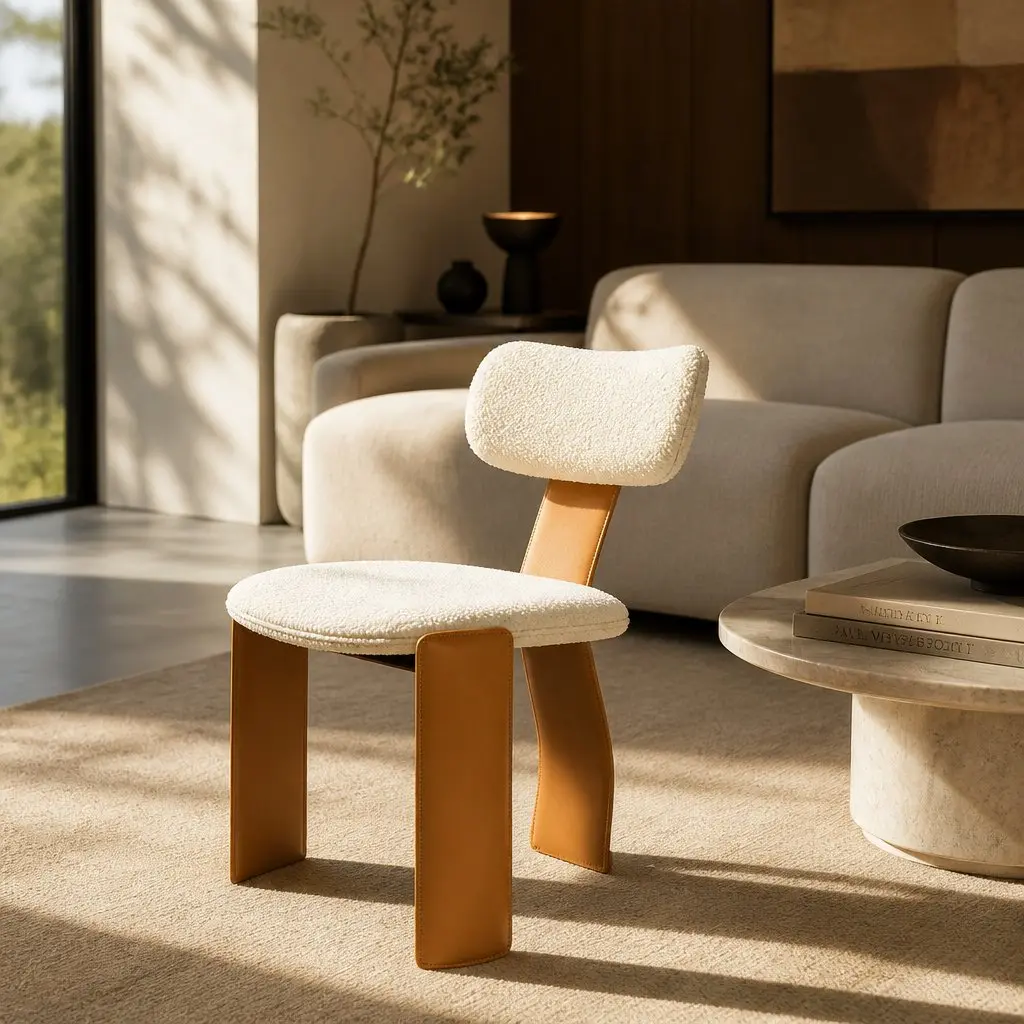 Dining Chair
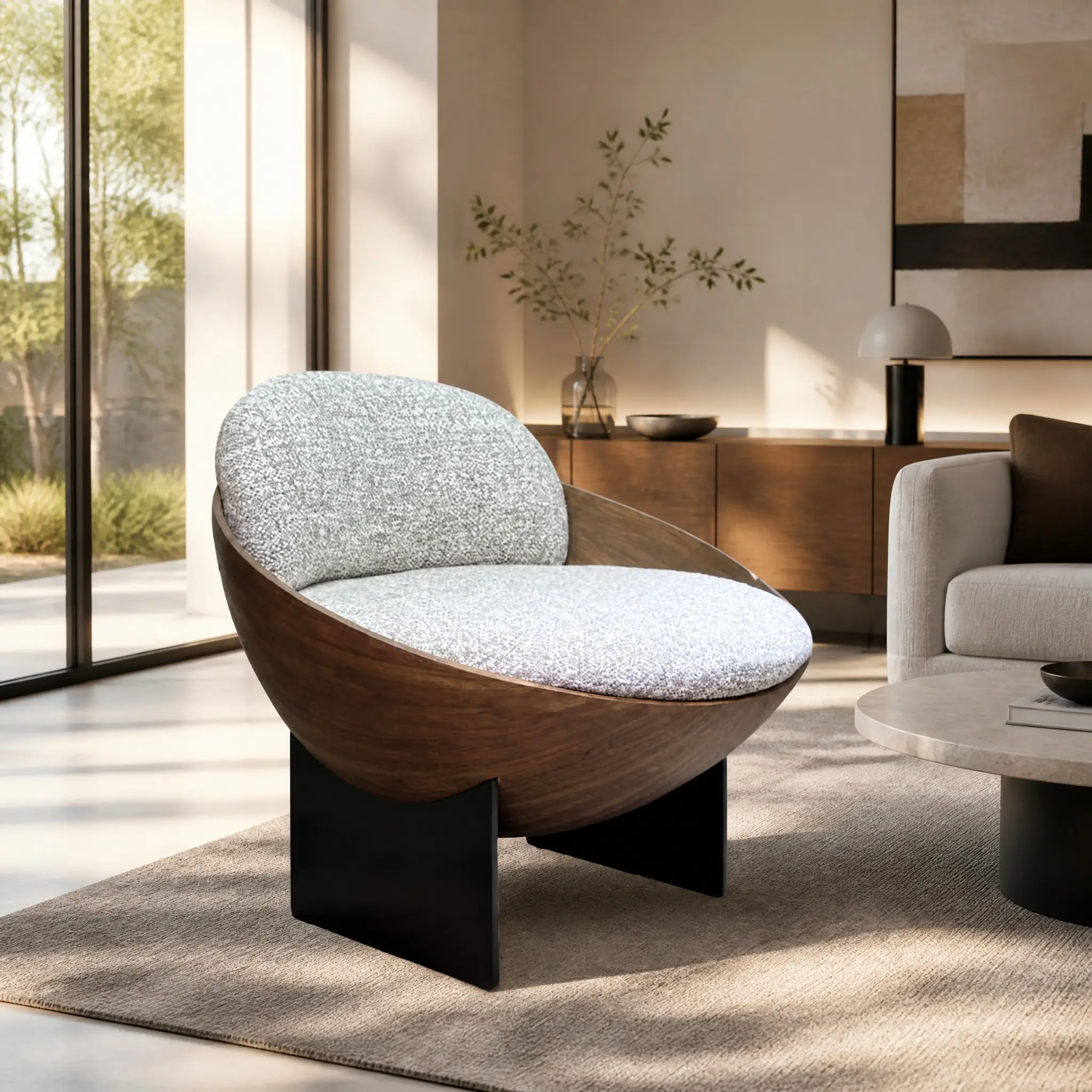 Lounge Chair
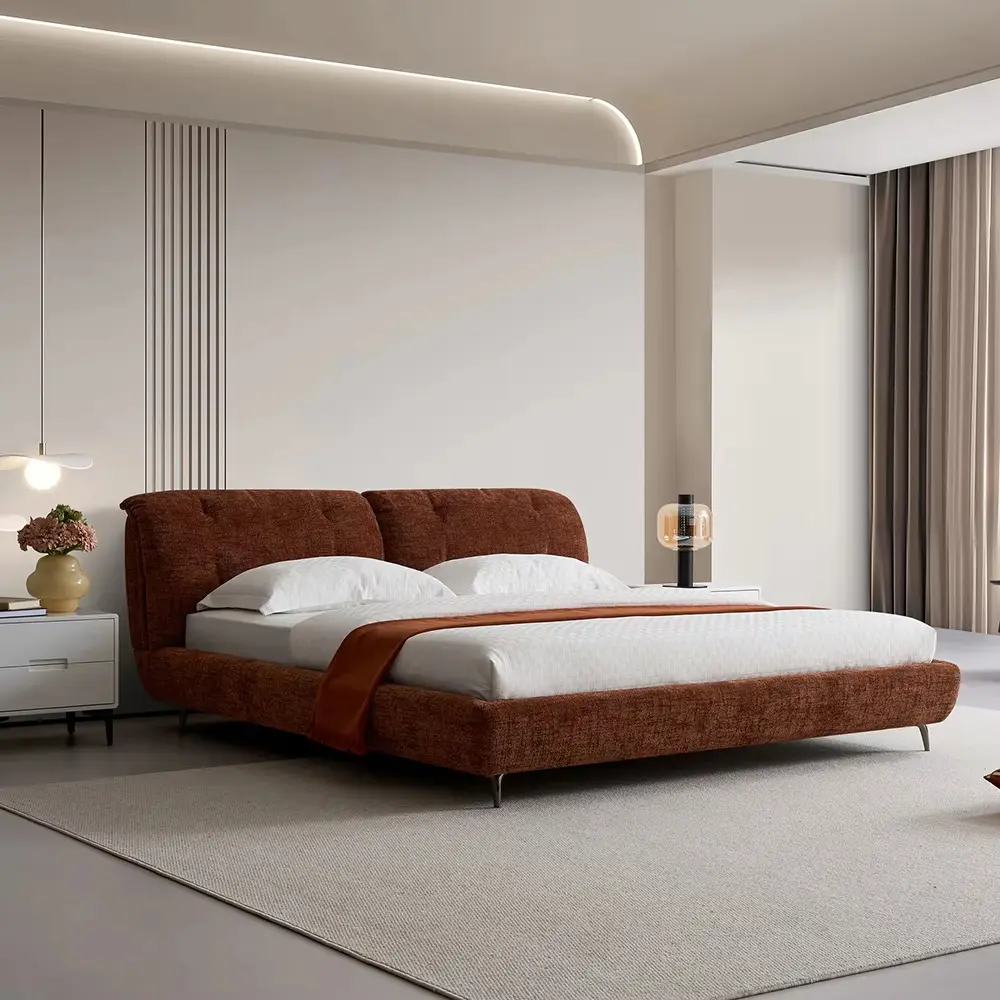 Platform Bed
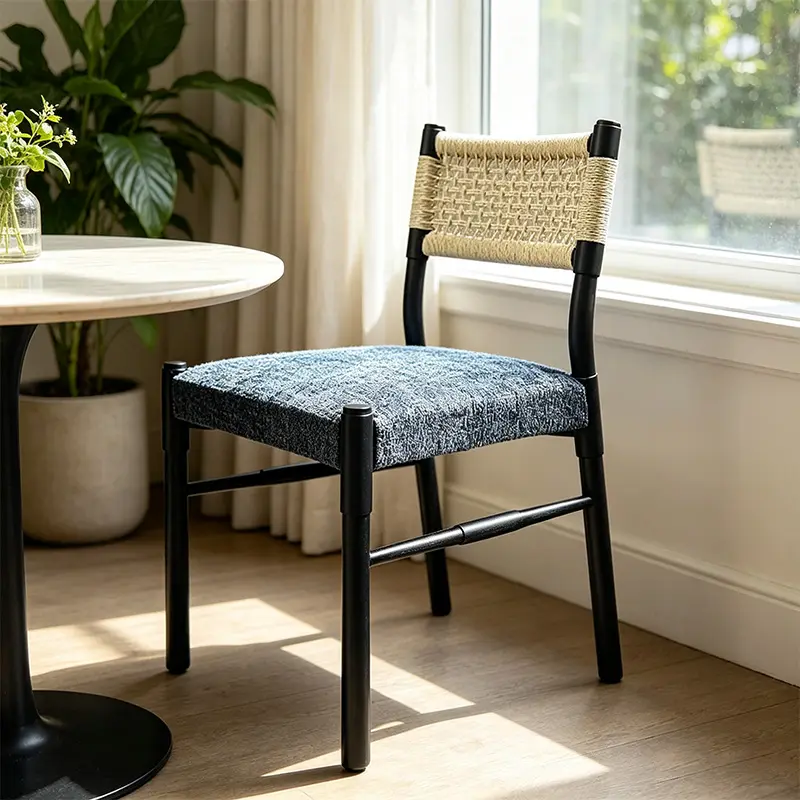 Restaurant Seating
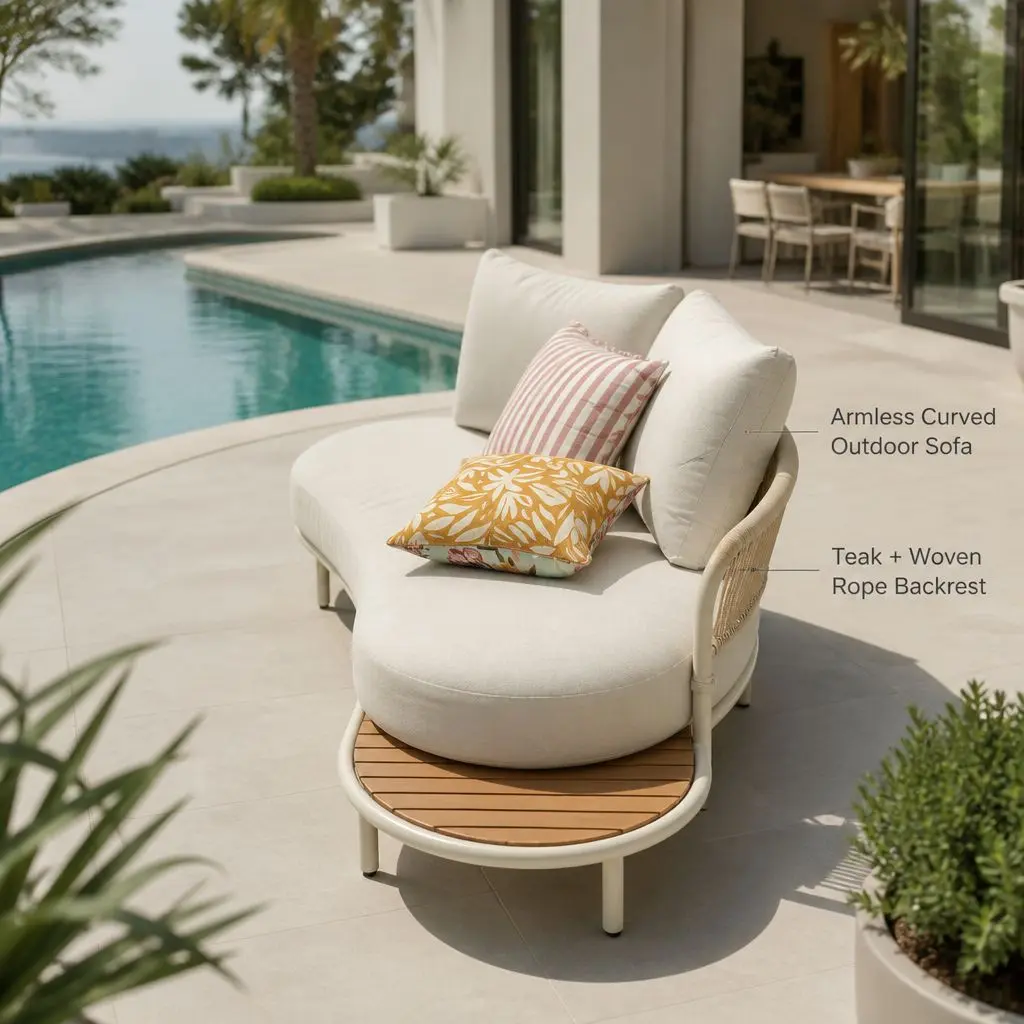 Outdoor Sofa
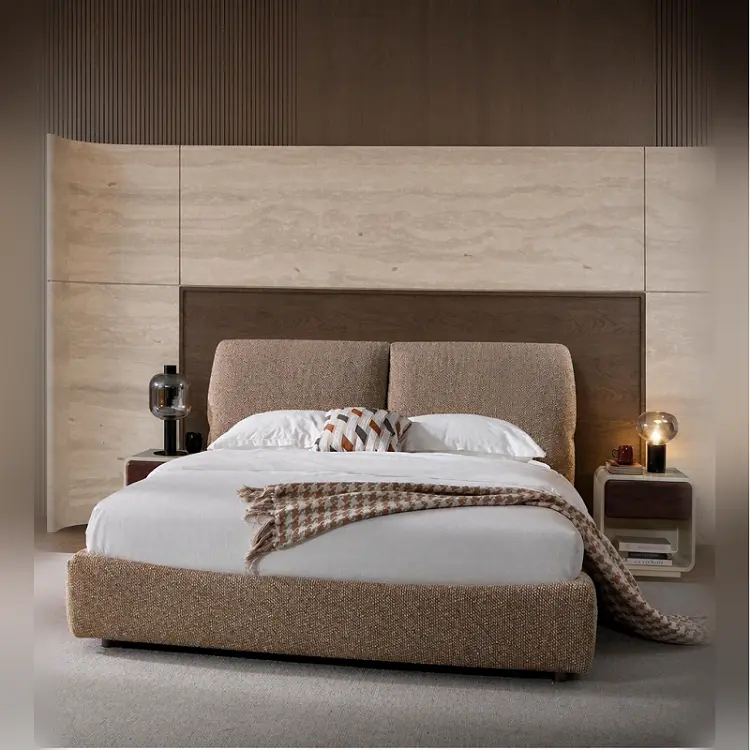 Suite Bed
Manufacturer Credentials
Why Houston Buyers Should Care About Where Their Furniture Is Actually Made
The phrase "factory-direct" is used loosely. Genuine factory-direct sourcing means the entity quoting your project actually owns or directly manages the production line that will build it. Here is what that looks like in practice.
Owned Production Facility
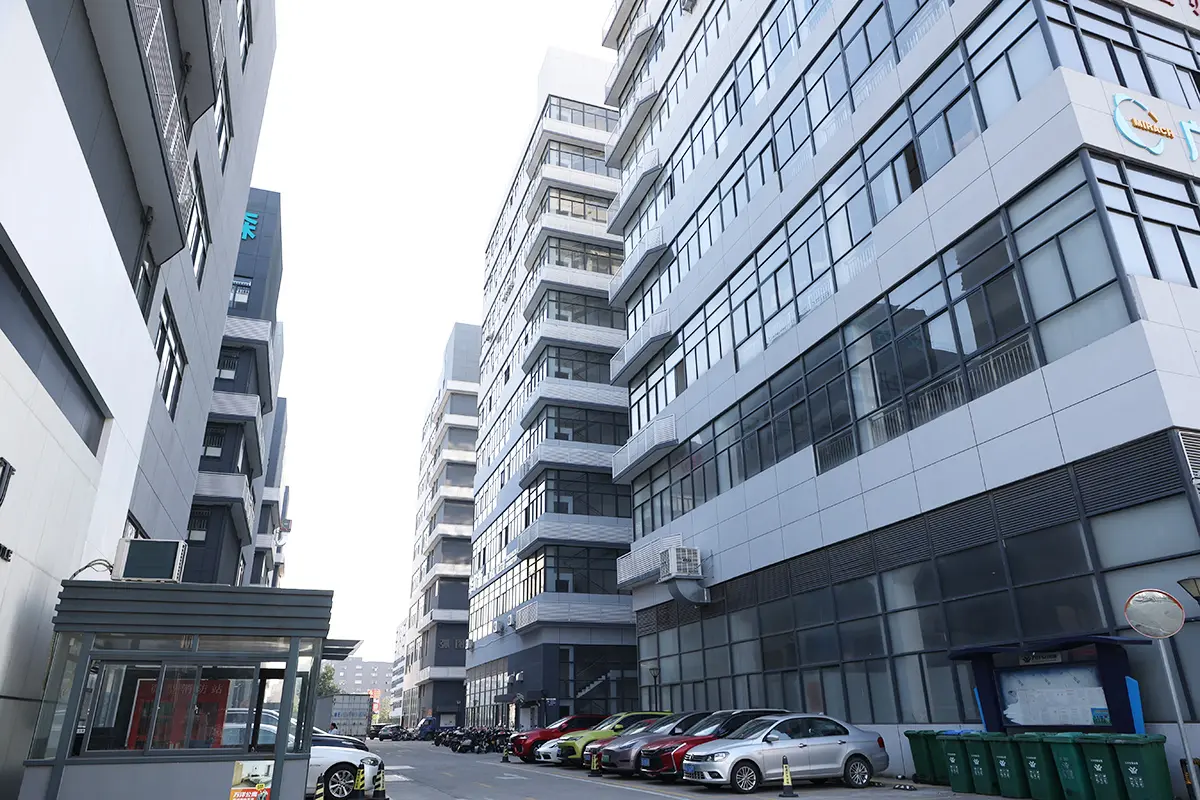
Foshan Qingyumai Technology Co., Ltd. operates its own production facility in Longjiang, Shunde — the heart of China's most established furniture manufacturing cluster. R&D, sampling, upholstery, QC and export documentation sit under one roof.
Audited Partner Network
For categories outside our own line — casegoods, mattresses, outdoor — we work through a long-established network of audited specialist factories. Buyers receive one purchase order and one QC standard, not a list of suppliers to manage.
Documented Track Record
More than a decade of export experience across North America, Europe, the Middle East and Southeast Asia, supported by 100+ original design and structural patents on file. Buyers are welcome to arrange factory and showroom visits before committing.
For serious Houston buyers: a pre-award factory visit — either in person or via a live video walkthrough — is the single highest-value verification step available. Seeing the production floor, the sample room and the QC station answers most of the questions that a catalog cannot.
Buyer FAQ
Frequently Asked Questions from Houston-Area Hotel Buyers
Straight answers to the questions that come up most often from owners, developers, procurement managers and designers evaluating Foshan-based hotel guestroom furniture supply.
Can a Chinese factory actually meet U.S. hotel fire and flame-retardant requirements?
Yes, when it is specified explicitly. California TB 117-2013 for upholstered furniture, NFPA 260 and NFPA 261 for fabric and foam assemblies, and ASTM E84 for surface materials can all be met using contract-grade FR foam and fabrics that we source routinely. The critical point is that these must be written into the purchase order — they are not automatic. Our pre-sale team will recommend material configurations aligned with your brand standard, your local AHJ and your insurer's requirements before any production begins.
What is the realistic timeline from approved sample to furniture arriving in Houston?
Typical schedule: 7–14 days for sample room production, 3–5 days for sample shipping and on-site approval, 10–16 weeks for mass production depending on order size and category mix, 4–6 weeks ocean freight to the Port of Houston, and 1–2 weeks for customs clearance and inland drayage to the project site. Total: roughly 4–6 months from sample approval to delivery. On projects with a fixed opening date we sequence floor sets so the first rooms can be set while later sets are still in production.
How does your guestroom furniture handle Houston's humidity?
Houston's subtropical climate is the most common performance concern we hear from local buyers. Our standard specification for the Gulf Coast market includes moisture-resistant MDF substrates with sealed edges, high-density foam with moisture-resistant backing, powder-coated metal components, and upholstery fabrics selected for resistance to mold and mildew. For outdoor and pool-deck furniture we specify powder-coated aluminum frames, marine-grade stainless fasteners, olefin or solution-dyed acrylic rope, and quick-dry foam. This is not a premium option — it is the baseline specification we recommend for Texas projects.
Can you do a mock-up room before committing the full order?
Yes — and we strongly recommend it for any hotel project of meaningful size. A full mock-up room is produced in Foshan and shipped for on-site approval by ownership, brand and design teams. Dimensions, comfort, fabric hand-feel, finish color and hardware are confirmed before mass production begins. For multi-property rollouts the mock-up becomes the reference standard for every subsequent floor set.
What happens if a component fails two years after opening?
This is where factory-direct sourcing needs thoughtful planning. Because shipping individual replacement parts from China is slow, we recommend including a planned spare-parts reserve in the initial shipment — extra cushions, drawer runners, table tops and hardware for the most wear-prone items. For a typical select-service property this reserve adds a modest percentage to the initial order but dramatically reduces post-opening disruption. Five years after a project opens, we can still produce the same model or an evolved version for phased refresh.
Do you charge a separate fee for custom designs, fabrics or branding?
Customization is priced case by case. Adjusting dimensions, upholstery colors, frame finishes and fabric grades within our standard production framework rarely carries a separate design fee. Deep custom tooling — an entirely new structural design, for example — may require a one-time development charge that is typically credited against the first production order. Private-label branding such as custom woven labels, embossed logos and branded packaging is handled as a per-unit cost.
Can I combine guestroom, public-area and outdoor furniture in one container?
Yes, and for many Houston projects this is the most economical structure. Because we produce across nineteen categories, one container can leave Foshan loaded with beds, nightstands, lobby seating, dining chairs and pool-deck loungers together. Our post-sale team plans the loading sequence carefully, using multi-layer export crating and stacking rules that reduce transit damage while maximizing container fill. The result is a lower ocean freight cost per unit than splitting the same order across multiple suppliers.
Are factory visits welcome?
Yes. Buyers, designers and procurement teams are welcome to visit our facility and showroom in Longjiang, Shunde District, Foshan, Guangdong. For teams unable to travel, we can arrange a live video walkthrough of the production floor, sample room and QC station. A pre-award visit — in person or virtual — is the single most effective way to verify capability before committing a project.
Work With Us
Planning a Houston Hotel Furniture Package?
Send us your room count, brand standard and opening timeline. Our export team will respond with a category-by-category proposal, material specification aligned to Gulf Coast conditions, and a realistic landed-cost estimate for delivery to your project site.