
Market Context
Why Norwegian Buyers Need a Different Leather Sofa Playbook
Norway is not a generic "Scandinavian market." Its purchasing calendar, climate envelope, freight structure and public-procurement rules all shape which leather sofas actually sell — and which simply sit in a warehouse in Bergen with a humidity problem.
Norwegian furniture retail is dominated by a small number of chains and buying groups, with a long tail of independent studios in Oslo, Bergen, Trondheim, Stavanger and Tromsø. For importers and project buyers, the commercial logic is straightforward: high labour cost, high living standards and a strong preference for durable, repairable materials mean leather remains a premium, defensible category — particularly full-grain and corrected-grain leathers that tolerate the dry indoor air of heated apartments.
At the same time, Norway's climate is a genuine technical challenge for leather. Indoor relative humidity in winter-heated homes can fall well below 30%, while coastal humidity in Bergen and Stavanger can climb. A sofa that performs acceptably in a Foshan showroom can show surface cracking, seam stress or dye migration in a Norwegian living room within two heating seasons. That is why experienced Norwegian buyers now select suppliers on material specification and finishing discipline, not on the lowest container price.
This guide consolidates the practical intelligence our export team has built across Nordic B2B orders: what Norwegian buyers actually ask for, how Chinese leather sofa factories can support them, where the supply chain is resilient, and what compliance looks like when a sofa enters Norway.
Featured Leather & Comfort Series
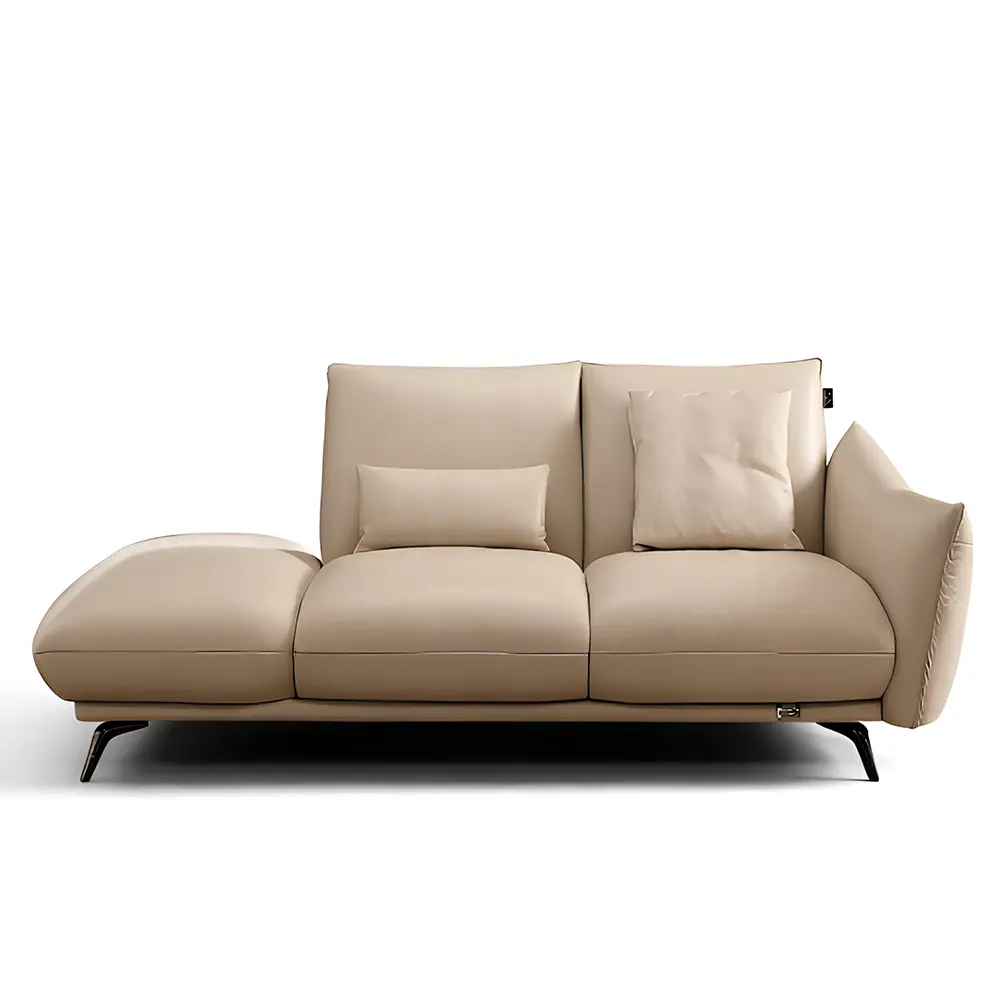
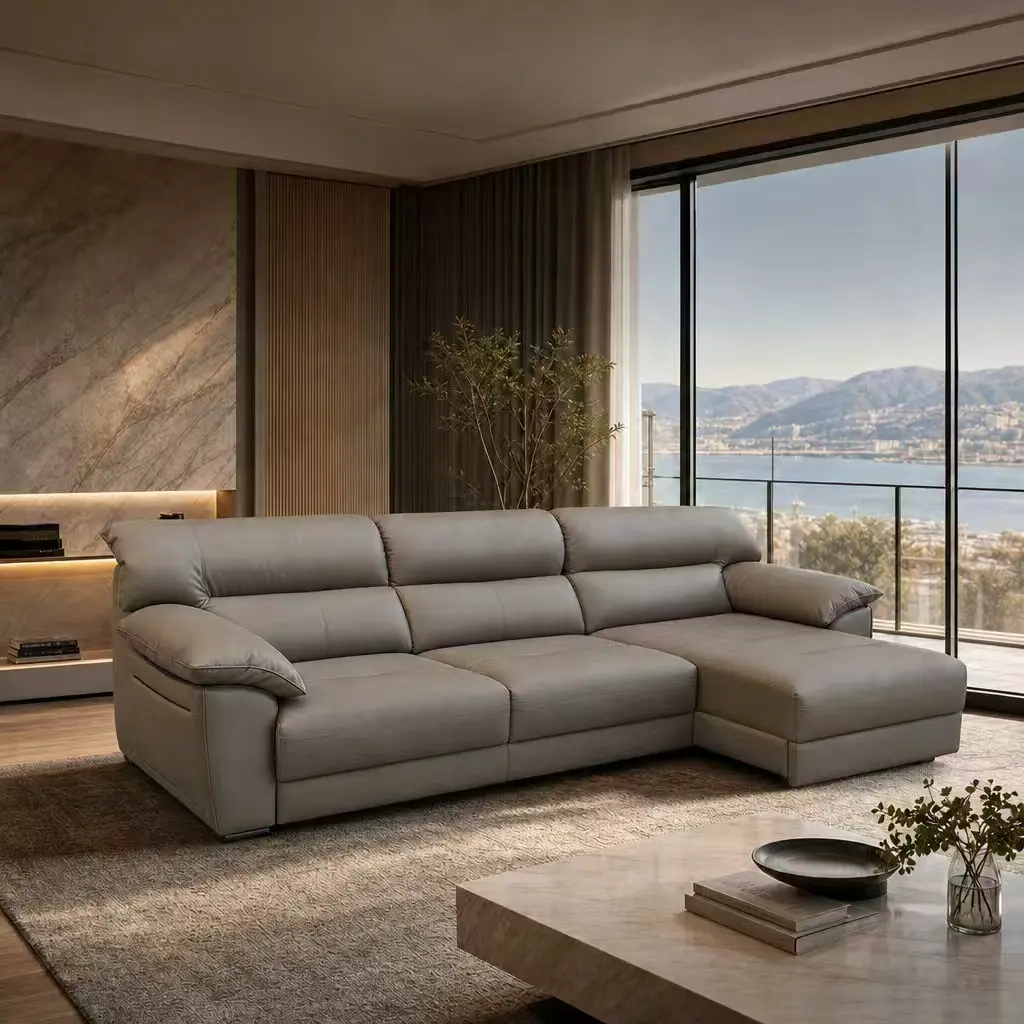
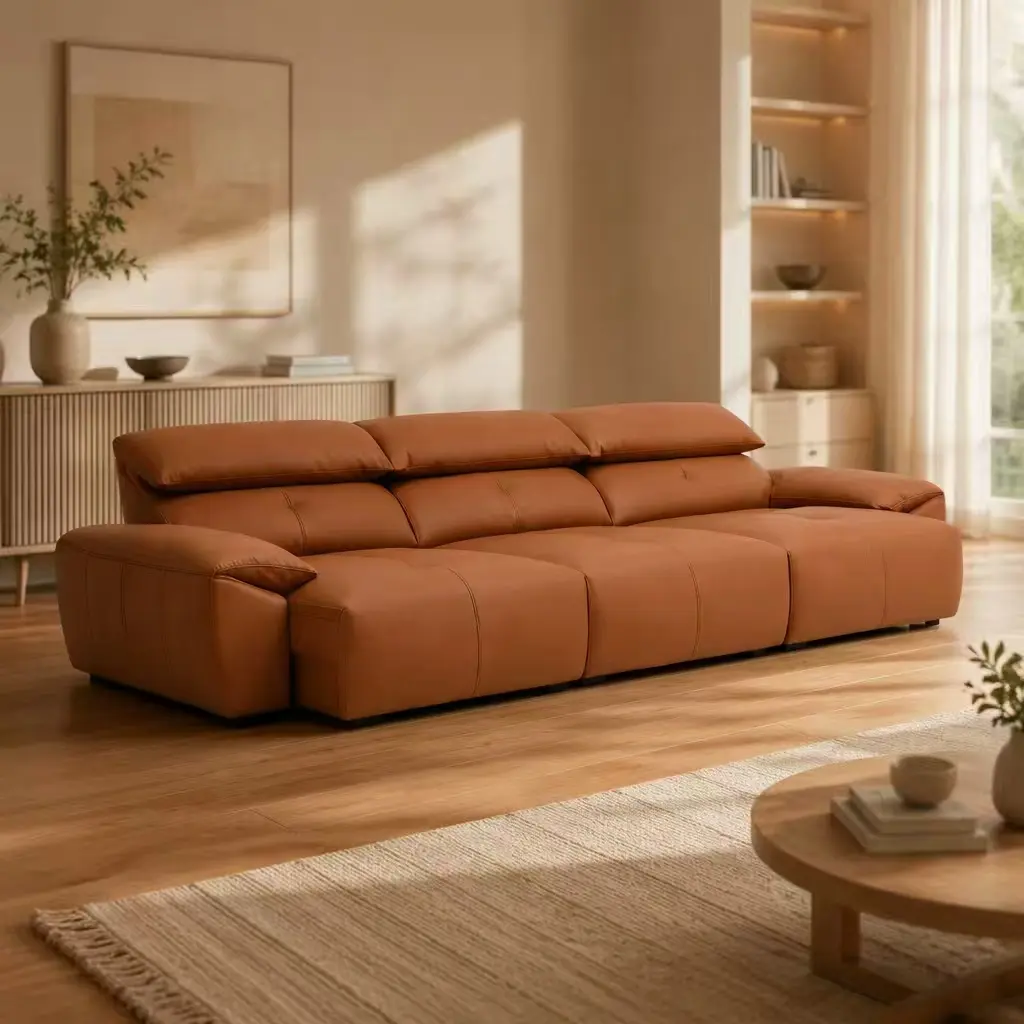
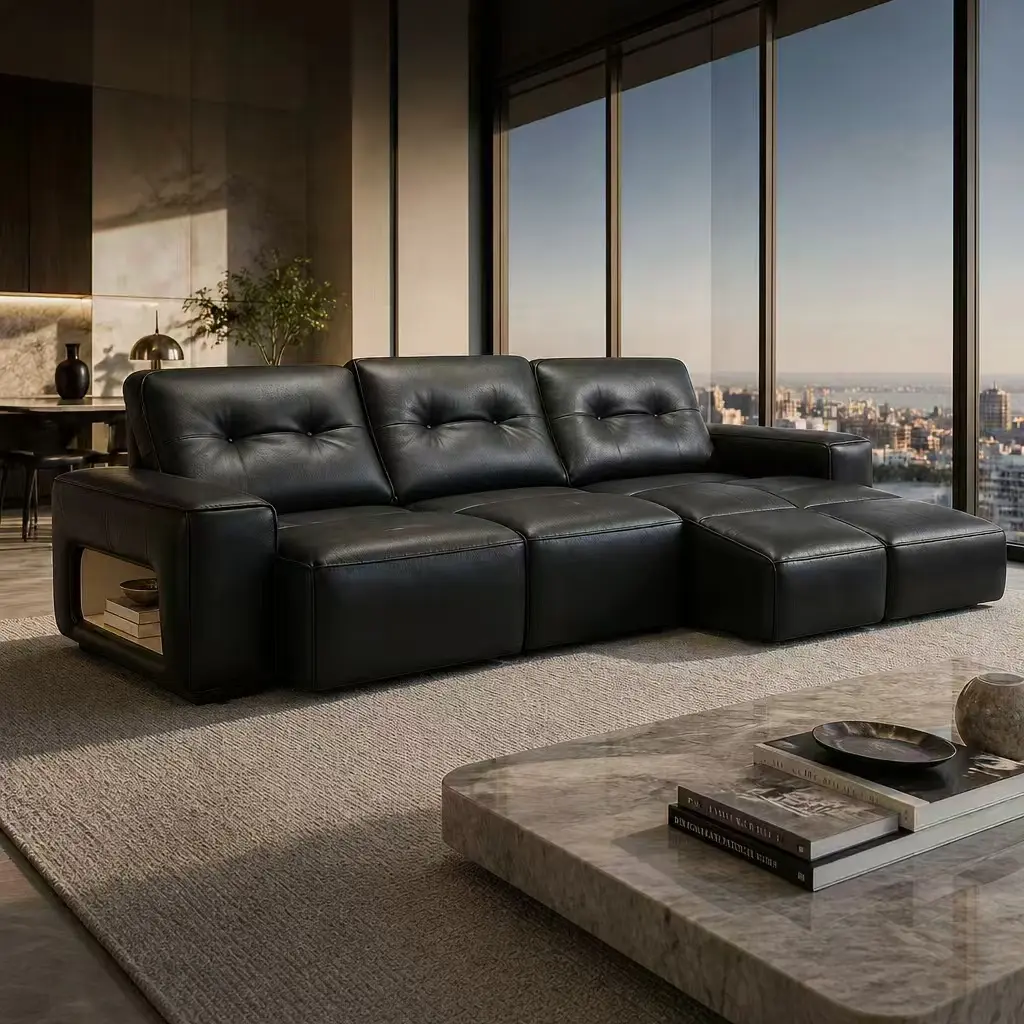
Four Signature Models for Norwegian Living Rooms & Hotel Suites
Each platform below is engineered for cold-climate interiors: controlled leather finishing, high-resilience foam cores and modular structures that survive stairwells and narrow Nordic apartment entrances.
Norway Commercial Landscape
The Leather Sofa Business in Norway: Retail, Projects & Public Procurement
Norway's furniture market is comparatively small in population — around 5.5 million people — but unusually high in per-capita furniture spend. That combination produces a market that rewards quality-first positioning and punishes generic volume dumping. Three demand channels matter most for leather sofas:
Retail Chains & Buying Groups
Concentrated retail means a single listing decision can move container volumes. Buyers prioritise consistent dye lots, stable lead times and repeatable QC across shipments.
Hospitality & Property Projects
Hotels, serviced apartments and commercial interiors in Oslo, Bergen and Stavanger specify contract-grade leather with documented abrasion cycles and fire performance.
Public Sector & Offices
Municipal and state procurement follows strict tender rules, requiring documentation, environmental declarations and long warranty commitments from suppliers.
A structural feature of the Norwegian market is the durability expectation. Norwegian consumers and contract buyers tend to keep furniture for a decade or more, and public debate around fast furniture and consumption has increased. For suppliers, this shifts competitive advantage away from "cheapest FOB" toward repairability, replaceable covers, and leathers with a proven finish system.
Freight geography also matters. Most Norwegian imports of Asian furniture arrive via Gothenburg or Rotterdam feeder services, or directly into Oslo, Bergen and Narvik. Ocean transit from South China typically runs 30–45 days door-to-door depending on routing — meaning a Chinese supplier's production planning discipline directly affects whether a retailer can hit the autumn selling season.
Localized Application Scenarios
Where Leather Sofas Actually Go in Norway
Norwegian interiors are shaped by daylight scarcity, small floor plans in city apartments and generous cabin and coastal homes. Leather sofas are specified differently across each scenario.
Urban Apartments — Oslo, Bergen, Trondheim
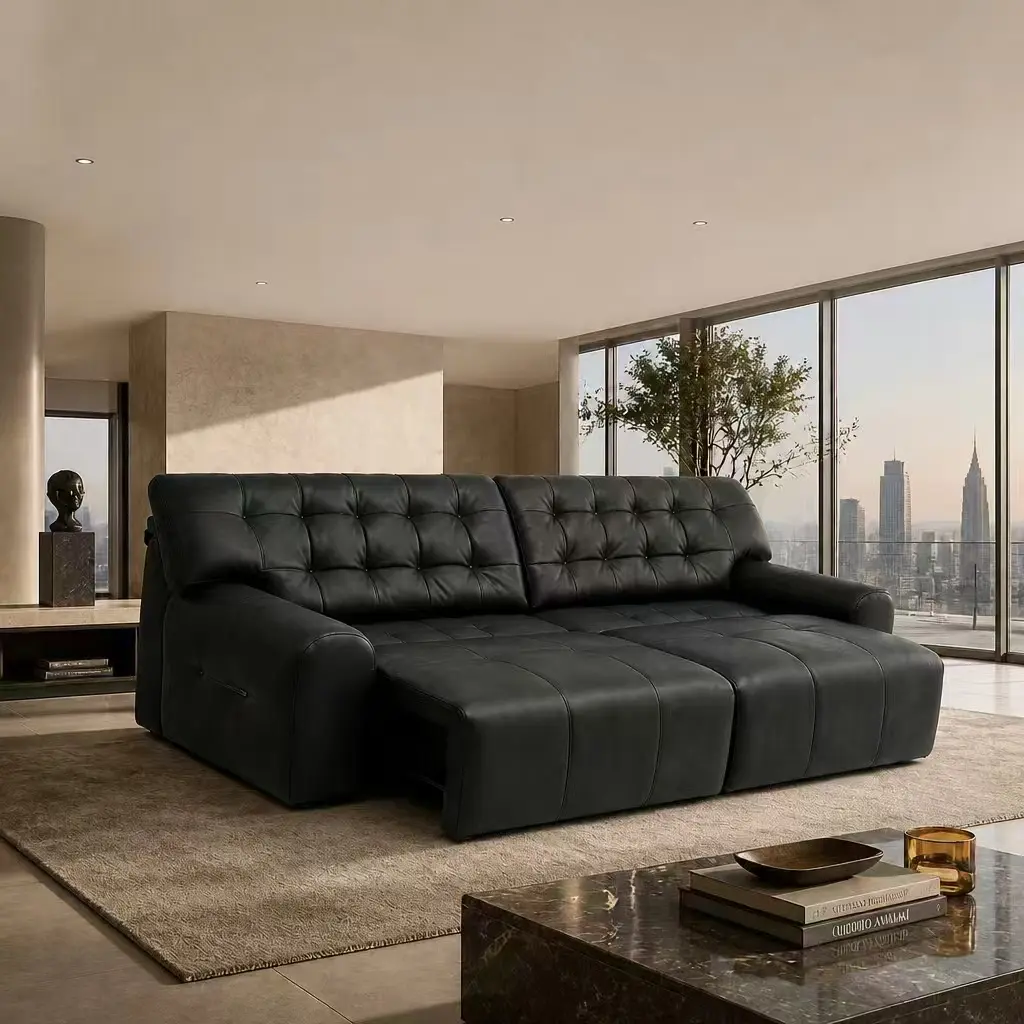
Compact L-shape and modular leather sectionals with narrow arms and removable backs dominate. Lift access and stairwell turns are the limiting factor — modular construction that splits into 60–80 cm modules is often the deciding specification. Our Italian-style leather sectional is frequently configured this way.
Hytte & Coastal Cabins
The Norwegian cabin market is substantial. Buyers want leather that resists sand, damp air and wood-stove dryness, with low-maintenance surfaces and strong seam construction. Corrected-grain and pigmented leathers with protective topcoats outperform untreated aniline finishes here.
Hotel Lobbies & Suites
Contract leather must meet fire-performance expectations and survive heavy daily use. Reclining and electric variants — such as our electric reclining sectional — are increasingly specified in suites and executive lounges.
Multi-Function Guest & Student Housing
Convertible leather sofa beds answer space constraints in student cities. Electric pull-out mechanisms reduce physical handling, which matters where tenants turnover frequently. See our power sofa bed range.
Technical Roadmap & Future Outlook
Leather Sofa Technology Roadmap for Cold-Climate Markets (2025–2030)
Material and mechanism innovation is moving faster in upholstered furniture than in almost any other wood-based category. For Norwegian buyers, four technology tracks are commercially relevant.
Phase 1 — Finish Engineering & Climate Stability
Water-based topcoat systems with improved flex resistance and reduced plasticiser migration, targeting low-humidity indoor environments. Expect tighter specification of flex cycles and colour-fastness to rub and light.
Phase 2 — Mechanism Intelligence
Quieter, more efficient recliner motors and USB-C power integration. Norwegian buyers increasingly ask for low-standby-power mechanisms and serviceable actuator modules that can be replaced without returning the sofa.
Phase 3 — Circularity & Repairability by Design
Modular cushions, zip-on leather covers, and documented spare-part catalogues. This directly answers Norwegian expectations on longevity and aligns with emerging EU rules on repairability and digital product information.
Phase 4 — Transparency & Digital Product Passports
Traceable leather supply chains with tannery-level documentation, and QR-linked product data covering origin, care and end-of-life. Early preparation gives suppliers a tender advantage in public and large-scale projects.
Supply Chain Resilience
Why the Chinese Leather Sofa Supply Chain Remains Norway's Most Efficient Option
Discussions about supply-chain risk are legitimate, but they should be evidence-based. For leather upholstered furniture, the Foshan–Shunde cluster offers depth that no alternative region currently matches at scale.
- Dense tannery, foam, hardware and mechanism ecosystems within a short radius, reducing lead-time variance.
- Deep pool of skilled upholsterers and pattern-makers, which is the real bottleneck in leather sofa production.
- Container consolidation across categories — sofas, beds, mattresses, dining and outdoor — under one purchase order.
- Mature export documentation, inspection workflows and multi-layer crating designed for long ocean transit.
Kunmingmai's model complements in-house production with an audited partner-factory network, which absorbs seasonal peaks and keeps delivery commitments realistic. For Norwegian buyers planning an autumn retail launch, that capacity flexibility is often more valuable than a marginally lower unit price.
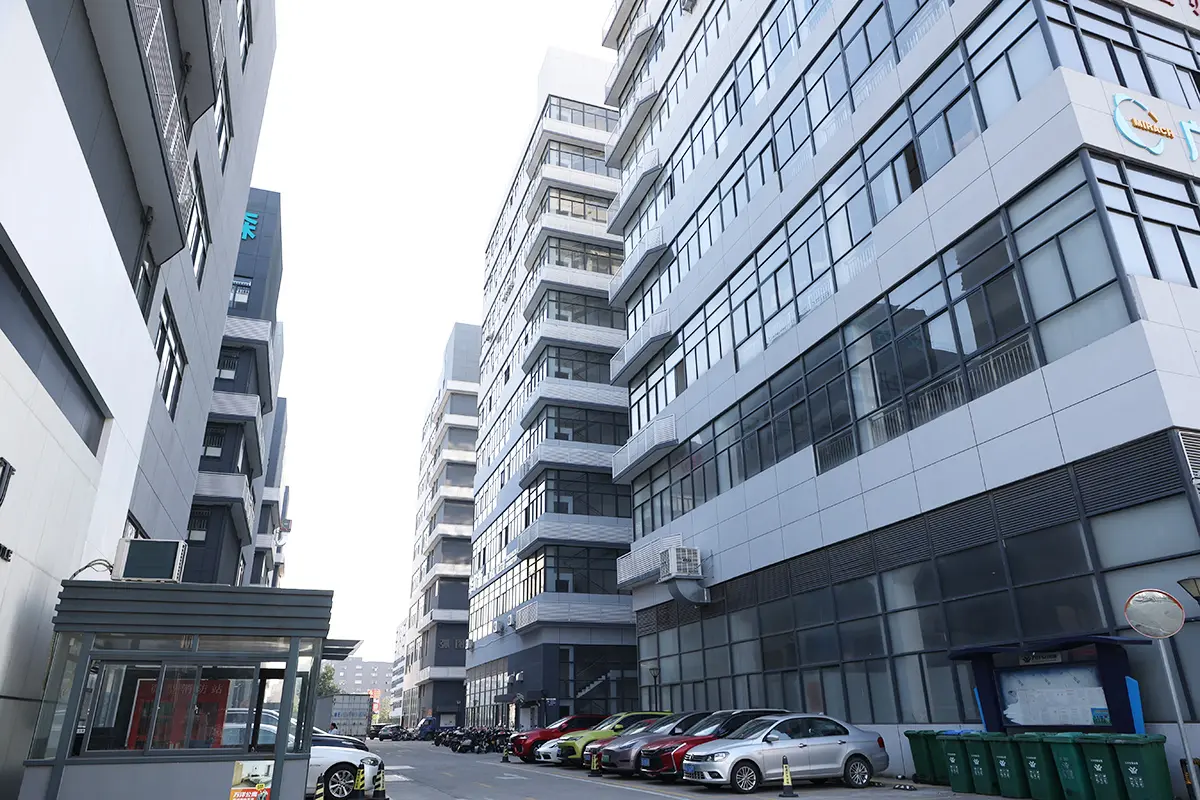
10+Years of export experience
100+Original design & structure patents
19Furniture categories in production
30–45Typical ocean days to Norwegian ports
Global Industry Snapshot
Global Leather Upholstery: Where Norway Sits in the Demand Map
Globally, leather upholstery demand is bifurcating. Volume-driven markets — parts of the Middle East, Southeast Asia and Latin America — prioritise competitive pricing and decorative finishes. Mature markets — Northern Europe, North America, Japan and Australia — prioritise material integrity, certification and long service life. Norway belongs firmly to the second group.
This has three practical consequences for procurement:
| Dimension | Volume-Driven Markets | Mature Nordic Markets (incl. Norway) |
|---|---|---|
| Leather grade | Split / bonded / heavy-corrected | Full-grain, top-grain, controlled corrected-grain |
| Primary decision factor | Unit price | Durability, finish stability, compliance |
| Warranty expectation | 1–2 years | 5–10 years structural, documented |
| Documentation | Minimal | Material specs, test reports, care data |
| Typical order profile | High volume, short cycle | Repeat orders, stable specification |
For Chinese manufacturers, the strategic insight is that Nordic business is won on consistency and documentation, not on price alone. Suppliers who can demonstrate repeatable finishing and reliable QC are structurally advantaged in Norway.
Localization, Compliance & Support
Entering Norway: Documentation, Rules and Practical Support
Norway is not an EU member, but it participates in the EEA. That means most EU product rules apply, while customs and VAT follow Norwegian national rules. Below is the practical checklist our export team uses for Norwegian orders.
Product Safety & Fire Performance
Upholstered furniture placed on the Norwegian market should meet applicable EEA product-safety requirements. Contract and hospitality buyers typically request documented fire-performance data for upholstery combinations. Always confirm the exact test standard with your Norwegian customer before production.
Chemicals & Materials
REACH-style restrictions are referenced through EEA membership, and Norwegian authorities maintain additional national restrictions on certain substances. Leather treatment chemicals, flame retardants and coatings should be declared at tannery level.
Customs, VAT & Import
Norway applies its own customs tariff and VAT regime; VAT is generally collected on import. Accurate HS classification of sofas, mechanisms and separate components prevents delays at Oslo or Bergen. Buyers should confirm Incoterms and customs responsibility clearly in the purchase contract.
Packaging & Wood Materials
Wood packaging must comply with ISPM 15 phytosanitary rules. Multi-layer export crating protects leather surfaces from transit abrasion and moisture, and clear labelling speeds customs handling.
Language & After-Sales
Assembly instructions, care labels and warranty documents in Norwegian or English improve end-customer experience and reduce returns. We support bilingual documentation and a spare-part catalogue for long-term serviceability.
Sampling & Pre-Production
Pre-production samples confirm leather hand-feel, colour and seat comfort before mass production — critical given that leather colour can shift between dye lots. Sampling also allows Norwegian buyers to test the sofa in real interior conditions.
Complete Range for Norwegian Buyers
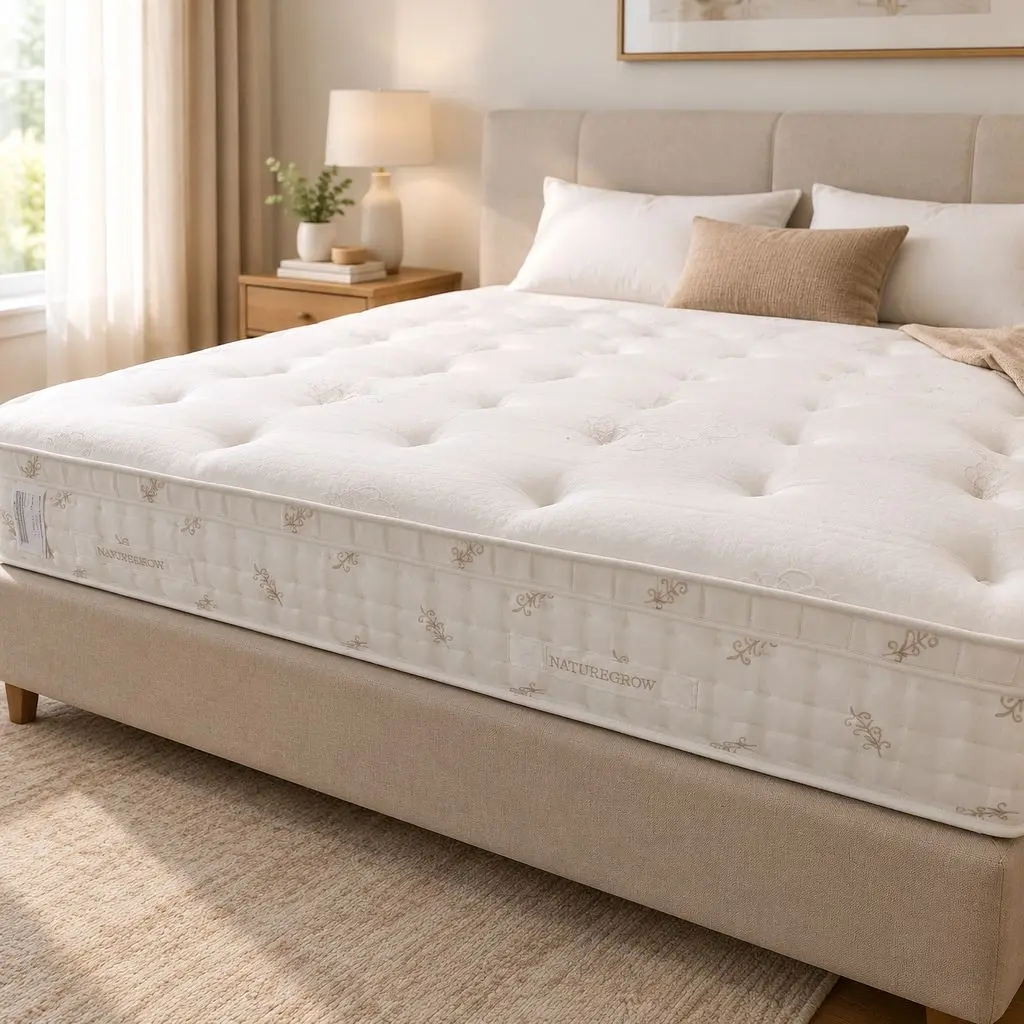
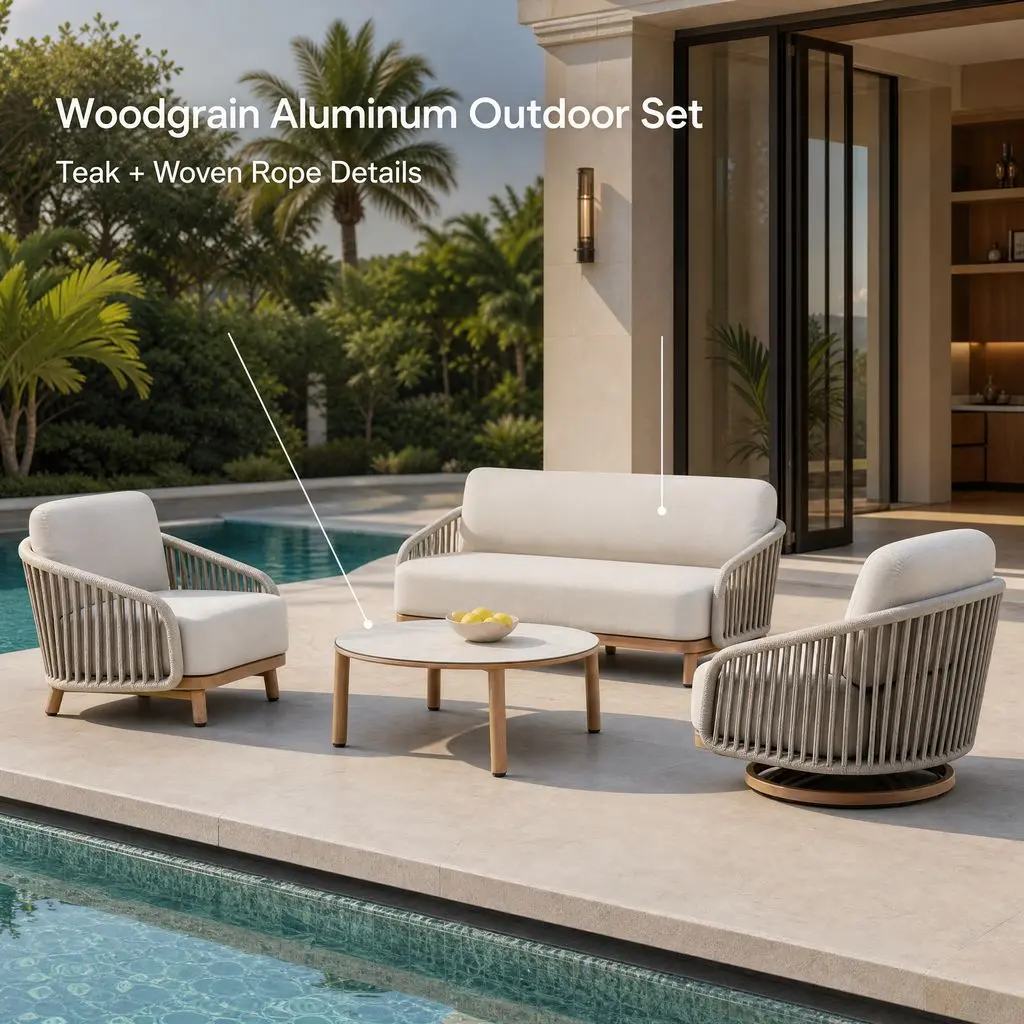
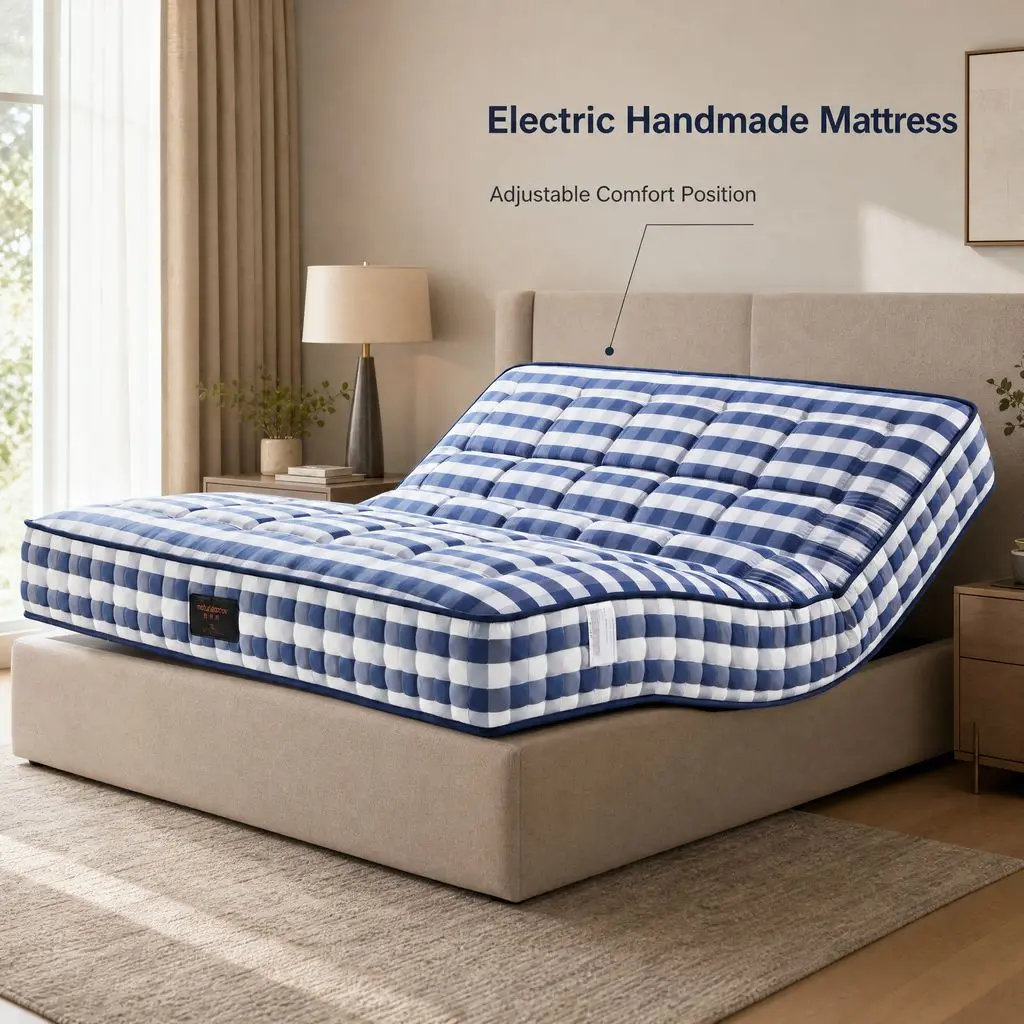
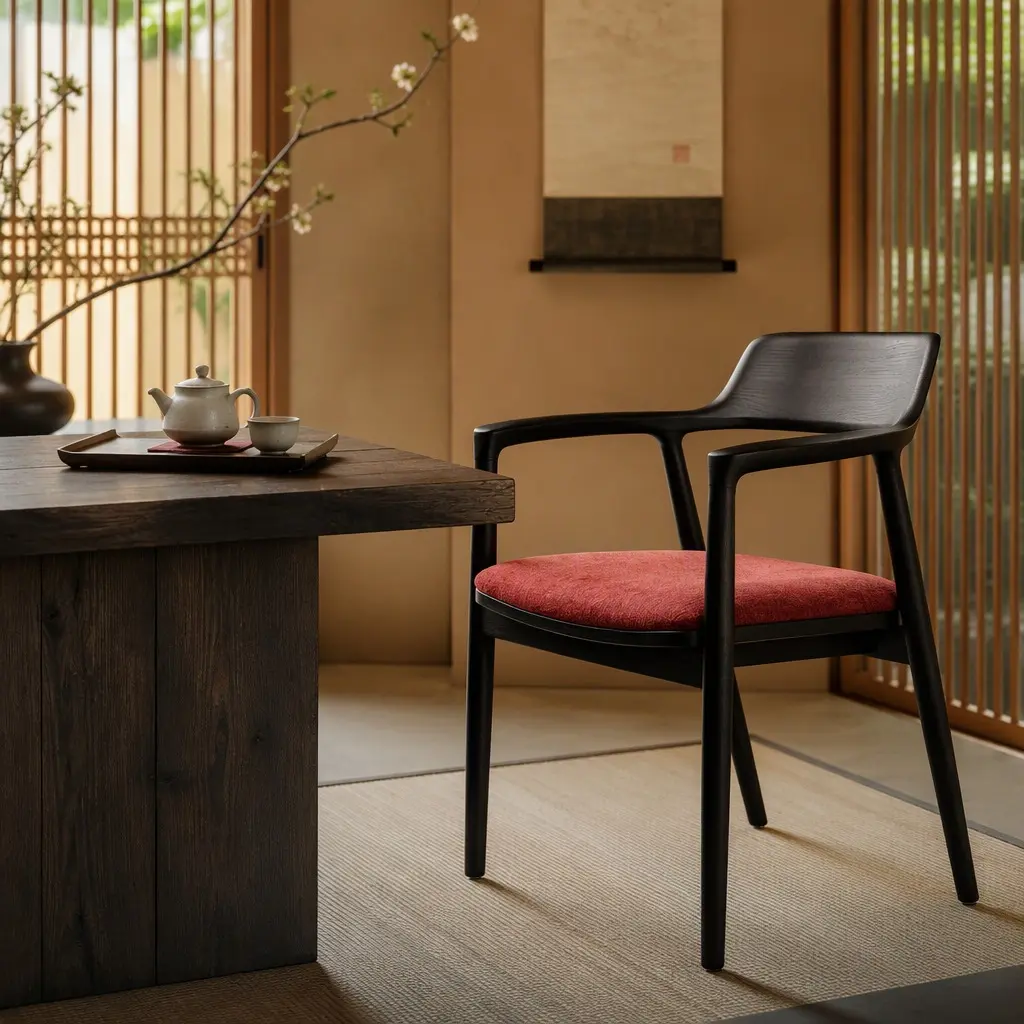
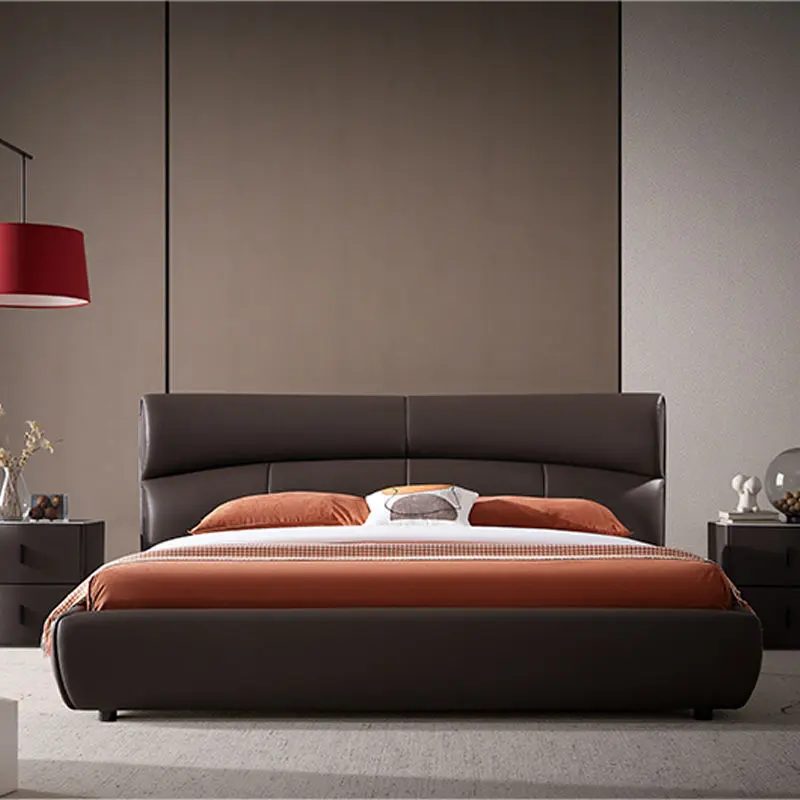
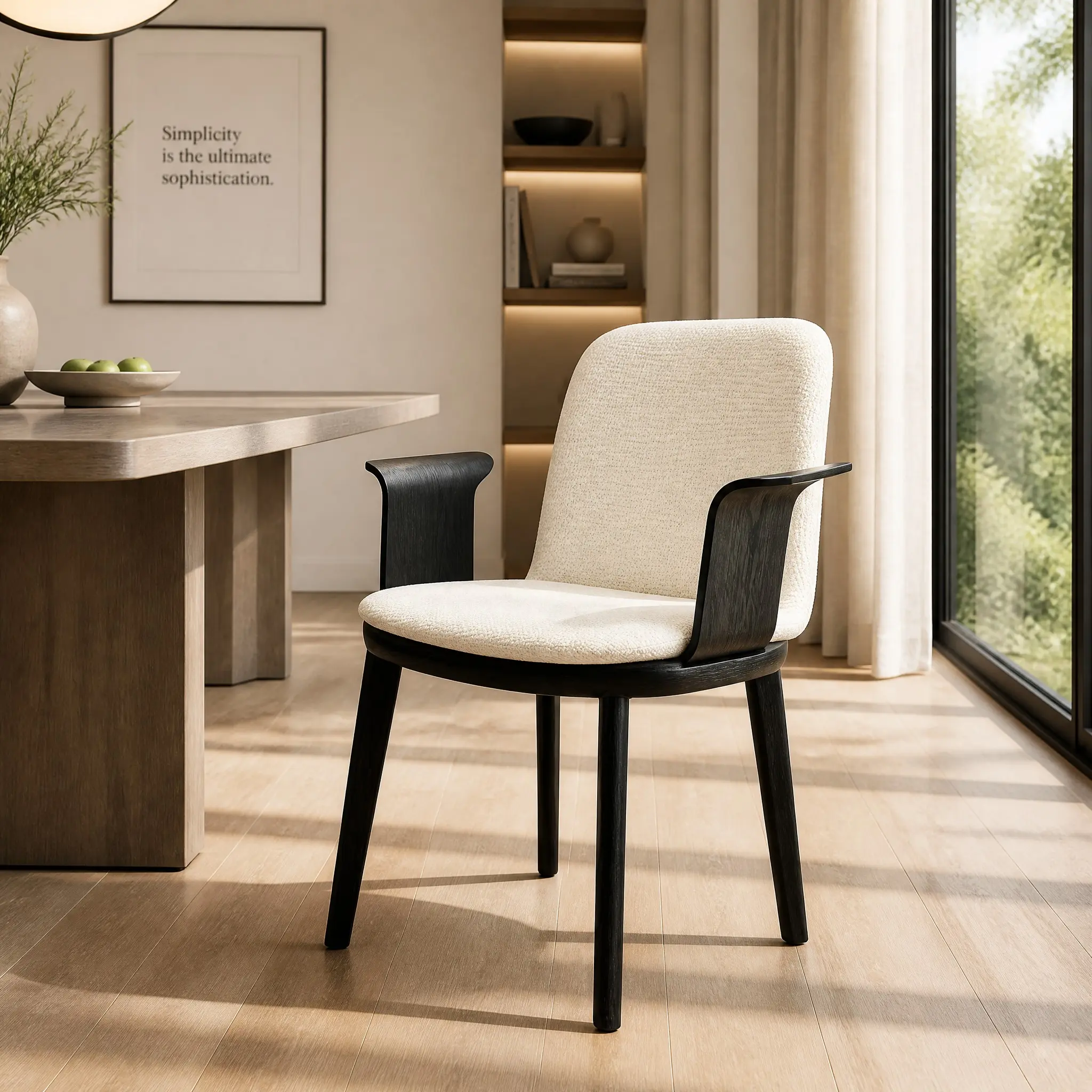
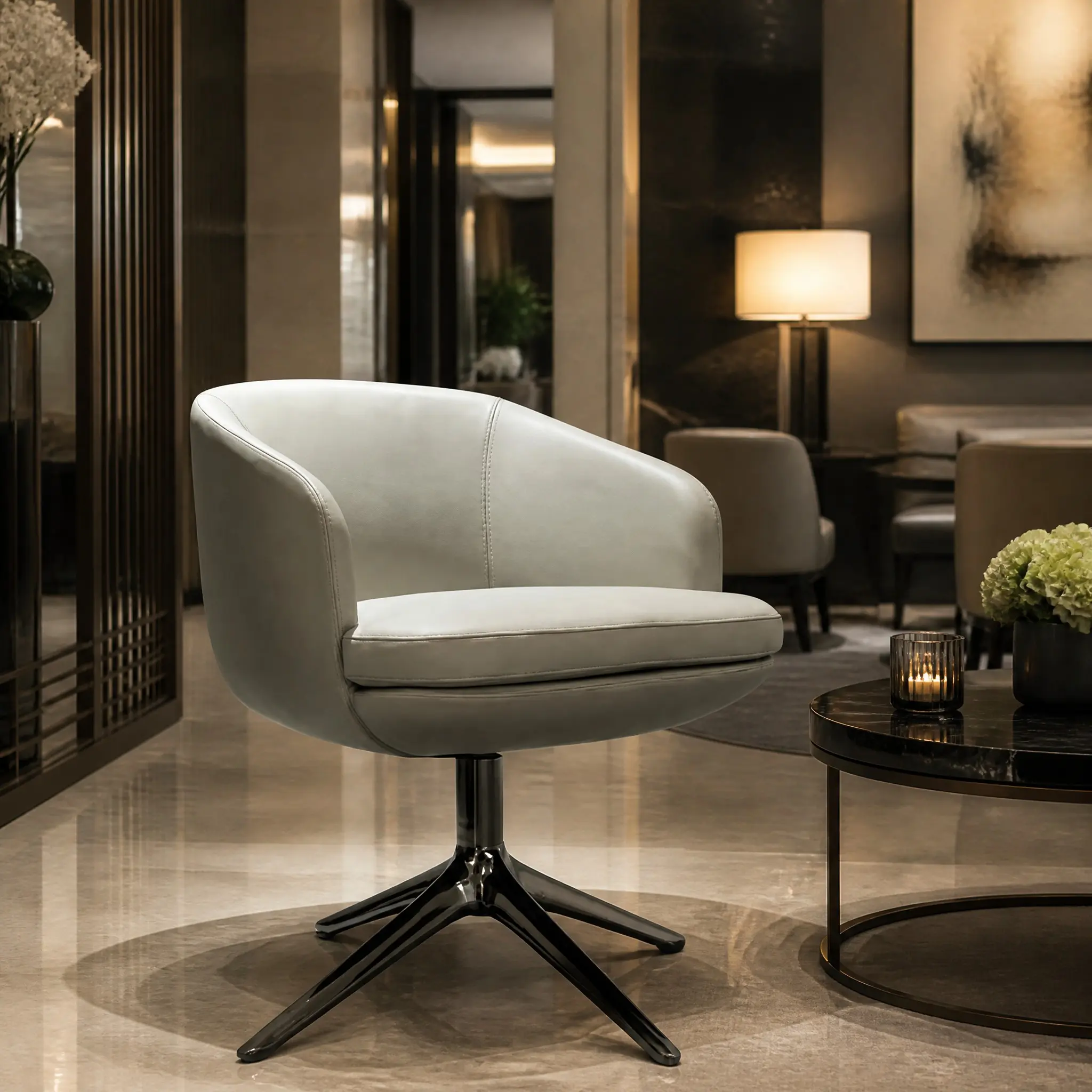
More Models: Beds, Mattresses, Dining & Outdoor for One-Container Sourcing
Norwegian importers increasingly combine leather sofas with bedroom, dining and outdoor categories to reduce freight cost per unit and simplify supplier management.
Buyer Q&A
Frequently Asked Questions: Leather Sofas for Norway
The questions Norwegian importers, hotel procurement teams and interior studios ask most often before their first container order.
Which leather type is best for Norwegian indoor climates?
For most Norwegian homes, a top-grain or controlled corrected-grain leather with a protective finish offers the best balance of durability and climate stability. Untreated aniline leathers look beautiful but are more vulnerable to surface dryness in winter-heated interiors. For cabins and coastal homes, pigmented corrected-grain leathers with strong topcoats are generally safer. We recommend testing a physical sample in the actual environment before committing to a full production run.
Can you supply contract-grade leather for Norwegian hotel projects?
Yes. For hospitality and commercial projects we specify heavier leather weights, contract-grade foams and reinforced frame structures. We also provide material declarations and test documentation on request, and our pre-sale consultants help align the specification with the standards your project requires. Final suitability should always be confirmed with your project specifier and Norwegian customer.
How long does production and shipping to Norway take?
Standard lead time for leather sofa orders is typically 30–45 days for production after sample approval, depending on order size and leather availability. Ocean transit from South China to Norwegian ports commonly runs 30–45 days depending on routing and feeder connections. For repeat programmes we plan production windows against your retail calendar and hold buffer stock where practical.
Can I combine leather sofas with beds, mattresses and dining furniture in one container?
Yes. Container consolidation across categories is one of our core services. Our post-sale team plans loading space to reduce ocean freight cost per unit, and uses multi-layer export crating to prevent transit damage. This is particularly useful for Norwegian importers who want a coordinated living-room, bedroom and dining offer from one purchase order.
Do you support OEM and private-label leather sofa programmes?
Yes. We customise dimensions, module configurations, leather colour and grade, stitching details and branding — including woven labels, embossed logos and branded packaging. For Norwegian retailers, private-label programmes are a common way to differentiate from the large chains. Minimum order quantities vary by model and customisation depth.
How do you manage quality during mass production?
Our QC engineers carry out on-site production line audits covering frame integrity, leather cutting and matching, stitching, foam resilience and finish consistency. Pre-production samples lock the specification before mass production, and pre-shipment inspections verify the final goods against the approved sample. Reports and photos are shared with the buyer.
What documentation can you provide for Norwegian customs and compliance?
We provide commercial invoices, packing lists, HS classification guidance, certificates of origin where applicable, and ISPM 15 documentation for wood packaging. Material and test documentation for leather and foam can be supplied on request. We recommend Norwegian buyers confirm their own import, VAT and product-compliance obligations with a local customs broker and compliance advisor.
Where is your factory and can I visit?
Our facility is located in Hui Cheng Industrial Park, Longjiang Town, Shunde District, Foshan, Guangdong, China — one of the world's most established furniture manufacturing clusters. Norwegian buyers are welcome to arrange factory and showroom visits, and we can coordinate virtual factory tours and live video inspections for remote buyers.
Start Your Norway Programme
Planning a Leather Sofa Order for the Norwegian Market?
Share your target categories, leather preferences, destination city and retail timeline. Our export team will propose configurations, material options and a consolidated container plan tailored to Norway.
About This Guide
Experience, Expertise & Sourcing Authority
This guide is prepared by the export and product teams at Foshan Qingyumai Technology Co., Ltd., an integrated furniture manufacturer based in Longjiang, Shunde, Foshan — with more than a decade of export experience across Europe, the Middle East, North America and the Asia-Pacific, and a portfolio spanning living room, bedroom, dining, outdoor, salon, office and hotel furniture.
Our comments on the Norwegian market reflect practical B2B order history, buyer feedback and material engineering experience in cold-climate applications. Regulatory and customs statements are provided for general orientation only and should be verified with a qualified Norwegian customs broker, compliance advisor or your project specifier before importing or specifying products.
Manufacturing Depth
In-house R&D, production and a network of rigorously audited partner factories delivering coordinated multi-category orders.
Full-Lifecycle Service
Pre-sale material engineering, in-line QC audits and post-sale container consolidation with export-grade packaging.
Project-Ready Documentation
Material specifications, test data and export paperwork prepared to support Norwegian retailer, contract and public-sector requirements.