
Upholstered Bed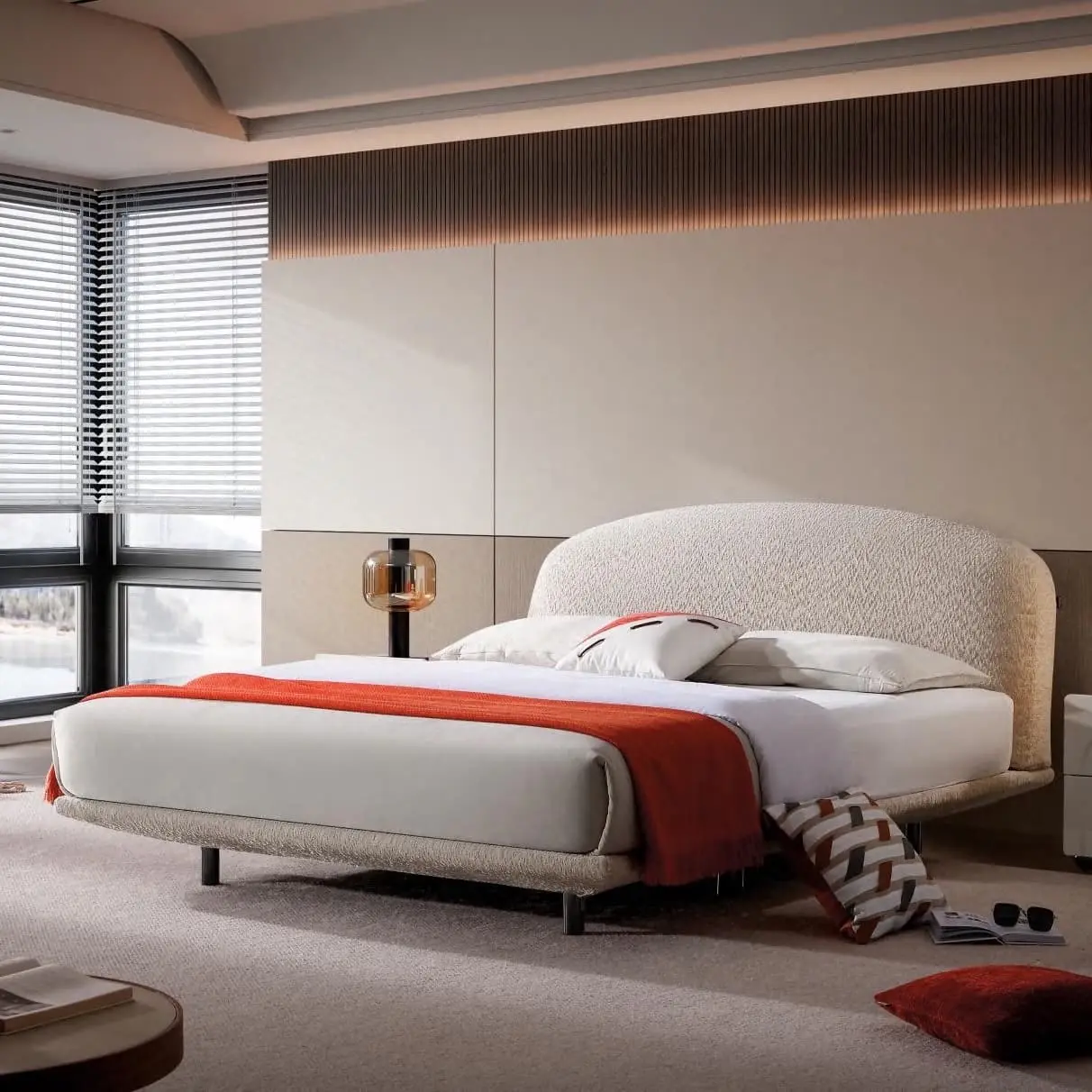
Egypt’s hospitality and residential development pipeline — from New Cairo and the New Administrative Capital to Sharm El-Sheikh, Hurghada and the North Coast — is driving sustained demand for durable, UV-stable, pool-side-ready outdoor dining sets. For wholesalers and project buyers, the competitive edge no longer comes from finding the cheapest chair; it comes from sourcing furniture engineered for Egypt’s specific heat, salt air and sand environment, with documentation that clears customs fast and a supply chain that does not break when global logistics tighten.
This white paper is written for Egyptian importers, furniture wholesalers, hotel procurement teams, landscape and villa developers, and interior designers who specify outdoor dining sets at volume. It explains what to buy, how to verify quality, and how to build a resilient sourcing route from Foshan to Egyptian ports.
These four models represent the core specification envelope most Egyptian buyers request: aluminum frames, rope-and-teak detailing, and upholstery that survives high solar load and salt exposure.
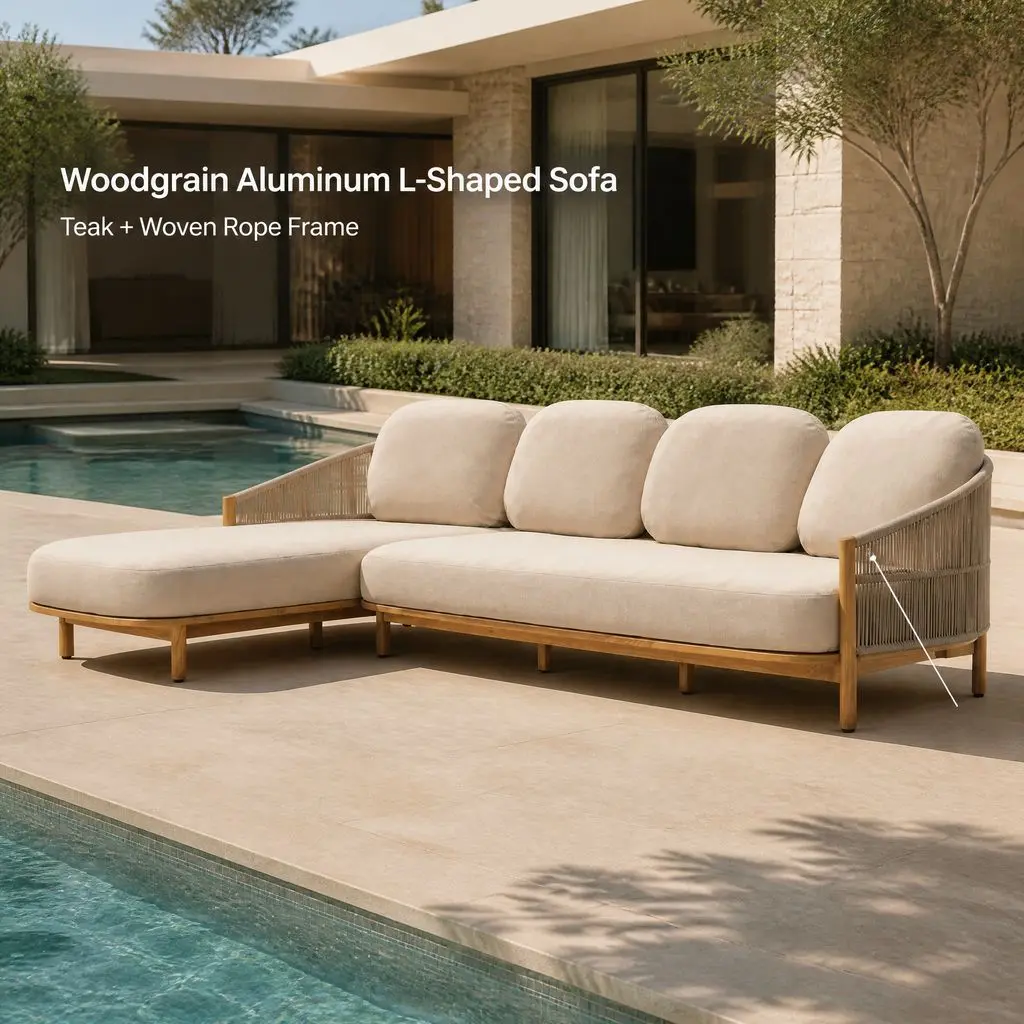
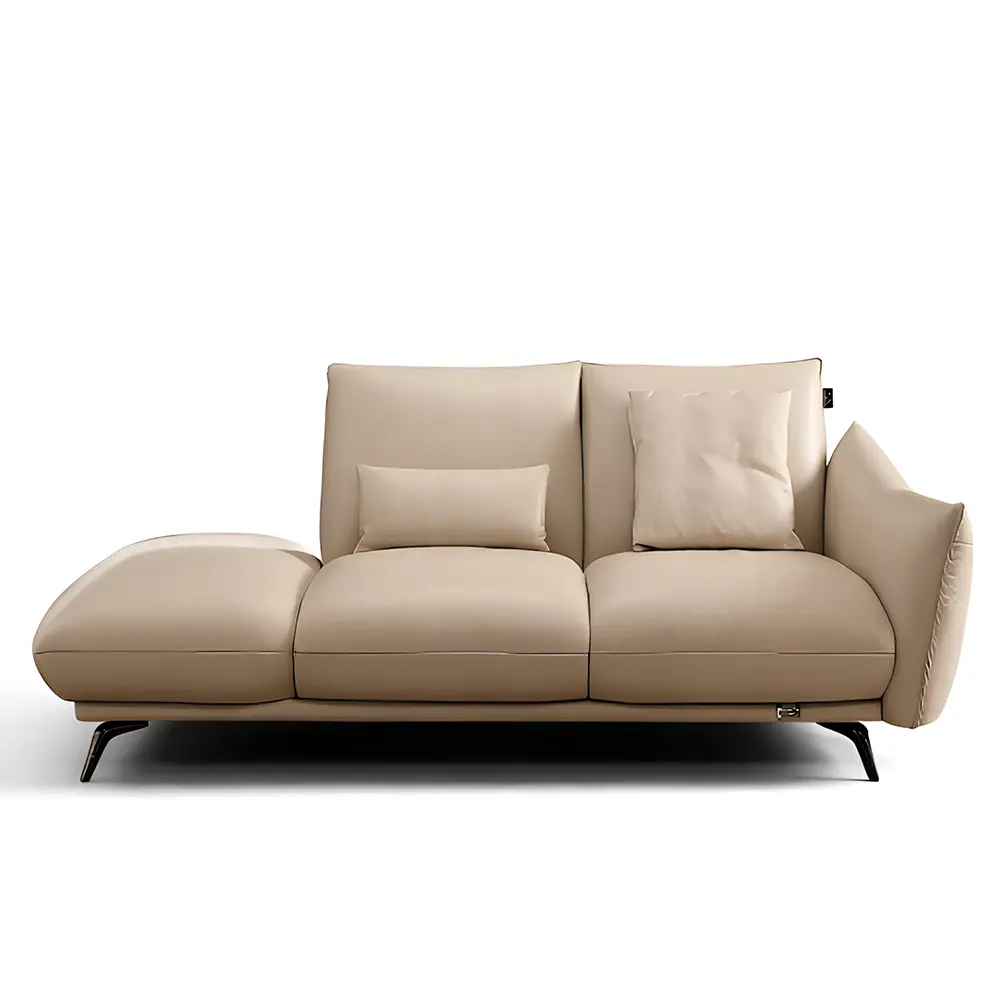
Understanding Egypt’s climate, retail structure and development cycles is the difference between a container that sells out and a container that sits in the warehouse.
Egypt’s furniture market sits at an inflection point. Domestic manufacturing, concentrated around Damietta, 6th of October City and Alexandria, is a genuine regional force in upholstered furniture and bedroom casegoods. However, the outdoor segment is structurally underserved: local producers rarely invest in powder-coating lines rated for high-UV environments, marine-grade stainless fasteners, or solution-dyed acrylic fabrics. That gap is precisely where imported Chinese outdoor dining sets — and the Foshan supply cluster behind them — win specification.
Three demand engines matter most for buyers planning 2025–2027 containers:
Currency dynamics also shape buying behaviour: importers increasingly plan larger, less frequent container orders to hedge FX and freight volatility. That rewards suppliers who can consolidate multiple categories into a single container — outdoor dining sets alongside indoor upholstery, beds and mattresses — so one 40HQ delivers a full seasonal assortment.
Each scenario below has a distinct specification profile. Buying a single generic SKU across all five is one of the most common and costly mistakes importers make.
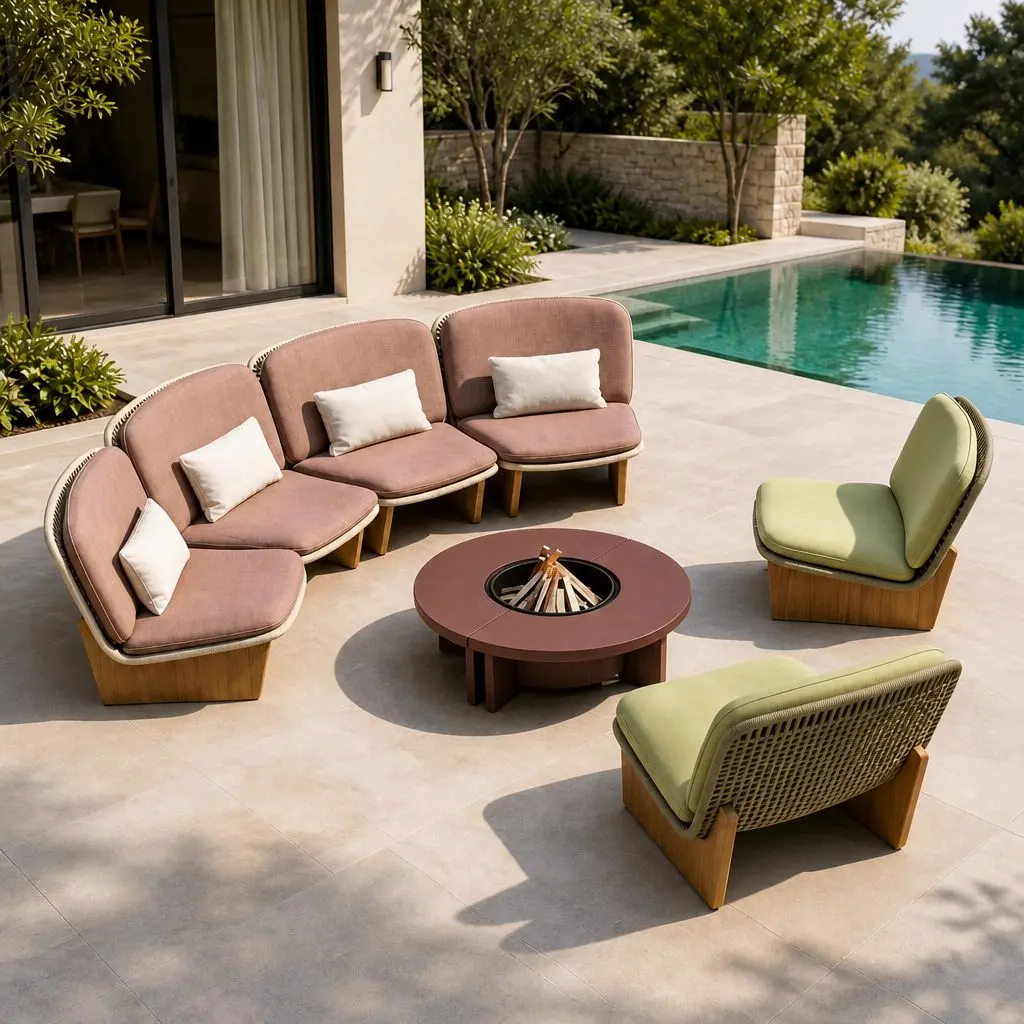
Sharm El-Sheikh, Hurghada and Marsa Alam properties need salt-resistant aluminum frames, 316-grade stainless fasteners, and quick-dry foam that does not mildew after pool splash. Cushion covers should be removable and machine-washable, since resorts launder far more frequently than villas.
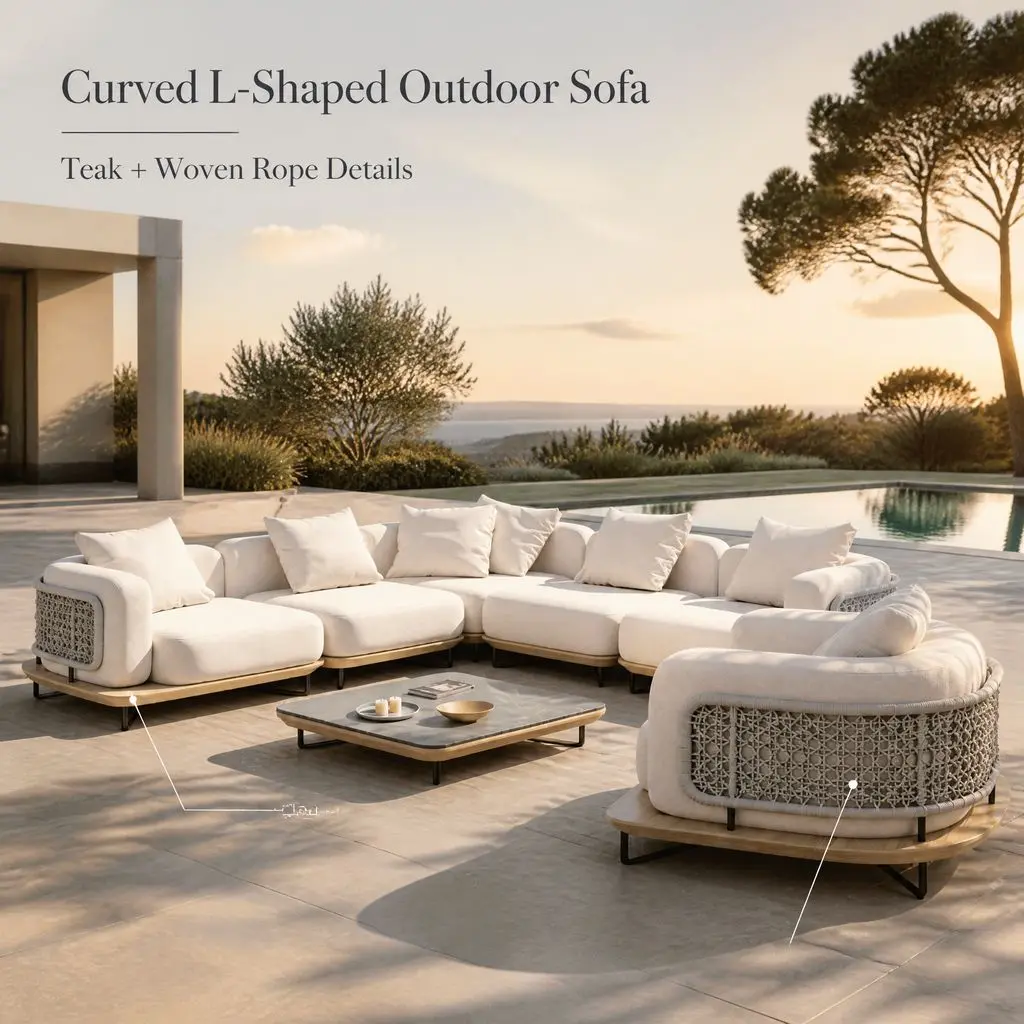
Seasonal-only occupancy means furniture sits covered for months, then endures intense use in summer. Buyers prioritize teak accents, mold-resistant olefin rope, and 8-seat dining tables that can handle family entertaining and children safely. Flat-pack or knock-down design reduces villa installation friction.
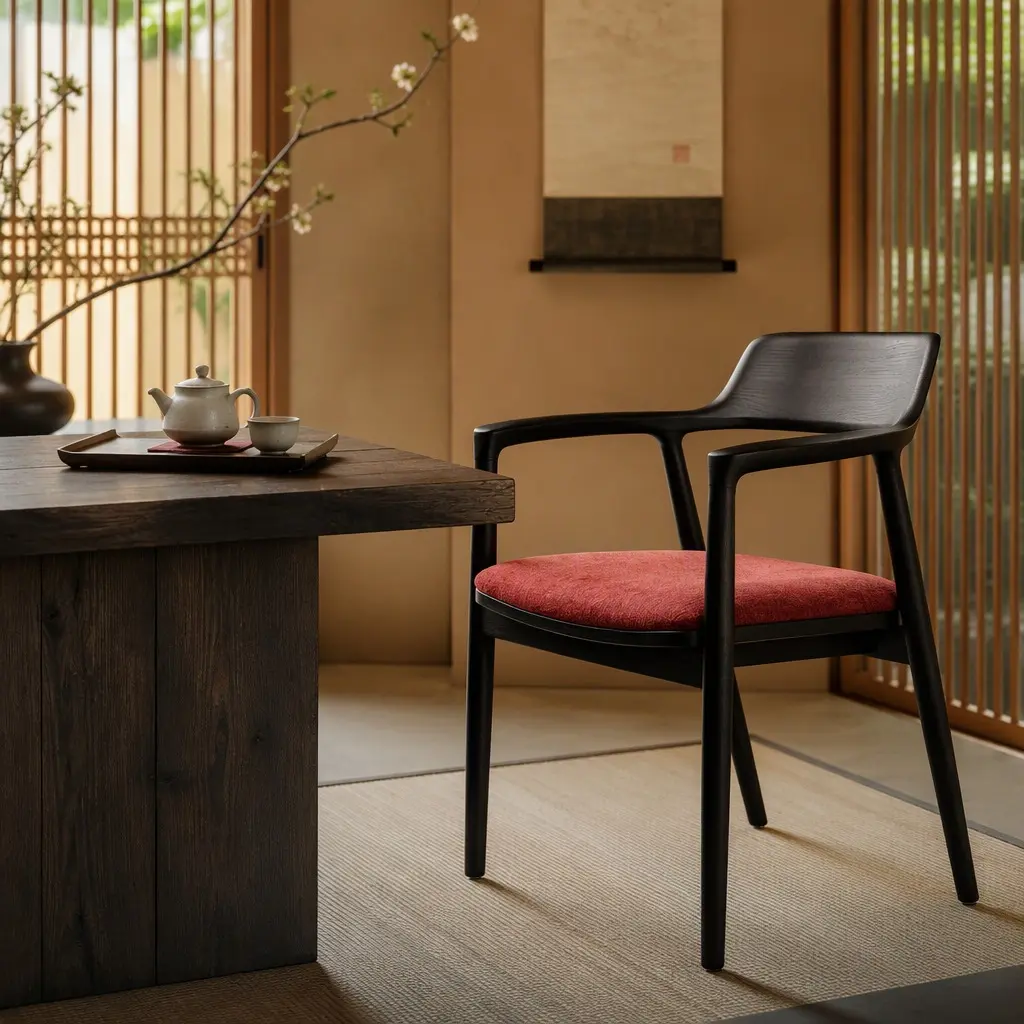
Urban café operators care about brand cohesion and durability against heavy daily turnover. Stackable or lightweight-but-rigid chairs, consistent RAL or brand-matched powder coating, and fast replacement of a single SKU rather than a full set are the real buying criteria.
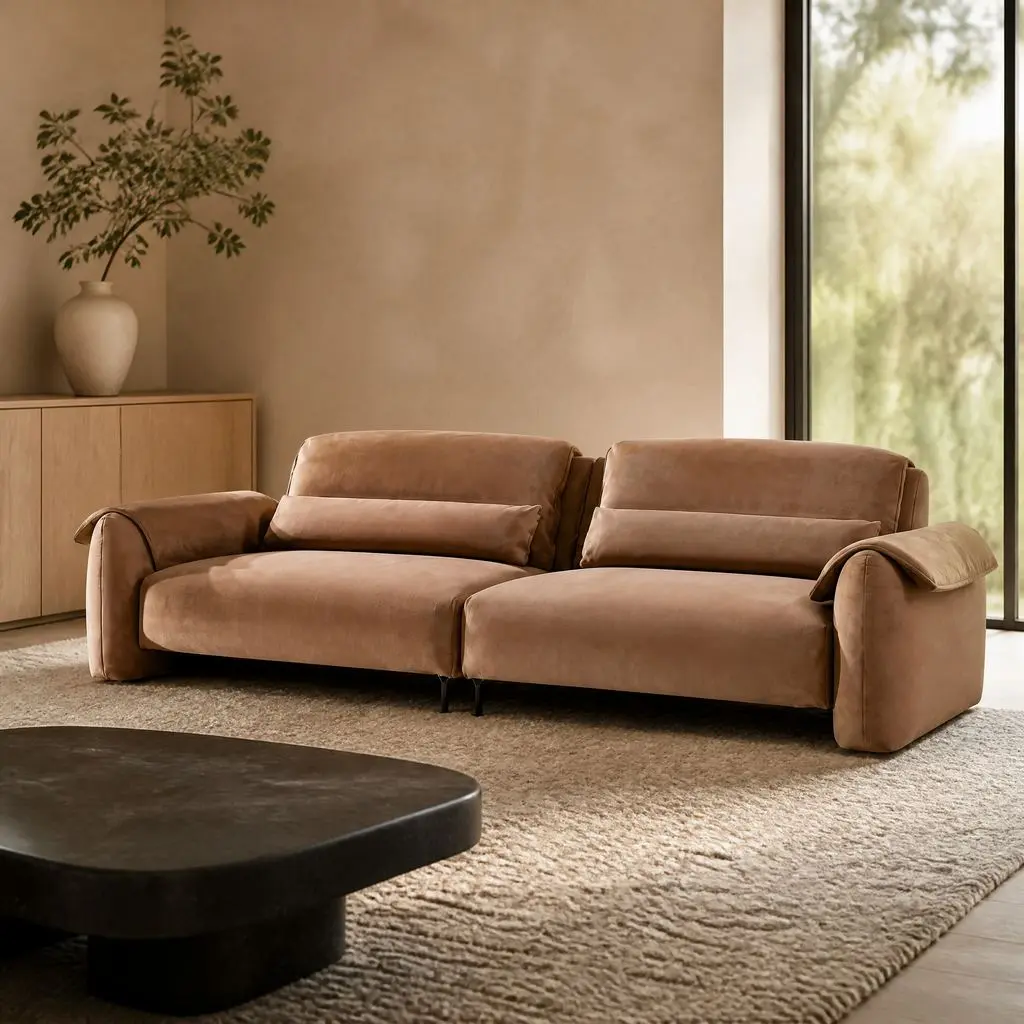
Egyptian homes increasingly blur living room and terrace. Buyers want visual continuity between an interior sectional and an outdoor seating group, sharing wood-grain aluminum finishes and compatible cushion palettes so the terrace feels like an extension of the interior.
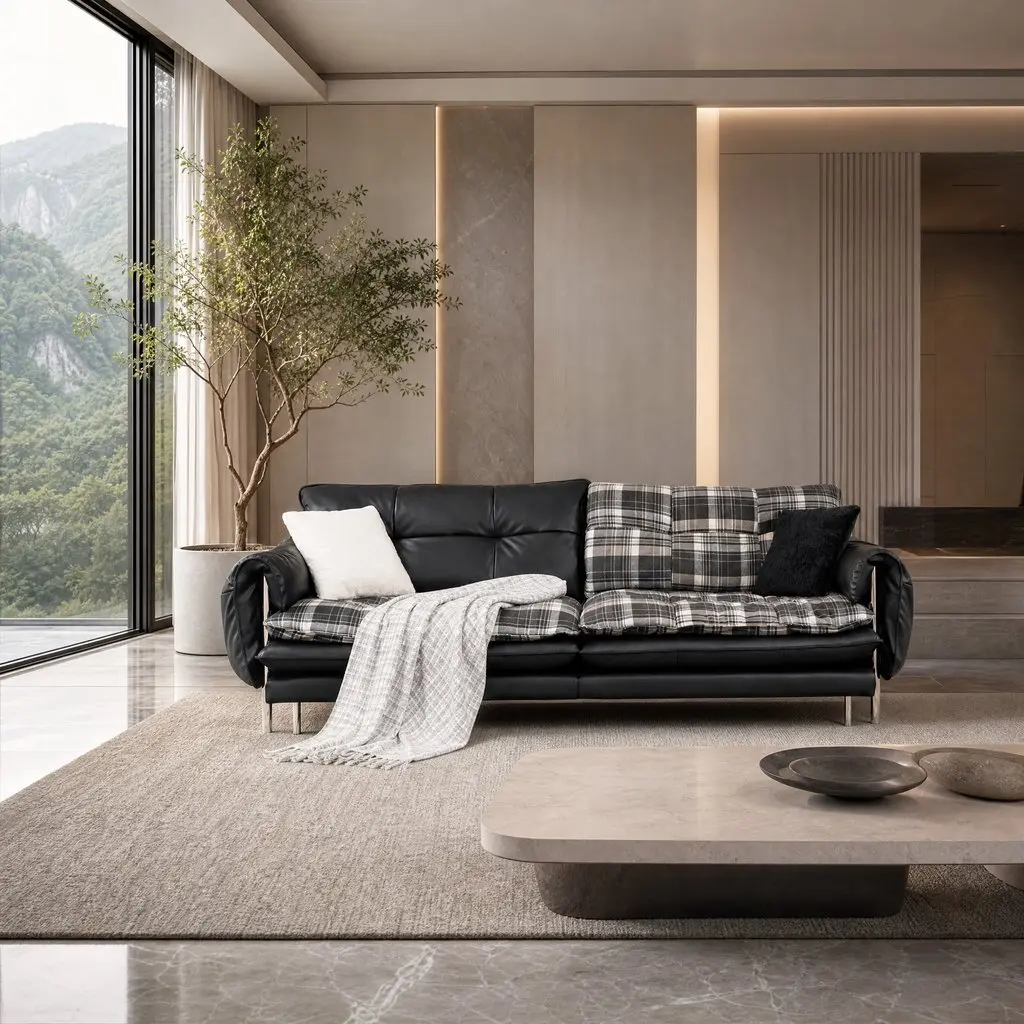
Developers delivering furnished show units and amenities need a coordinated whole-house package — indoor sofas, beds, mattresses and outdoor dining — from one contract, with consistent quality documentation and staged delivery schedules aligned to handover milestones.
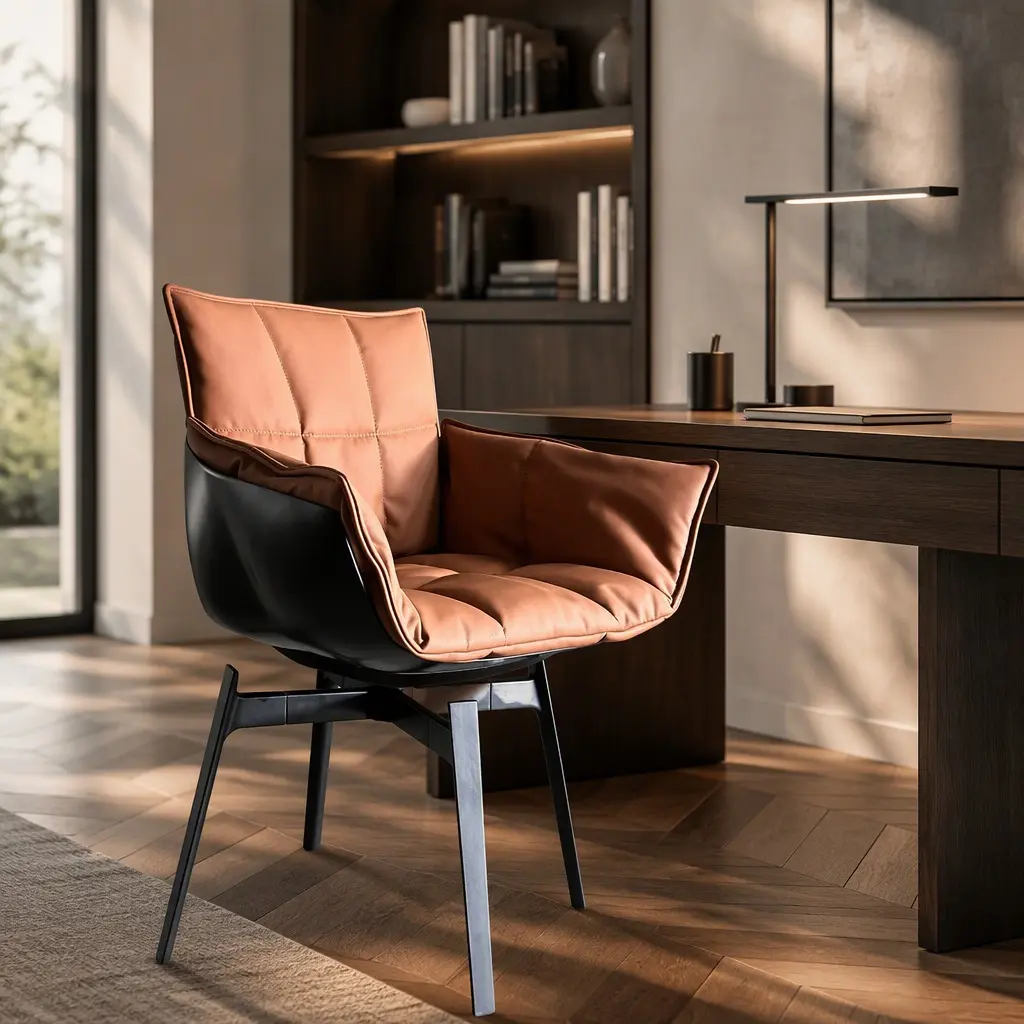
Boutique properties in Downtown Cairo and Alexandria specify statement pieces. Designer-style seating with durable microfiber leather or contract fabric raises the perceived quality of the venue while keeping the maintenance burden manageable for a small team.
Buyers are rightly cautious about concentration risk. The counterintuitive truth: a well-managed Foshan sourcing partner reduces risk for Egyptian importers compared with dispersed, unverified vendors.
Within a 40 km radius, buyers can access aluminum extrusion, powder coating, teak sourcing, rope weaving, foam, and fabric suppliers. This density shortens sampling cycles dramatically — prototype to approved sample in days, not weeks.
In-line QC audits, salt-spray and UV exposure testing, and pre-shipment inspections produce a paper trail Egyptian customs and hotel brand standards auditors can actually accept.
Outdoor dining sets, indoor upholstery, beds, mattresses and casegoods can be consolidated under one PO and one QC standard — a single container delivers a complete seasonal assortment to Egypt with one freight booking.
Mature production planning, buffer stock on high-rotation SKUs, and multiple vessel options via Chinese and Mediterranean carriers keep delivery windows stable for Q2 resort deadlines.
Knock-down engineering on tables, nesting of chairs, and optimized carton dimensions regularly lift container utilization by 15–25% versus off-the-shelf packing — a significant saving when freight is a material share of landed cost.
An aggregate-manufacturing model with multiple audited partner factories means a disruption at a single plant does not stop a confirmed Egypt order — capacity is reallocated across the network.
Egypt is one of the fastest-growing outdoor furniture import destinations in the region, but it competes for factory capacity with buyers from the Gulf, Europe, North America and Australia. Understanding the global demand picture helps Egyptian importers plan ahead.
The global outdoor furniture market has expanded steadily as hospitality refurbishment cycles shorten and residential buyers treat terraces as primary living space. Demand clusters are: Europe, where sustainability credentials and FSC teak dominate specification; Gulf Cooperation Council, where mega-resort openings and extreme heat push buyers toward aluminum and high-performance synthetics; and North America, where replacement cycles for hospitality and hospitality-adjacent chains drive repeat procurement.
Egypt sits adjacent to all three, with two structural advantages. First, its Red Sea and North Coast hospitality corridor is expanding and refurbishing simultaneously, creating a mix of new-build and refresh demand. Second, Egypt’s free trade agreements and port infrastructure make it a natural gateway for buyers sourcing both for domestic consumption and for re-export to East Africa and the Levant.
The global picture also shapes material standards. Contract-grade projects increasingly require documentation on flame-retardant fabrics, REACH-aligned chemical compliance in Europe, and durability testing that simulates years of UV exposure. Egyptian importers aiming at international hotel brands should specify to these benchmarks even when the immediate client is domestic, so that a single SKU can move between projects without re-specification.
| Region | Primary Material Preference | Key Buying Driver |
|---|---|---|
| Egypt | Wood-grain aluminum, teak, olefin rope | Heat, salt, sand; project and villa demand |
| GCC | Powder-coated aluminum, synthetic rope | Mega-resort refurbishment, extreme heat |
| Europe | FSC teak, recycled aluminum | Sustainability and REACH alignment |
| North America | Aluminum, HDPE wicker, performance fabric | Hospitality chains, replacement cycles |
| East Africa | Durable aluminum, low-maintenance rope | Cost of ownership, port reliability |
A furniture container is only valuable once it clears customs and is installed. These are the compliance and support elements that protect an Egyptian order.
Commercial invoice, packing list, certificate of origin, and product specification sheets prepared to align with Egyptian customs requirements. Any conformity attestation requests are coordinated with your clearing agent before shipment.
Shipment planning aligned to Alexandria, Damietta, Port Said and Sokhna routing. Consolidation across categories, container loading diagrams, and multi-layer export crating reduce transit damage and demurrage risk.
Pre-sale consultants recommend fabric grades, foam densities and coating specifications matched to the destination climate — coastal versus inland, resort versus villa — so the client does not over- or under-specify.
Egyptian retail brands can build a private-label outdoor line with custom frame finishes, branded woven labels, embossed logos, and custom cartons. Full customization for dimensions, colors, and fabric grades is available from the first PO.
A single point of contact manages brief, sampling, mass production, QC reports, and shipping. English-language communication throughout, with factory and showroom visits welcomed in Foshan.
Access to replacement cushions, fabric rolls, rope kits and frame parts supports long-term resort maintenance, so a hotel can refresh an outdoor set without replacing the frame.
Buyers who understand the technology trajectory can negotiate better prices today and avoid SKUs that look dated in two seasons.
Higher-grade aluminum alloys, thicker marine-rated powder coating, and solution-dyed acrylic and olefin fabrics with stronger UV resistance.
Frames engineered for flat-pack shipping and on-site assembly, improving freight utilization and simplifying villa and resort installation.
Quick-dry reticulated foam, fluorine-free water repellents, and stain-resistant contract fabrics aligned with tightening chemical regulations.
BIM-ready models, 3D product assets, and standardized spec sheets that let Egyptian architects and designers specify imported outdoor sets with confidence.
Over the next 24–36 months, expect three shifts. First, more Egyptian importers will move from single-SKU purchasing to curated outdoor collections delivered in consolidated containers, because FX volatility makes large infrequent orders more economical than frequent small ones. Second, hospitality specification will tighten toward documented durability, favoring suppliers who can present test data rather than samples alone.
Third, private label will grow. Egyptian retail brands and hospitality groups increasingly want their own identity on outdoor furniture, and Foshan’s OEM / ODM capability is well suited to that shift — custom powder-coat colors, woven labels, and branded packaging at reasonable MOQs.
Browse additional outdoor and indoor pieces available for consolidation into the same Egypt shipment.
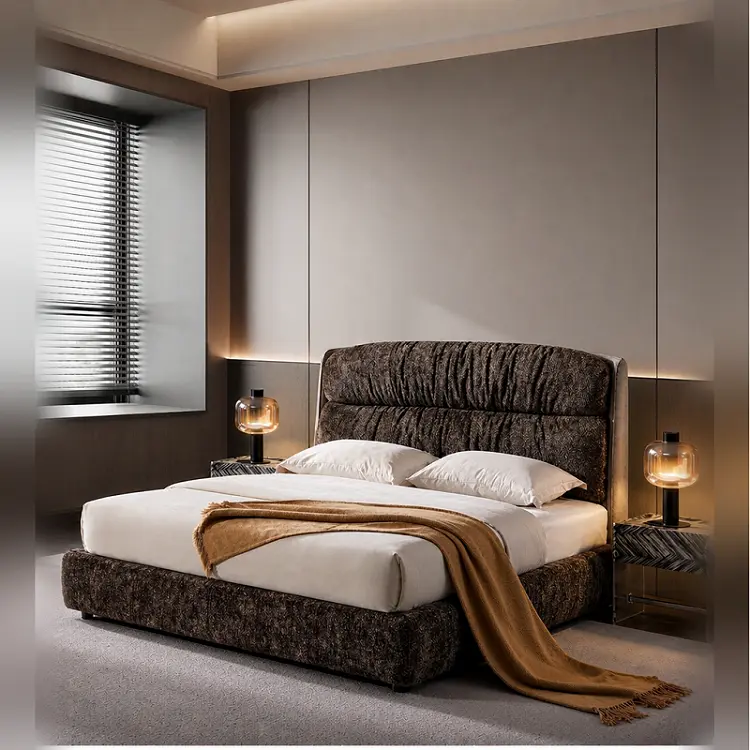
Egyptian importers who buy on unit price alone often pay more in the long run. This is a simple but frequently ignored reality.
Four cost layers sit on top of factory unit price: freight per set, duty and clearing costs, warranty and replacement cost, and lifespan. A slightly cheaper chair that fails after one Red Sea summer costs the importer far more than a well-engineered chair that survives four seasons. For a resort replacing 40 chairs, the difference is material.
Across all four layers, the engineering choices that matter most for Egypt are: aluminum alloy grade and coating thickness, foam density and quick-dry behavior, and fabric UV stability. Each of these is specified on our spec sheets and can be verified in a sample before mass production.
| Cost Layer | Cheapest Option | Engineered Option |
|---|---|---|
| Factory unit price | Lower | Slightly higher |
| Freight per set | Higher (bulky packing) | Lower (knock-down nesting) |
| Warranty / replacement | Frequent, expensive | Rare, covered |
| Typical usable lifespan in Egypt | 1–2 seasons | 4+ seasons |
| Maintenance | Full replacement | Parts and covers only |
Practical answers to the questions that come up most often before a first Egypt order.
Send our export team your assortment, target configurations, and project details. We will help you plan categories, materials, sample approval, and a shipping schedule aligned to Egyptian ports.