Best Seller
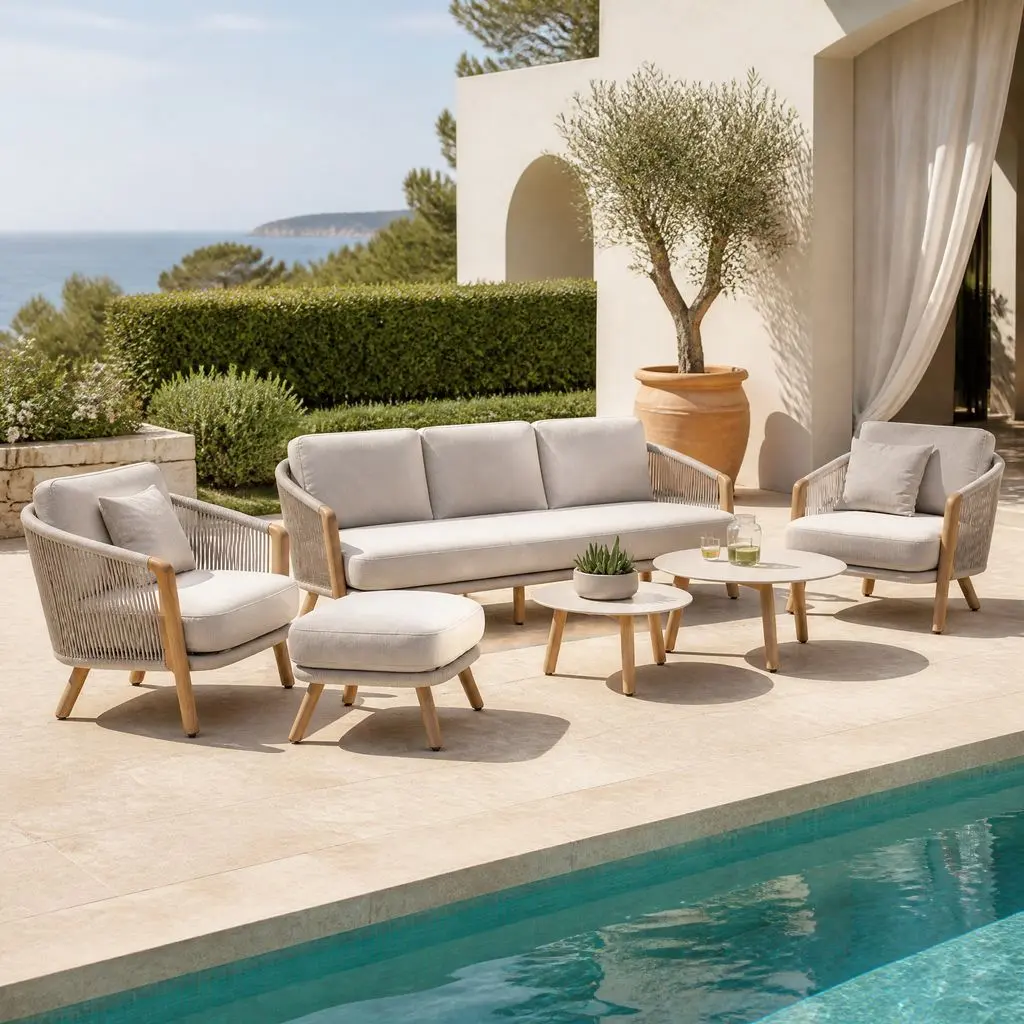
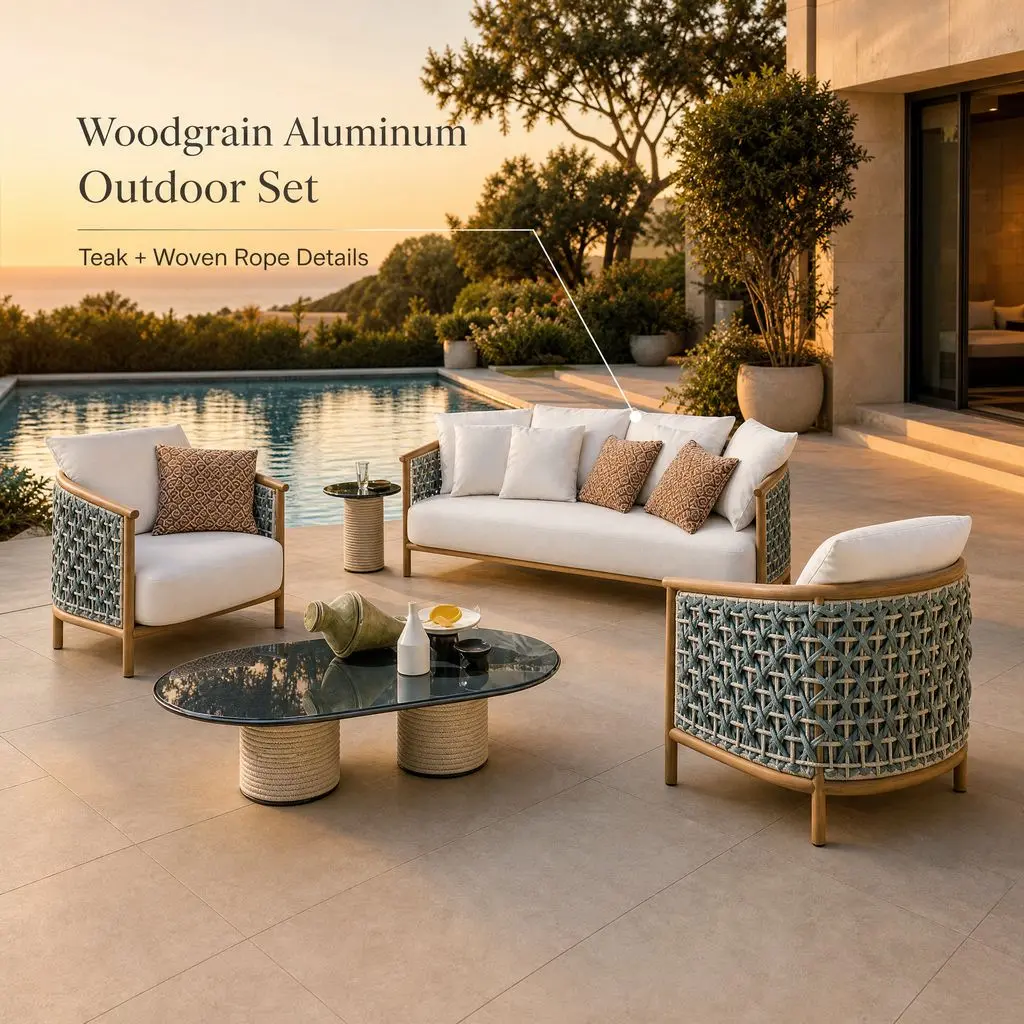
Selected by our export engineering team for their performance in hot, dry summers and cold continental winters — UV-stable rope, powder-coated wood-grain aluminum and waterproof quick-dry cushions.
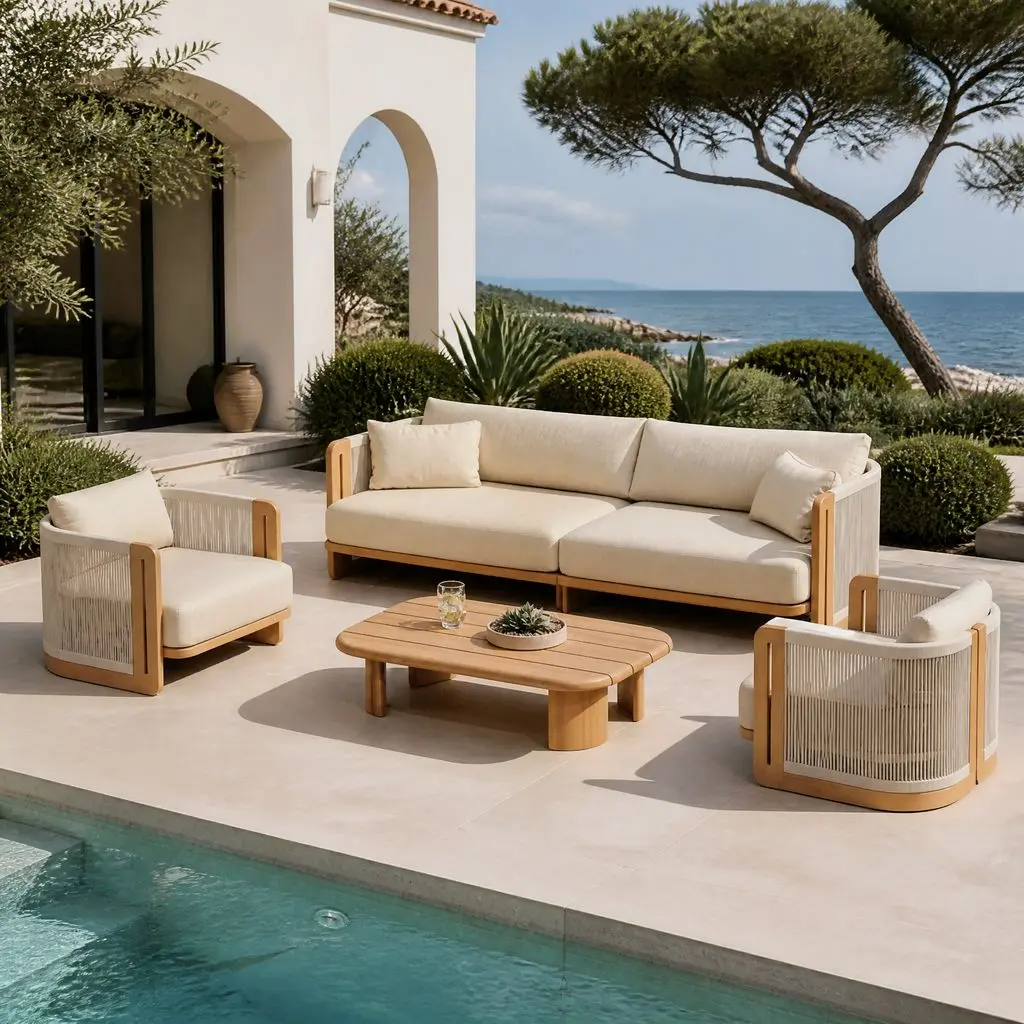
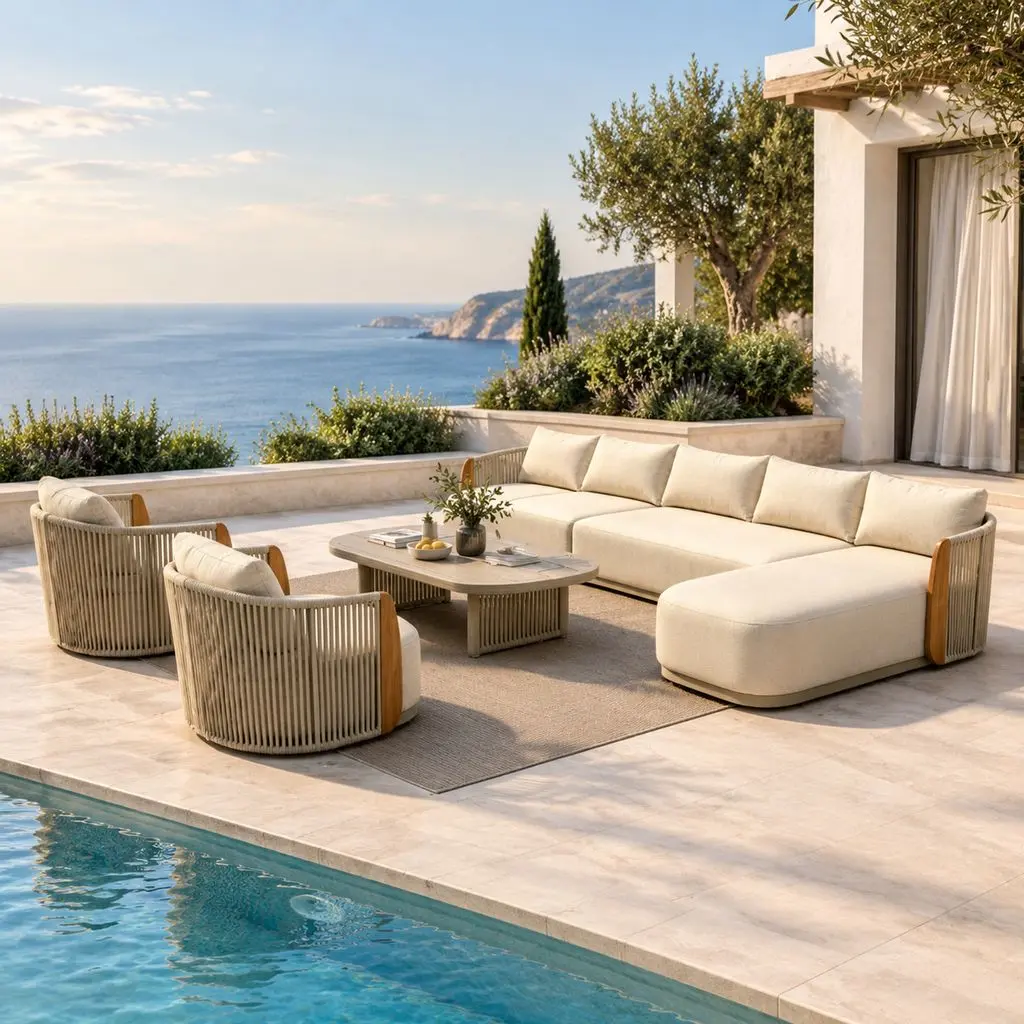
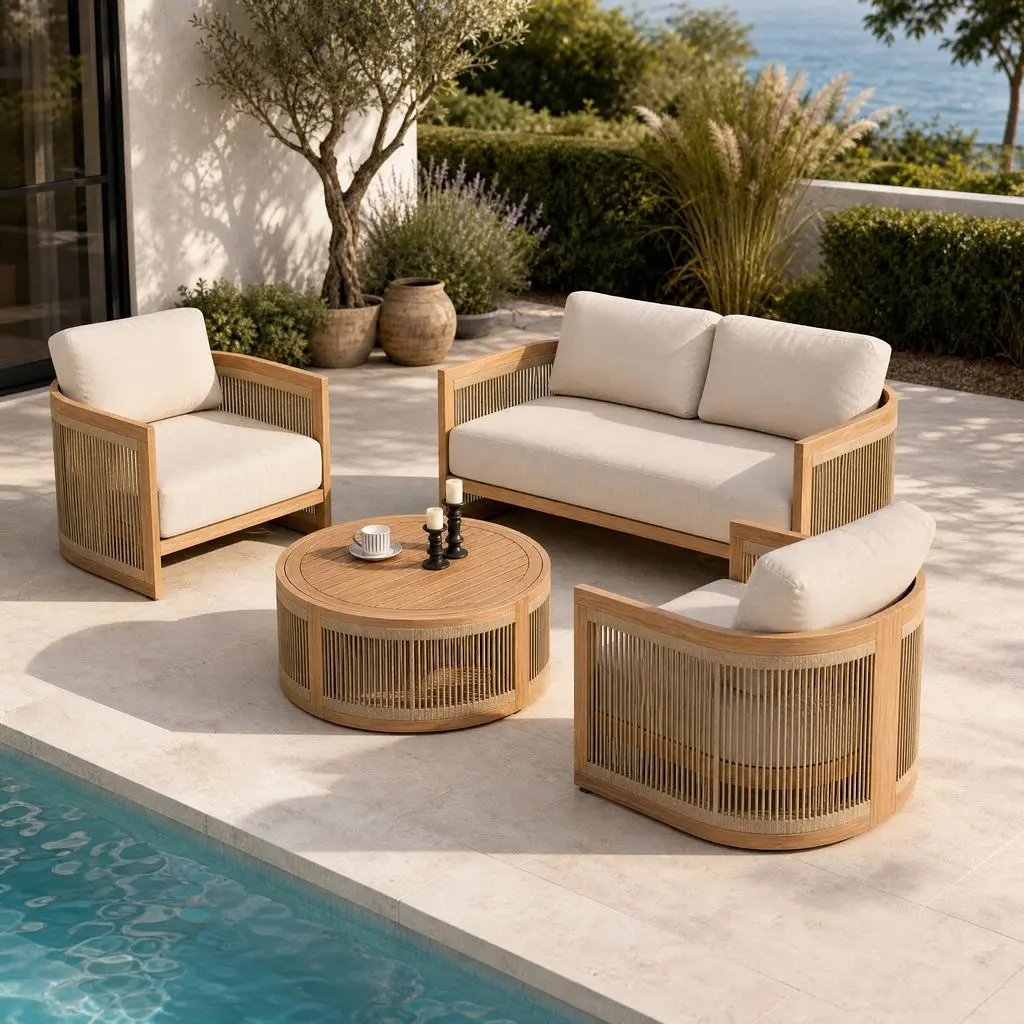
Uzbekistan is undergoing a sustained construction and tourism expansion. State programmes for housing, hospitality and public space renewal — together with the liberalisation of trade and the expansion of Tashkent's retail and HoReCa sectors — have created structural demand for outdoor living furniture: terrace sofas, balcony modular sets, poolside sectionals and café lounges.
Three demand drivers repeat consistently in buyer briefs we receive from Tashkent, Samarkand, Bukhara and Namangan:
Yet local manufacturing of aluminium-frame outdoor sofas remains limited. Most importers rely on container-based sourcing from China, Turkey and occasionally Vietnam. That is precisely where a Foshan factory-direct program becomes commercially decisive: it shortens the supply chain, stabilises quality and protects distributor margins.
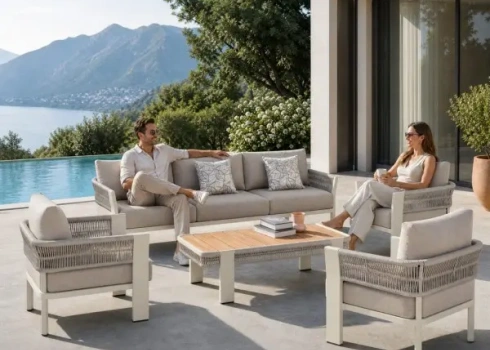 Tashkent · Samarkand · Bukhara
Uzbekistan combines scorching, dry summers — frequently above 40 °C — with cold winters where temperatures fall below −10 °C. Outdoor furniture that performs in Bali may crack, fade or rust here. Our XD-series is specified for both extremes.
Olefin-based rope resists UV degradation and colour fade across 3,000+ sun hours per year — critical for Tashkent rooftop terraces.
Wood-grain powder coating on 1.5–2.0 mm aluminium frames resists rust, sand abrasion and temperature fatigue.
Water-repellent foam and drainage-lined covers dry fast after rain and resist dust accumulation in dry seasons.
Natural teak armrests and trim are kiln-dried to 8–12% moisture, preventing cracking in arid Central Asian air.
Knock-down module packing and multi-layer export crating reduce freight cost per set on China–Uzbekistan rail and road corridors.
Distributors receive cushion covers, rope repair kits and frame hardware — essential for after-sales credibility in a growing market.
Understanding where Uzbekistan sits within the global outdoor furniture trade helps importers negotiate better and forecast demand more accurately.
Global outdoor furniture demand has shifted in character over the past five years. Where the category was once dominated by seasonal garden-centre retail in North America and Western Europe, growth now comes from year-round hospitality projects, residential balcony culture in emerging economies, and replacement cycles in mature markets.
Three structural forces shape the current supply chain:
For Uzbek importers, this means the most reliable supplier is not the cheapest — it is the factory that can engineer for continental climate, consolidate mixed categories into one container, and support after-sales as the local market matures.
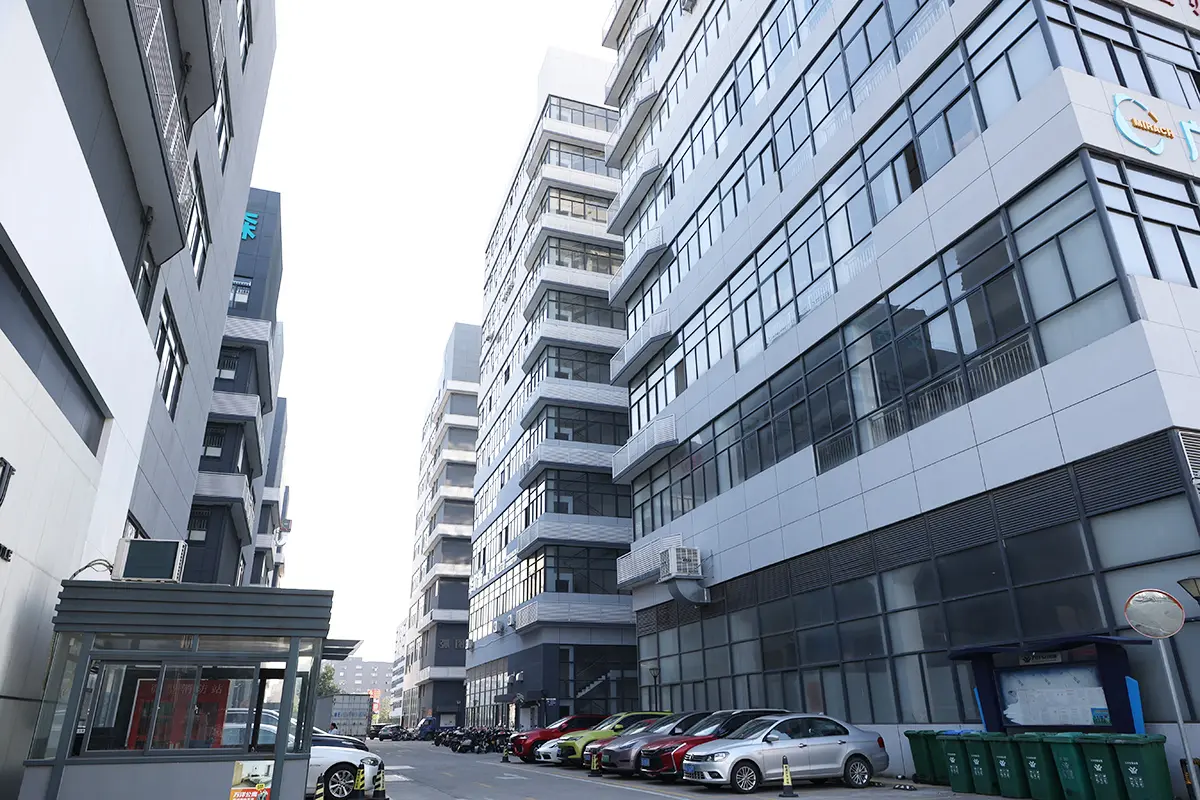 Factory-Direct · Shunde, Foshan
Foshan's furniture cluster produces an efficiency gradient that is difficult to match elsewhere. For Uzbek importers, this translates into four concrete procurement gains:
In practice, a Tashkent distributor who sources 5–8 SKUs from 5 different Turkish or Vietnamese vendors typically pays more in coordination cost, freight and defect replacement than one who consolidates those SKUs behind a single audited Chinese factory partner.
Our Uzbek distributor partners deploy these XD-series models across five recurring commercial scenarios. Each scenario has different specification priorities.
Samarkand and Bukhara hotels specify L-shaped modular sofas for courtyard terraces and rooftop lounges, prioritising UV resistance and quick-dry cushions.
Tashkent HoReCa operators use compact 2-seat rope sofas and armless sectionals — easily reconfigured for evening service and resilient to daily cleaning.
New apartment towers in Tashkent and villa estates specify compact modular sofas; dark wood-grain frames and neutral cushion palettes dominate.
Resort developments near Charvak and Chimgan specify waterproof quick-dry cushions and wider 3-seat sofas for poolside family zones.
Distribution partners use the XD-series as in-store display sets; modular design lets staff re-compose floor displays weekly without tools.
Municipal projects in park and promenade upgrades value durability over trend, prioritising aluminium frames and replaceable components.
Buyers who understand these long-cycle trends can negotiate better, plan inventory more accurately and select suppliers positioned for the future.
Modular sectionals dominate new-season developments — a single base frame serviceable as a 2-seat, L-shape or U-shape configuration reduces SKUs and inventory risk.
UV-stable olefin rope, thicker powder coating and quick-dry cushions are now standard in buyer briefs from Central Asia and the Middle East alike.
China–Uzbekistan rail corridors and trans-Caspian routes shorten transit and reduce damage risk; knock-down packing is becoming a procurement requirement.
Buyers increasingly evaluate suppliers on replacement-part programs, warranty clarity and documented QC — not just FOB price.
Whether the buyer is a Tashkent distributor, a Dubai hospitality procurement manager or a European importer, the evaluation pattern is strikingly similar.
Verified Experience. Documented export history, auditable factory references and a clear distinction between manufacturer and trading company. Buyers increasingly avoid resellers who cannot demonstrate production depth.
Technical Expertise. Material specifications for the buyer's specific climate — a supplier who offers only one cushion grade for all markets is not technically credible.
Authority. Original design patents, an in-house design team and long-term relationships with the manufacturing cluster. Authority is what separates a stable supplier from a seasonal trader.
Trustworthiness. Clear warranty terms, documented QC processes, transparent shipping timelines and responsive after-sales support. Trust is not claimed; it is proven through repeat orders and buyer references.
At Qingyumai, these four dimensions are mapped to our operations directly: in-house production in Shunde (experience), climate-specific specifications for Uzbekistan and Central Asia (expertise), 100+ patents and design team (authority), and a structured pre-sale / production / post-sale service matrix (trustworthiness).
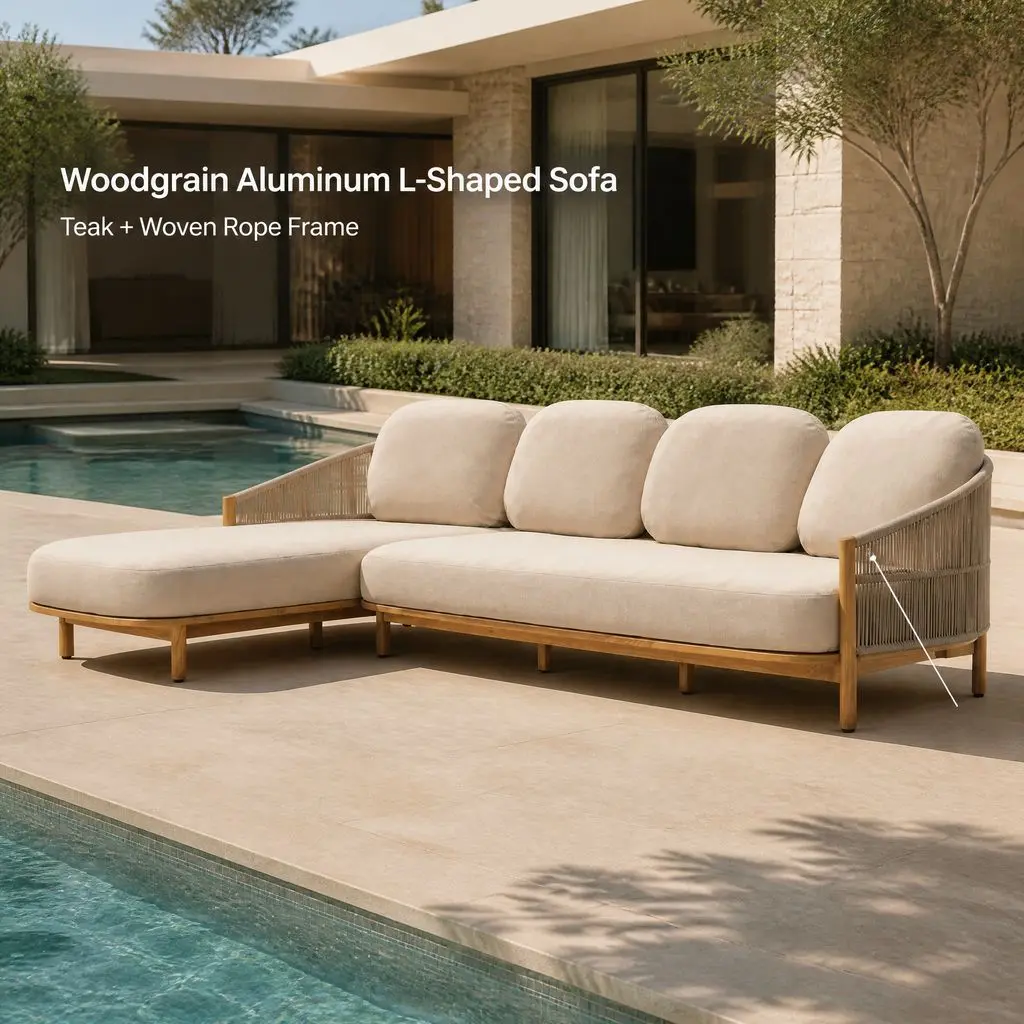
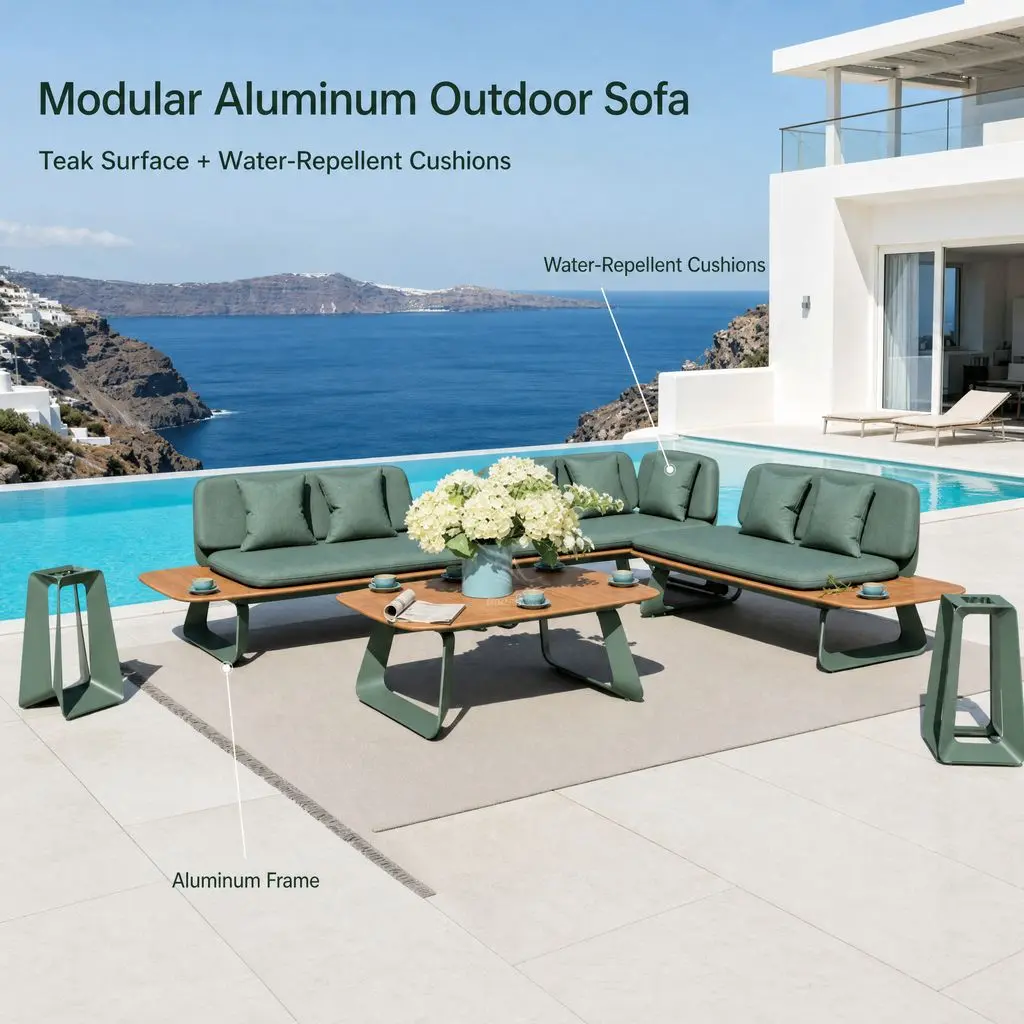
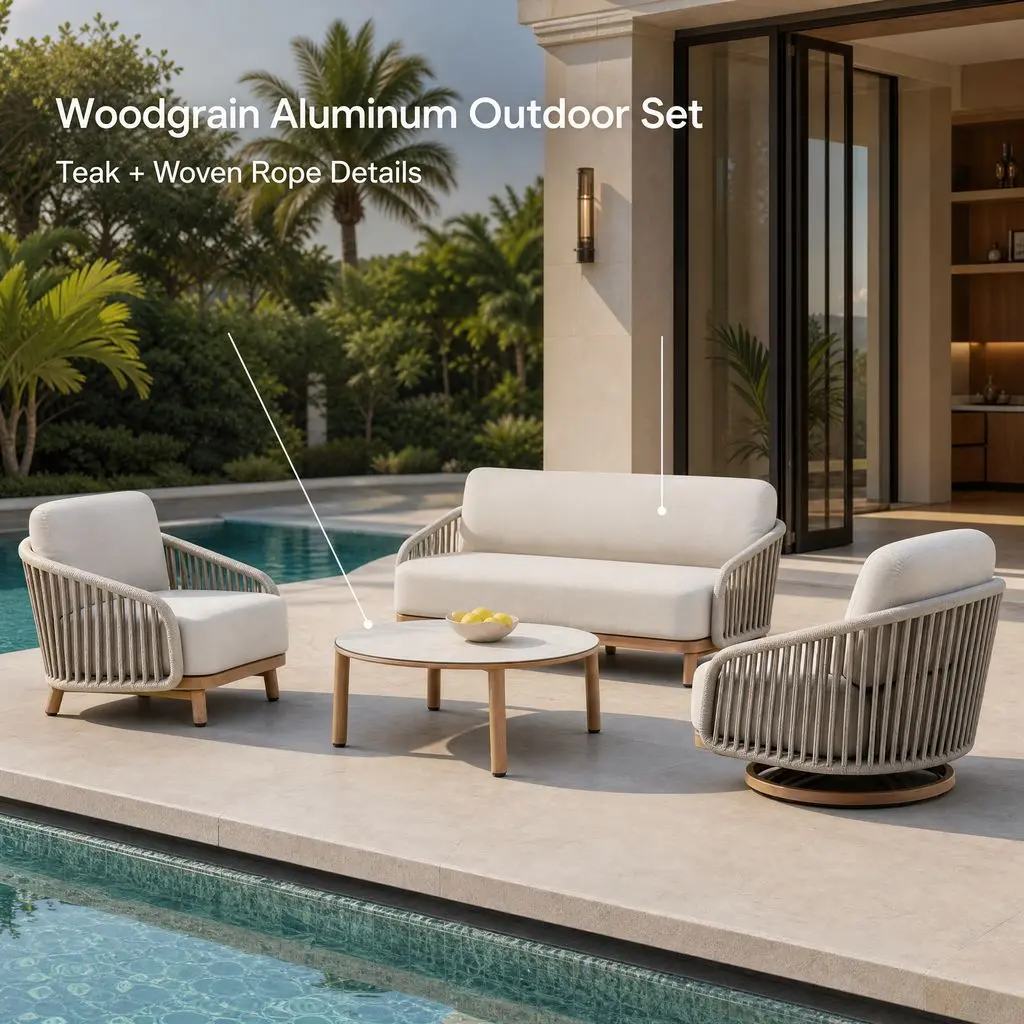
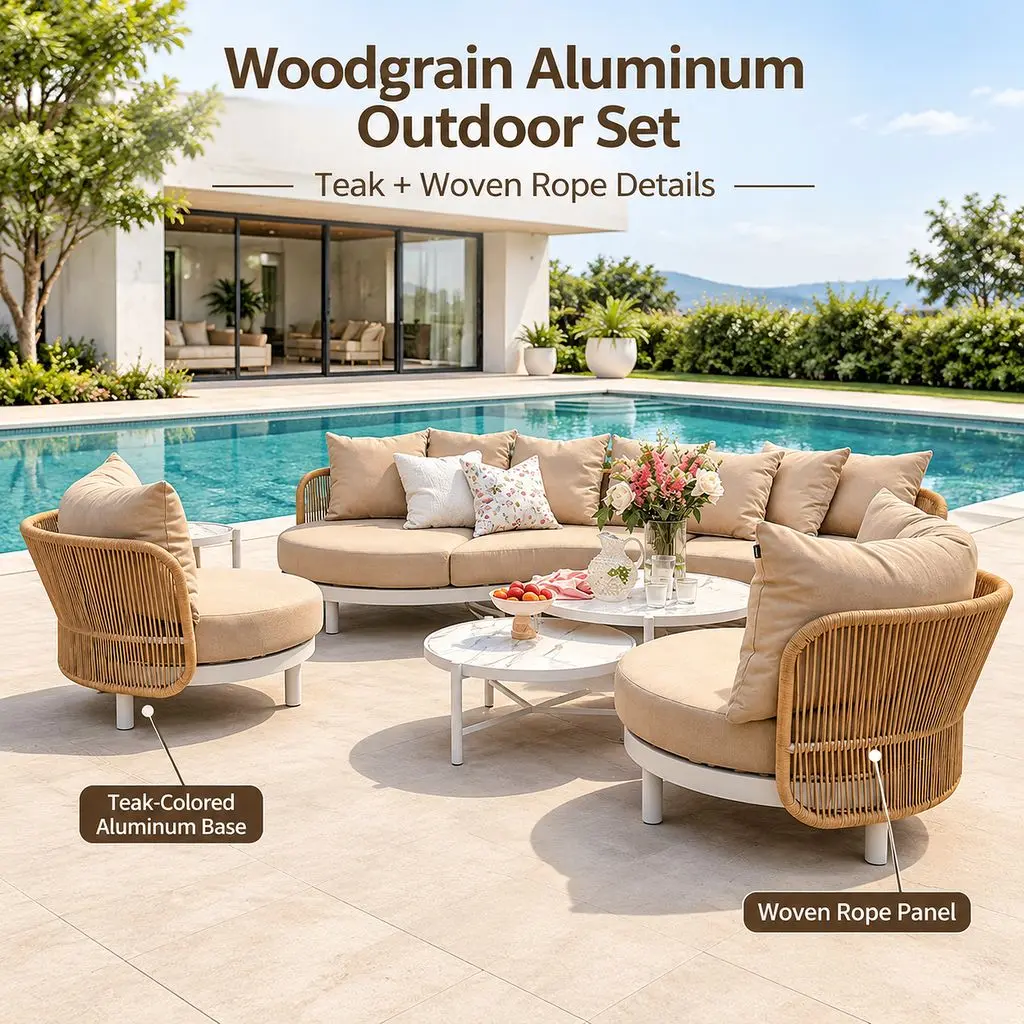
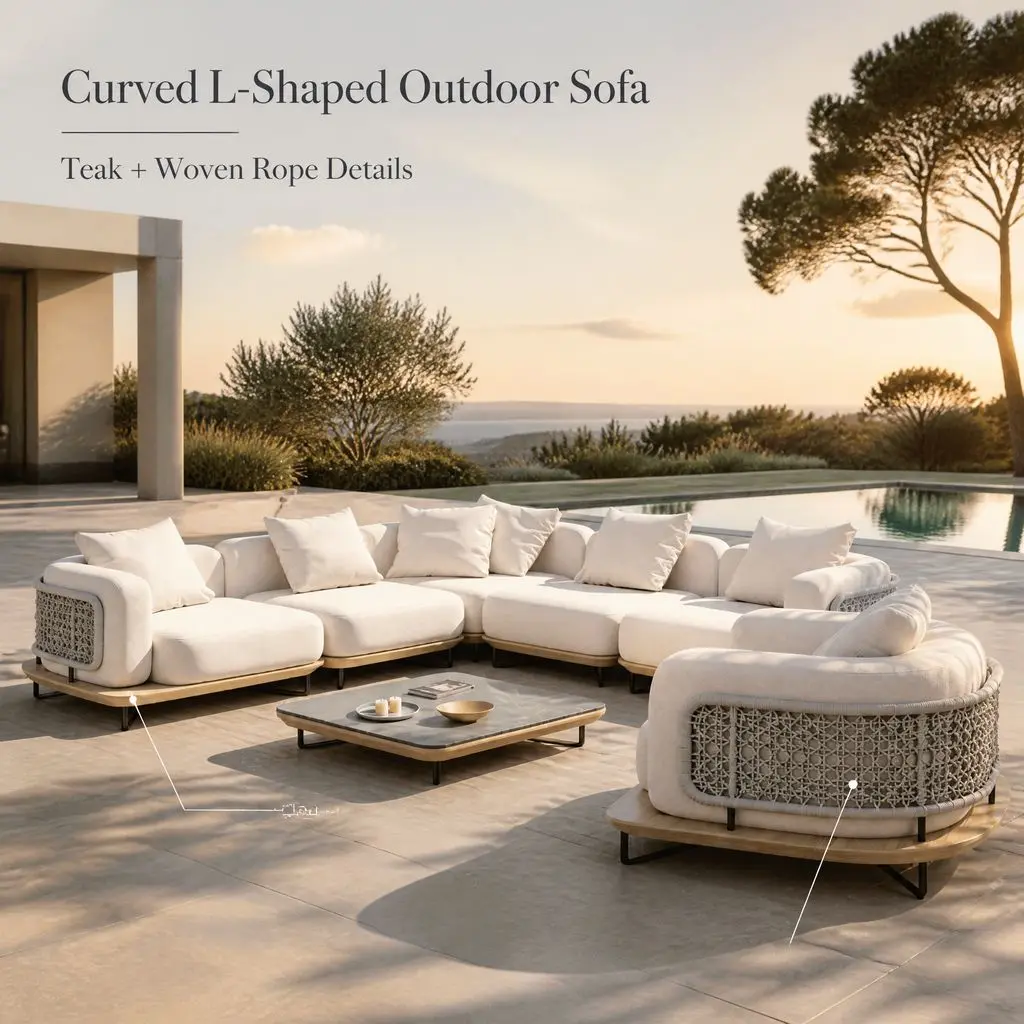
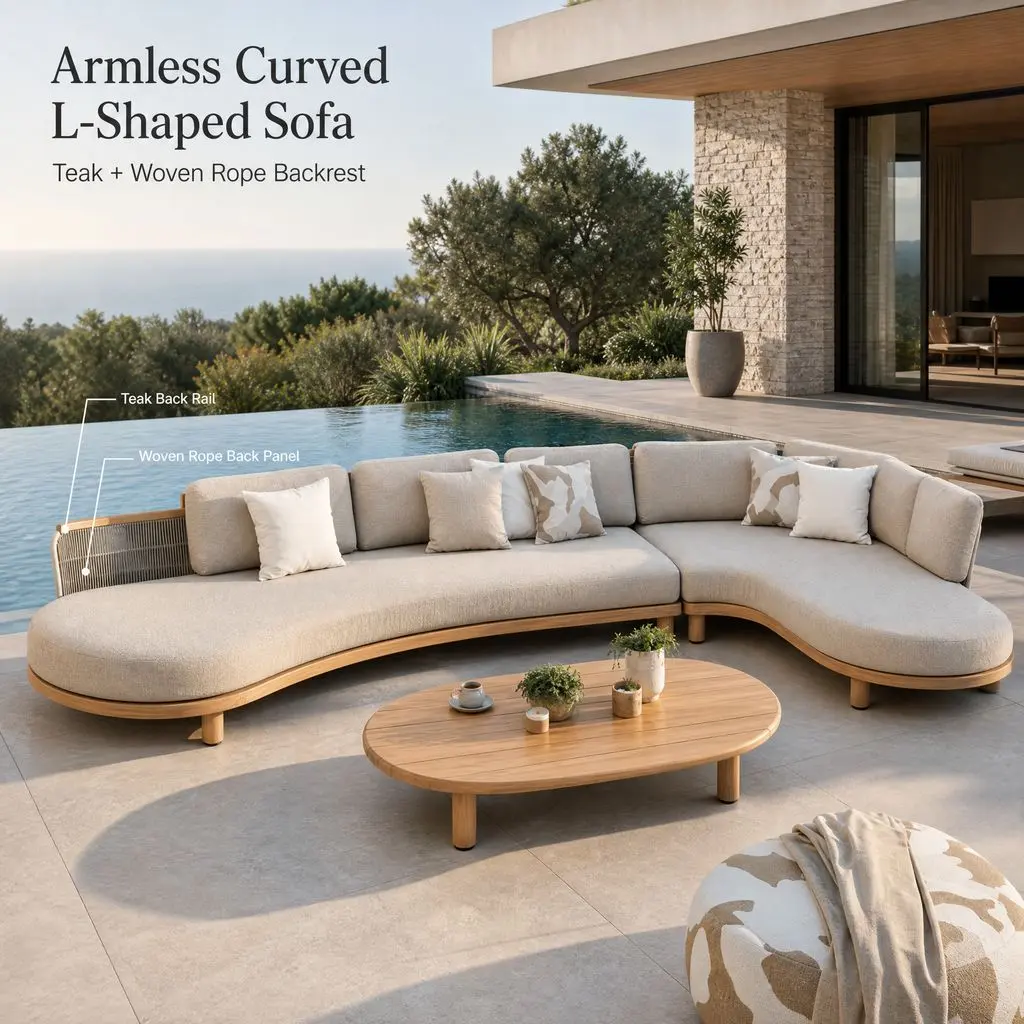
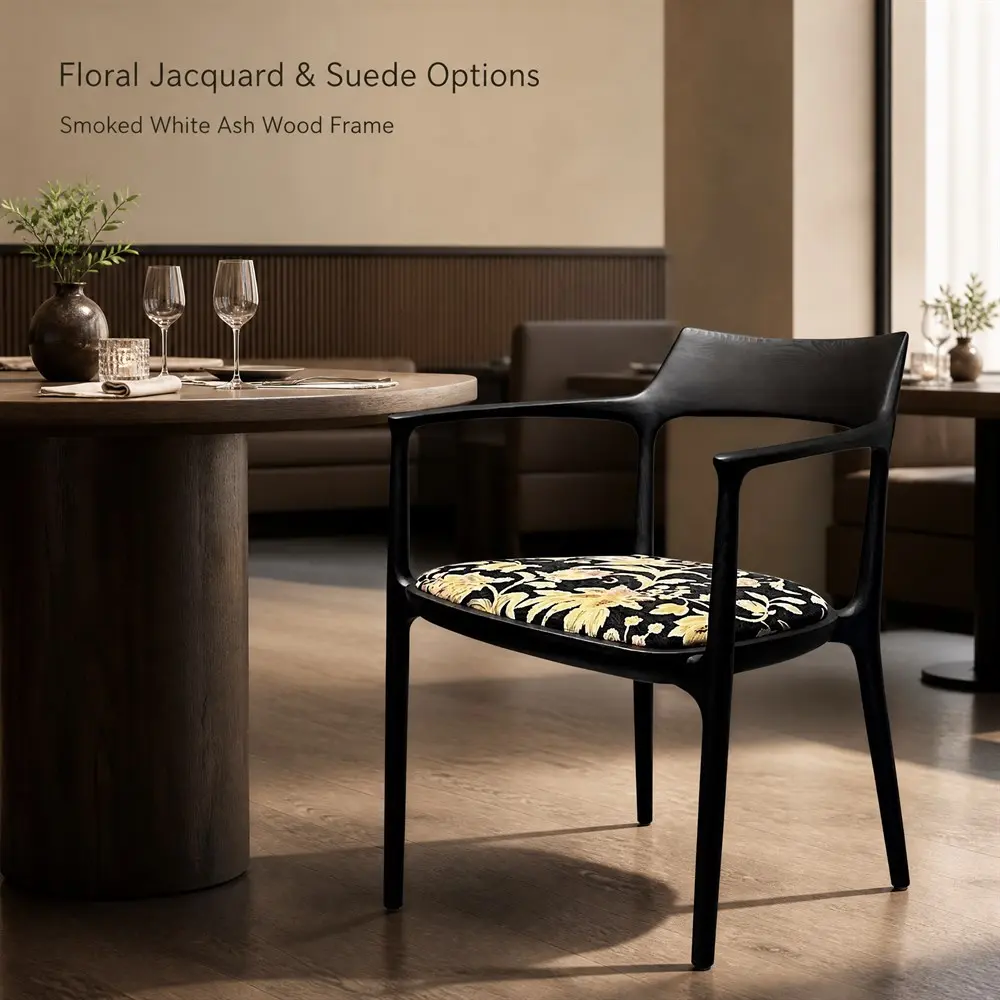
Extend your assortment with L-shaped sectionals, curved modular arrangements, armless configurations and complementary dining armchairs. All models ship wood-grain aluminium frames, teak trim and waterproof cushions as standard.
Practical answers for importers, distributors and project buyers evaluating a first or expanded order from a Chinese outdoor sofa factory.
Share your target models, container plan and destination city — Tashkent, Samarkand, Bukhara or elsewhere — and our export team will return a technical specification, FOB/CFR pricing and a realistic shipping schedule within one business day.