
Modular L-Shape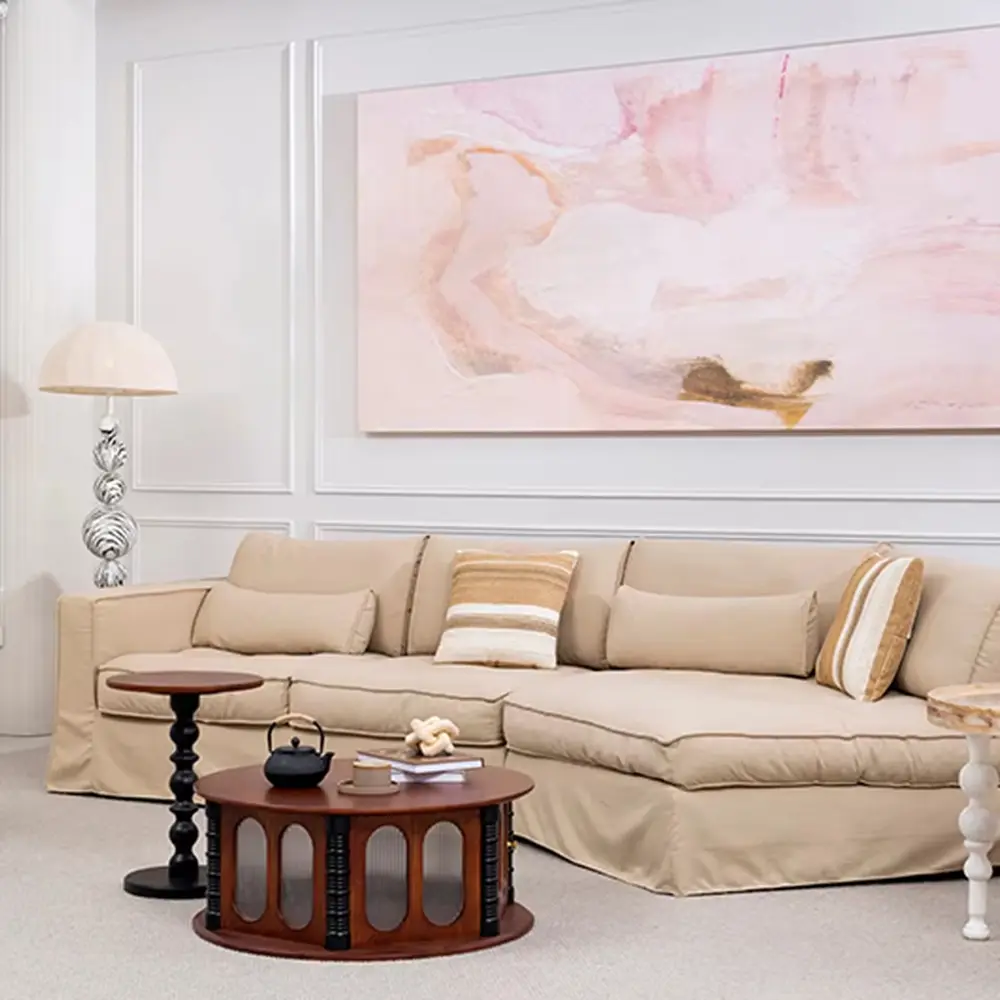
A procurement-grade field guide for importers, hospitality groups and fit-out contractors in Riyadh — covering local demand drivers, fabric specification, supply-chain resilience from Foshan, compliance, and a working delivery roadmap.
Riyadh is no longer a passive reseller market. Between Vision 2030 giga-projects, a young and rapidly urbanising population, and a hospitality construction pipeline that ranks among the largest per capita in the world, the Saudi capital now generates structured, repeatable demand for upholstered seating — and fabric sofas in particular. This brief explains what that demand actually looks like at the factory floor, how to buy it well, and where the supply-side risks sit in 2025 and beyond.
Figures are directional market indicators compiled from publicly available tender, hospitality-pipeline and urban-development disclosures; they are intended for procurement planning orientation, not as a formal statistical forecast.
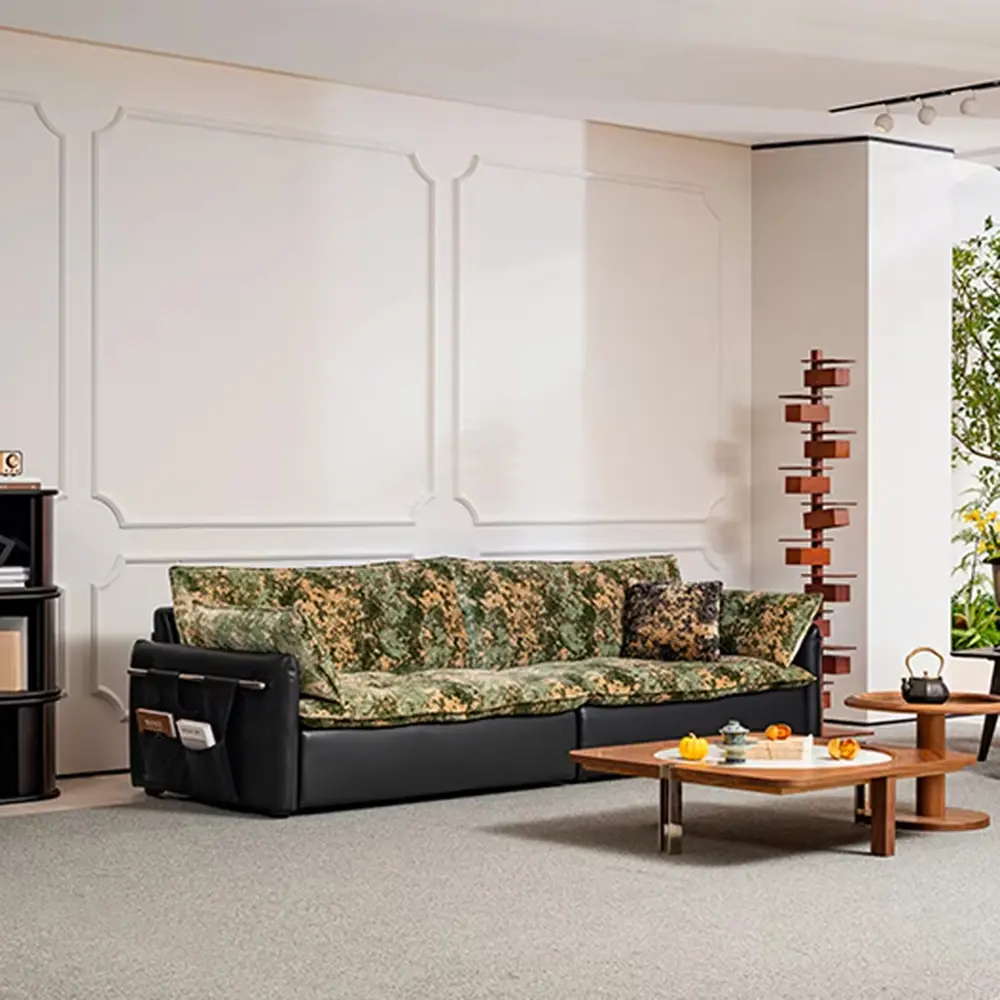
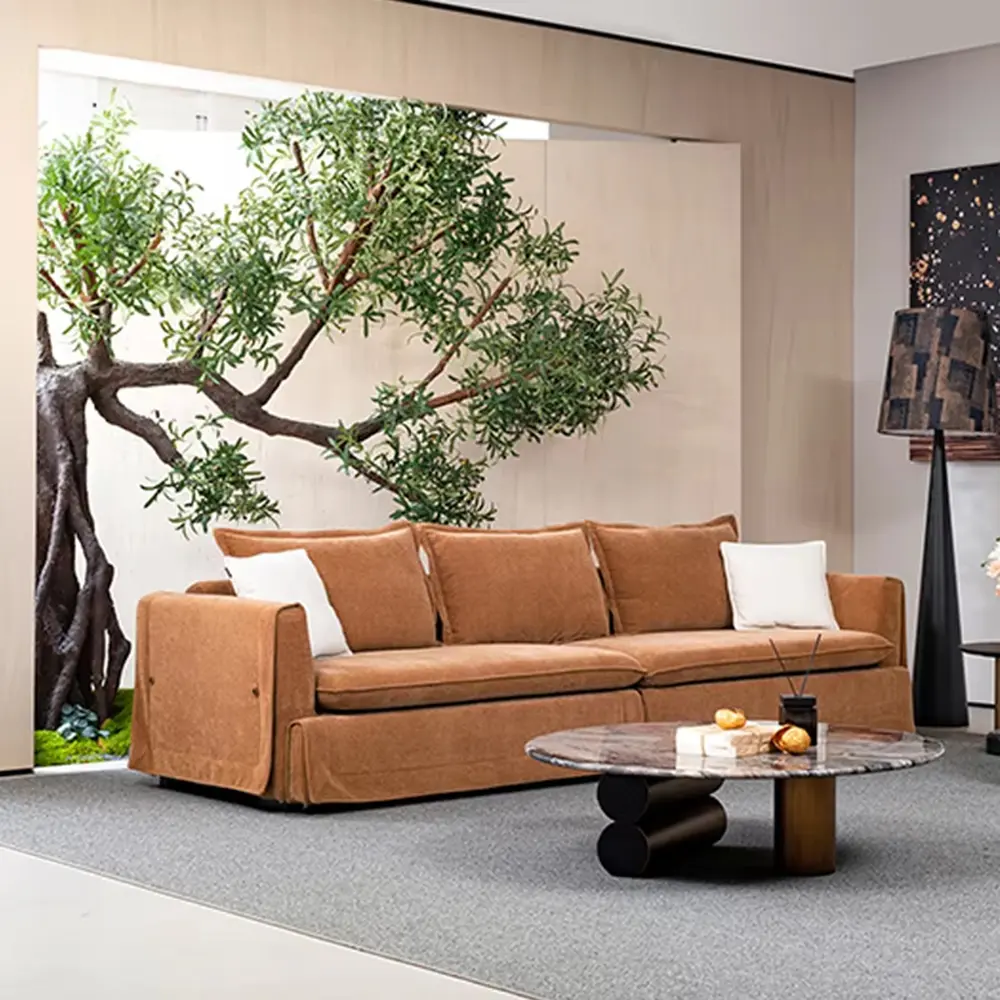
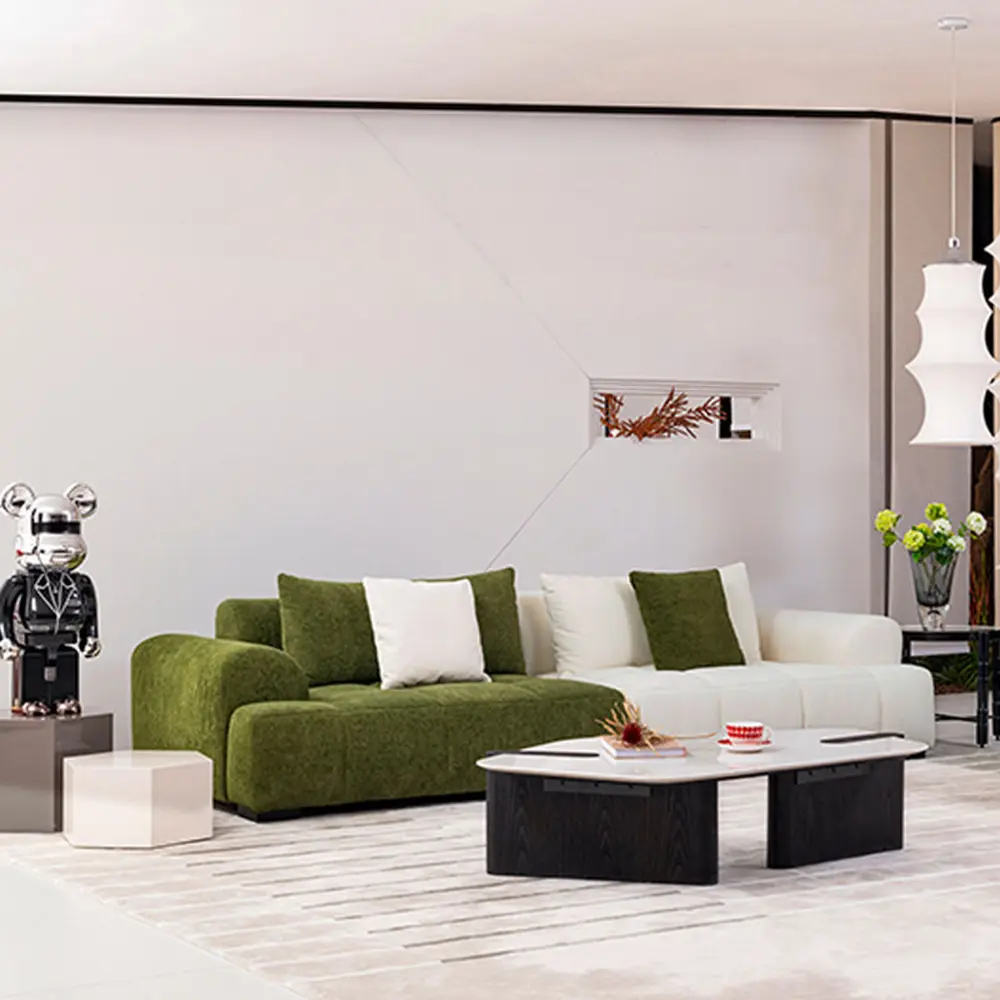
These four modular platforms are the most frequently requested by Riyadh fit-out contractors and hospitality buyers because they balance modularity, removable covers for hot-climate maintenance, and container-friendly packaging.
Riyadh's furniture trade is shaped by three simultaneous, overlapping dynamics. First, the Vision 2030 capital-expenditure cycle has created a cluster of large-scale developments — from NEOM-adjacent feeder projects to the Diriyah Gate cultural district and the Qiddiya entertainment city — each requiring residential-grade and hospitality-grade upholstery in volume. Second, the completion of the metro line network and the widening of Northern Riyadh residential corridors has opened a steady stream of mid-market villa and apartment handovers, which is where fabric sofas dominate over leather on price, comfort and climate suitability. Third, e-commerce furniture retail has matured rapidly, and local marketplaces are now sourcing containers directly rather than through Dubai-based sub-distributors.
The practical outcome for a wholesale buyer: a Riyadh procurement manager in 2025 is usually comparing at least two Chinese factory quotes against one Turkish and one domestic re-upholstery quote, and the differentiator is rarely headline price — it is fabric specification durability, moisture and heat tolerance, warranty behaviour, and how reliably the supplier can re-supply the same SKU 14 months later. That last point is where factory relationships, not trading companies, win.
Summer surface temperatures frequently exceed 50°C. Upholstery needs heat-stabilised foam, UV-resistant yarns and fading-tolerant dyes.
Coastal-humidity leakage and heavy seasonal dust make removable, washable covers a real maintenance requirement rather than a marketing bullet.
Typical Riyadh villas allocate large majlis and family-living areas, supporting L-shaped configurations over compact three-seaters.
Local installation crews expect flat-pack modular arrivals with pre-labelled modules and pre-fitted brackets — not single-piece sofas.
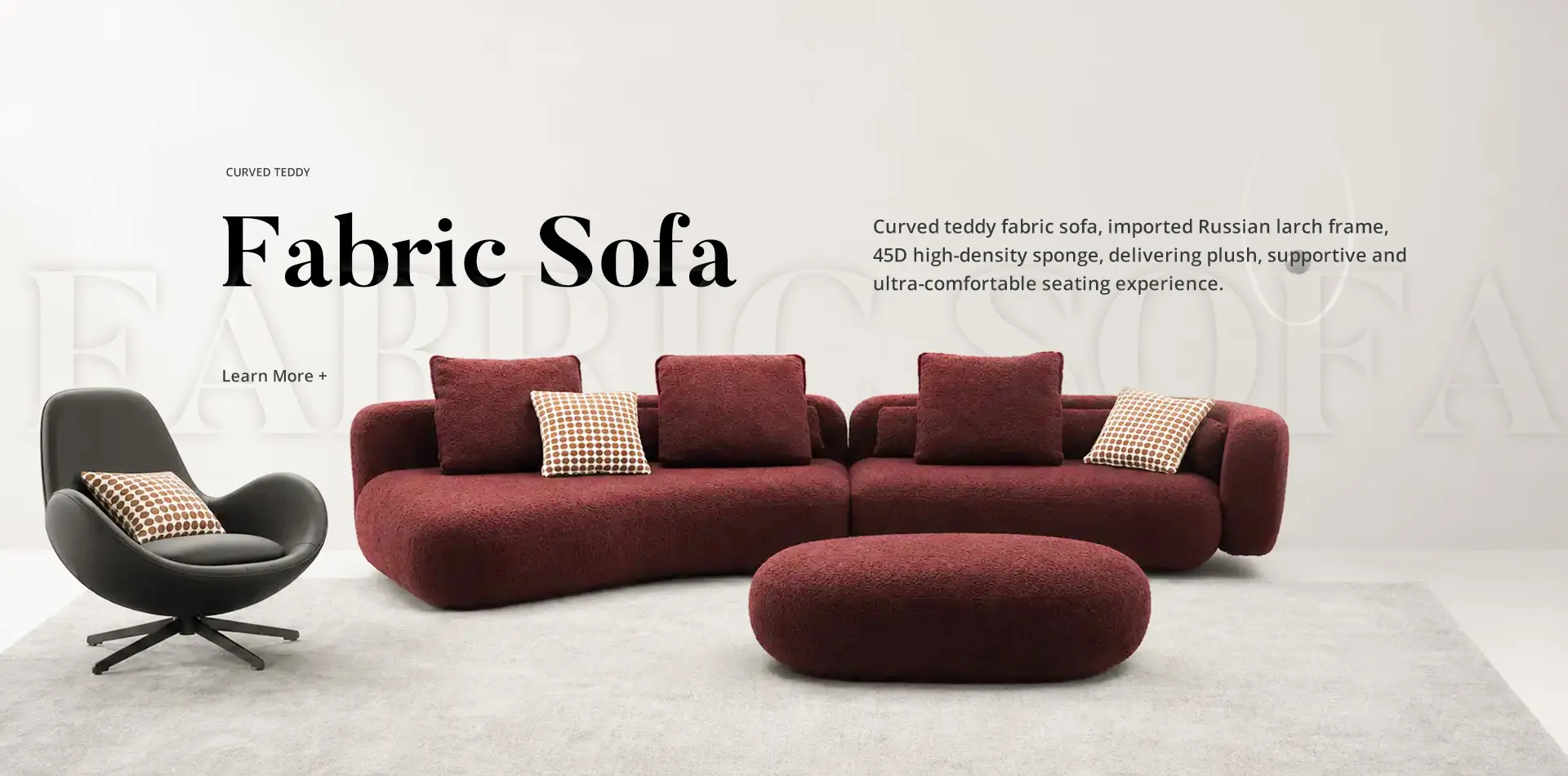
The correct specification for a Riyadh buyer is not "the best fabric." It is the fabric and modular geometry matched to a specific installation context. These are the four end-use contexts that most frequently appear in inbound Riyadh enquiries.
A common misreading of the market is that Chinese supply is "commoditised." For upholstered sofas — a product that is heavy, bulky and freight-sensitive — it is the opposite: the competitiveness is structural, not simply promotional.
Foshan/Shunde contains foam moulding, wood machining, upholstery, hardware, fabric mills and packaging within a ~40 km radius — reducing lead-time variance and rework risk.
A single factory group can produce L-shapes, three-seaters, ottomans and coffee tables in the same order — critical for coordinated fit-outs and container fill rate.
Direct factory-to-wholesaler channels strip two or three intermediary margins — enabling a Riyadh buyer to invest in better foam and fabric at the same landed unit cost.
Export documentation, SASO-oriented labeling support and SABER registration familiarity are standard for factories exporting into the Saudi market.
Trial containers from 50–100 units per model; established factories routinely handle 3–6 model mixed containers for a first shipment.
Compressed module packing keeps a 3.4 m L-shape sofa within a 1.15 m³ shipment volume, materially reducing container freight cost per unit.
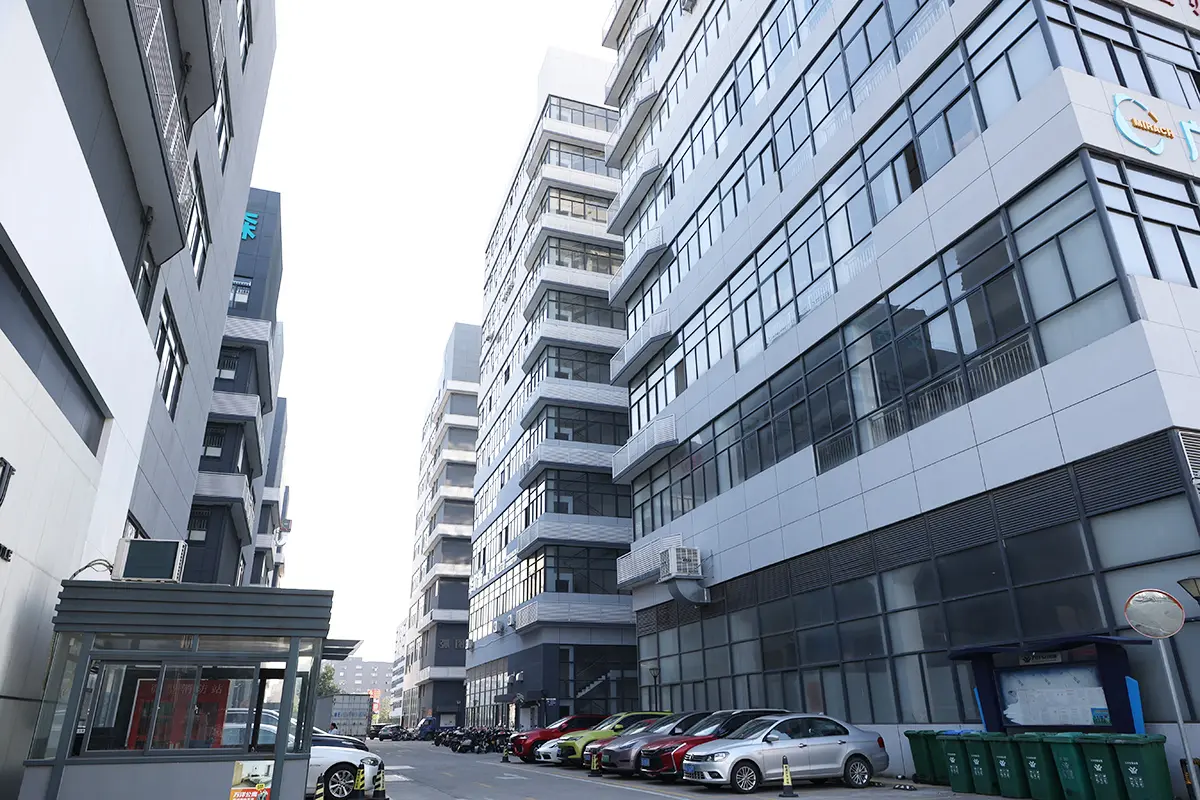
Most wholesale disappointments in this trade are not product failures — they are coordination failures. Four process controls matter more than any single material choice:
A physical sample must be photographed next to a color chip and signed off before mass production. Fabric lot-to-lot variance is real.
Frame and foam inspection at 30% completion; fabric fit and stitching at 80% completion. Both should be documented with photos.
A loading plan that accounts for module nesting, crate reinforcement and pallet-free stacking can add 8–14% extra units per container.
Every module, carton and label should reference the same model ID (e.g., QYM M1053), so a future re-order refreshes correctly.
Riyadh is best read within a wider global context. The dynamics observed in the Gulf — modularisation, removable covers, climate-adaptive fabric — are the same dynamics visible in Australia, Canada, the UK and Southeast Asia, just on slightly different timelines.
Fixed sofas are losing share to modular configurations across all major markets. The reason is not aesthetic — it is logistics and lifecycle economics: modules can be replaced individually, reducing both warranty cost and warehouse footprint.
In markets where consumers weigh price against maintenance, fabric consistently wins. 2024–2025 saw multiple crossover points in Australia and Canada where fabric modulars took volume share from leather, and the same pattern is now visible in Riyadh.
Buyers increasingly want formaldehyde-low foams, low-VOC adhesives and recycled-content fabrics. This is not yet a hard regulatory requirement in every market, but it is a tender-winning differentiator for government-adjacent projects.
Turkish and Eastern European factories are gaining share in the EU, but the Gulf remains firmly oriented to Asia for cost-to-volume. For Riyadh specifically, freight economics from Turkish ports do not beat Foshan at wholesale volumes.
Riyadh resellers increasingly source via online catalogues and 3D walk-throughs, then confirm via WhatsApp. The supplier that documents its own catalogue properly converts better — a decisive competitive detail.
2021–2023 disruption taught buyers to evaluate suppliers partly on schedule reliability, not only price. Factories that publish accurate production windows are now preferred even at a 3–5% premium.
The next five years of fabric-sofa engineering will be shaped less by design fashion than by three technical streams: material science, modular frame architecture, and after-market serviceability. For a Riyadh buyer, these streams translate directly into specification choices that should appear on your tender documents today.
Contract-grade fabrics become standard expectation above 25,000 Martindale cycles. Water and stain repellents move from optional treatments to factory default on cotton-linen blends.
Responsive latex cores layered over high-density foam extend seating comfort without compression fatigue in high-heat climates — an inflection point for Riyadh villa and hospitality buyers.
Larch and eucalyptus plywood frames begin consolidating around standardised bore patterns, allowing modules from different production years to connect interchangeably.
Removable, washable covers become the primary after-sales currency — buyers re-order covers before re-ordering sofas. This changes the wholesale SKU structure.
Recycled-content fabric and traceable wood frame documentation become tender-relevant. Expect major Saudi public-sector projects to request material passports.
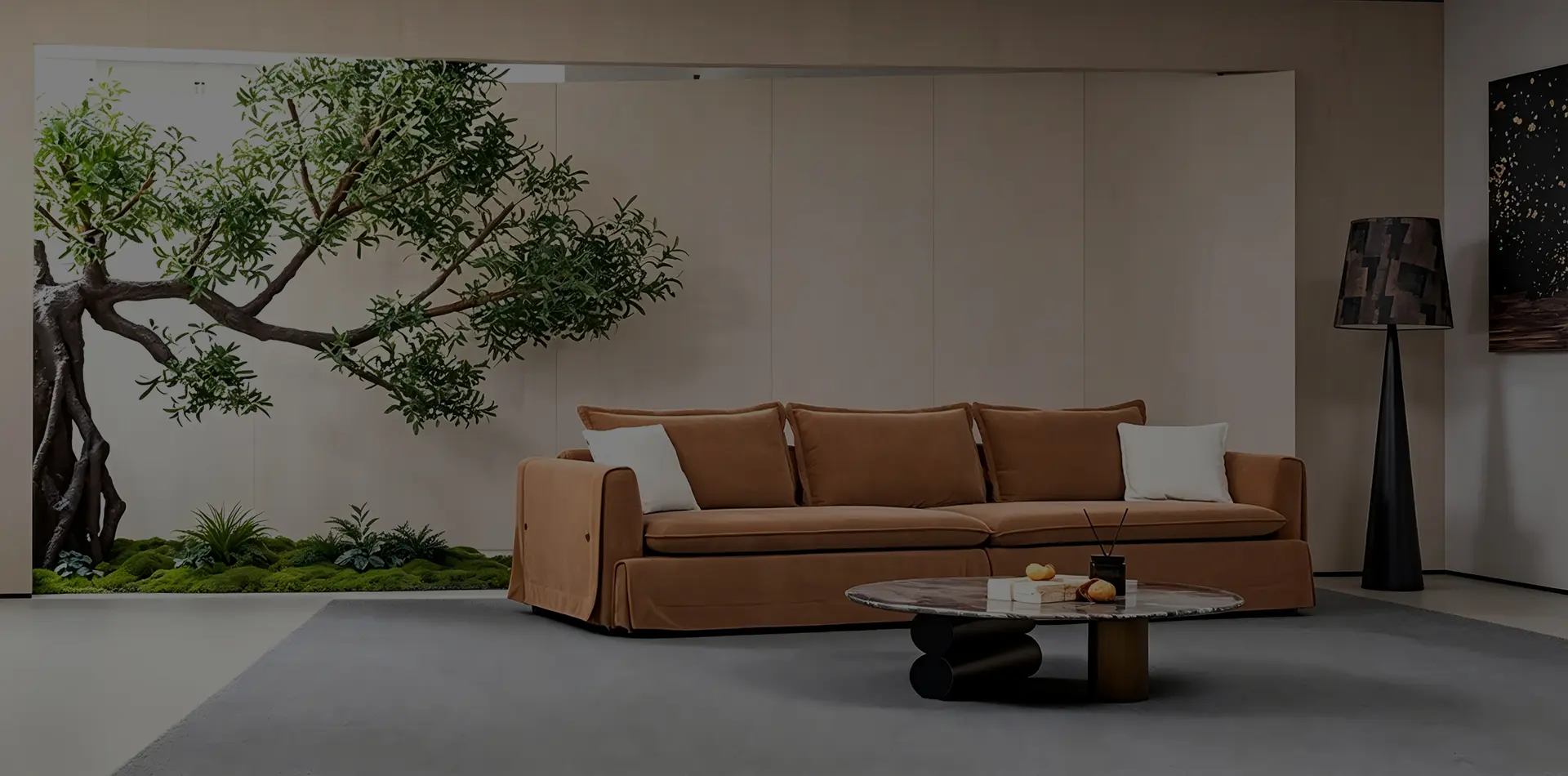
Compliance is the area where first-time Riyadh buyers most often underestimate effort. The list below is a working summary — it does not replace counsel from a Saudi customs broker or conformity-assessment body, but it does frame what you should expect to discuss with a factory.
Saudi Arabia requires regulated products, including furniture for many categories, to be registered through the SABER platform. A product certificate of conformity (PCoC) and shipment certificate of conformity (SCoC) are typically required before clearance. A factory that has exported to Saudi previously will understand the registration flow; a first-timer may not.
For hospitality and public interiors, fabric flammability documentation is frequently requested. Fabric compositions and treatments should be documented precisely — vague "imported fabric" descriptions cause delays during conformity review.
Retail-facing products typically need Arabic labels or bilingual packaging. Factories that support Arabic labelling (even as an add-on service) collapse a significant amount of downstream parallel work for the buyer.
Crating which uses solid wood must comply with ISPM 15 for phytosanitary requirements. This is a routine check, but missing it can delay a container at the port — every shipment should be documented.
Document a warranty that covers foam compression, frame integrity and stitching for a defined period. More importantly, agree a re-order lead-time commitment on that exact model — this is what protects you two years later.
For hospitality and serviced-apartment buyers, an agreed local installation and upholstery-service partner in Riyadh is often more valuable than a slightly lower FOB price. Discuss this before signing the first PO.
"The first thing our team checks is not the showroom model — it is whether the covers on container arrival can be swapped by our installer without calling the factory. When that works, the whole re-order conversation changes."
— Pattern observed across multiple Riyadh reseller and fit-out briefs, 2024–2025Qingyumai is the export brand of Foshan Qingyumai Technology Co., Ltd., an integrated furniture manufacturer in Shunde, Foshan — 10+ years of export experience and 100+ original patents. The company's specification briefs and coverage extend across living room, bedroom, dining, salon, outdoor, office and hotel project categories.
The models below cover the wider configuration range most requested by Riyadh buyers — detachable chenille modulars, minimalist slipcovers, Italian-style velvet-and-chenille combinations, larch-wood frame sectionals, and striped linen luxury executions.
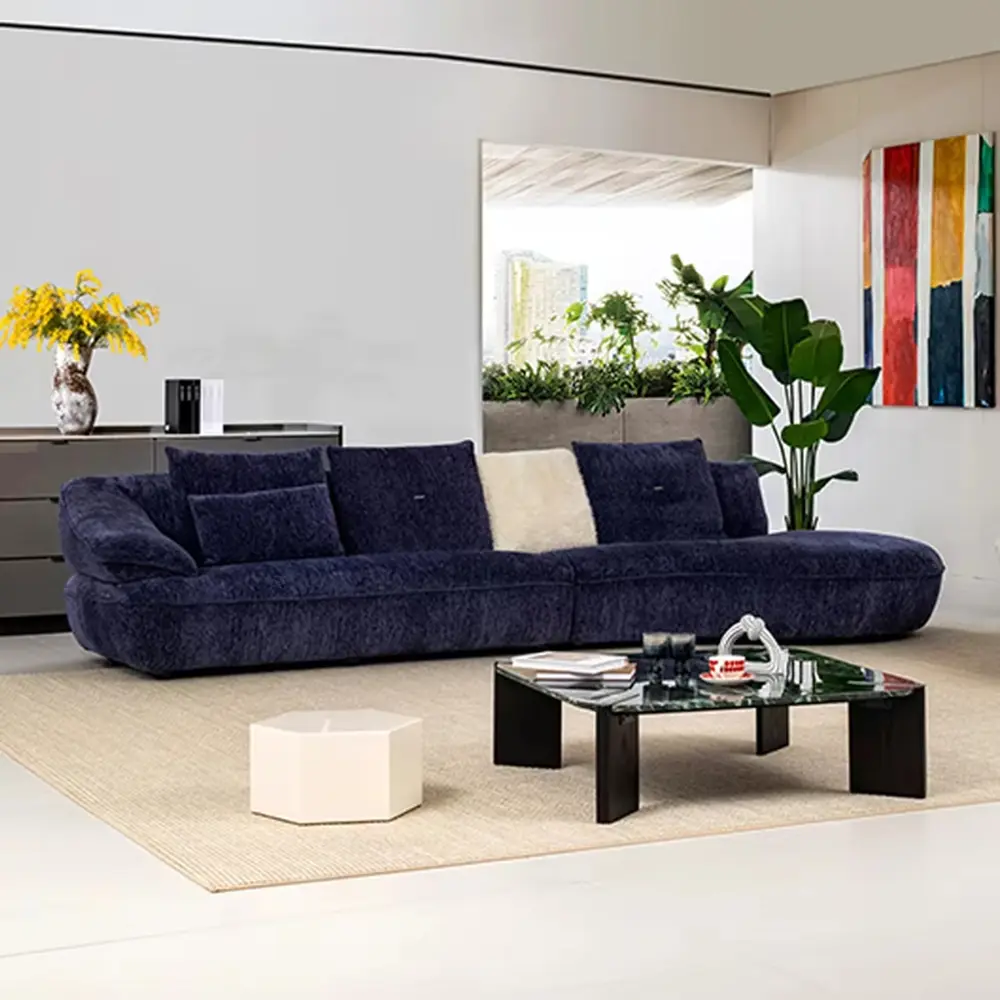
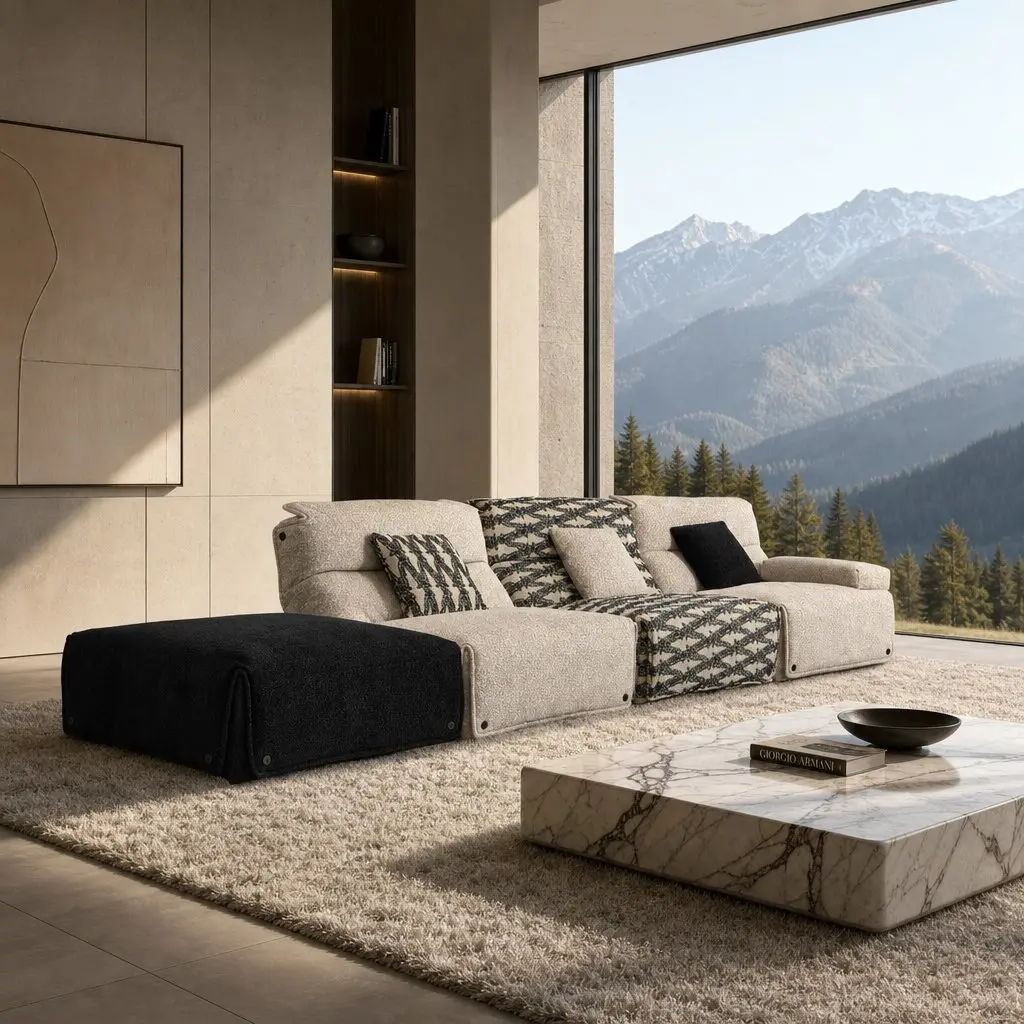
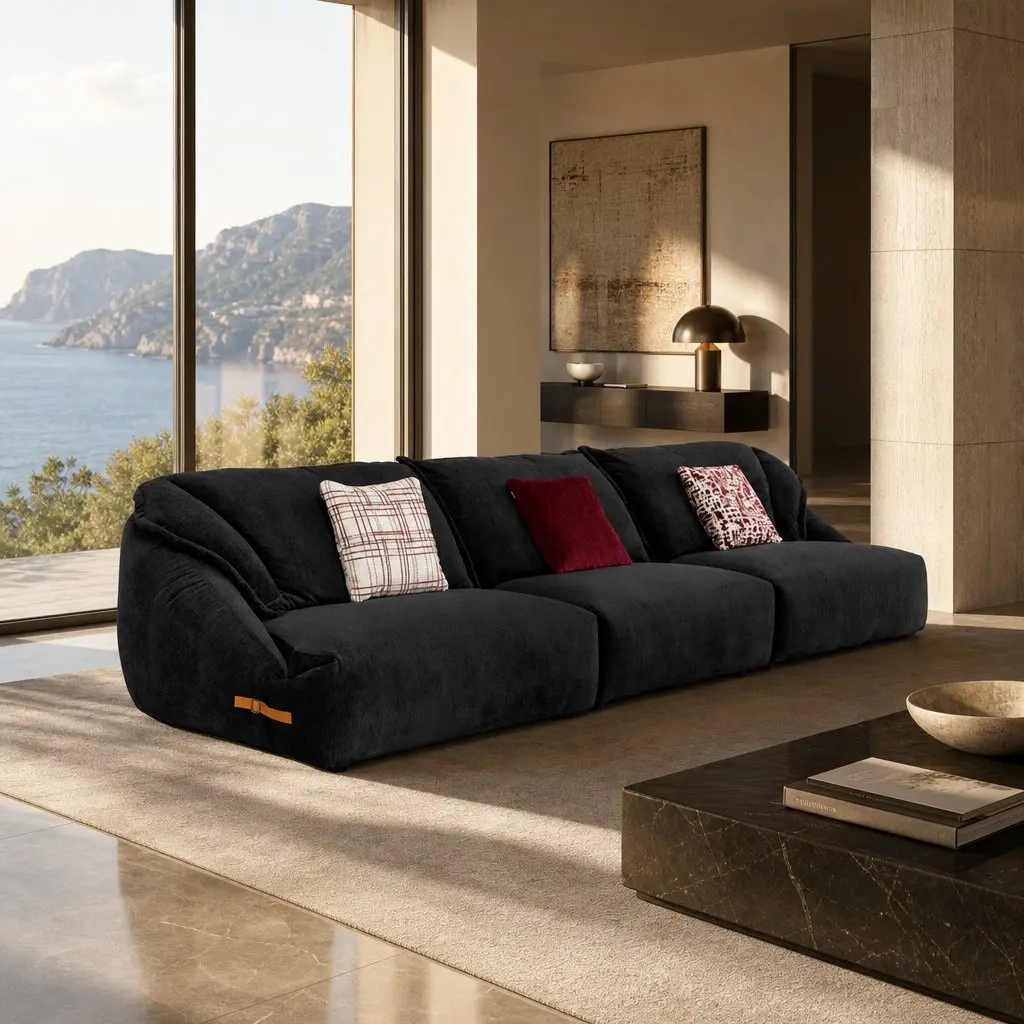
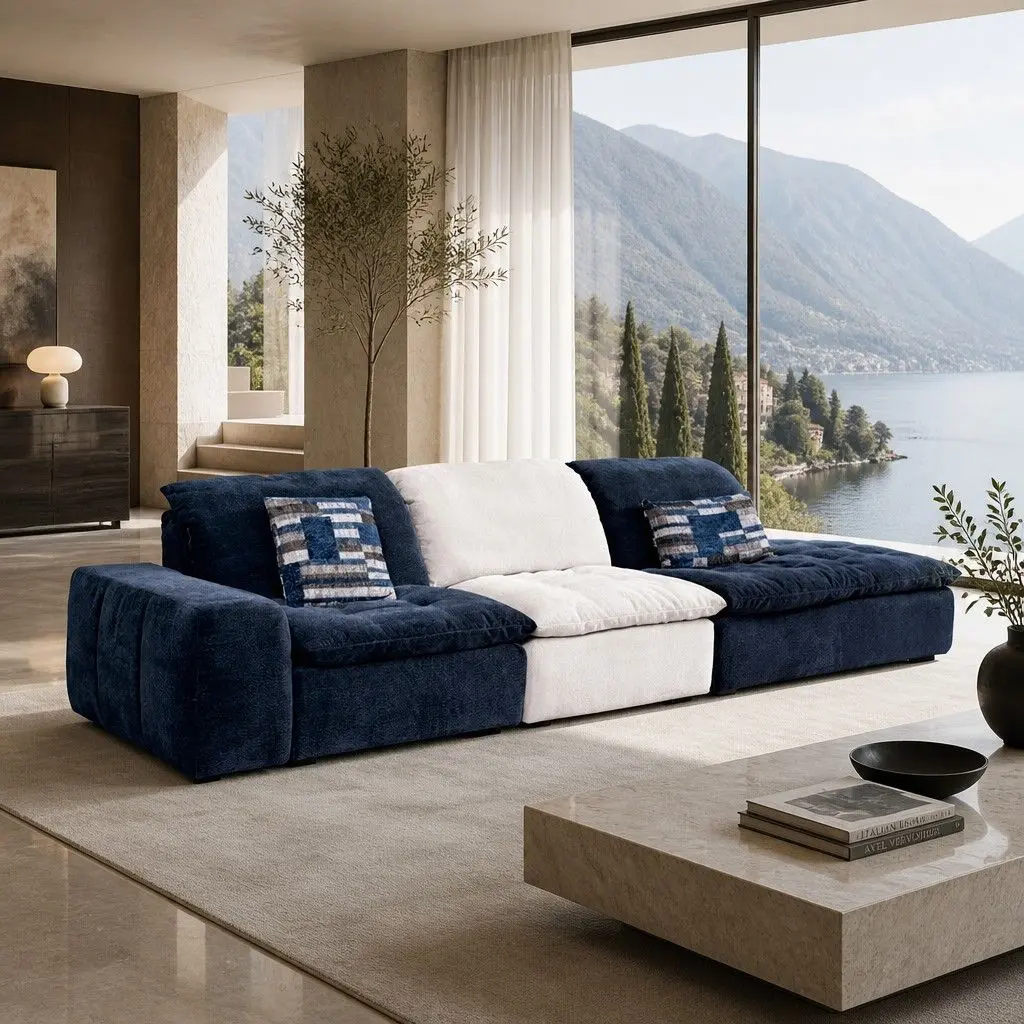
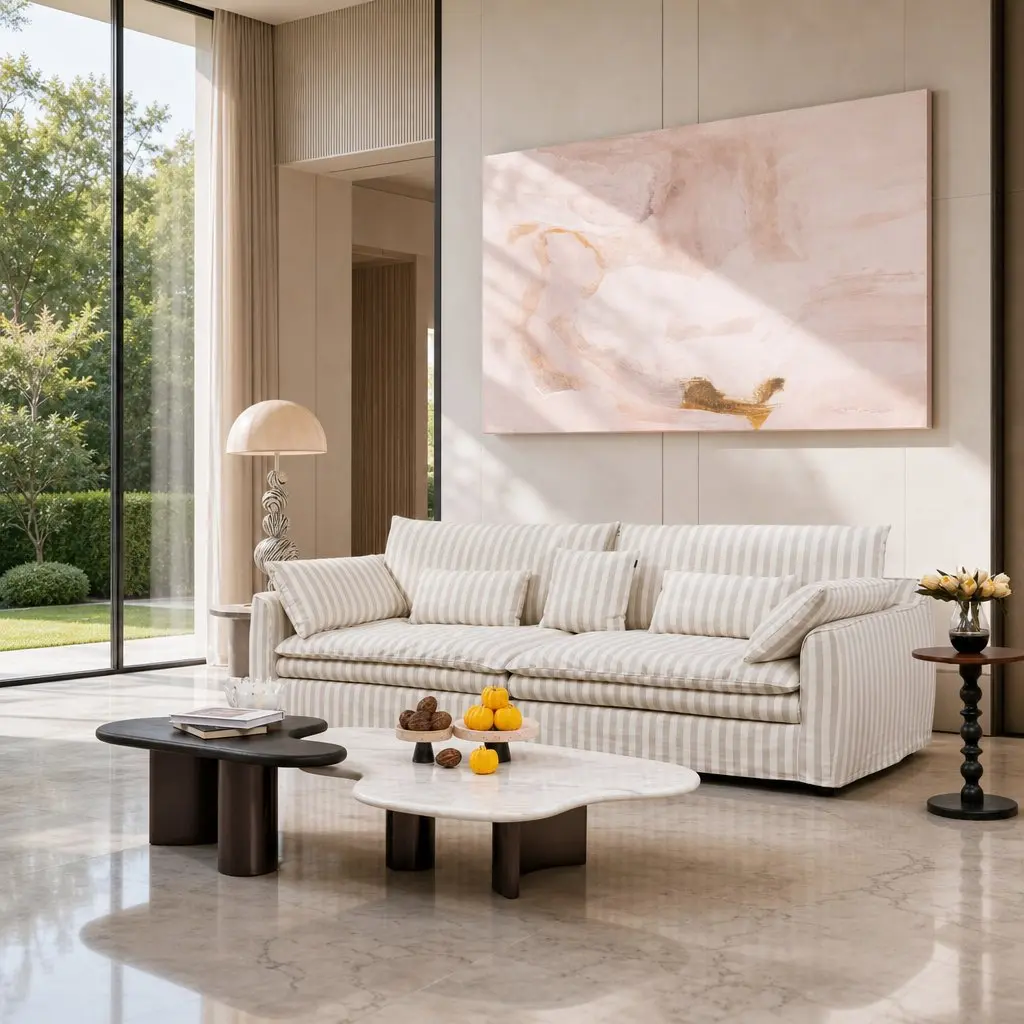
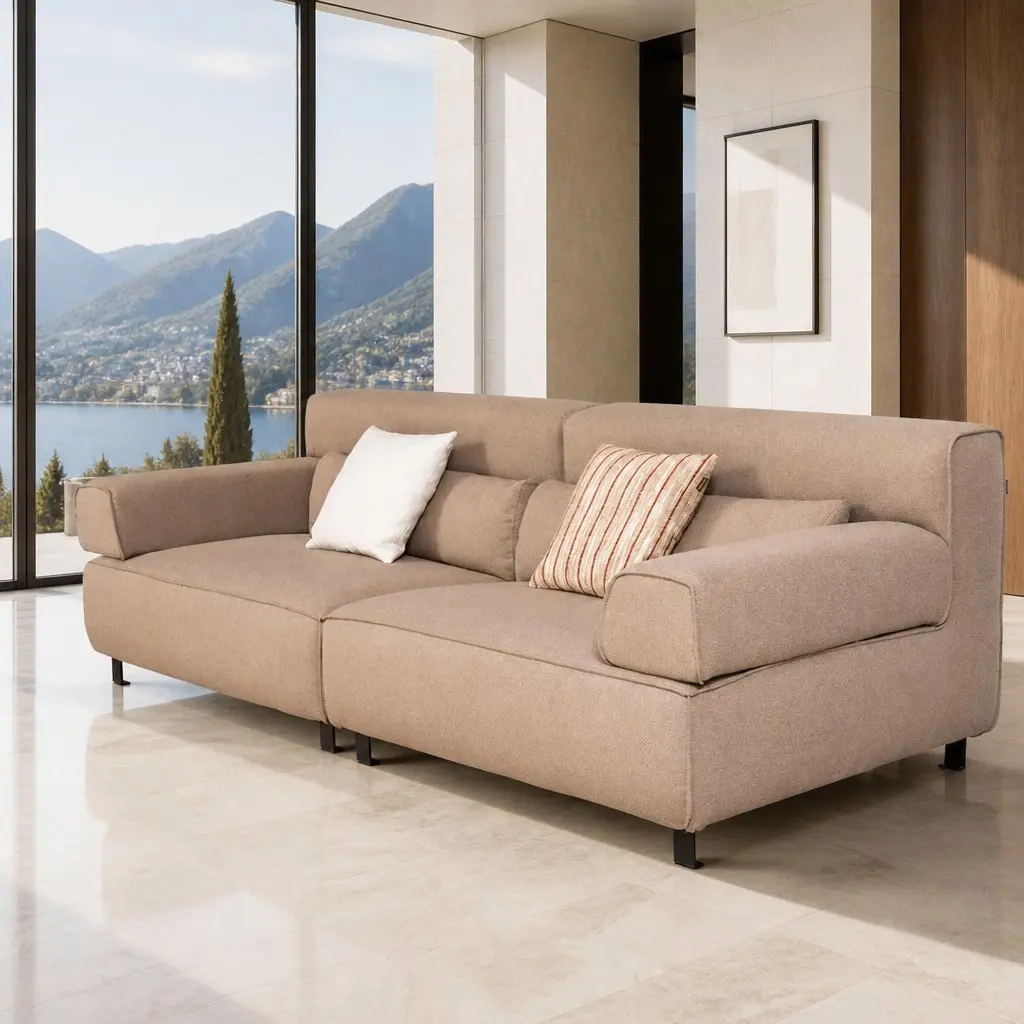
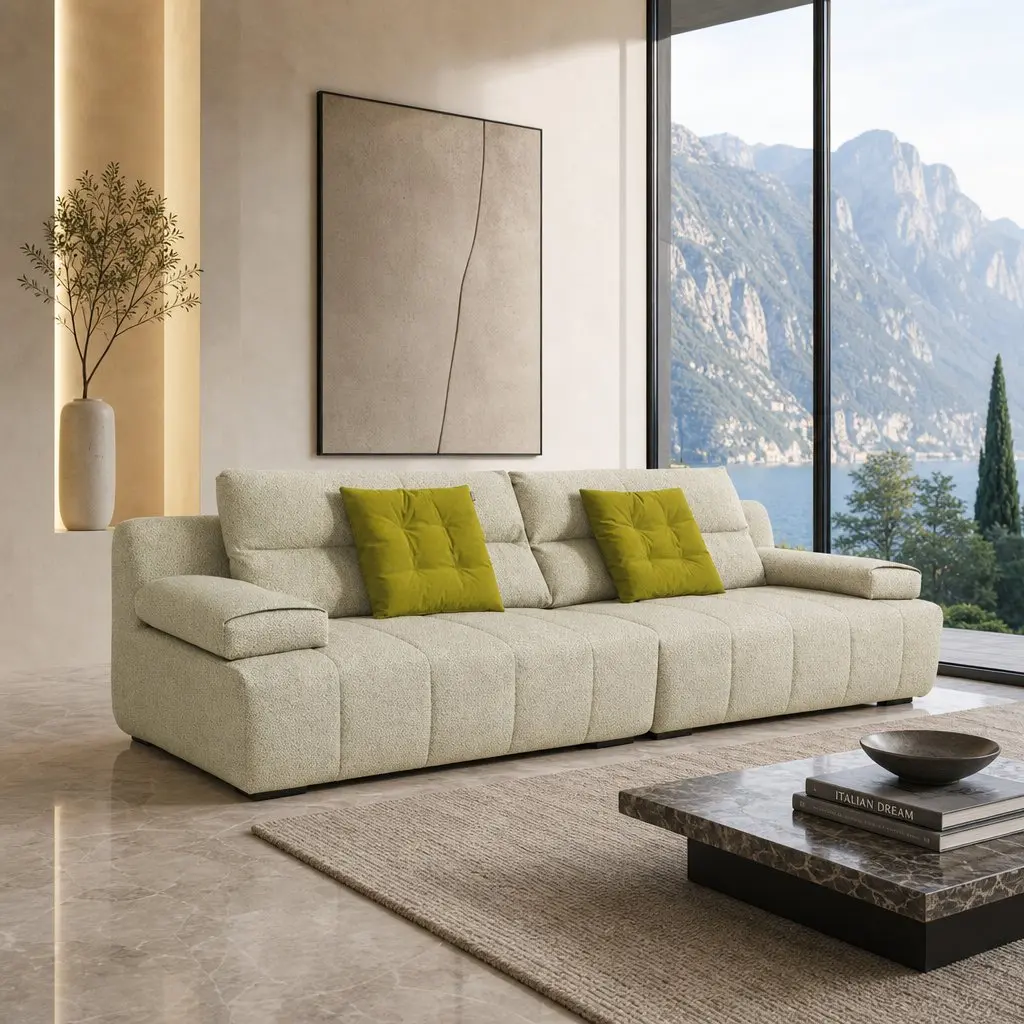
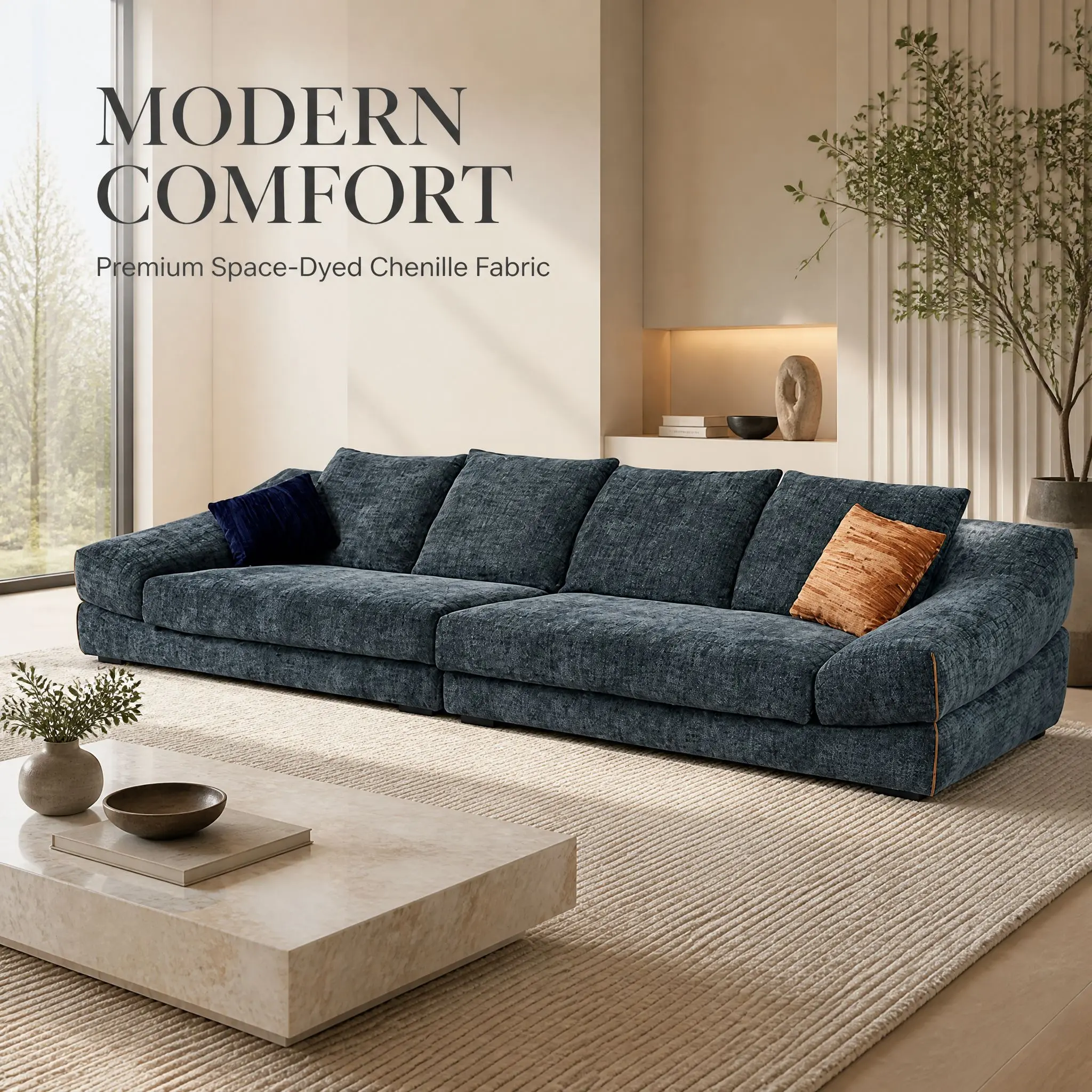
Send your configuration brief — module counts, fabric preference, delivery destination and target timeline — and our export team will respond with a tailored quotation and a preliminary container loading plan.
Most established fabric-sofa factories work from 50–100 units per model per configuration for a first trial container, with negotiable thresholds for mixed-model orders. For Riyadh buyers combining 3–5 models in one container, this typically works out to one 40HQ container with total volume optimised by module compression. Trial orders at the low end of this range are usually converted into repeat orders within 3–6 months.
Port-to-port transit from South China ports to Jeddah or Dammam typically lands in the 25–40 day range depending on routing and season, with roughly 7–15 additional days for inland transport and customs clearance to a Riyadh warehouse. Plan a 45–60 day total lead-time assumption — including production — for a first order. Repeat orders that reuse the same specification can compress to 30–45 days.
For residential villa use, breathable cotton-linen and chenille with tight weave perform well. For hospitality and serviced apartments, commercial-grade fabrics with 30,000+ Martindale cycles and removable covers are strongly recommended. For F&B and family-use applications subject to spills, waterproof snownylon treatments offer a pragmatic balance of durability and feel. Pure silk and low-twist velvet are generally not recommended for high-traffic Riyadh interiors.
In a word, yes — for Riyadh specifically. The combination of seasonal dust and household dust-load means covers will need cleaning more frequently than in temperate markets. Removable, washable covers turn a 5–7 year sofa product into a 10–12 year asset by allowing the surface to refresh without replacing the internal frame and foam. This is especially relevant for hospitality SKUs where the same model may run 40–120 units across a portfolio.
Yes — and for whole-house or fit-out orders this is usually the most cost-efficient approach. Mixed-category loading reduces freight cost per unit, aligns finishes across the scheme, and produces a single invoice and one QC standard. The practical constraint is planning loading geometry: module compression for sofas, carton reinforcement for casegoods, and pallet-free stacking where feasible.
Standard factory warranty for fabric sofas from established Chinese manufacturers typically covers frame integrity, foam compression and stitching for 1–3 years, with construction-related defects covered longer. Fabric wear and colour fading are usually handled as cover-replacement rather than full warranty. For a Riyadh buyer, agree the exact warranty scope and cover-reorder policy in writing, and link it to the specific model number on the PI.
Most furniture imports require SABER registration (PCoC and SCoC), textile composition documentation, and compliant wood packaging under ISPM 15. Fire-retardant documentation is frequently requested for hospitality and public-interior projects. Your Saudi customs broker and conformity-assessment body will confirm the exact product-specific requirements; factory-side, ask for a checklist and copies of prior Saudi shipment documentation before placing your first order.
Yes for most established export factories. Typical services include woven label branding, embossed logo tags, printed Arabic or bilingual carton labels, and inner-pack customisation. This is usually agreed at the sample stage and documented in the PI. If Arabic labelling is a requirement, confirm the translation content with your local team before production — this avoids costly label reprints.
Three practical checkpoints: (1) request factory video walk-throughs of your specific model under production (not catalogue footage); (2) order a physical sample through a small trial container or courier sample before the production PO; (3) ask for at least two prior Saudi shipment references with shipment dates and container numbers you can cross-check. A factory that exports regularly to Saudi Arabia will handle these requests without friction.
A realistic landed-cost model for Riyadh should include: FOB price + ocean freight + insurance + inland transport + customs duty + clearance + local installation + warranty reserve. Fabric sofa freight is driven mainly by cubic volume, not weight — which is why module compression and container fill rate matter more than a low per-unit FOB. Compare suppliers on landed cost per delivered seat and on the cost of a two-year re-order of the same model, not just first-order price.
Yes. Hospitality-grade fabric sofas involve specific considerations: higher Martindale-rated fabrics, fire-retardant options, denser foam density (typically 35–45 kg/m³ for contract-grade seating), and documented material certificates. Factories that already serve this category can typically produce the PI-level detail required by hotel and serviced-apartment procurement teams. For Riyadh projects in particular, allow enough lead time to build in fire-retardant fabric sample approval before mass production.
Qingyumai is the export brand of Foshan Qingyumai Technology Co., Ltd., located in Hui Cheng Industrial Park, Longjiang Town, Shunde District, Foshan, Guangdong, China — one of the world's most established furniture manufacturing hubs. Buyers are welcome to arrange factory and showroom visits, and video factory tours are available for overseas buyers who cannot travel immediately.
Share your configuration brief, fabric preference and target delivery window. Our export team will reply with model recommendations, a factory-direct quotation and a preliminary container loading plan.