
Rope Sofa
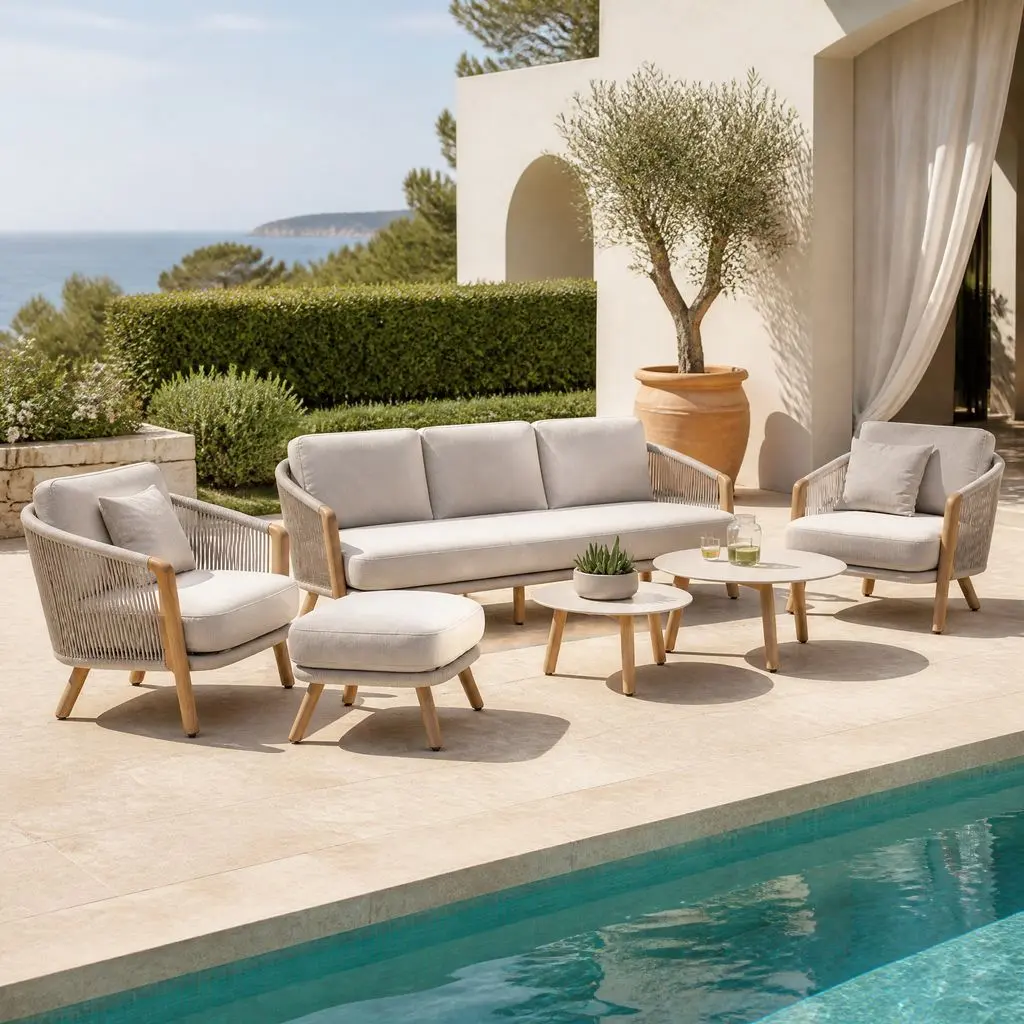
Four proven SKUs engineered for coastal humidity, desert UV exposure and four-season patio use — the entry points most US buyers choose for their first container.
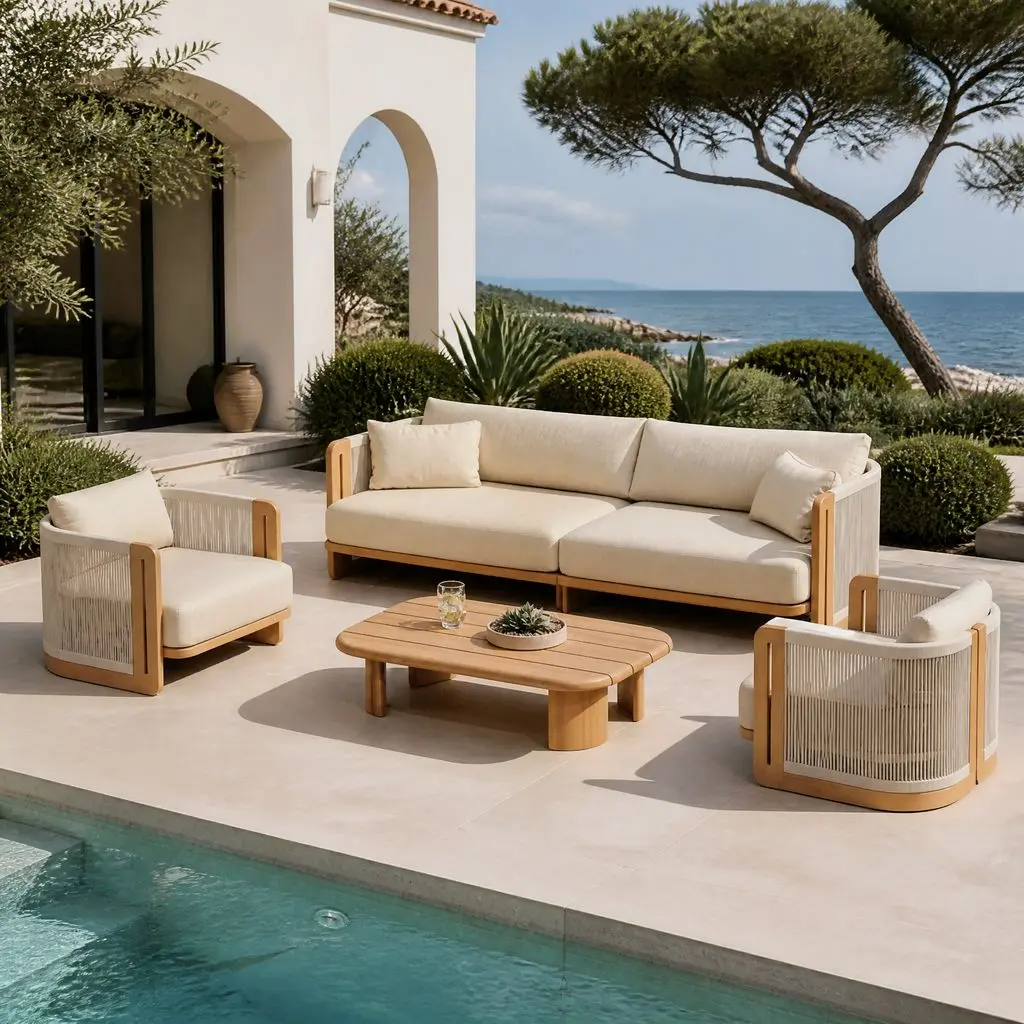
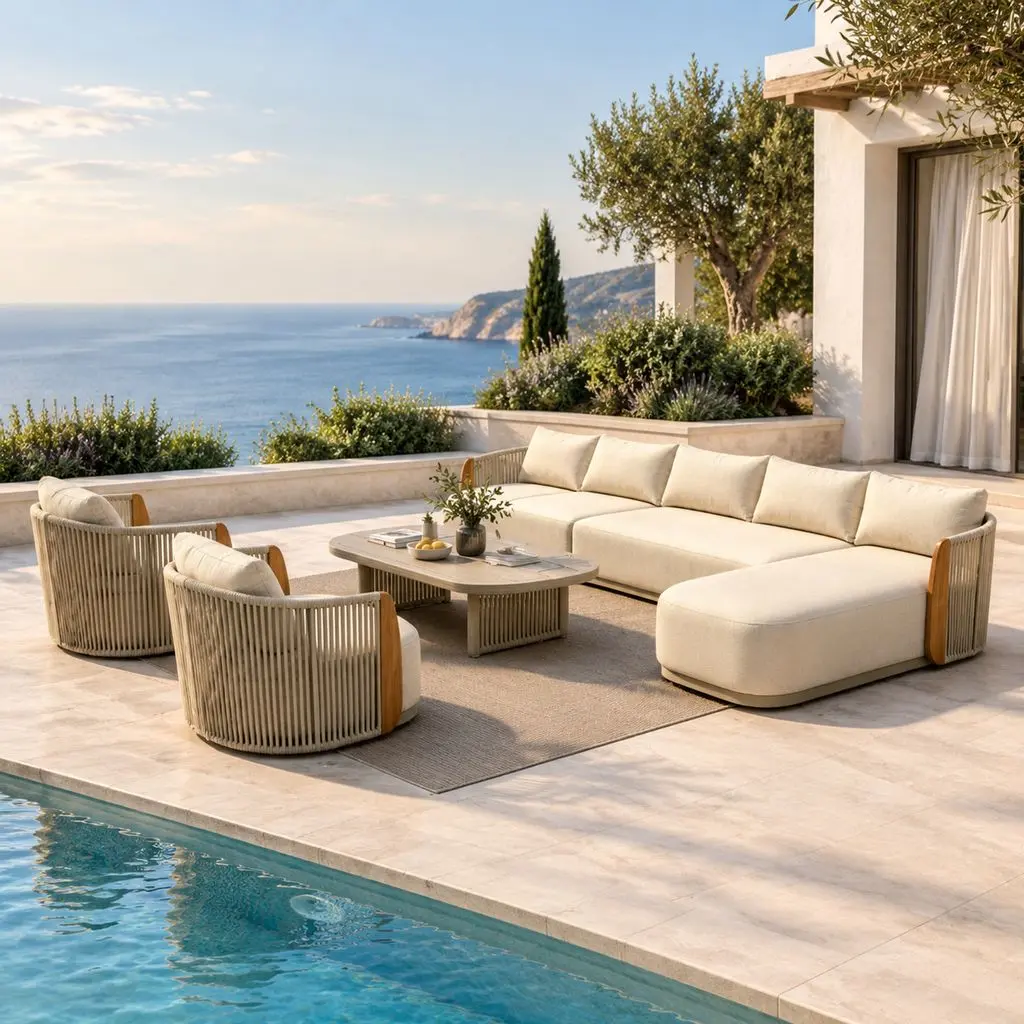
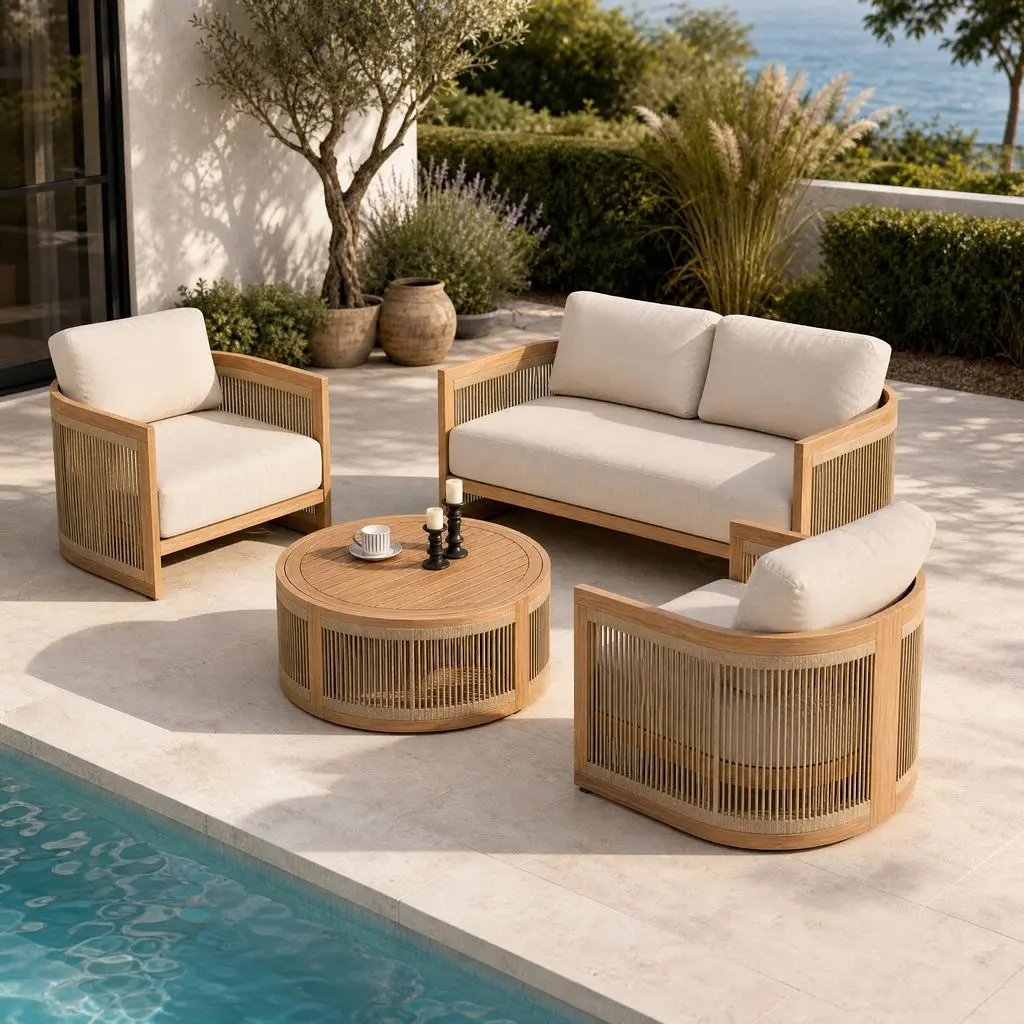
Demand for outdoor living has structurally decoupled from new-home starts. Remodeling, rental turnover and hospitality refresh cycles now drive the majority of patio seating volume.
The US outdoor furniture market has matured from a seasonal, discretionary category into a year-round replacement and upgrade market, shaped by three forces that every importer must now underwrite in its buying plan.
1. Outdoor living as interior extension. Covered patios, screened porches and rooftop terraces are being furnished to interior standards — deep-seat sectionals, performance fabrics and coordinated coffee tables rather than folding chairs. Retail buyers report that "outdoor room" assortments now carry higher average unit retail than entry-level indoor seating in many metro markets.
2. Climate-driven material specification. Coastal Florida, the Gulf Coast and Hawaii impose salt-air and hurricane-wind considerations; the Southwest imposes extreme UV and dry-heat cycling; the Pacific Northwest imposes persistent moisture. A single "outdoor-rated" claim is no longer sufficient — US buyers now request powder-coat thickness data, rope UV-stabilization grades and cushion foam density figures before placing a PO.
3. Channel fragmentation. Specialty patio retailers, big-box seasonal programs, e-commerce drop-ship sellers, hospitality FF&E procurement and landscape architecture specifiers each buy differently — different MOQs, different packaging, different compliance documentation. Suppliers that can serve multiple channels from one production platform have a decisive advantage.
Globally, the outdoor furniture manufacturing base remains concentrated in China (Guangdong and Zhejiang clusters), Vietnam, Indonesia and Poland. China continues to dominate aluminum-frame and rope-woven construction because the powder-coating, CNC tube-bending and hand-weaving supply chain is co-located within a 60 km radius of Foshan — compressing lead times and enabling rapid customization that dispersed manufacturing regions cannot yet match.
Send Inquiry NowFoshan Qingyumai Technology Co., Ltd. manufactures and exports outdoor seating from Shunde, Guangdong — with 10+ years of export experience, 100+ original patents and an audited partner-factory network covering 19 furniture categories.
In-house R&D and CNC tube-bending, so frame geometry, weld quality and powder-coat thickness are controlled at source — not negotiated through a trading intermediary.
Material declarations, cushion foam density records and packaging drop-test reports prepared for US import clearance, retailer vendor manuals and hospitality FF&E submittals.
Knock-down frame packing and nested cushion cartons raise container fill, reducing landed cost per set — the single largest lever on US wholesale margin.
Dimension changes, wood-grain tone matching, custom rope colors, private-label woven tags and retailer-specific carton artwork — all available on wholesale volumes.
English-speaking export coordinators aligned to US business hours, handling sampling, inspection booking, documentation and after-sales claims resolution.
Repeat wholesale programs across North America for patio specialty retailers, resort groups and multi-family developers — with a documented QC audit trail per shipment.
Performance in the US market is determined by four interacting systems — the frame, the weave, the cushion, and the finish. Each has a measurable specification.
6061/6063 aluminum tube, 1.2–1.5 mm wall, full-penetration TIG welds. Wood-grain transfer finish after chromate pre-treatment for salt-spray resistance.
UV-stabilized HDPE or olefin rope with solution-dyed core, hand-woven over rigid aluminum rod. Rated for continuous outdoor exposure without fading or embrittlement.
Quick-dry reticulated foam with drainage channels, wrapped in solution-dyed acrylic or olefin boucle. Removable, zippered covers for US laundering expectations.
Marine-grade 304/316 stainless fasteners, adjustable glides for uneven patio surfaces, and a powder-coat system tested to specified hour-cycles of salt spray.
The same wholesale platform is configured differently across six dominant US buying scenarios. Understanding the difference is the fastest route to a margin-protecting assortment.
Salt-air corrosion resistance dominates. Specify 316 stainless hardware, thicker powder coat and quick-dry foam. Rope sections must resist chlorine-pool and ocean-spray exposure.
High-abuse environments with strict budget ceilings. Modular sectionals that reconfigure across amenity decks, plus replaceable cushion covers to extend service life between capital refreshes.
Desert and subtropical homeowners prioritize UV fade resistance and heat-reflective cushion surfaces. Wood-grain aluminum paired with light-tone performance fabric is the dominant retail aesthetic.
Freeze-thaw cycling and shoulder-season storage drive demand for knock-down frames, stackable modules and cushion carts. Detachable covers simplify off-season storage.
Commercial-frequency seating requires higher foam densities, reinforced stitching and cleanable covers. Armless modules and curved sectionals optimize tight sidewalk footprints.
Chlorine and splash exposure make drainage the design driver. Reticulated foam with vertical drainage channels and rust-proof fasteners prevent the "wet cushion" complaints that erode retail reviews.
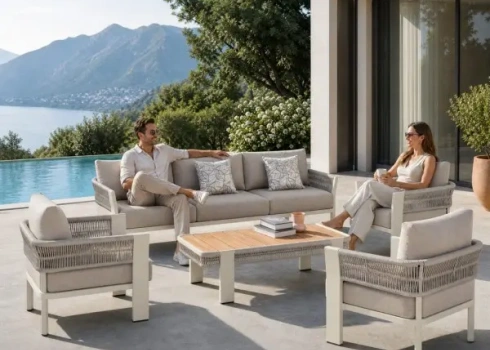
Outdoor seating is one of the most logistics-sensitive furniture categories. Volume is high, unit value is moderate, and damage rates in transit can silently destroy margin. A robust sourcing architecture addresses four layers simultaneously.
Four directional shifts will reshape how wholesale outdoor sofa sets are designed, specified and sold in the US over the next several buying cycles.
Recycled HDPE rope and solution-dyed acrylic become default buyer requests, driven by retailer sustainability scorecards and state-level procurement preferences.
Cross-SKU modularity — one seat module compatible across multiple collections — reduces SKU count for retailers while widening configuration choice for consumers.
Integrated heating, USB power and shade accessories migrate from premium to mainstream outdoor seating, requiring frame-integrated cable routing from the design stage.
Fully replaceable covers, screw-fixed weave panels and published spare-parts catalogs extend product life and become a measurable retail differentiator.
Send your target market, volume and specification priorities. Our export team will return a configuration proposal, material spec sheet and container loading plan for your review.
Send Inquiry Now Request a CatalogEight additional platforms spanning L-shape sectionals, curved configurations, armless modulars and convertible power seating — all available with US-appropriate material specifications.
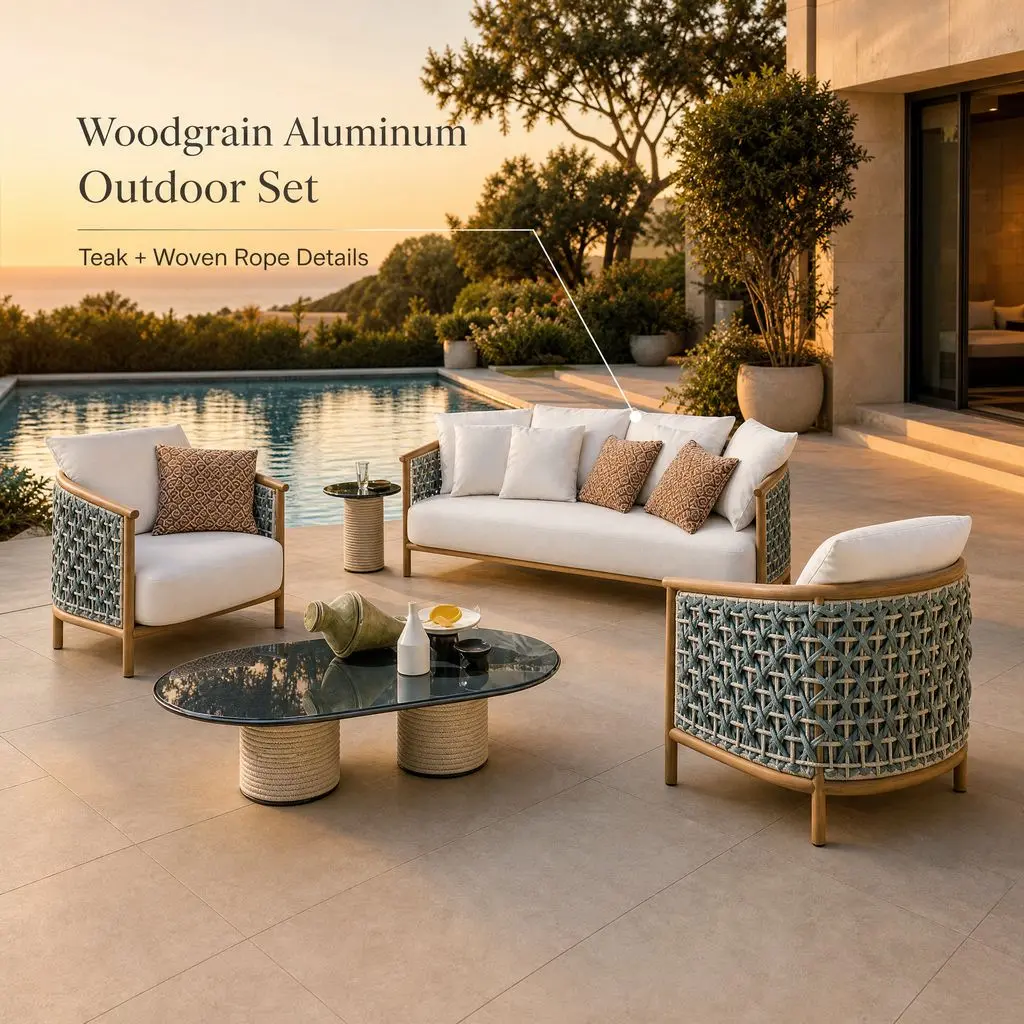
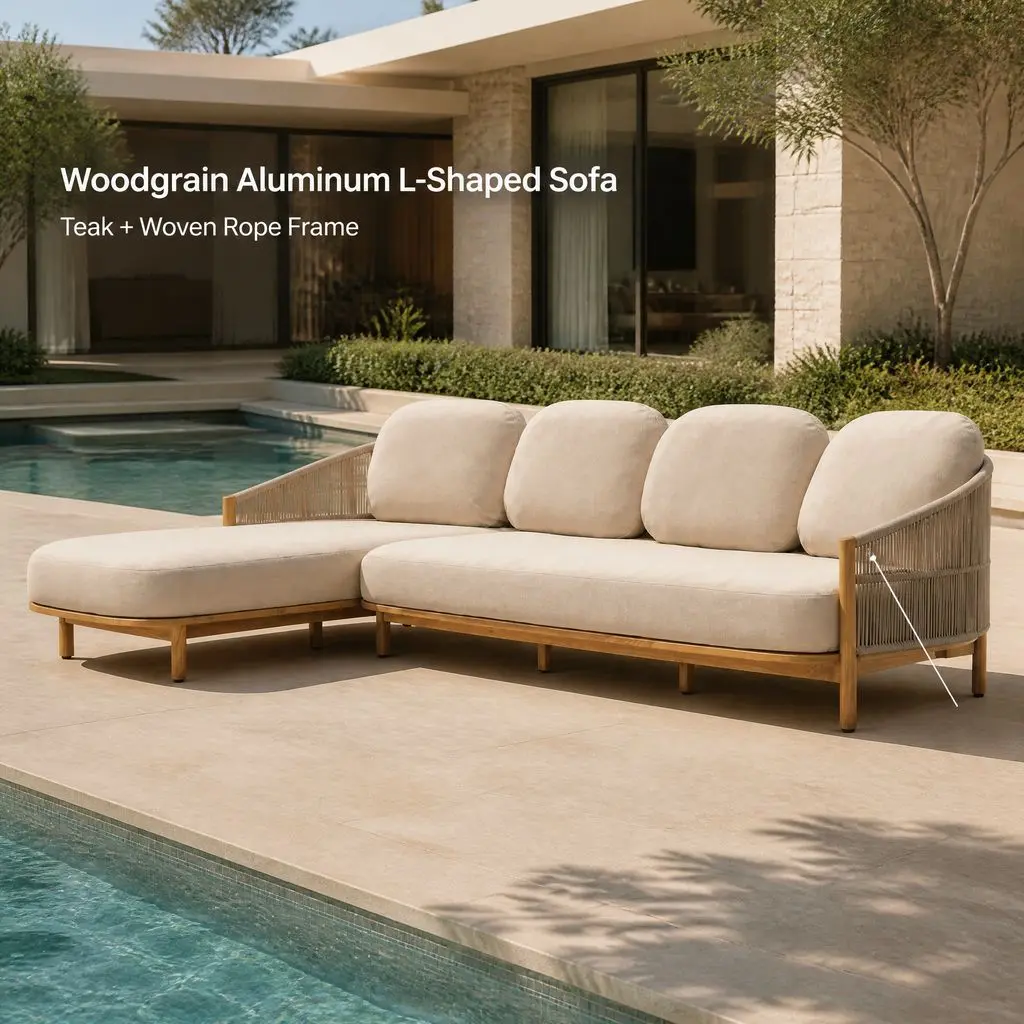
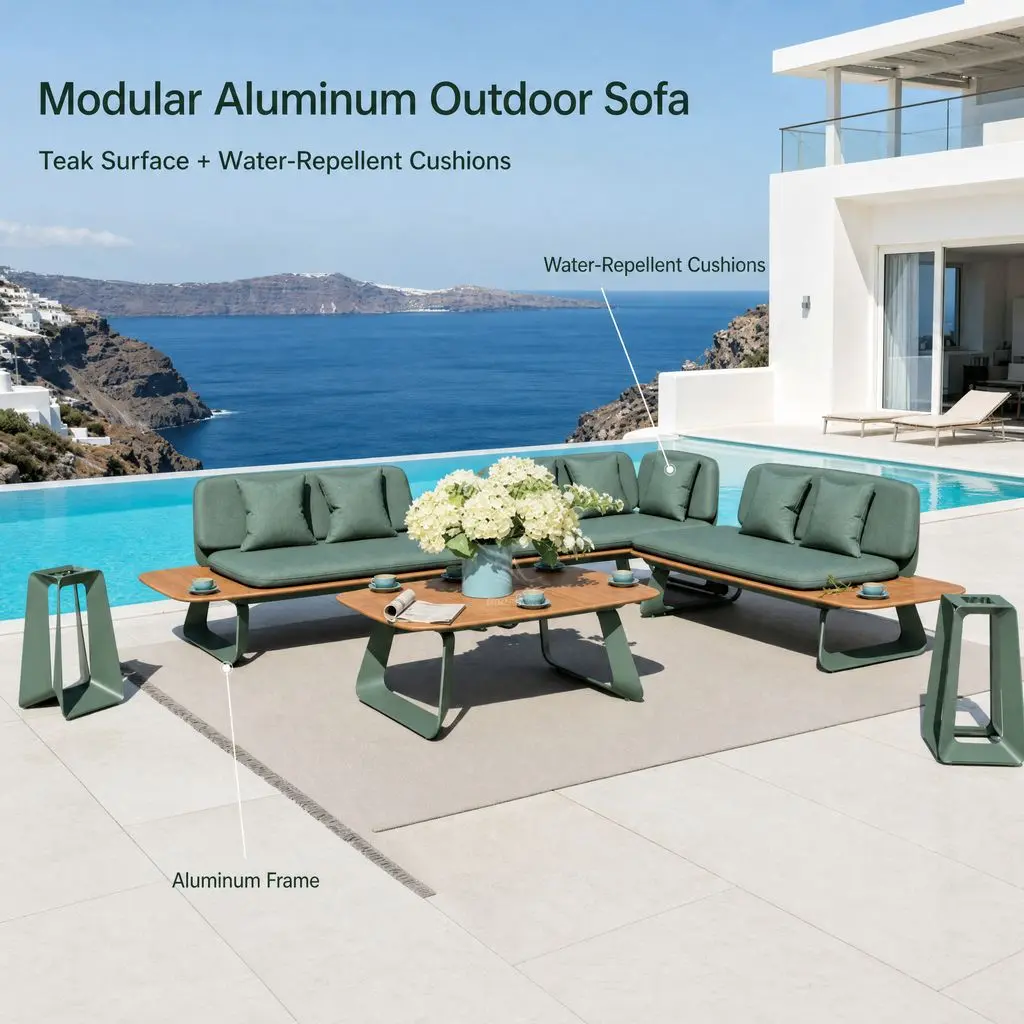
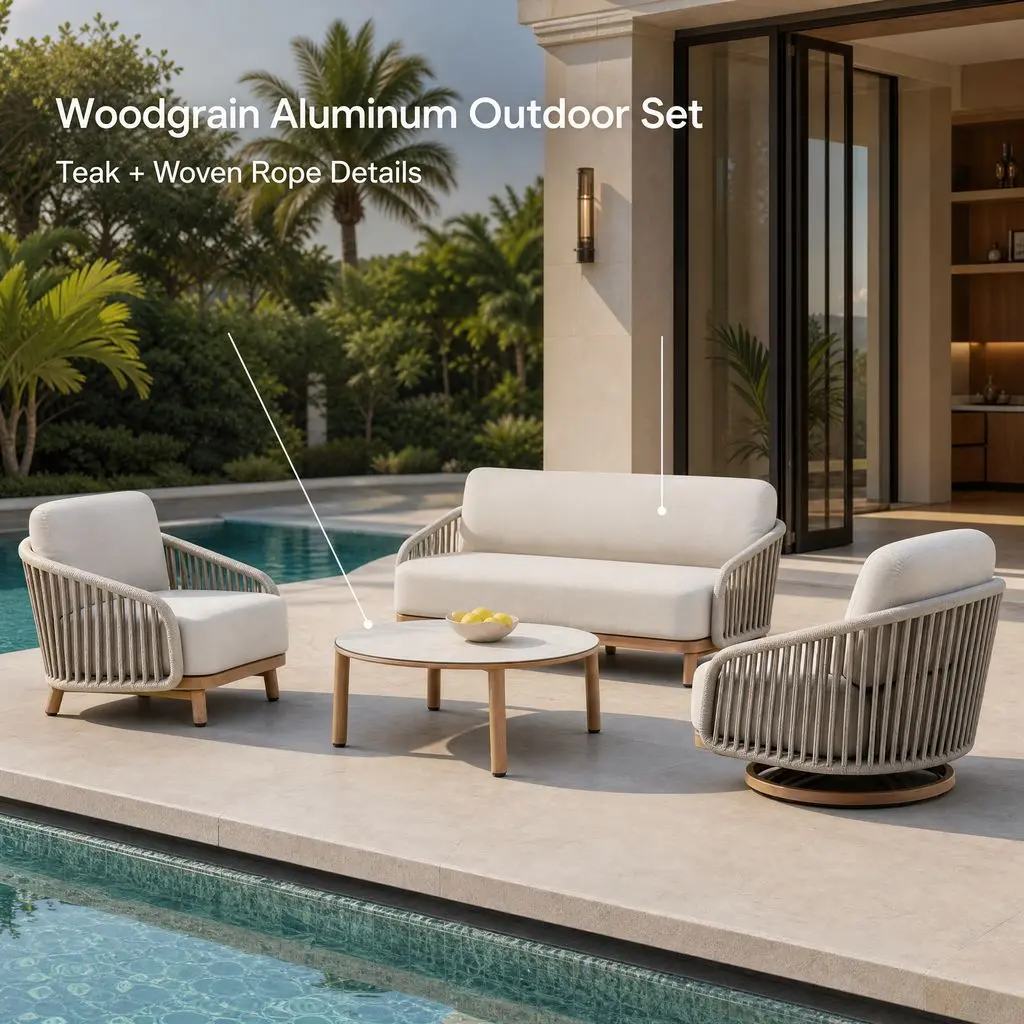
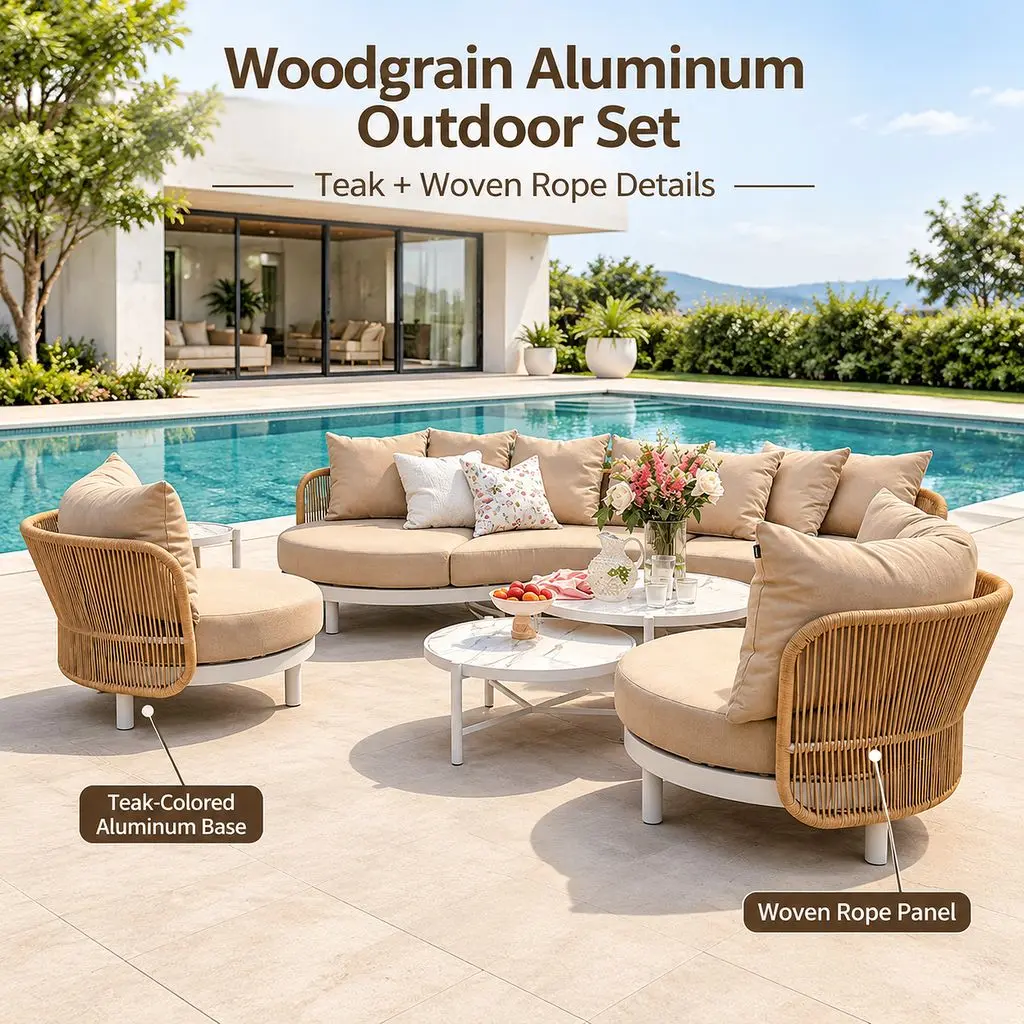
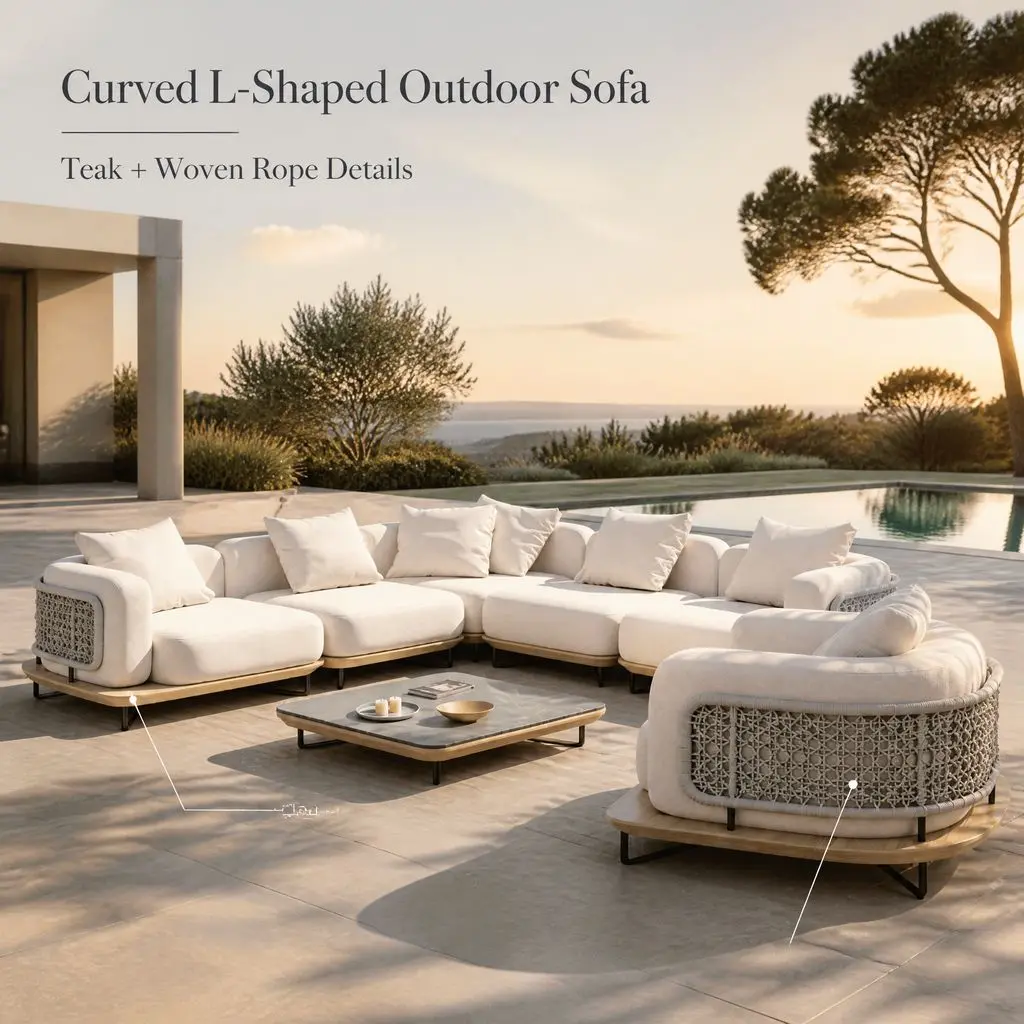
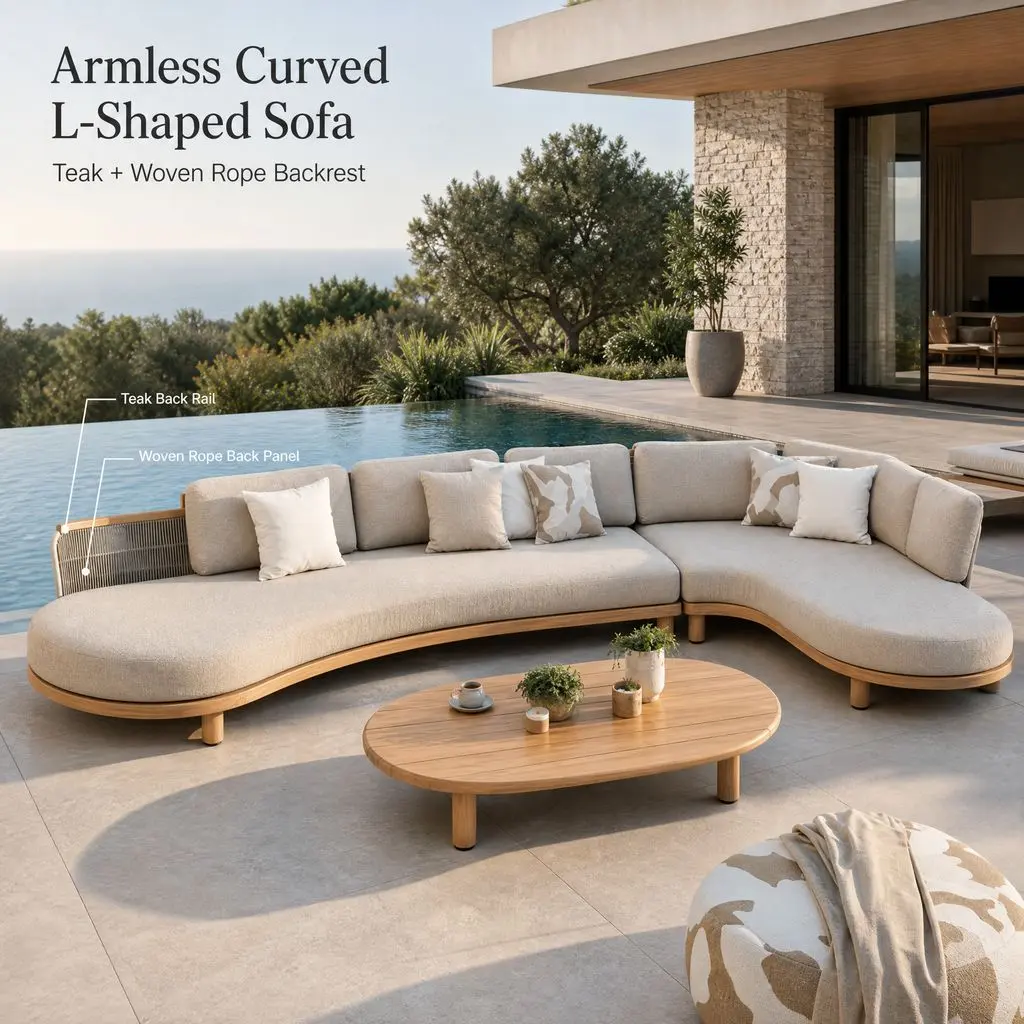
US buyers cannot inspect a container on the water. Quality must therefore be provable at the factory gate, through process discipline and documented inspection.
Every frame batch is sampled for weld penetration, alignment tolerance and load-bearing performance before powder coating is applied.
Hand-weaving is performed over rigid aluminum rod with tension measured per panel, preventing the sagging that shortens service life in sun-exposed settings.
Foam density and compression set are verified against the approved sample, ensuring cushions recover after shipping compression and repeated seasonal use.
An in-line and pre-shipment QC report with photographic evidence is issued per container, giving US buyers a documented basis for retail vendor compliance.
Direct answers to the questions US importers, hospitality procurement teams and retail vendors ask most before their first wholesale order.
Yes. Coastal, desert, four-season and poolside specifications are each built from a different material configuration, covering hardware grade, rope UV stabilization, foam density and cover fabric. Buyers can specify by US climate zone directly on the wholesale order.
Mixed-model containers are standard practice. Configuration is planned around your assortment rather than imposed by factory batch minimums. Contact the export team for a project-specific minimum recommendation.
Yes. Customization extends to dimensions, wood-grain tone, rope color, cushion fabric grade, woven brand labels and carton artwork — enabling retail-specific or private-label programs without multiple suppliers.
Frames are knock-down packed with corner protection and internal bracing. Cushions are nested and cartoned separately to avoid compression damage. Multi-layer export crating is applied to high-value configurations.
Patio and outdoor specialty retailers, e-commerce sellers, hospitality and resort procurement groups, multi-family developers, landscape specifiers and restaurant chains requiring commercial-grade outdoor seating.
Yes. Qingyumai operates 19 furniture categories under one purchase order and one quality standard, allowing outdoor seating to ship alongside dining sets, indoor sofas, casegoods or hospitality FF&E packages.
Foshan Qingyumai Technology Co., Ltd. is located in Hui Cheng Industrial Park, Longjiang Town, Shunde District, Foshan, Guangdong, China — one of the world's largest furniture manufacturing hubs. Factory and showroom visits are welcome by appointment.
Share your target market and volume. Receive a configuration proposal, material specification sheet and container loading plan tailored to the US climate zone and channel you sell into.
Send Inquiry Now View Outdoor Collection