
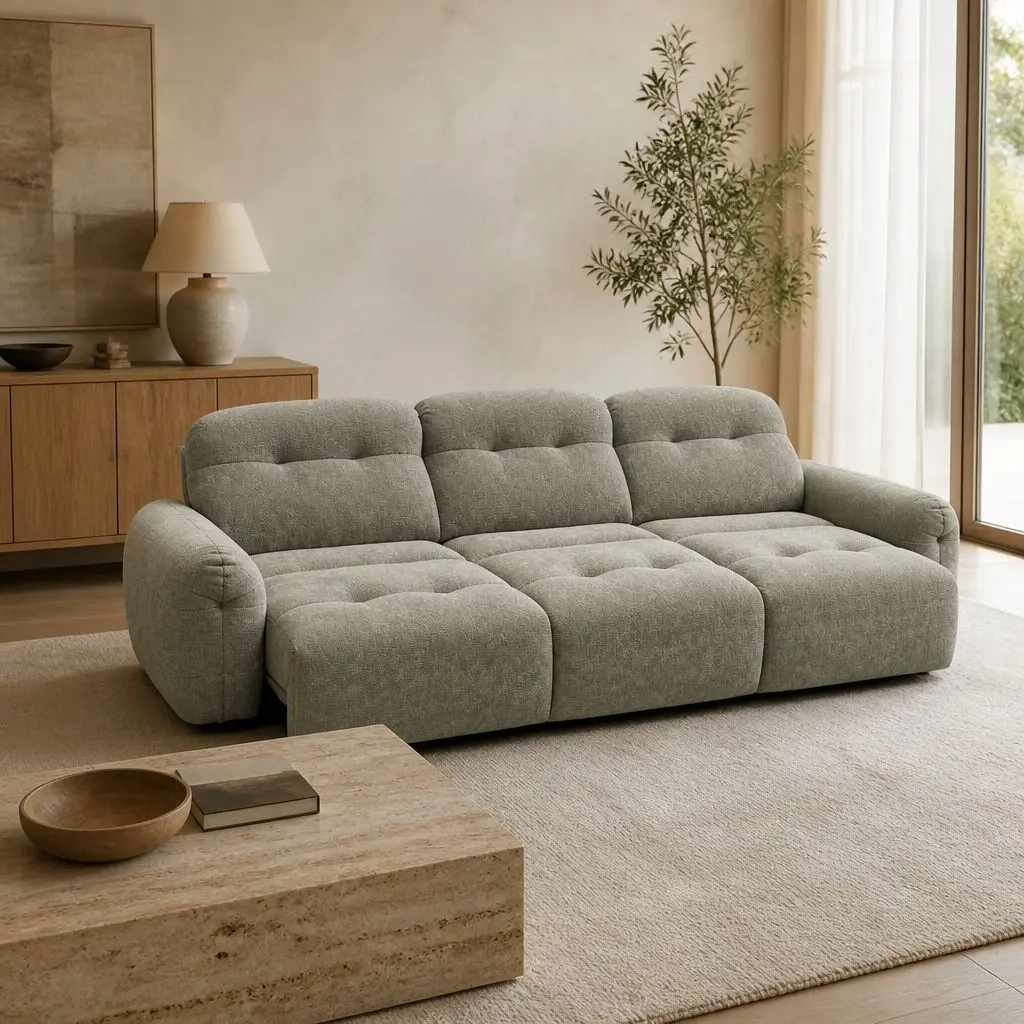
Why Morocco Is a Strategic Growth Market for Power Reclining Sofas
Morocco has become one of North Africa's most dynamic furniture-import corridors. Under the EU–Morocco Association Agreement, industrial goods move tariff-free between Morocco and the European Union, while the country's port infrastructure at Tanger Med — Africa's largest container terminal by capacity — positions importers to serve both domestic demand and re-export flows into West Africa and Southern Europe. For wholesale buyers, this creates a dual-channel opportunity: sell power reclining sofas to the fast-growing domestic middle class and to hospitality developers, while holding stock that can flex into nearby export markets.
Domestic demand is being reshaped by three forces. First, urbanization in Casablanca, Rabat, Marrakech and Tangier is producing compact, high-rise apartments where a reclining sofa replaces both a static sofa and a separate lounge chair — a space-efficiency story that directly favors powered modular configurations. Second, a tourism and hospitality boom — Morocco targets significantly expanded hotel capacity ahead of major international sporting events — is generating FF&E (Furniture, Fixtures & Equipment) tenders for hotel suites, serviced apartments and resort lounges, where motorized recliners are increasingly specified for guest comfort and differentiation. Third, a young, design-literate consumer base exposed to European interior trends through social media is pushing retailers to stock contemporary silhouettes rather than traditional heavy upholstery.
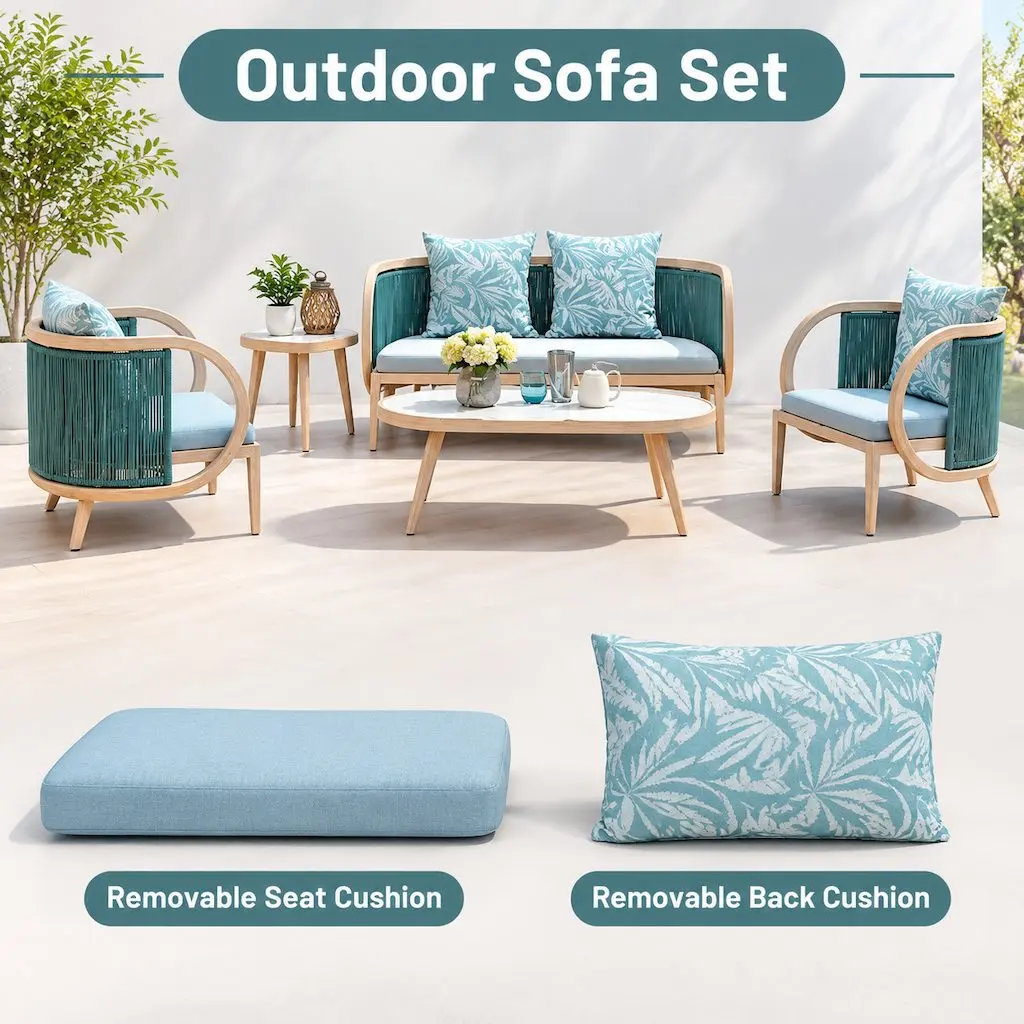
On the supply side, Morocco's own furniture manufacturing base remains concentrated in small and medium workshops with limited capacity for motorized mechanisms, embedded electronics and consistent fabric grading at scale. This gap is precisely where Chinese power reclining sofa factories — particularly those in the Foshan cluster — deliver information gain for Moroccan buyers: mature motor supply chains, tested mechanism cycles, and the ability to ship mixed containers that combine recliners with beds, dining sets and outdoor furniture under one purchase order.
Global Market Context: The Motorized Recliner Shift
Globally, the reclining sofa category is undergoing a structural upgrade from manual lever mechanisms to power reclining systems with USB charging, adjustable headrests, lumbar support and, increasingly, app or voice control. North America remains the largest single market for powered motion furniture, but the fastest incremental growth is occurring in Europe, the Middle East and North Africa (MENA), where rising disposable income and smaller living spaces are converging on multi-functional seating.
For importers, the strategic implication is clear: the competitive advantage is no longer simply offering a recliner, but offering a reliable motorized platform with documented cycle testing, spare-part availability and electrical compliance for the destination market. Chinese manufacturers have consolidated this capability — from mechanism casting to motor assembly — into a dense regional supply chain that can respond to specification changes in weeks rather than quarters.
At the same time, freight and inventory economics are reshaping buying behavior. Buyers increasingly favor modular reclining sofas that pack flat, ship at higher container utilization and can be reconfigured at destination for different retail floor plans — a packaging and SKU strategy that Chinese factories have refined specifically for export.
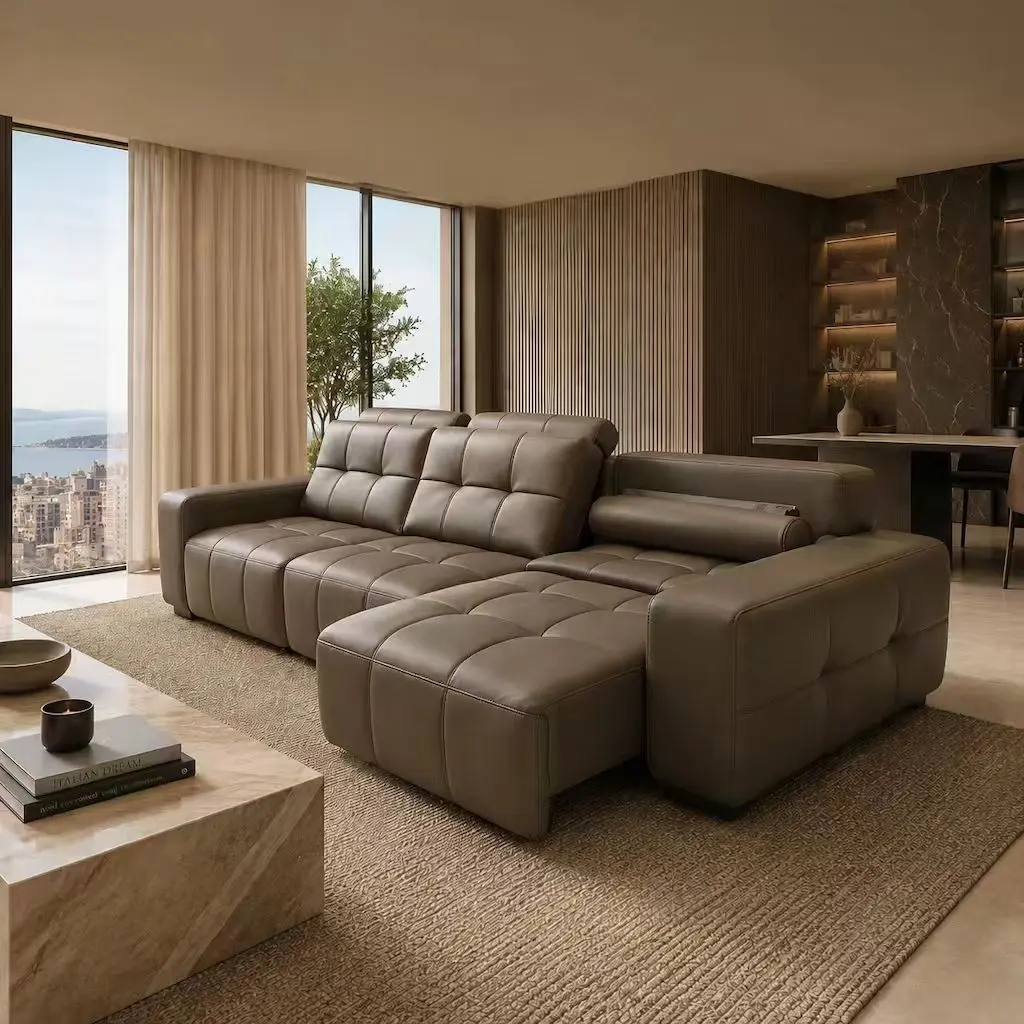
China Factory Efficiency Advantage: What Wholesale Buyers Actually Gain
The efficiency story is not just about unit price — it is about speed-to-spec, quality consistency at volume and the engineering depth required to make motorized furniture reliable in the field.
Cluster-Level Supply Chain Depth
Foshan and surrounding Guangdong clusters consolidate mechanism casting, motor assembly, foam cutting, frame joinery and upholstery within a short radius. Buyers gain compressed lead times and the ability to swap mechanism tiers without re-qualifying an entirely new factory.
Mechanism & Motor Qualification
Reputable factories cycle-test mechanisms to tens of thousands of open/close operations and source motors from established drive suppliers. This documented testing is the single most important information gain for buyers replacing high-failure-rate products.
Mixed-Container Consolidation
Rather than splitting orders across recliner, bedroom and dining suppliers, buyers can consolidate categories under one quality standard and one loading plan — reducing per-unit ocean freight and simplifying customs documentation.
OEM / ODM Customization Depth
Dimensions, fabric grades (cashmere-touch, cotton-linen, contract-grade performance fabrics), frame colors, USB/USB-C modules and private-label branding can all be specified at the order stage rather than purchased as separate line items.
Export-Grade Packaging
Flat-pack modular designs, multi-layer crating and corner protection are engineered to survive long ocean transits and multi-leg distribution — a consideration that materially affects return rates and retail partner satisfaction.
Compliance Flexibility
Electrical components and fabrics can be configured to align with destination-market requirements, allowing Moroccan importers to serve domestic retail and EU-facing re-export channels from the same production run.
Localized Application Scenarios Across Morocco
Power reclining sofas are not a single product story — the same platform serves multiple Moroccan channels with different specification priorities.
Casablanca & Rabat High-Rise Apartments
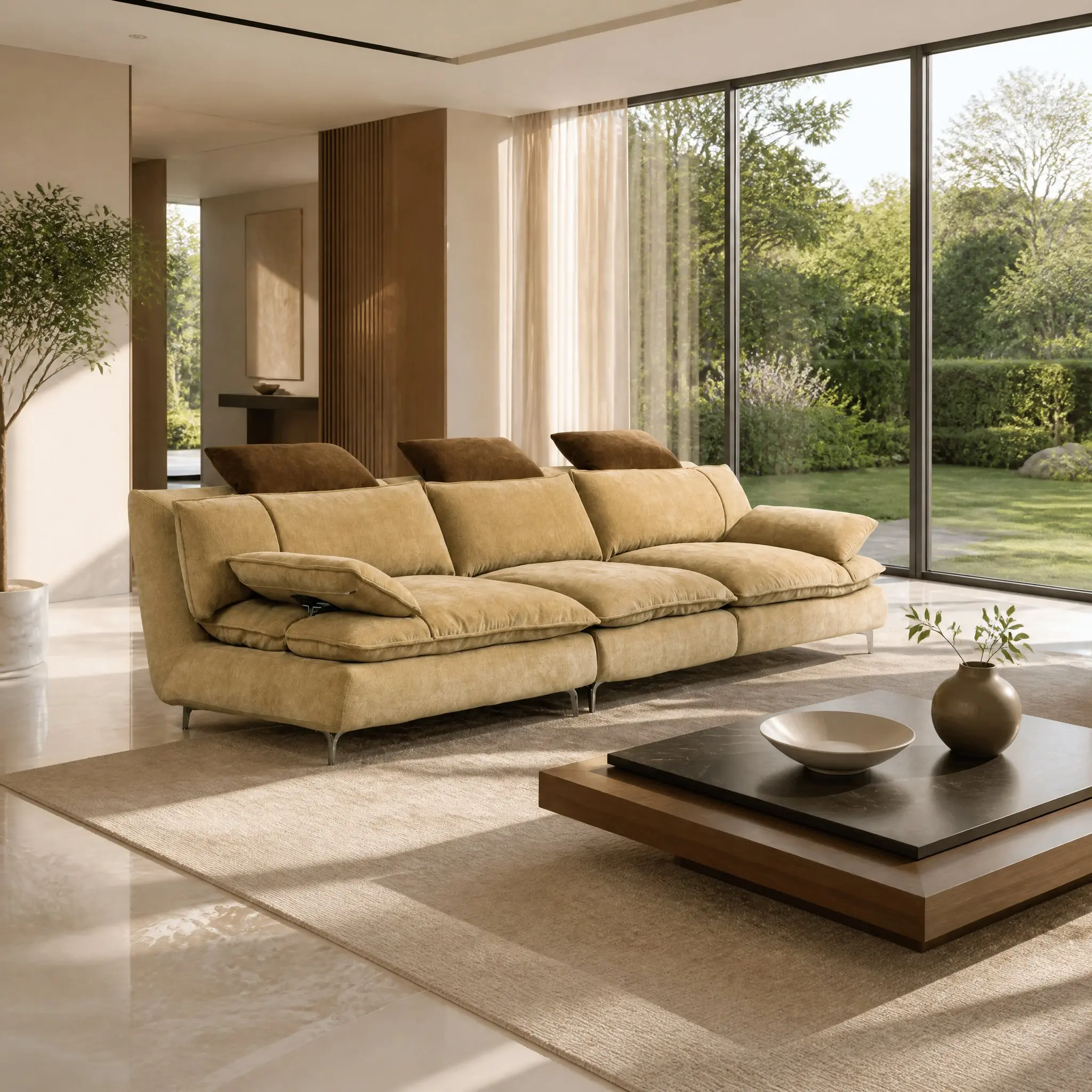
Compact modular recliners with wall-hugger mechanisms maximize usable floor space in modern apartments, where a single powered section replaces both a sofa and a separate lounge chair.
Marrakech & Agadir Hospitality Suites
Hotel and resort FF&E programs specify motorized reclining seating in suites and lounge areas to differentiate guest experience; contract-grade fabrics and tested mechanisms are essential.
Tangier & Tétouan Coastal Residences
Second-home and expatriate buyers favor performance fabrics with UV and humidity resistance, paired with modular configurations suited to larger terraces and sea-facing living rooms.
Retail Chains & Furniture Showrooms
Multi-store retailers require consistent fabric grading, SKU-level packaging and replenishment reliability — a factory partner that can hold a specification stable across reorders is a competitive asset.
Serviced Apartments & Corporate Housing
High-turnover environments demand cleanable covers, robust mechanisms and easy field serviceability; modular sections allow damaged units to be replaced without discarding a full sofa.
Re-Export to West Africa & EU
Importers with Tanger Med access can stock configurations that flex between Moroccan domestic demand and neighboring markets, using one consolidated production run.
Industry Trends Reshaping Power Recliner Procurement
Three trends are converging to change how wholesale buyers source motorized seating. First, smart-furniture integration: USB-C fast charging, app-controlled recline presets, and even health-monitoring sensors are moving from premium tiers into mainstream SKUs. For importers, this means the specification conversation is shifting from "does it recline" to "which control platform and firmware version."
Second, material performance transparency is becoming a purchasing criterion. Buyers are asking for Martindale abrasion ratings, colorfastness data and cleaning-code documentation — an information-gain advantage for factories that publish these specifications rather than assume them. In hospitality contracts especially, this documentation shortens approval cycles.
Third, circular and repairable design is entering the category. Modular construction, replaceable motor modules and standardized mechanism mounts are reducing warranty risk and extending product life — a trend that aligns with European and increasingly Moroccan regulatory direction on repairability and waste. Buyers who source modular platforms now will be better positioned as these expectations harden.
Global Buyer Procurement Requirements: What to Verify Before Ordering
- Mechanism cycle documentation — request the tested open/close cycle count and the mechanism supplier identity, not just an approval photo.
- Motor and control unit sourcing — confirm motor brand tier, warranty terms and spare-part availability for the destination market.
- Electrical compliance profile — verify voltage, plug configuration and certification documentation align with Morocco (220–240V, Type C/E plugs) and any re-export markets.
- Fabric performance data — Martindale abrasion rating, colorfastness to light and rubbing, and cleaning codes for contract vs. residential use.
- Container loading plan — obtain a loading diagram to confirm cubic utilization before committing to a mixed-category order.
- QC inspection protocol — clarify whether in-line and pre-shipment inspections are third-party witnessed or factory self-certified.
- After-sales parts pathway — for wholesale continuity, establish the process for mechanism, motor and fabric panel replacement before the first reorder.
Frequently Asked Questions — Wholesale Power Reclining Sofas for Morocco
What makes a power reclining sofa different from a manual recliner for wholesale buyers?
Power recliners use electric motors and control units rather than mechanical levers, enabling precise infinite-position recline, integrated USB charging and, on premium platforms, adjustable headrest and lumbar functions. For wholesale buyers, the key difference is that power systems introduce motor and electrical compliance considerations, so mechanism testing documentation and spare-part availability become core due-diligence items rather than optional extras.
How should Moroccan buyers specify electrical compliance for motorized sofas?
Morocco operates at 220–240V with Type C and Type E plug configurations, so control units and plug types should be specified accordingly at the order stage. Buyers intending to re-export into EU markets should request components with EU-recognized certification and confirm the factory can produce both variants from the same platform to avoid duplicate tooling costs.
Can power reclining sofas be consolidated with beds, dining and outdoor furniture in one container?
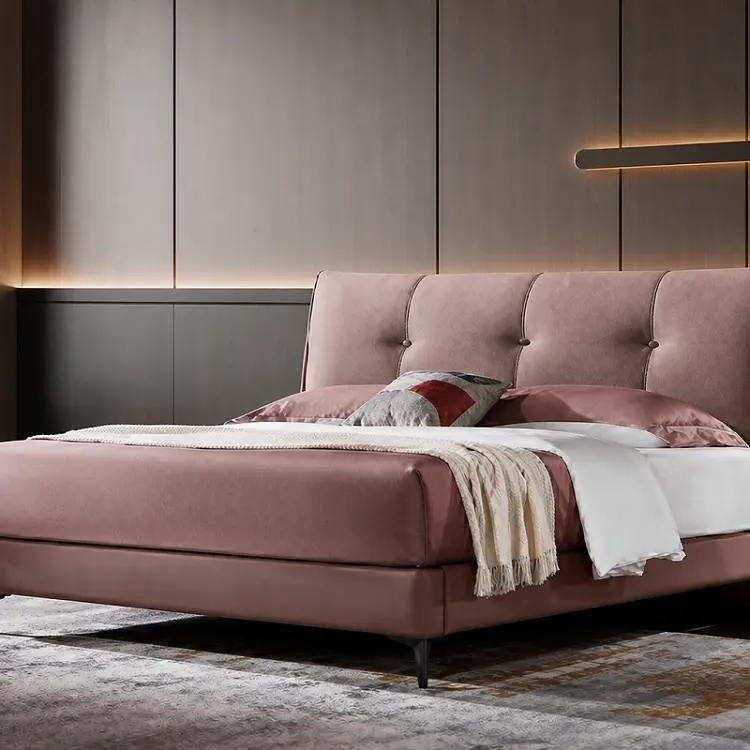
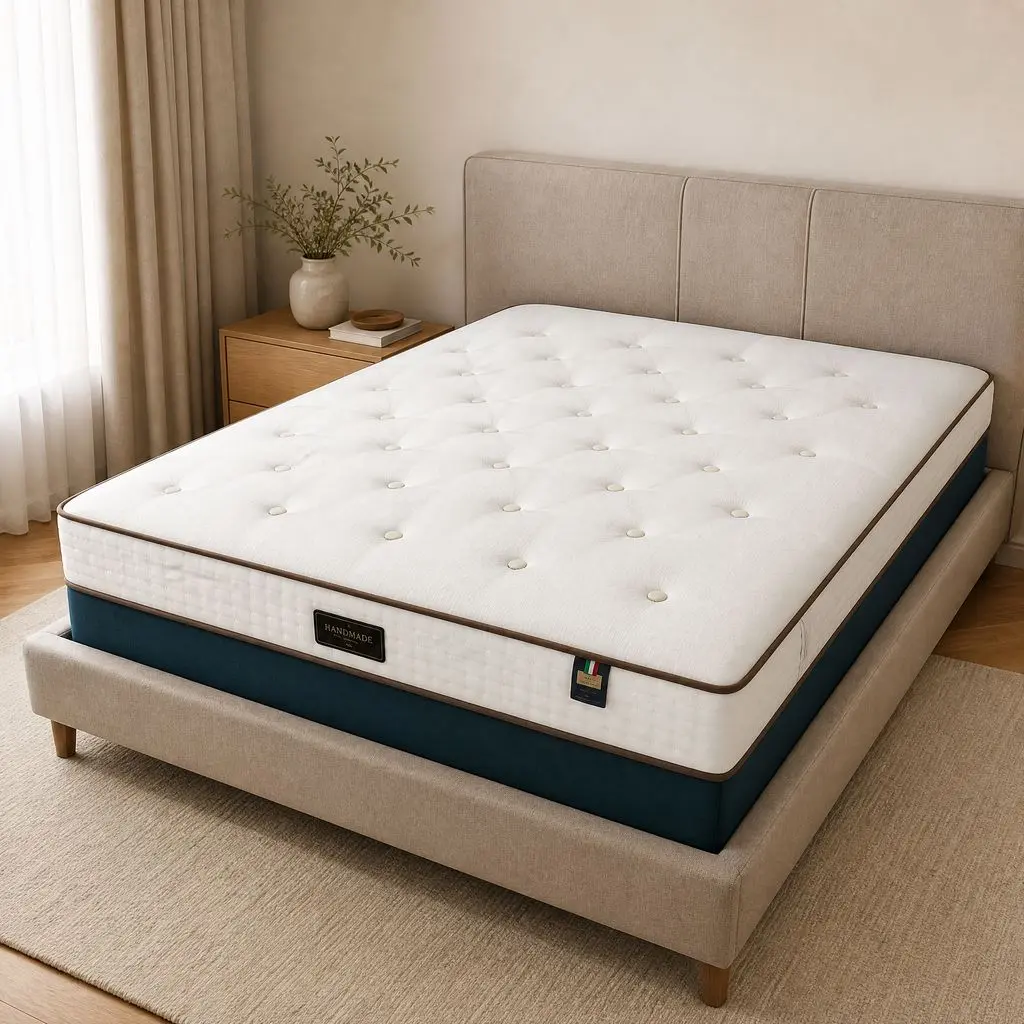
Yes, and it is often the most cost-efficient approach. A mixed-category container from a single factory partner lets you combine recliners with upholstered beds, mattresses, dining chairs and outdoor sets under one quality standard, one QC inspection cycle and one loading plan — reducing per-unit ocean freight and simplifying documentation compared with multi-supplier sourcing.
What customization dimensions are typically available for OEM power recliner orders?
Dimensions (width, depth, seat height, module count), upholstery and frame colors, fabric grades including contract-rated performance fabrics, motor and control-unit specifications, USB/USB-C modules, and private-label branding such as woven labels and embossed logos. Samples should be approved before mass production to lock the specification.
How can buyers assess mechanism reliability before placing a first order?
Request cycle-test documentation showing the number of open/close operations the mechanism has been tested to, the mechanism supplier's identity, and the warranty terms for both mechanism and motor. For larger orders, request a third-party-witnessed pre-shipment inspection that includes a functional recline test on a sample of units.
What typical lead times should a Moroccan importer plan for?
Lead times vary with specification complexity, fabric availability and order volume. Standard models with in-stock fabric can move through production faster than fully custom OEM programs requiring new tooling or fabric development. Buyers should request a production schedule alongside the quotation and plan ocean transit from South China ports plus Moroccan customs clearance on top of that.
How should importers plan spare parts for ongoing wholesale operations?
Establish a spare-parts pathway before the first reorder: confirm which components (motors, control units, mechanism assemblies, fabric panels) can be supplied separately, in what minimum quantities, and at what lead time. For retail and hospitality channels where downtime is costly, holding a small buffer of motors and control units at destination is a practical risk-mitigation step.
Ready to Build Your Morocco Power Recliner Program?
Share your target configurations, fabric direction and volume. Our export team will map your specification to a production path, prepare a loading plan and provide the mechanism and material documentation your buyers need.
Send Inquiry Now Request a Catalog

E-E-A-T Commitments: Why Buyers Can Rely on This Information
Experience. Our export team has coordinated furniture shipments to markets across Europe, the Middle East and Africa, including mixed-category containers combining motorized seating with bedroom, dining and outdoor lines. The procurement guidance above reflects hands-on coordination of production schedules, loading plans and documentation packages.
Expertise. Our in-house R&D function develops sofa platforms and holds original design and structure patents. Mechanism and material specifications are documented at the production stage, not assumed at the sales stage, and customization is handled by the same engineering team that builds the standard models.
Authoritativeness. We operate from the Shunde, Foshan furniture cluster — one of the world's most established production hubs — with our own facility and a network of audited partner factories covering multiple categories. Our production and export footprint allows us to speak concretely about factory-side constraints rather than repeating generic supplier claims.
Trustworthiness. We publish clear specifications, provide documented mechanism and material data on request, welcome factory and showroom visits, and structure quality control through production-line audits. Buyers can verify claims directly rather than relying on marketing language alone.