
Queen · Storage

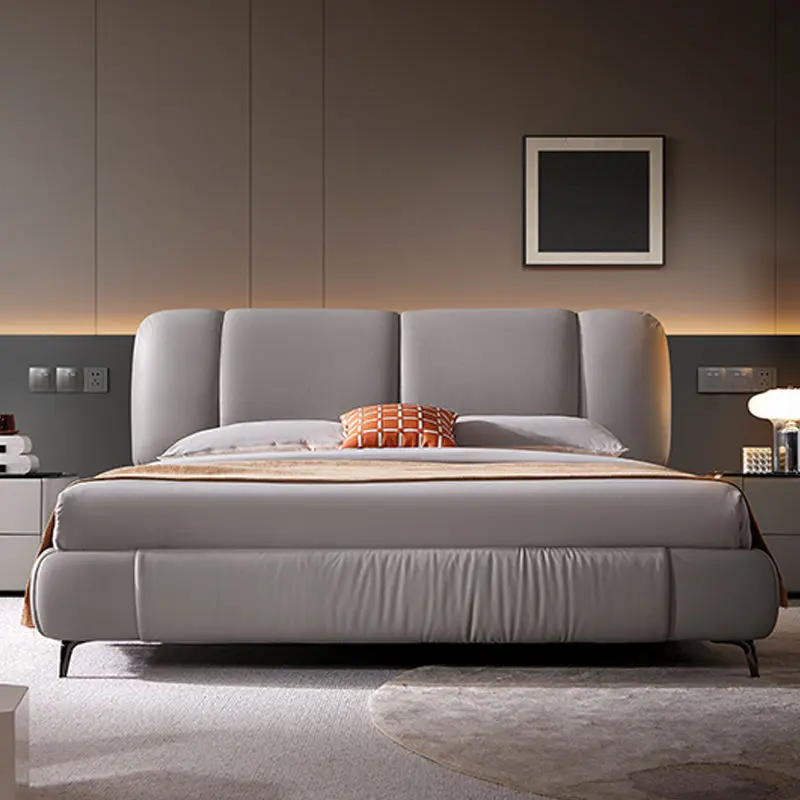
Each model below is engineered around the constraints London buyers live with daily: narrow stairwells and lift cores, integrated storage for compact apartments, fire-performance upholstery, and a reinforced solid-wood core that survives dense, high-turnover hospitality use. Every link resolves to the live product page so your specification team can move from shortlist to sample request without friction.



London is not simply "a UK city" for furniture procurement — it is a dense, vertically stacked, compliance-heavy market where the physical characteristics of a building routinely dictate the engineering of a bed. A wholesaler supplying Manchester or Leeds can often assume a wide stairwell and a standard 4ft 6in access route. A supplier working with London developers cannot.
Three structural forces shape demand and specification across the capital:
For a wholesale buyer, this means the London question is not "who is cheapest per container" but "who can deliver a compliant, access-viable, storage-integrated bed into a constrained building, on a schedule that matches a phased handover."

London's bed demand is dominated by four buyer types: BTR and co-living operators specifying at scale, hotel groups refurbishing on rolling cycles, independent bedroom retailers in zones 2–6, and interior design practices fitting out prime residential. Each buys differently — and each imposes a different tolerance for lead time, packaging and documentation.
Globally, upholstered bed manufacturing is undergoing a quiet structural consolidation. Three trends define the current cycle and directly inform how a London buyer should structure supply.
Production of upholstered bed frames remains concentrated in a small number of global clusters — Foshan in Guangdong being the deepest, with supporting clusters in Vietnam and Eastern Europe. Concentration means scale efficiency, but it also means buyers must audit within the cluster rather than shop across continents.
Fire regulations, chemical restrictions and packaging waste rules are diverging, not converging. The UK, EU and North American markets increasingly require distinct material stacks. Global suppliers are responding by maintaining market-specific bill-of-materials libraries rather than a single universal catalogue.
Ocean freight volatility has permanently changed bed design. Knock-down frames, hollow-core ottoman bases and flat-pack headboards are no longer only a cost play — they are a container-efficiency strategy that lets wholesalers increase units per 40HQ, which directly improves landed margin in a high-cost market like London.
Information gain for buyers: most supplier pages describe materials. Very few explain how the material stack changes when the destination is London. The differentiator is not the fabric — it is whether the supplier can produce the same silhouette in three compliance configurations and still ship it through a 1.1m lift core. That is the actual procurement problem.
Rather than treating an upholstered bed as a single SKU, treat it as a stack of four engineering layers, each with its own specification decisions, failure modes and compliance exposure. This framework is what separates a repeatable wholesale program from one-off container buying.
| Layer | What It Controls | London-Specific Consideration | Failure Mode If Ignored |
|---|---|---|---|
| Structural core | Frame rigidity, load rating, joint integrity, slat system | Reinforced solid-wood core required for high-turnover BTR and hotel use | Squeak, flex and premature joint failure within 18 months |
| Upholstery system | Fabric or leather, foam density, fire-performance treatment | BS 5852 compliance pathway and documented testing | Non-compliant stock rejected at handover or in audit |
| Storage mechanism | Ottoman lift, gas-strut rating, base volume, safety lock | Storage treated as base specification, not upgrade | Resident complaints and retrofit cost in BTR portfolios |
| Logistics architecture | Flat-pack design, headboard segmentation, packaging | Access through narrow lift cores and tight stair turns | Delivery failure, on-site damage and remobilisation cost |
Layered this way, the conversation with a manufacturer becomes technical rather than transactional. A credible partner can produce a documented bill of materials per layer, per market, and demonstrate the change control process when a fabric is substituted mid-program.

The phrase is overused. Operationally, London-ready support and compliance has four concrete components that a wholesale buyer should be able to verify.
Specify upholstery against BS 5852 schedules appropriate to the setting — domestic, contract or higher-risk public areas. Request the test pathway, the fabric reference it applies to, and confirmation of whether interliner or barrier cloth is part of the build. Document what changes if a substitute fabric is proposed later.
Confirm the foam and textile inputs against UK and EU restriction requirements, including flame-retardant chemistry. A supplier maintaining a market-specific material library can answer this in days rather than weeks.
Ask for a delivery profile: minimum door width, minimum lift-core width, headboard segment dimensions, and total carton count per bed. This converts a vague promise into a specification your installation contractor can plan against.
A wholesale program lives or dies on replacement parts. Confirm whether gas struts, slat sets, feet and fabric swatches are held as serviceable components, and what the reorder lead time is for a single unit replacement.
Fabric references, test pathway, foam specification and packaging declaration bundled per shipment — not held informally in email threads.
Beds, mattresses, nightstands and dining combined into one container plan, reducing per-unit freight and aligning with phased site handovers.
Commercial invoice, packing list, and product specification sheets aligned so your customs broker and site team work from the same data.
Each scenario below carries a different risk profile. Matching the bed specification to the scenario — rather than to a generic catalogue — is the single highest-leverage decision a wholesale buyer makes.
Storage-integrated ottoman beds, reinforced cores for turnover durability, consistent fabric across hundreds of units, and serviceable parts for maintenance teams.
Higher BS 5852 schedules, headboard designs that withstand cleaning regimes, and batch consistency so refurbishment floors match earlier phases.
Private-label ranges, competitive MOQs, fabric swatch programs and the flexibility to reorder a proven SKU without a full redevelopment cycle.
Custom dimensions, cashmere and premium fabric grades, coordinated headboard geometry, and one-off sampling before committing a full interior scheme.
For wholesale and project buyers, customisation is not decoration — it is alignment between a product and a market. Our OEM/ODM program operates across four dimensions, each with its own approval gate.
Adjust width, depth, headboard height and rail length to match London floorplans and access routes without abandoning a proven silhouette.
Frame finishes and upholstery tones matched to brand palettes and interior specifications, with physical swatches approved before production.
Cotton-linen, cashmere-touch, ecological leather and commercial-grade contract fabrics, each mapped to a documented compliance pathway.
Woven labels, embossed logos, branded packaging and retail-ready documentation for buyers building their own bedroom brand.
The next five years will reward buyers who lock in suppliers capable of evolving their material stack and data transparency — not just their design catalogue.
Machine-readable product data — dimensions, compliance references, packaging profiles and carbon estimates — moving from PDFs into structured feeds that procurement systems can ingest directly.
Removable covers, replaceable foam cores, mono-material frame construction and documented disassembly pathways aligned with emerging UK extended producer responsibility expectations.
Integration between bed frames and adjustable mattress platforms, enabling storage bases and powered sleep systems to share a single structural architecture.
Batch-level traceability from timber and foam to finished carton, letting buyers answer ESG and procurement audits with evidence rather than assertion.
For a London buyer, the practical implication is simple: choose a manufacturer that already maintains market-specific material libraries and structured product data, because those are the capabilities that will be mandatory in three to five years.
A full range covering platform beds, floating designs, steel-wood quiet structures and genuine leather headboards — each available for sampling, customisation and container consolidation alongside the four flagship models above.







Qingyumai operates as the export brand of Foshan Qingyumai Technology Co., Ltd. — an integrated manufacturer with in-house R&D, production and international sales in Shunde, Foshan. For London wholesale and project buyers, that model produces four practical advantages.
Documented experience supplying international wholesale, project and retail buyers across multiple regulatory environments.
Original structural and design patents supporting private-label ranges with defensible differentiation.
Beds, mattresses, nightstands, dining and more under one purchase order, one QC standard and one shipping plan.
Pre-sale specification consulting, in-line QC audits and post-sale consolidation handled by one accountable contact.
Yes. We specify upholstery against the BS 5852 schedule appropriate to your setting — domestic, contract or higher-risk public areas — and document the test pathway, the fabrics it applies to, and whether interliner or barrier cloth forms part of the build. We recommend confirming the exact schedule with your compliance advisor before finalising a fabric selection, and we will supply the corresponding documentation per order.
We engineer for access rather than assuming it. Headboards can be segmented, side rails designed as flat-pack components, and ottoman bases shipped as hollow-core structures. For each order we can provide a delivery profile covering minimum door width, minimum lift-core width, headboard segment dimensions and carton count per bed, so your installation contractor can plan the route before the container arrives.
Both configurations are available, but for London BTR, co-living and compact apartment schemes we recommend treating integrated storage as base specification. Resident expectation has shifted, and retrofitting storage into an occupied unit is materially more expensive than specifying it at the outset.
Minimums vary by model, fabric selection and whether the order is a stock configuration or a full custom development. Standard models generally allow lower entry quantities, while new structural designs or bespoke fabric development require higher volumes. Share your target unit count and we will confirm the corresponding MOQ and lead time.
Yes. Our post-sale team handles container consolidation across categories, planning loading space to reduce ocean freight cost per unit while using multi-layer export crating to prevent transit damage. This is particularly valuable for London buyers fitting out multiple rooms or phasing a building handover.
Pre-production samples are typically produced after the specification is locked, including fabric, dimensions and storage configuration. Production lead time then depends on volume, fabric availability and whether multiple compliance configurations are required within the same order. We confirm dates at the point of quotation rather than after deposit.
Yes. We offer custom woven labels, embossed logos and branded packaging for wholesale and project orders, supported by our original design and structural patents. This is particularly relevant for independent bedroom retailers and online brands differentiating on exclusivity rather than price.
Our internal QC engineers carry out on-site production line audits that check structural durability and finish consistency, applied uniformly whether the item is produced in our own facility or by one of our audited partner factories. Pre-sale consultants also recommend material configurations aligned with the regulatory standards of your destination market.
Send us your target unit count, building access constraints and compliance requirements. We will respond with a specification-matched shortlist, MOQ guidance and a container consolidation plan.