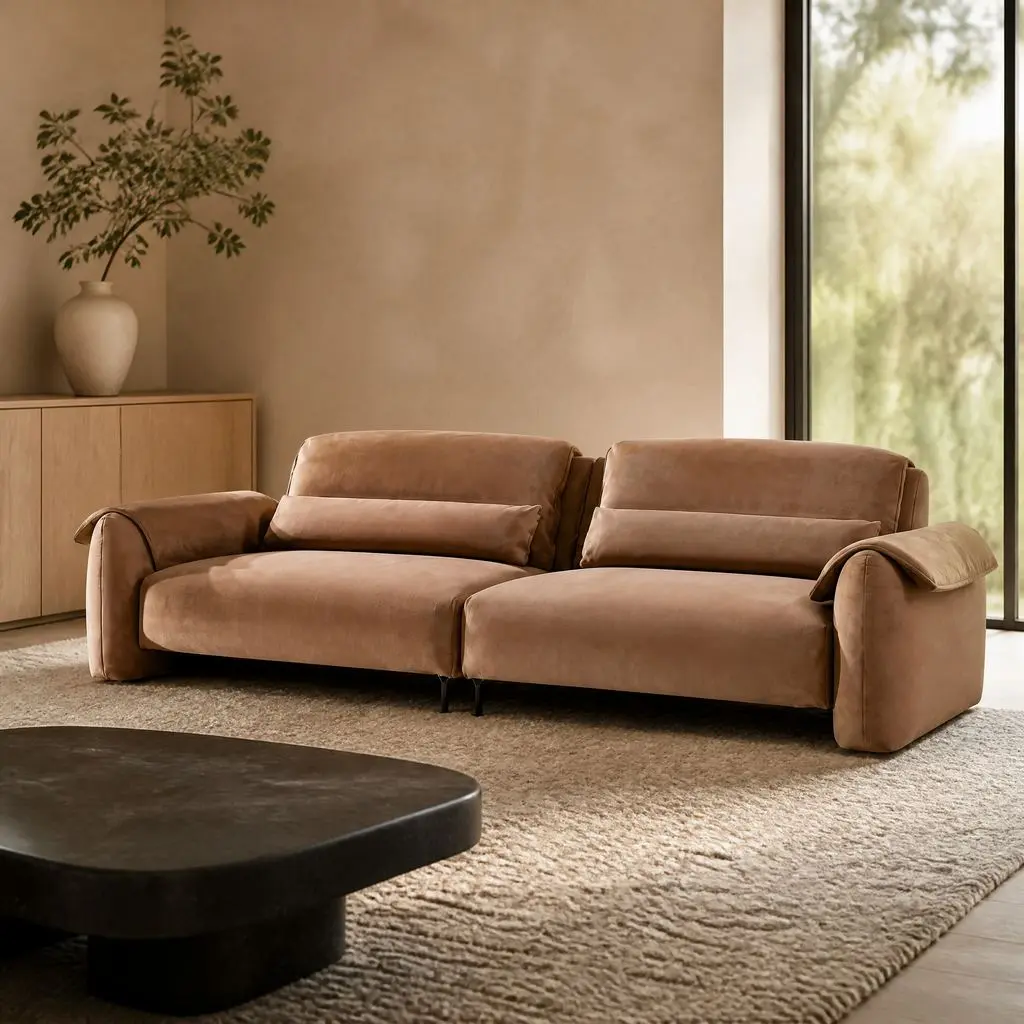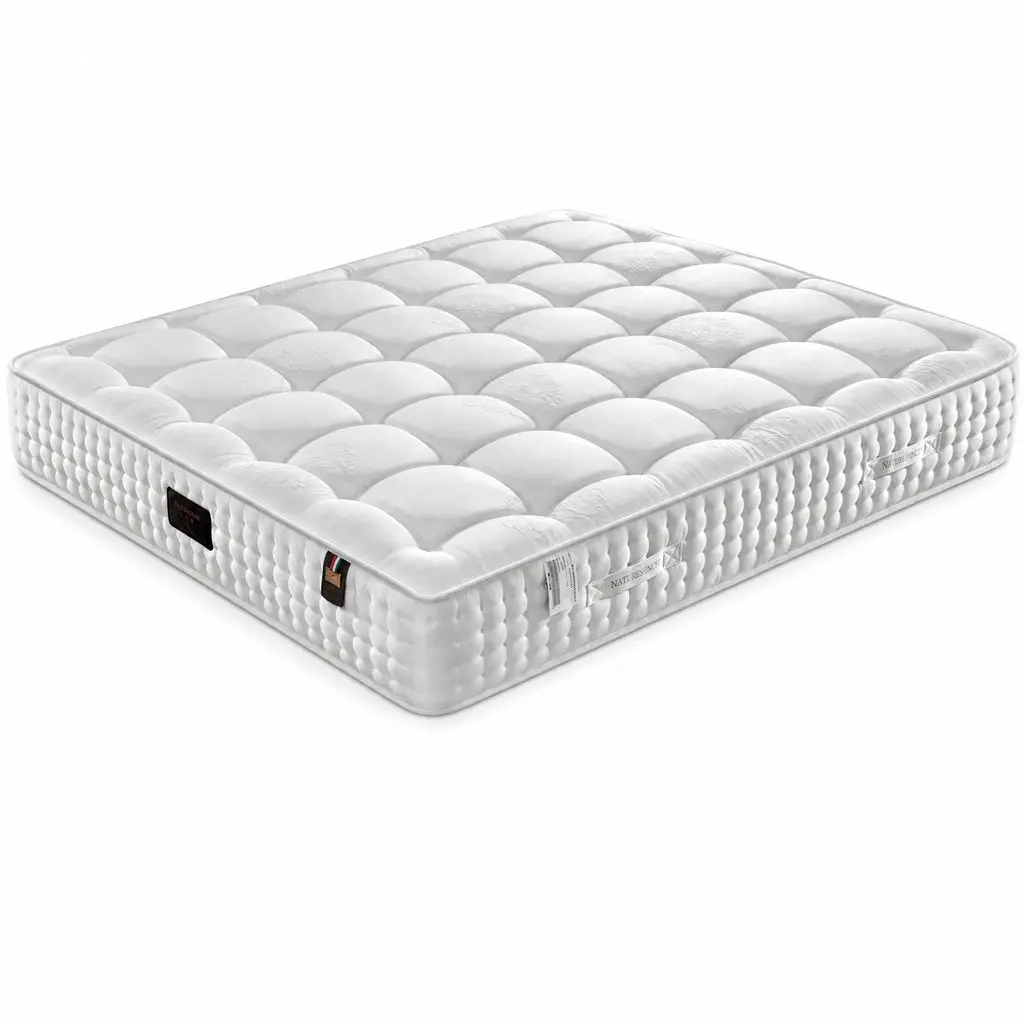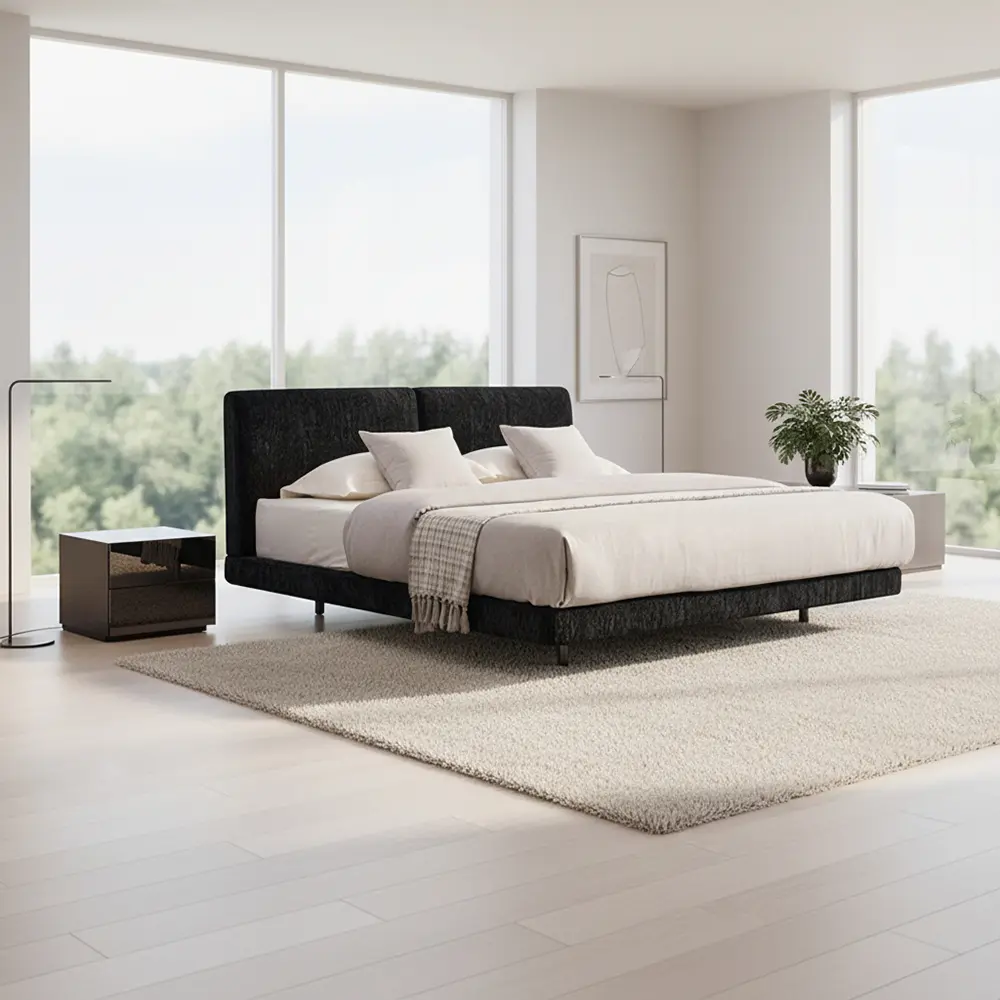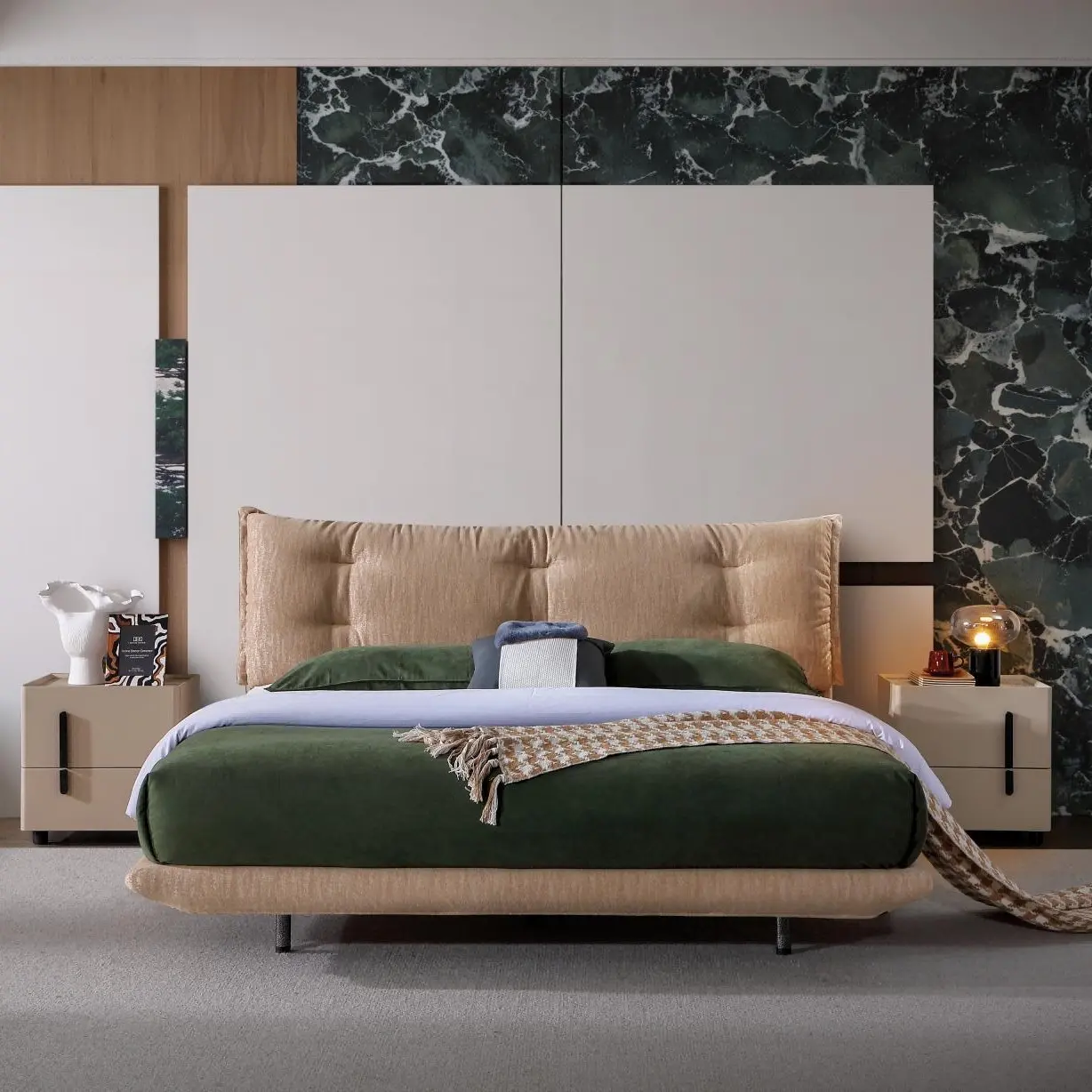
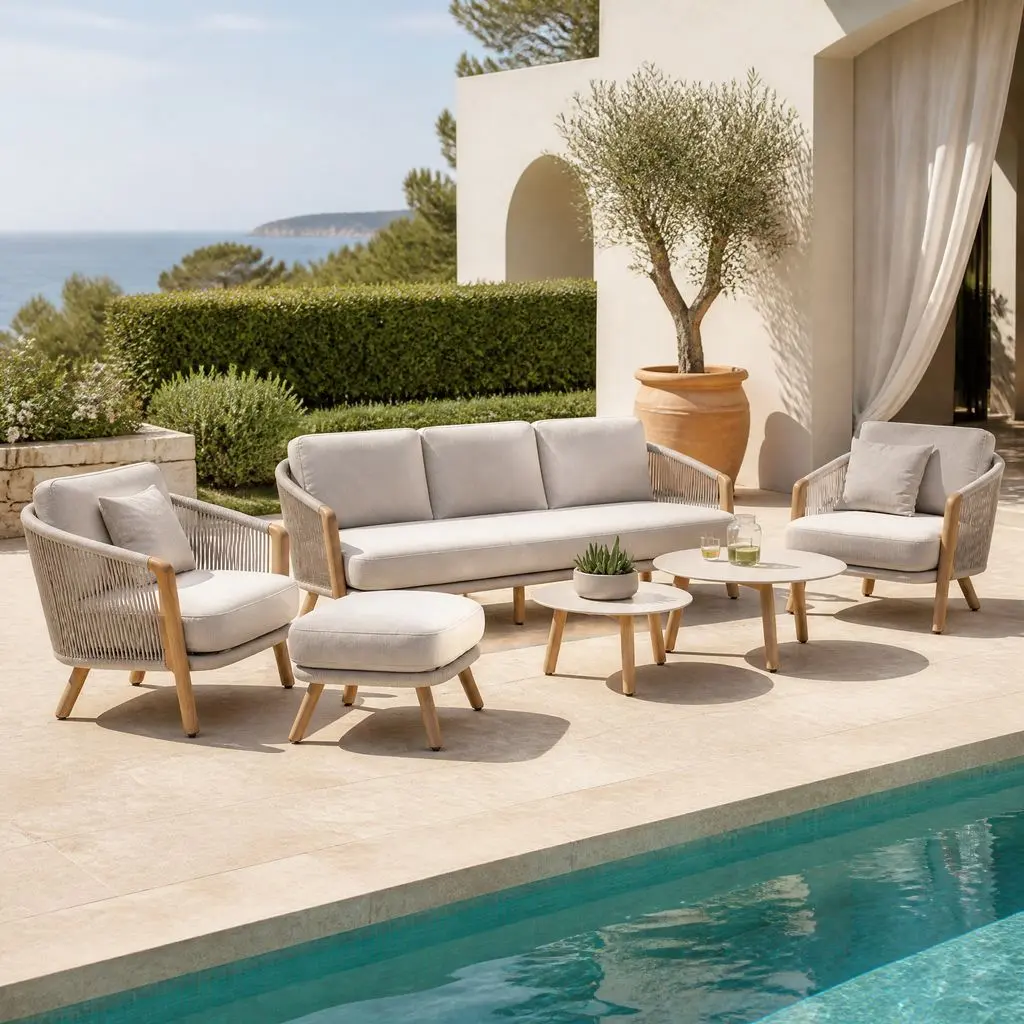
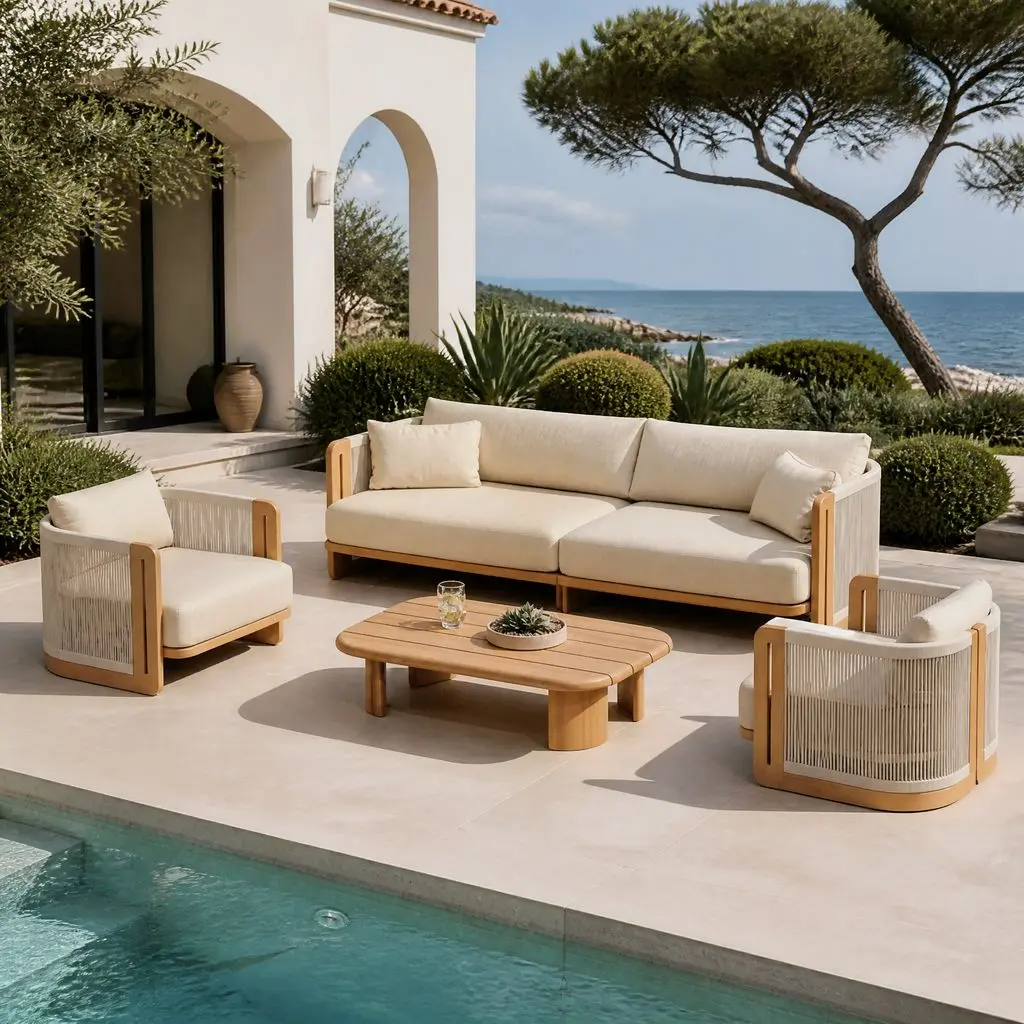
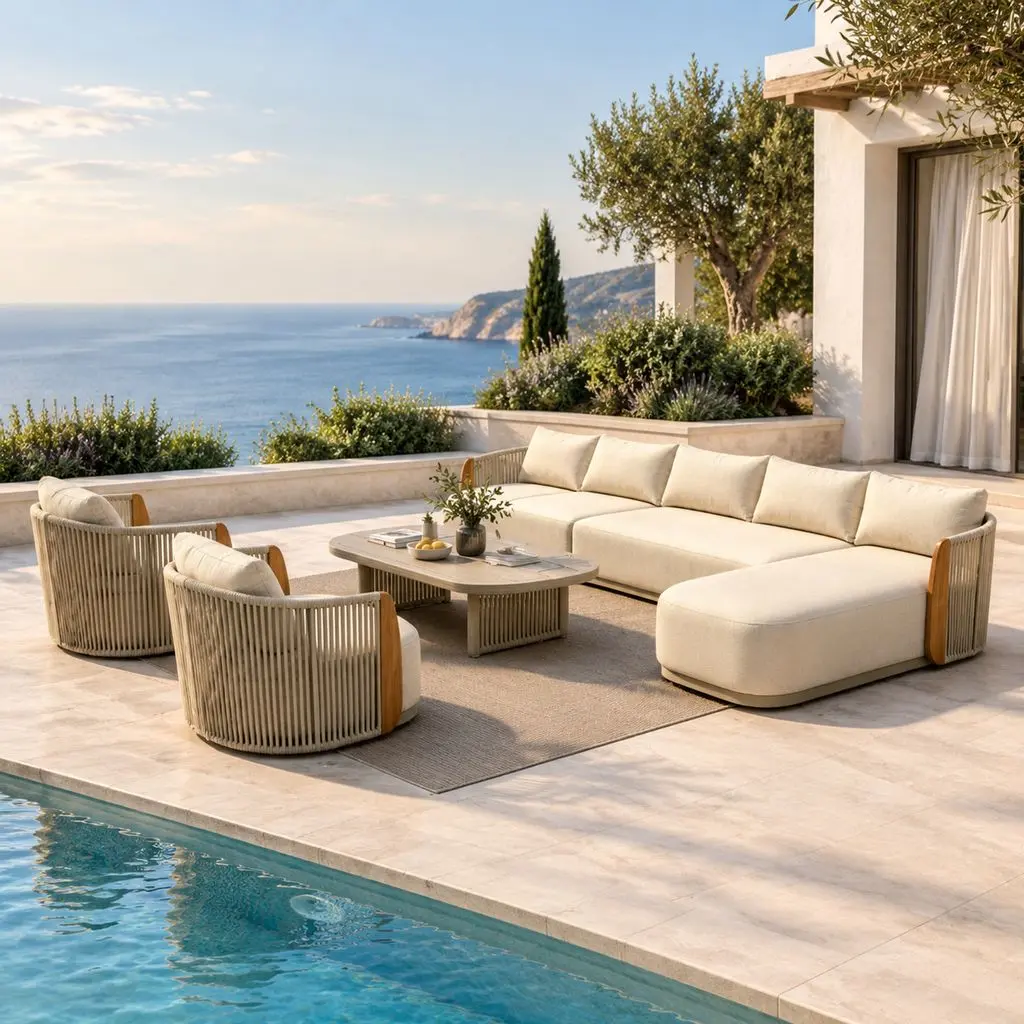
Outdoor Sofa Set Models for Wholesale
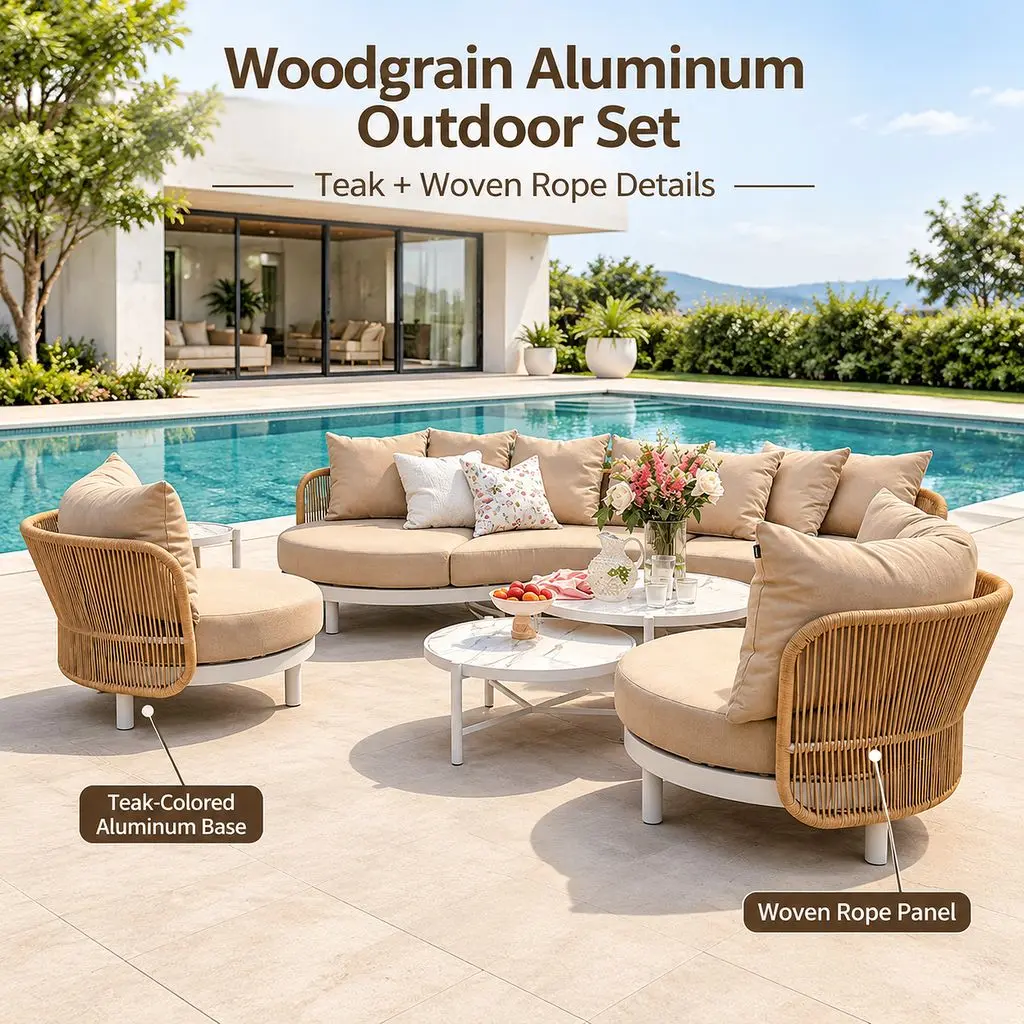
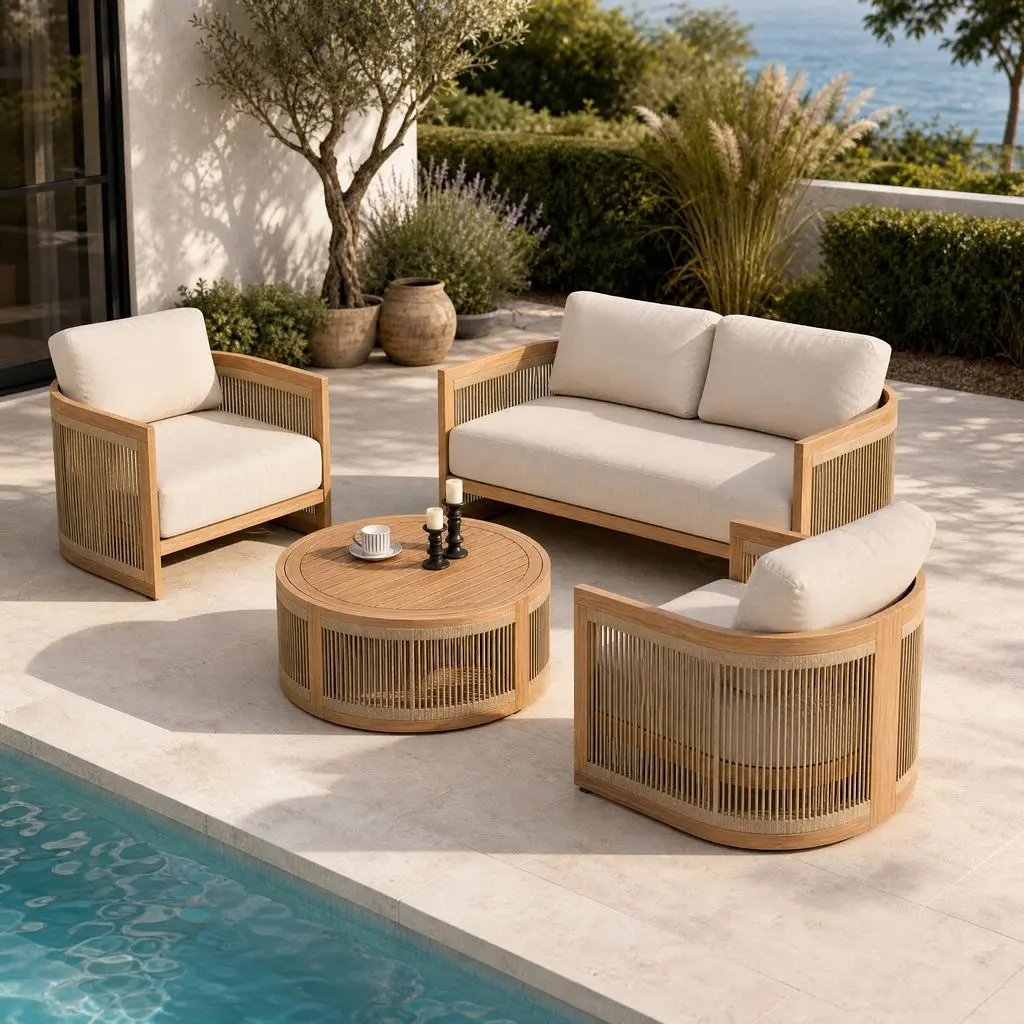
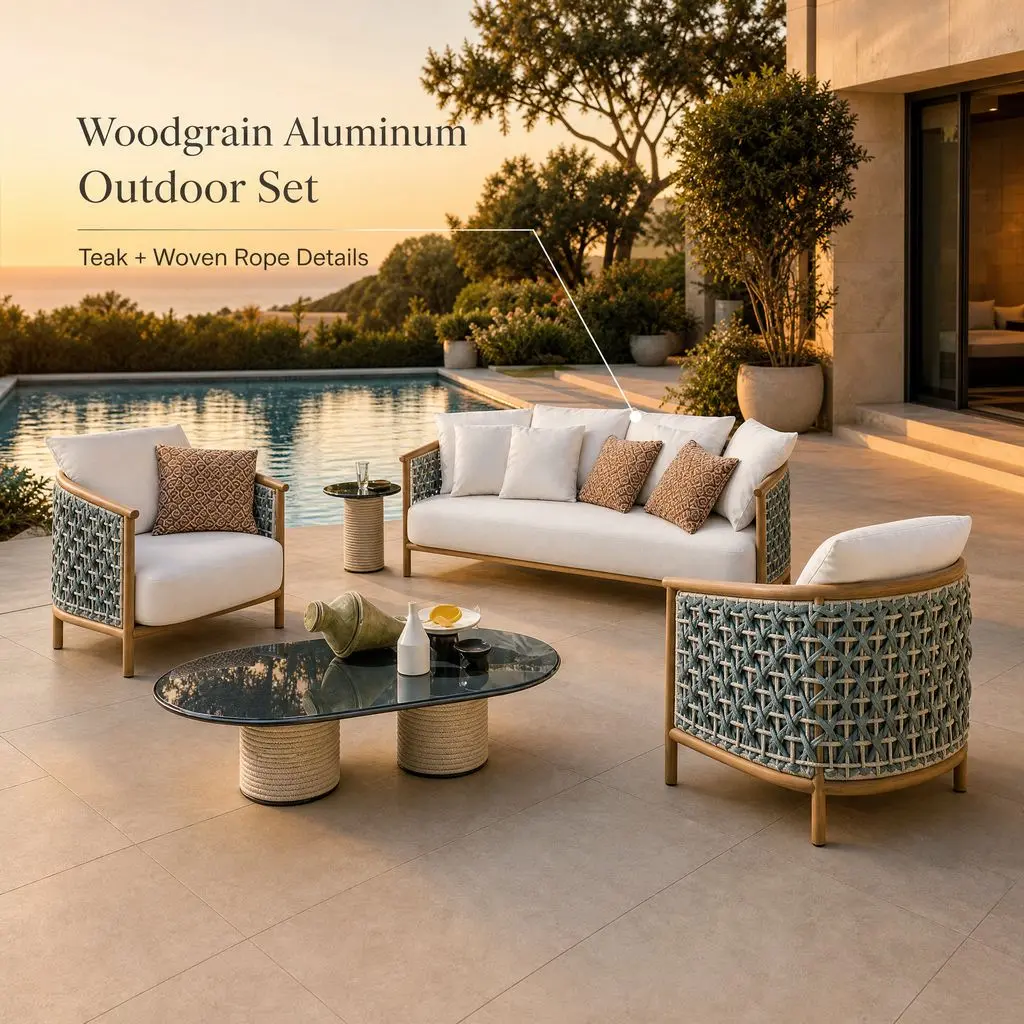
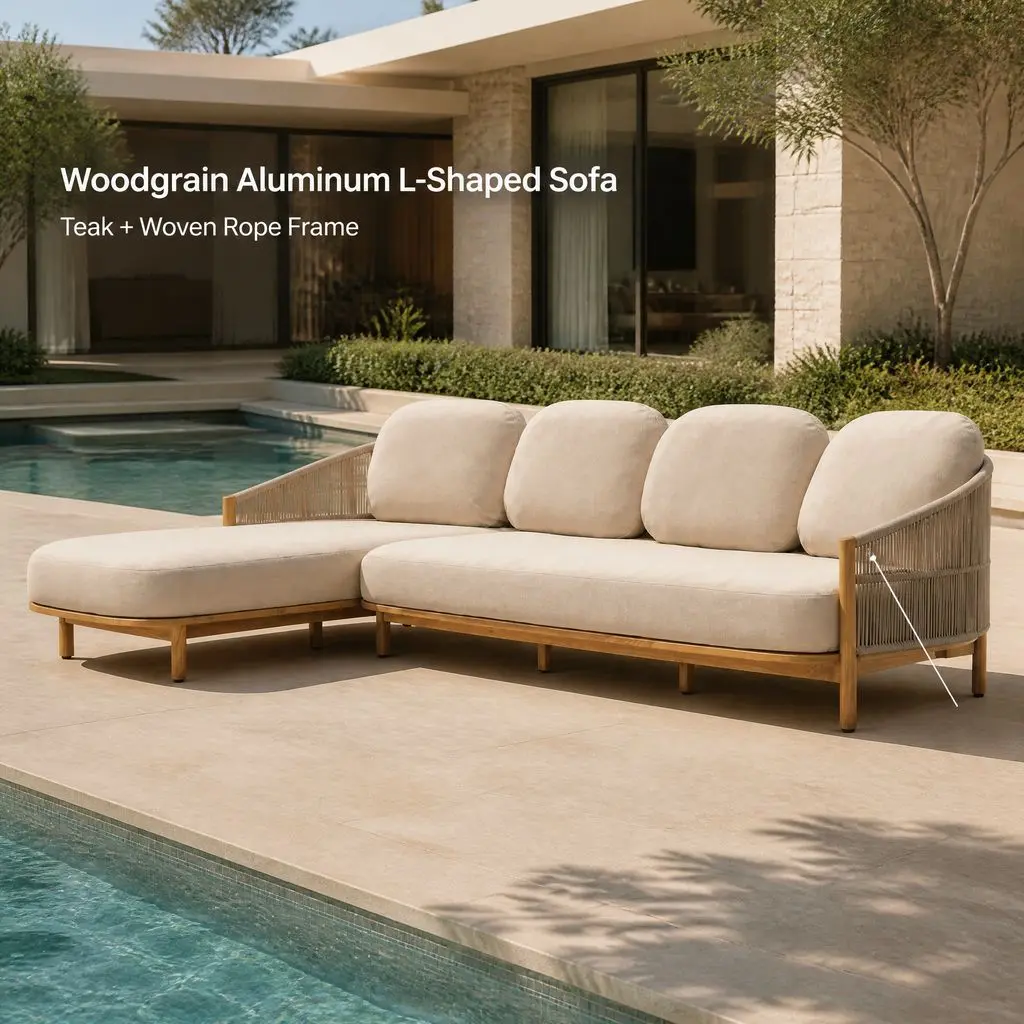
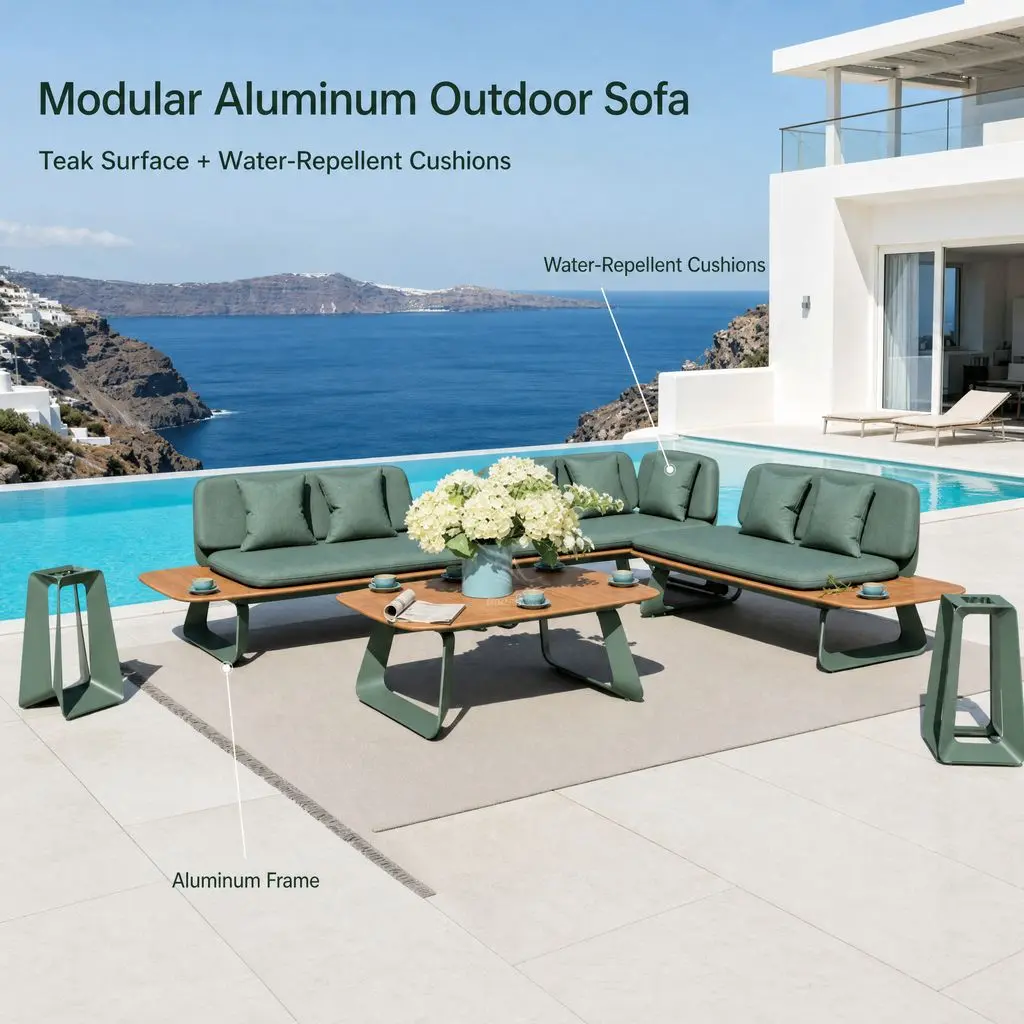
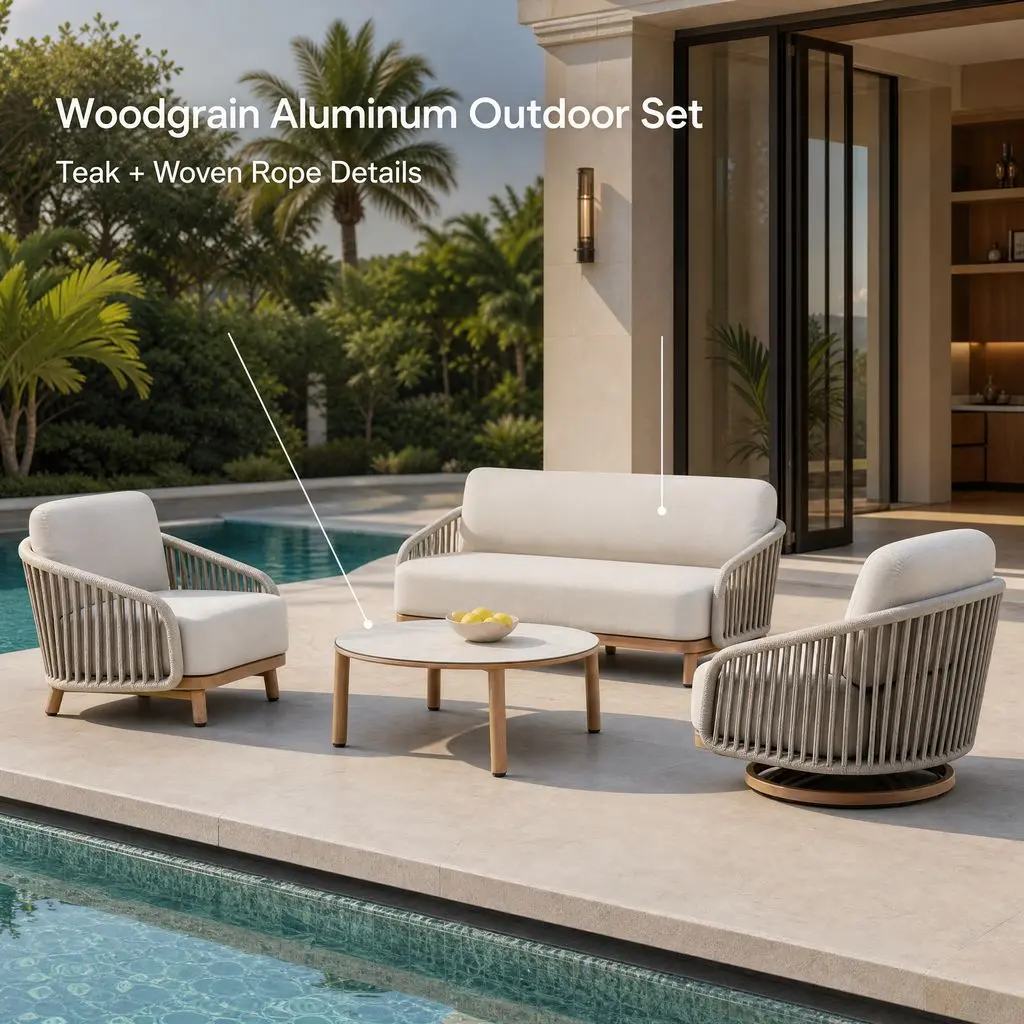
Rope weave · Wood-grain aluminum · Teak armrests · Waterproof cushions
Market Context
The Global Outdoor Furniture Economy in 2026
Outdoor living has shifted from a seasonal accessory category to a permanent, high-margin revenue line for furniture wholesalers, hospitality procurement teams and design-build contractors. Buyers no longer purchase a single bench — they specify fully coordinated outdoor sofa sets engineered for UV exposure, salt air, monsoon rainfall and heavy commercial traffic.
For a sourcing manager, this changes the brief entirely. An outdoor sofa set is a materials-science product: the frame alloy determines structural fatigue life, the rope extrusion determines colorfastness, the cushion foam determines drainage and recovery, and the fabric determines whether the set survives four summers or fourteen.
Qingyumai operates from Longjiang, Shunde — the production heart of Foshan, one of the world's most established furniture manufacturing clusters — combining in-house R&D with a network of rigorously audited partner factories to supply 19 furniture categories under one purchase order, one QC standard and one shipping plan.
Why Buying Direct From a Foshan Outdoor Sofa Manufacturer Matters
Our scale-driven direct-supply model bypasses regional distributors and secondary agents, sourcing straight from the factory floor. Lower per-unit costs are passed on so partners keep healthy project margins — while a single accountable team owns quality from sample approval to container loading.
10+Years supplying global markets
100+Original design & structure patents
19Furniture categories, one supplier
4OEM / ODM customization dimensions
Macro Industry Solutions
From Single Model to Full Outdoor Program
A wholesale outdoor sofa program is not a catalogue order. It is a specification, a compliance file, a packaging standard and a load plan. We structure every engagement around four solution layers.
Residential Terrace & Balcony Programs
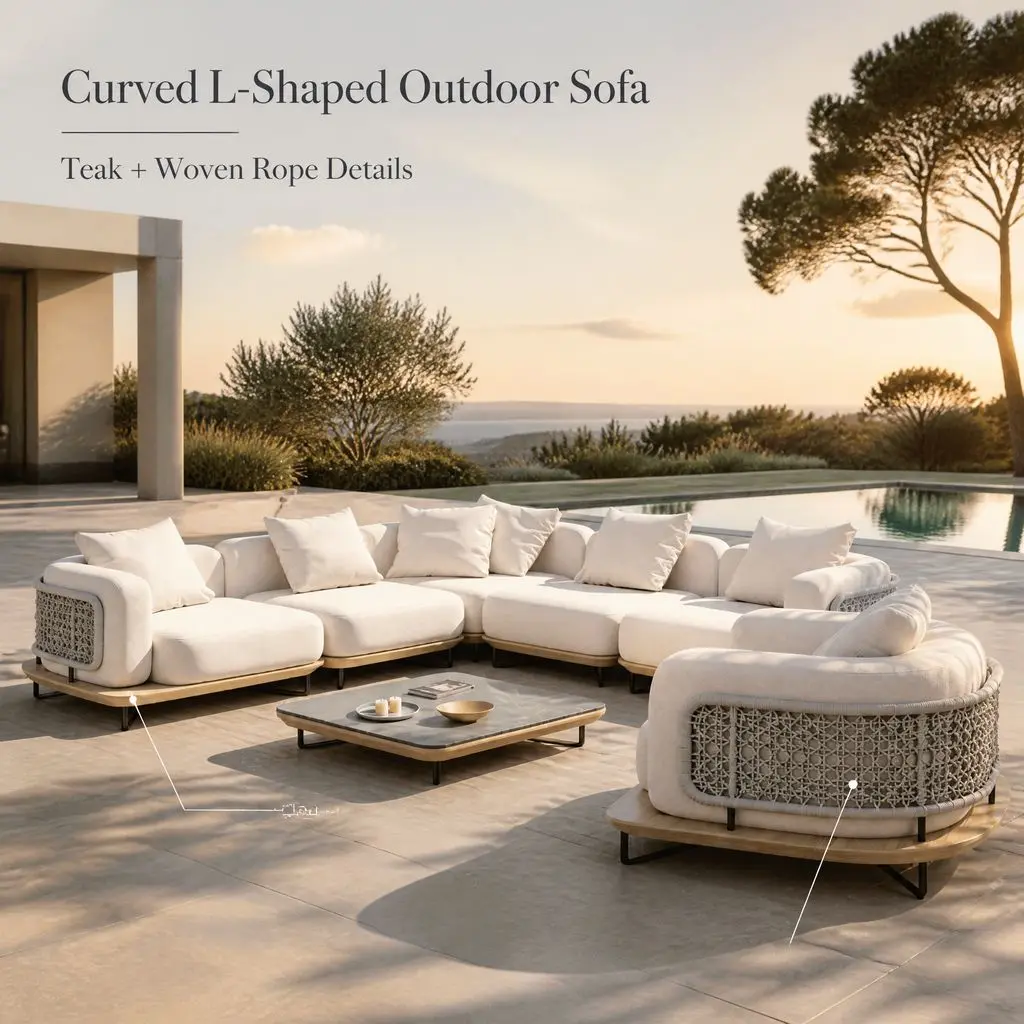
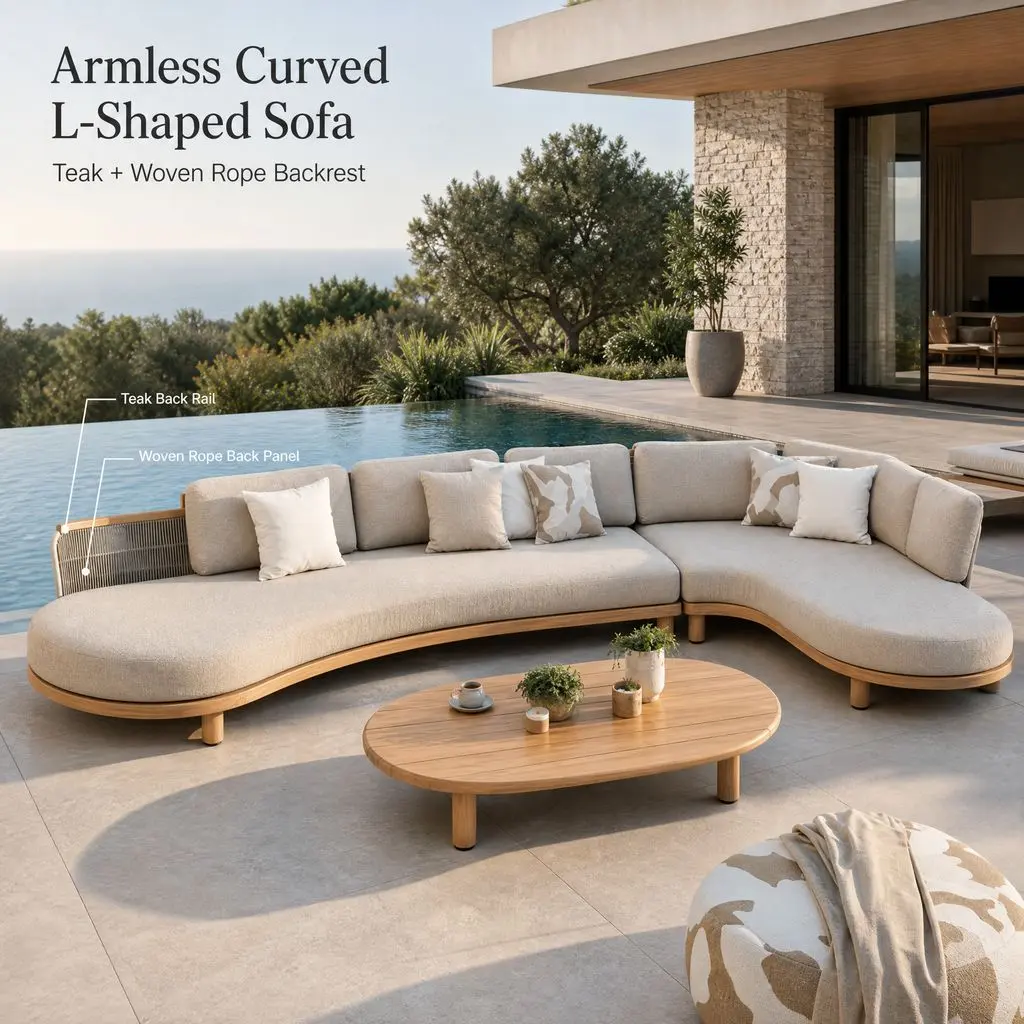
Modular L-shaped and armless configurations sized for apartments, villas and serviced residences, with removable, washable covers that survive real household use.
Hospitality & Resort FF&E Packages
Guestroom terraces, pool decks and lobby lounges specified to contract-grade fabric rub counts, with tea-stain and chlorine resistance for high-turnover properties.
Wholesale & Container Programs
Mixed-category container consolidation, volume-based pricing and repeat-order colour consistency for importers, distributors and retail chains.
OEM / ODM Private Label
Custom dimensions, frame colours, fabric grades, woven labels and embossed logos — building a defensible private-label outdoor range for your brand.
Sample & Prototype Engineering
3D modelling, precision prototyping and rapid sampling so buyers validate comfort, proportion and finish before mass production begins.
Compliance & Documentation
Material declarations, treatment records and specification sheets aligned to the regulatory framework of your destination market.
Material Science · Information Gain
Anatomy of a Commercial-Grade Outdoor Sofa Set
Two outdoor sofa sets can look identical in a photograph and behave completely differently after 24 months outdoors. This is the specification layer that separates a retail-grade product from a contract-grade one.
| Component | Specification Standard | Why It Matters to Buyers |
|---|---|---|
| Frame | Powder-coated aluminium alloy, wood-grain transfer finish, welded or mechanically fastened joints | Aluminium will not rust like steel; the transfer finish preserves the warm timber look without teak's maintenance cycle. |
| Rope Weave | Olefin or high-tenacity synthetic rope with UV stabilisers, hand-woven over an aluminium core | Determines colourfastness and tensile retention under sun and salt air; olefin resists moisture absorption. |
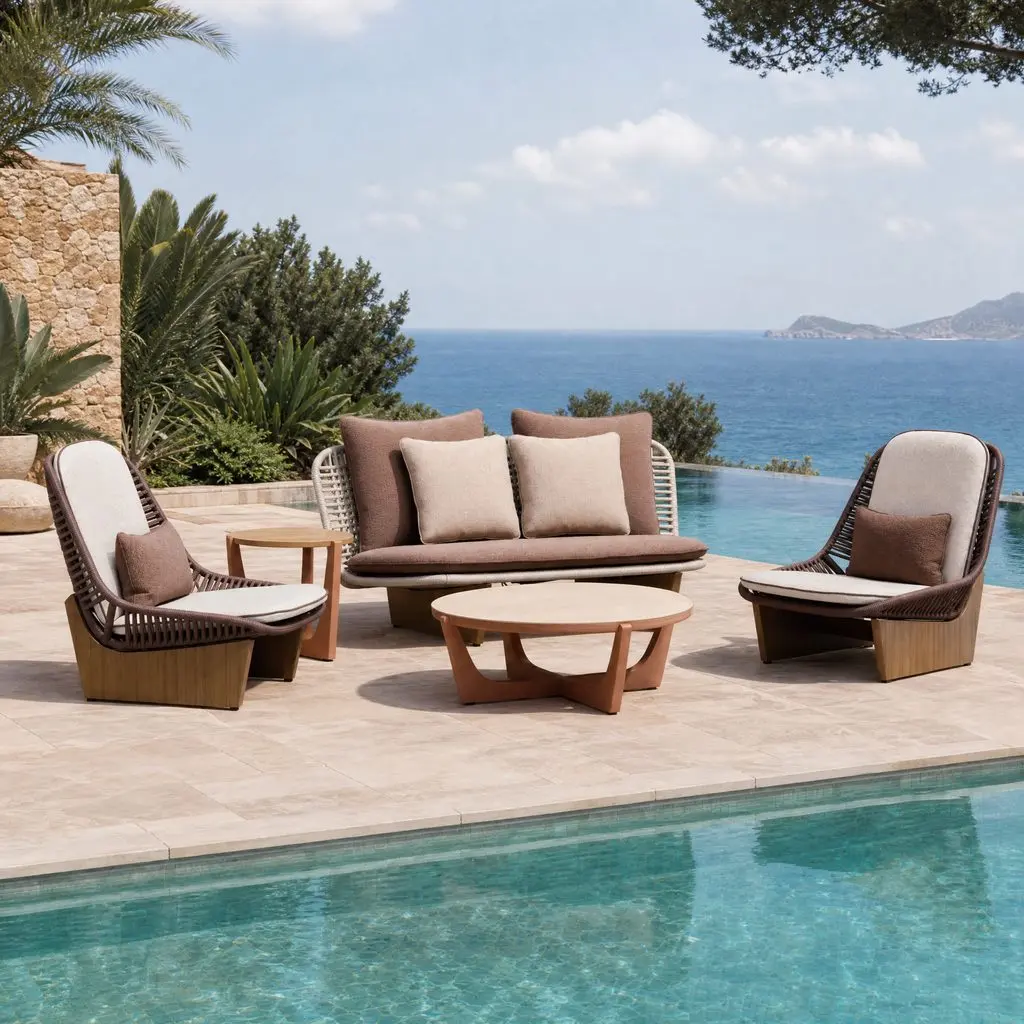
| Timber Trim | Teak armrests, trim and seat boards, sanded and oiled | Teak's natural oils resist rot and insects — the detail that reads "premium" at point of sale. |
| Cushion Foam | High-density polyurethane with open-cell drainage structure and quick-dry wadding | Open-cell foam lets water pass through instead of holding it, preventing mildew and loss of loft. |
| Upholstery | Waterproof, solution-dyed acrylic or olefin fabric with removable, zipped covers | Solution-dyed fibres keep colour through UV exposure; removable covers allow field replacement without replacing the set. |
| Hardware | Stainless or zinc-plated fasteners, nylon glides, levelling feet | Prevents galvanic corrosion at joints and protects balcony decking from scratching. |
Global Trade Reality
Commercial Status, Compliance & Localised Support
Outdoor furniture crosses borders under increasingly strict scrutiny. Buyers in the EU, North America, the Gulf and Oceania must reconcile flammability rules, chemical restrictions, timber sourcing rules and packaging-waste directives — often for the same container.
Qingyumai's pre-sale consultants recommend material configurations aligned with the regulatory standards of your destination market, while internal QC engineers verify structural durability and finish consistency on the production line. The result is a shipment that clears customs and satisfies your buyer's compliance team on the first pass.
- Fabric and foam options selected around destination flammability and chemical regimes
- Timber documentation support for legally sourced teak specification
- Export packaging designed to reduce volume and therefore waste-disposal liability
- Specification sheets and packing lists issued before production release
Localised Support, Not Just Localised Pricing
Our post-sale team handles container consolidation across categories, planning loading space to reduce ocean freight cost per unit while using multi-layer export crating to prevent transit damage. Buyers are welcome to schedule factory and showroom visits in Shunde before committing to a first container.
Multi-Market Configuration
The same model family is produced in different fabric and foam specifications depending on whether it ships to a European, Gulf or Pacific market.
Freight-Optimised Engineering
Knock-down or nesting module design reduces cubic metres per set, directly lowering ocean freight cost per unit.
Repeat-Order Consistency
Colour and weave specifications are locked at sample approval so a second container matches the first — critical for retail chains and hotel rollouts.
Application Scenarios
Where These Outdoor Sofa Sets Ship To
The same frame platform is configured differently depending on its final climate, traffic level and design language. Below are the five most common deployment scenarios we engineer for.
Poolside & Resort Decks
Chlorine-tolerant fabric, quick-dry foam and non-slip glides. Modular L-shaped sets configured around cabana layouts.
High-UV Terrace Environments
Solution-dyed olefin rope and UV-stabilised aluminium for markets with intense year-round sun exposure.
Coastal & Salt-Air Sites
Stainless or zinc-plated hardware and teak trim chosen to resist galvanic corrosion in marine-adjacent properties.
Urban Balcony & Rooftop
Compact armless and two-seat configurations engineered to fit narrow footprints without losing visual depth.
Restaurant & Café Terraces
Contract-grade fabric with elevated rub counts and denser foam cores that recover after continuous daily use.
Villa & Show-Home Staging
Coordinated room packages — outdoor seating paired with living room, bedroom and dining lines for turnkey staging.
Technology Roadmap
Where Outdoor Seating Manufacturing Goes Next
Regulation, freight economics and consumer expectation are converging on the same direction: lighter, repairable, documented and recyclable. Our production roadmap follows that curve.
Phase 01 · Now
Material Substitution
Wider adoption of recycled olefin rope and recycled-fill wadding in place of virgin polymers, without sacrificing UV or tensile performance.
Phase 02 · Near Term
Design for Disassembly
Bolted rather than welded module joints and replaceable cushion covers so a single component can be swapped in the field instead of scrapping a set.
Phase 03 · Mid Term
Digital Product Passports
Model-level specification records — alloys, fabric compositions, treatment data — attached to the SKU and retrievable by QR at point of sale.
Phase 04 · Forward
Freight-Optimised Modularity
Flat-pack structural engineering that reduces cubic volume per set, cutting carbon intensity and per-unit ocean freight simultaneously.
Phase 05 · Forward
Climate-Specific Testing
Accelerated weathering and salt-spray protocols run at model level so buyers receive quantified durability evidence, not marketing claims.
Phase 06 · Forward
Whole-House Program Integration
Outdoor sofas specified on the same order, colour story and QC standard as living room, bedroom and dining lines — one contract, one shipment.
OEM & ODM Workflow
How a Custom Outdoor Sofa Order Moves From Brief to Container
Full customization for wholesale and project orders. Build a private-label outdoor range or tailor a standard model to your floor plan, market and brand guidelines.
01 · Project Brief
Share drawings, target market and budget. Consultants map each room and terrace to suitable categories and configurations.
02 · Material Engineering
We recommend frames, foams, ropes and fabrics that meet your destination's regulatory standards and climate conditions.
03 · Sample Approval
Pre-production samples confirm dimensions, colour, weave density and comfort before mass production is released.
04 · In-Line QC Audits
QC engineers test structural durability and finish consistency on the factory floor, not only at final inspection.
05 · Consolidated Shipping
Mixed-category container loading and multi-layer export crating reduce freight cost and prevent transit damage.
06 · After-Sales Support
Long-term maintenance guidance, replacement-part planning and reorder consistency for multi-phase projects.
Buyer FAQ
Outdoor Sofa Sets Sourcing Questions, Answered
Direct answers to the questions importers, hospitality procurement teams and contractors ask most before placing a first outdoor order.
What materials should I specify for an outdoor sofa set that will be used commercially?
For commercial use, specify a powder-coated aluminium frame (not steel), solution-dyed acrylic or olefin upholstery with elevated rub counts, open-cell quick-dry foam, and stainless or zinc-plated hardware. Our XD-6000 series pairs a wood-grain aluminium frame with teak armrests and waterproof cushions — a combination engineered for both visual warmth and weather resilience.
Is Qingyumai a furniture manufacturer or a trading company?
Qingyumai is the export brand of Foshan Qingyumai Technology Co., Ltd., an integrated manufacturer covering R&D, production and international sales with its own production facility in Shunde, Foshan. For whole-house orders we also coordinate a network of audited partner factories so that every category ships under one quality standard and one purchase order.
Do you accept OEM and ODM outdoor furniture orders?
Yes. We customize dimensions, upholstery and frame colours, fabric grades (cashmere, cotton-linen, cool-touch and commercial-grade fabrics), rope colours and branding such as woven labels and embossed logos for wholesale and project orders.
Can I combine outdoor sofas with beds, mattresses and dining furniture in one container?
Yes. Our post-sale team handles container consolidation across categories, planning loading space to reduce ocean freight cost per unit while using multi-layer export crating to prevent transit damage. Because we produce 19 categories, mixed containers are a standard workflow rather than an exception.
How do you control quality during mass production?
Our internal QC engineers carry out on-site production line audits that check structural durability and finish consistency, and pre-sale consultants recommend material configurations aligned with the regulatory standards of your destination market.
Which climate conditions can these outdoor sofa sets handle?
Aluminium frames and olefin rope resist humidity and salt air, while teak trim is naturally rot- and insect-resistant. For high-UV or coastal markets we adjust the fabric specification to solution-dyed fibres and confirm hardware finish at sample approval stage. Discuss your climate with our consultants during the brief — the material engineering step exists precisely for this.
How long does a wholesale outdoor sofa order take?
Timelines depend on whether the order uses catalogue models or custom tooling, and on sample-approval cycles. The workflow runs brief → material engineering → sample approval → production with in-line QC → container consolidation, with schedule milestones confirmed before production release.
Where is your factory located?
We are located in Hui Cheng Industrial Park, Longjiang Town, Shunde District, Foshan, Guangdong, China, one of the world's best-known furniture manufacturing hubs. Buyers are welcome to arrange factory and showroom visits.
Need a Wholesale or Custom Outdoor Sofa Solution?
Get our latest outdoor collections, material options and customization guide. Our export team will help you plan categories, configurations and container loading for your market.
More Outdoor & Whole-House Models
One purchase order · one QC standard · one shipping plan